







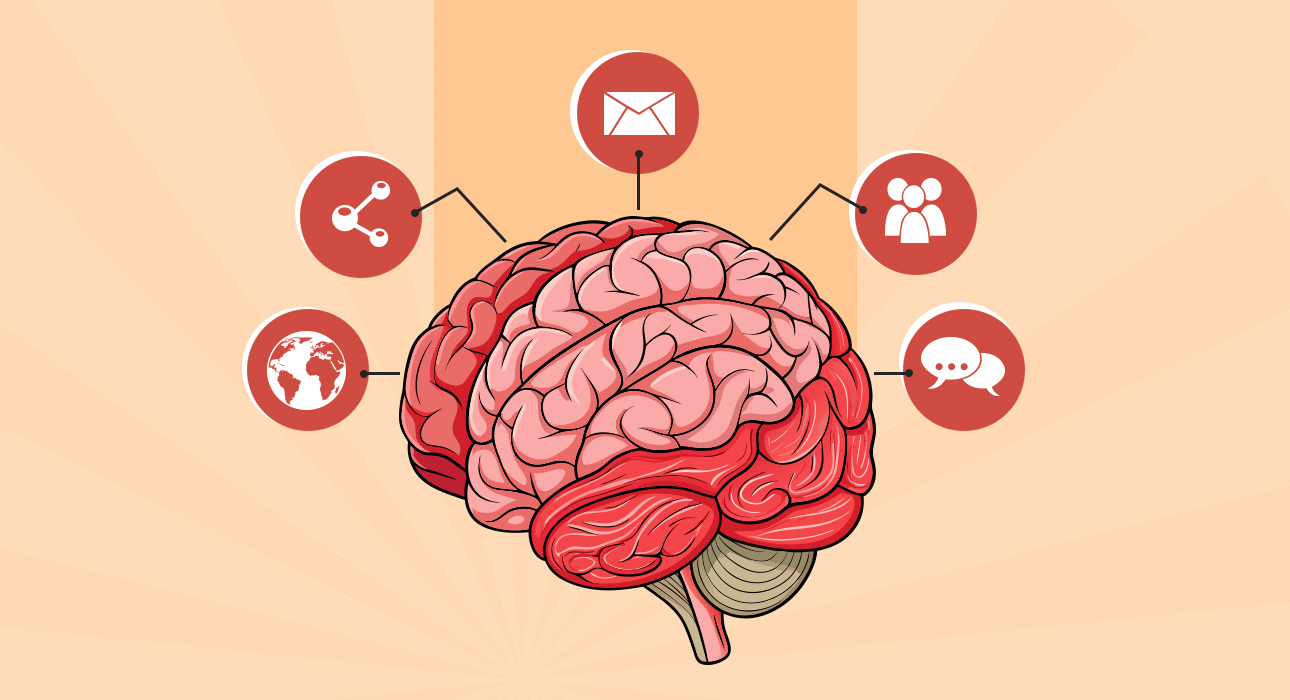
There are many issues in our modern virtual worlds, and the field of neuroscience is only now starting to make sense of them. Today’s generation has more knowledge available than earlier generations, but studies suggest they are retaining less and grasping it less. While understanding has increased overall, the cognitive processes that support it have struggled to keep pace. In psychological literature, digital memories do not indicate a complete loss of intelligence or cognitive capacity.
It explains something more precise: a methodical change in the way the brain distributes memory resources in reaction to the circumstances brought about by digital technology. With information now always available through web browsers, cloud storage, snapshots, bookmarks and smartphones, the brain becomes more concerned with knowing where to find information than with deeply recording the knowledge itself into permanent memory (Sparrow et al., 2011). The effect is a change in the structure of the relationship between people and knowledge, in the sense that access to information starts to function as a mental substitute for real understanding.
This article explores mental health and neurological processes through which digital media habits rewire memory and attention. It uses research on cognitive offloading, process-based levels, attentional control, and brain overload to show why information doesn’t reliably give lasting data and which factors are needed to restore genuine learning.
Read More: Understanding Technology’s Impact on Mental Health
How People’s Memories Are Organised
The human memory was not designed to operate as a complete archive. The brain is naturally selective in what it remembers, filtering incoming information by emotional salience, apparent weight, repetition, and meaning. A selective cognitive system is necessary because indiscriminate preservation of all incoming information would overwhelm the mental capacity needed to integrate raw data into knowledge. As psychologist Professor Daniel Schacter, whose research on the nature of memory is still foundational, put it, memory is reconstructive, not archival; the brain encodes what looks important and often throws away what looks redundant or retrievable by other methods (Schacter, 2001).
This architecture is thousands of years older than digital technology. Before the advent of smartphones, people memorised what practical life required: contact information, guidance, schedules, names, and meetings. Neglecting these had real consequences, so the brain adjusted its implicit cost-benefit analysis of what to keep. Digital tools have moved ownership of this type of information to gadgets, apps, and linked repositories, and the head has reduced its effort to store it. Neuroscientist Daniel Levitin established this dynamic deeply, noting that as outside systems increase their data processing role, the brain adjusts its attentional focus in ways that are beneficial in the short term, but have cognitive costs that grow over time (Levitin, 2014).
This reset is not an act of laziness. It reflects the brain’s energy-conservation nature, constantly assessing whether to store information internally versus externally. The psychological problem of the digital age cannot be in this adaptive reaction per se, but in the long-term consequences of its prevalence and in a growing disconnect between the information accessed and the understanding actually formed.
Cognitive Offloading and the Google Effect
The most cited real evidence of digital amnesia in literature is an important study submitted to a scientific journal in 2011 by Betsy Sparrow, Jenny Liu and Daniel Wegner. When people predicted data to remain accessible via a desktop, they had significantly lower recall for the knowledge itself but higher recall for where and how it might be found (Sparrow et al., 2011). Their findings suggest the internet has become a kind of external memory, an archive that the brain regards as a dependable cognitive partner and so outsources to rather than encodes internally.
Sparrow et al. placed this outcome within the context of transactive memory theory, first introduced by Wegner in 1987. Transactive memory is the distribution of memory responsibilities among agents, individuals, groups, or, in current models, technological systems, so that each keeps and retrieves specialised information on behalf of the whole. Human beings have engaged in transactive recall socially throughout history: one person in a household remembers medical appointments, another navigates, and a third manages monetary commitments. The digital age has scaled up this process, with searches, cloud platforms and mobile devices assuming informational duties that were previously spread across individuals (Wegner, 1987; Sparrow et al., 2011).
The Illusion of Knowing in the Digital Age
The effect that the brain keeps more particular data in the absence of internet access cannot be simply made visible by the research, but it is that access to knowledge and understanding of it becomes progressively conflated. The person who has already bookmarked an article, kept a clip, or screenshotted a quote works under a subconscious cognitive impression that content has been acquired. Awareness, the feeling of familiarity, is neurologically different from the combining processes that lead to true long-term retention. The web creates an ordered illusion of intellectual mastery that involves none of the effortful processing demanded by real learning.
Read More: How AI Rewires the Brain: Cognitive, Memory & Social Effects Explained
Depth of Care: Why Awareness Is Not Learning
The difference between naive exposure and true encoding is not new to modern times, but the digital setting has made it more significant than ever in cognitive history. The theory underlying this distinction was laid out by Fergus Craik and Robert Lockhart in 1972 in one of the best-cited frameworks in the study of memories. The Levels of Computing model suggested that memory creation is not a function of time spent with knowledge. But of the level of cognitive involvement during its encoding (Craik & Lockhart, 1972). Shallow processing, focused on surface attributes of information, such as its appearance or sound, creates memory traces that are fragile and decay quickly. Deep processing produces a durable, combined memory by engaging through meaning, making associations, linking material to existing knowledge systems, and reflecting mentally or analytically on its relevance.
Digital behaviours are structurally tuned to shallow processing. Rapid scrolling, app-switching, multitasking across platforms, saving content for later engagement, and notification-rich media’s fragmented focus all fail to open deep encoding channels. When a person right away screenshots a paragraph rather than stopping and reflecting on its meaning, or saves an instructional video rather than proactively engaging with its content, the brain registers the action as administratively finished without any memory consolidation work being performed. What this finding means is that enormous amounts of accessed content accumulate with little retained in long-term memory.
How Digital Habits Encourage Shallow Processing
Nicholas Carr, drawing on an alignment of neuroscientific and psychological studies in his widely cited article The Shallows, asserted that the structural properties of online settings namely their focus on speed, novelty, links, and rapid transitions between content are not random features but constitute a distinct cognitive ethic that carefully trains the brain toward scans and skimming at the expense of focus and reflection (Carr, 2010). The brain is neuroplastic, so repeated contact with conditions promoting shallow processing not only fails to lead to deep learning but remodels attentional systems in the direction of the fragmented patterns these environments reward.
Cognitive Stress and Focus Limits
Concentration is the need for memory formation. Knowledge that does not get sustained attentional engagement cannot be deeply encoded, no matter how many times it is accessed. The modern digital environment bombards the brain with a volume and speed of incoming information that exceeds the attention span the human cognitive system has developed to handle, resulting in what cognitive psychologists and neuroscientists refer to as ‘decision fatigue’. This fatigue, which is made worse through repeated decision-making, is exacerbated by digital environments in which trivial choices accumulate endlessly throughout waking hours (Levitin, 2014). The brain’s attentional filter, which usually helps it to distinguish between cognitively important information and background noise, gets less efficient as the amount of incoming stimulation grows.
The 2009 study published in the Proceedings of the National Academy of Sciences by Ophir, Nass, and Wagner examined whether habitual media multitasking affects cognitive control. Their results indicated that heavy media multitaskers were more susceptible to interference from unrelated stimuli from the environment in addition to irrelevant representations in working memory (Ophir et al., 2009).
Where one might intuitively think that switching between more flows of information would improve the brain’s ability to handle multiple inputs, the empirical pattern was the opposite: habitual multitasking appeared linked with a wider, broader attentional stance that reduced the capacity to filter out what was not relevant. A later meta-analysis summarising more than a decade of follow-up studies concluded that, across measurement methods and cognitive functions, heavier multimedia multitaskers perform worse in several cognitive domains than lighter multitaskers (Parry & le Roux, 2021).
Multitasking and the Erosion of Attention
The sensory result is always understood: long hours of viewing digital content lead to little knowledge that can be long-term kept, despite at the same time creating a personal sensation of cognitive burnout. Knowledge has streamed through focused consciousness despite not being framed. And the demands of low-level ongoing participation have drained the cognitive resources for deeper inquiry.
Read More: How Chronic Overwork Impairs Memory and Cognitive Performance
Neuroplasticity: Digital Habits Change the Brain
The cognitive changes linked to digital amnesia are more than just behaviour choices that people can quickly undo by deciding to focus more intently. The brain’s neuroplasticity implies that repetitive patterns of engagement, such as the disorganised, rapid, externally reliant routines that virtual environments encourage, gradually alter the neural structures through which mental processing occurs. Carr’s review of the neuroscientific studies revealed that tools and innovations do not simply extend the brain’s functions but change the structural makeup of the pathways the brain most often activates (Carr, 2010).
Sustained engagement with conditions that reward rapid scanning and discourage ongoing focus does not simply fail to bolster the circuits associated with deep reading, critical thinking, and analytical concentration. It allows those circuits to degrade through disuse while strengthening the neural pathways linked with the attentional patterns the environment repeatedly activates. This is not a contention that digital technology is inherently harmful to cognition. It is an acknowledgement that the particular cognitive demands most digital contexts impose – breadth over depth, speed over reflection, and recollection over retention- possess neurological implications that accumulate over time and require conscious counteraction.
Levitin pointed out that the brain evolved in informational environments of relative scarcity, where the signal-to-noise ratio was relatively high, and the mental responsibilities of daily life did not require the constant management of fragmented, high-velocity stimulation (Levitin, 2014). The mismatch between the informational conditions to which human cognition is optimised and those that the current digital environment produces is, therefore, not simply a matter of overload but a structural imbalance with measurable impacts on memory, concentration, and the capacity for sustained analytical thought.
Developing Real Mental Action Across the Modern Era
Research on memory consolidation, depth of analysis, and attention span consistently points toward a set of conditions essential for information to become genuine knowledge rather than merely accessed content. These aren’t discoveries; they define similar cognitive procedures based on long-overseen traditional learning. They are harder to keep up with and more deliberate to build in modern life.
According to the studies, the following factors consistently lead to greater retention of memories and greater depth of cognitive activity:
1. Retrieval practice in action
Evaluating themselves on subject matter and using it from memory banks before revisiting it are a few of the greatest evidence-based strategies to enhance long-term memory retention. A comprehensive assessment published in the Journal of Mood Disorders revealed that active memory retention approaches. Such as retrieval techniques and self-assessment, were always associated with enhanced academic achievement and self-esteem in institutions of higher learning (Xu et al., 2024). Recovery as a cognitive activity fortifies memory’s track in ways in which ordinary passive revisiting does not.
2. Handwritten note-taking
Writing physically triggers different encoding processes than typing. Because handwriting is slower, it calls for selection, paraphrasing, and summarisation, cognitive operations that constitute a form of deep processing rather than the precise transcription that typing readily permits. The resulting encoding is correspondingly more robust.
3. Deliberate reflection before external storage
Pausing to take into account the context of found knowledge, linking it to previous knowledge, recognising its impact, or clarifying what it actually refers to in basic language triggers the idea-based processing function that the logic of process structure recognises as the requirement for deep inputting (Craik & Lockhart, 1972). Lowering or highlighting material as the primary answer prevents this routine from starting.
4. Reduced concurrent cognitive demands
Focus is a scarce commodity. Dual-tasking, signal delays, and fast-switching platforms deplete focus, thereby preventing long-term deep encoding. Compared to simultaneous tasks, focused, one-task books or work improve memory (Ophir et al., 2009; Levitin, 2014).
5. Private as well as emotional links to material
Information connected to emotional experience, personal meaning, or existing knowledge structures is processed at greater depth and retained more durably than information encountered as abstract content. Schacter’s analysis of memory formation consistently identifies emotional salience as one of the most potent drivers of consolidation (Schacter, 2001).
Conclusion
Digital amnesia is not a distinct failure of intelligence nor a novel kind of intellectual pathology. It outlines the predictable result of a systematic mismatch between how human memories create enduring knowledge and the knowledge conditions that digital environments generate. When information is perpetually available, and retrieval is easy, the brain’s cost-benefit analysis consistently opts for outside input over internal encoding. Sustained engagement, which is necessary for deep processing, cannot be achieved when attention is split among competing stimuli and cognitive demands remain constant. When saving content replaces engagement with it, the work of memory consolidation is bypassed before it can even begin.
The studies of Sparrow and colleagues on cognitive offloading, Craik and Lockhart’s levels of processing framework, Schacter’s account of memory reconstruction, Levitin’s analysis of cognitive overload, Carr’s description of neuroplastic change under digital conditions, and the evidence on multimedia multitasking from Ophir, Nass, and Wagner together show a consistent finding: access to information and understanding of it are not equivalent, and the conditions that produce one do not automatically produce the other (Sparrow et al., 2011; Craik & Lockhart, 1972; Schacter, 2001; Levitin, 2014; Carr, 2010; Ophir et al., 2009).
From Information Access to Meaningful Understanding
The question that the digital age poses for cognition is therefore not one of capacity. But rather, the brain retains its potential for deep, persistent, analytically sophisticated thought. It is one of the conditions. Those conditions focused attention, deliberate reflection, effortful retrieval, and the willingness to engage with information before offloading it have grown less naturally supported by the environments through which most knowledge is accessed. Preserving the cognitive practices through which information becomes genuine understanding is not a rejection of digital tools. It is the deliberate exercise of when and how those tools serve learning and when they substitute for it.
References +
- Carr, N. (2010). The shallows: What the Internet is doing to our brains. W. W. Norton & Company.
- Craik, F. I. M., & Lockhart, R. S. (1972). Levels of processing: A framework for memory research. Journal of Verbal Learning and Verbal Behaviour, 11(6), 671–684. https://doi.org/10.1016/S0022-5371(72)80001-X
- Levitin, D. J. (2014). The organised mind: Thinking straight in the age of information overload. Dutton.
- Ophir, E., Nass, C., & Wagner, A. D. (2009). Cognitive control in media multitaskers. Proceedings of the National Academy of Sciences, 106(37), 15583–15587. https://doi.org/10.1073/pnas.0903620106
- Parry, D. A., & Le Roux, D. B. (2021). “Cognitive control in media multitaskers” ten years on: A meta-analysis. Cyberpsychology: Journal of Psychosocial Research on Cyberspace, 15(2), Article 7. https://doi.org/10.5817/CP2021-2-3
- Schacter, D. L. (2001). The seven sins of memory: How the mind forgets and remembers. Houghton Mifflin.
- Sparrow, B., Liu, J., & Wegner, D. M. (2011). Google’s effects on memory: Cognitive consequences of having information at our fingertips. Science, 333(6043), 776–778. https://doi.org/10.1126/science.1207745
- Wegner, D. M. (1987). Transactive memory: A contemporary analysis of the group mind. In B. Mullen & G. R. Goethals (Eds.), Theories of group behaviour (pp. 185–208). Springer.
- Xu, J., Wu, A., Filip, C., Patel, Z., Bernstein, S. R., Tanveer, R., Syed, H., & Kotroczo, T. (2024). Active recall strategies associated with academic achievement in young adults: A systematic review. Journal of Affective Disorders, 354, 191–198. https://doi.org/10.1016/j.jad.2024.03.010




Leave feedback about this