







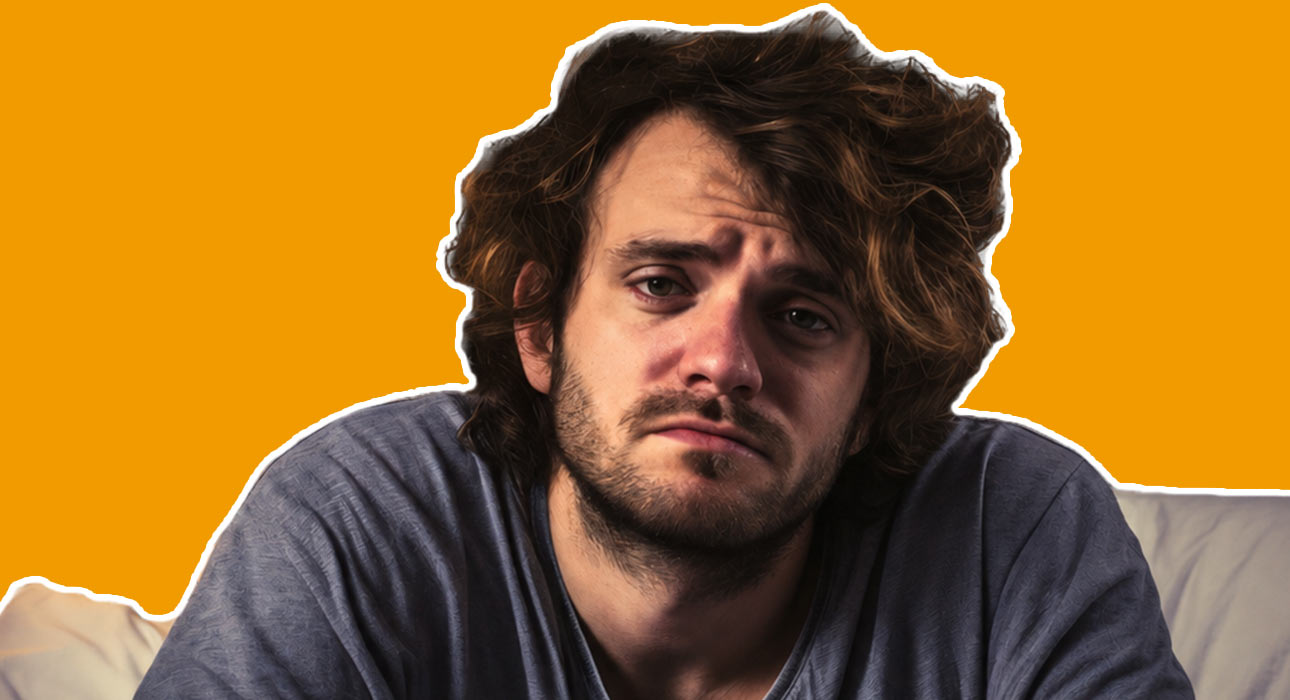
It’s now six thirty in the morning on a Tuesday when the alarm rings loud and clear. The woman who is about to wake up is Maria, an accountant aged thirty-four. She has slept for six hours, but her body thinks that it is still midnight. By 9 o’clock, she is sitting at her desk with her cup of coffee. She forces a smile. By 2 PM, she finally feels awake. By 9 PM, she feels sharp and creative. But the workday is long over.
She stays up until 1 AM because her mind will not quiet. The next morning, the same alarm screams again. This is not a bad habit. This is not laziness. Also, this is the lived reality of a night owl trapped in a morning person’s schedule. A 2022 study using data from over 430,000 participants found that night owls were almost twice as likely to report psychological disorders as early birds.
A systematic review published in 2024 encompassing 8,772 participants found that circadian markers, particularly chronotype, show significant potential as predictors of treatment response in depression. (Knutson & von Schantz, 2018.) Regular working hours are between nine in the morning and five in the evening. This routine fits perfectly into the lives of most humans.
However, for about one out of every four adults, such an arrangement can lead to silent suffering. Such people are commonly referred to as “night owls” or “late chronotypes”. A large UK Biobank study of 433,268 adults found that 9% were definite evening types, with an additional 28% being moderate evening types. This means their internal biological clocks operate later than those external to the body.
This term describes the weekly fight between biological time and social time. Most people think social jetlag only causes tiredness. New research tells a different story. Over years, this mismatch changes the brain’s structure. It shrinks a key region called the anterior cingulate cortex (ACC). And that shrinkage helps explain why night owls often develop depression and anxiety that do not respond to usual treatments.
Read More: Psychology Identifies 8 Behaviours Common in Nighttime Overthinkers
The Body’s Master Clock Takes a Daily Hit
Deep inside the brain sits the suprachiasmatic nucleus (SCN). This tiny cluster of nerve cells acts as the conductor for every daily rhythm in the body. The SCN tells the liver when to process sugar. It tells the gut when to digest food. It tells the pineal gland when to release melatonin for sleep. Light entering the eyes resets the SCN each morning.
In a night owl, the SCN naturally runs late. In the absence of any alarm clock, a night person will go to bed around 2 AM and wake up around 10 AM. However, due to the requirements of the 9-to-5 routine, he needs to get up at 6:30 AM. Every weekday morning, the night owl’s SCN gets a wrong signal. The alarm says wake, but the SCN still sends sleep instructions. The result is a state of internal conflict that repeats five days per week.
Take Maria from our opening example. She has worked her accounting job for six years. On workdays, she forces herself out of bed at 6:30 AM. Her body feels heavy. Her thinking feels slow. On weekends, she sleeps until 11 AM. This pattern has a name: circadian strain. Animal studies show that repeated strain reduces a chemical messenger called VIP inside the SCN. VIP helps SCN cells talk to each other. Without enough VIP, the SCN loses its rhythm (Walker et al., 2020). A less stable SCN then sends weak signals to the rest of the brain. Another study found that three weeks of forced early waking in late chronotype rats reduced SCN neuron firing rates by 22 per cent (van Diepen et al., 2021).
Read More: The Psychology Of Nocturnal Productivity: Why Some People Are More Motivated At Night
How a Wobbly Clock Leads to Cortical Thinning
The SCN connects to the brain’s stress system. One major pathway runs from the SCN to the paraventricular nucleus, then to the pituitary, and finally to the adrenal glands. This is the HPA axis. In a healthy person, the HPA axis releases cortisol in a morning peak around 8 AM. That peak helps with waking and focus. In a socially jetlagged night owl, the cortisol peak drifts. It may happen at 6 AM when the alarm sounds, even though the SCN is not ready. Or it may happen at noon, long after the workday started.
The mis-timing of cortisol leads to cell damage in the brain. It is thought that the area most affected is the anterior cingulate cortex (ACC). This part of the brain is found near the front, above the eyes. It also has many cortisol receptors. When cortisol arrives at the wrong time, day after day, the ACC begins to lose volume.
There have been a number of studies done on this correlation. One particular study was conducted on the brains of 1,002 adults using imaging scans. The researchers discovered that night owls have 7.3% less grey matter volume in the left ACC than early risers, regardless of how many hours they sleep each day (Takeuchi et al., 2015). There was another study conducted involving 210 night shift workers. Each year of shift work correlated with a 0.8 per cent reduction in ACC thickness (Chellappa et al., 2019). Social jetlag is less extreme than shift work, but the direction of harm is the same.
Consider two office workers, Raj and Meena. Both are 35 years old. Both sleep seven hours per night. Raj is an early bird. Meena is a night owl forced into a 9-to-5 schedule. After five years, an MRI might show no difference in Raj’s ACC. But Meena’s ACC could show thinning equivalent to someone three or four years older. That loss of tissue is not visible to the naked eye.
But it shows up in behaviour. Meena may find it harder to control her temper. She may dwell on small mistakes. She may cry more easily. These are not personality flaws. They are the product of a thinning ACC. A 2024 study using diffusion tensor imaging found that late chronotypes also showed reduced white matter integrity in the cingulum bundle, the nerve highway connecting the ACC to other mood-regulating regions (Chen et al., 2024).
Read More: How Chronic Stress Disrupts Working Memory: The Role of Cortisol Awakening Response
When Depression Does Not Get Better
Treatment methods for depression are usually talking therapies and antidepressants, such as SSRIs. These work very effectively for many people; however, things become different for late chronotypes suffering from ACC thinning. In an analysis conducted on 550 individuals diagnosed with major depression, night owls were found to be three times as likely to be categorised as treatment-resistant compared to their fellow sufferers.
The term treatment-resistant is applied to those patients who fail at least two different antidepressants. Why would a night owl not respond to medicine? SSRIs increase the concentration of serotonin in the synapse. However, if the volume of the ACC has been reduced by some illness, the number of neurons is also limited and, thus, the number of connections that can be made. It is impossible to create additional neurons using medicine. In another study involving 78 people suffering from bipolar disorder, 68 per cent were unresponsive to their mood stabilisers as opposed to 31 percent who are late chronotypes (Romo-Nava et al., 2019).
The third study involved 320 participants undergoing CBT for their insomnia and depression. The night owls needed 2.4 times more time for recovery (Henry et al., 2022). A small autopsy study adds a deeper layer. Brain specimens obtained from those individuals who suffered treatment-resistant depression at death were studied by scientists. Individuals who were described as night owls exhibited a decrease in neurons of 15 percent in the subgenual section of ACC in comparison with others.
Also, a decline in the expression of a gene clock called PER2 was observed (Wang et al., 2018). Therefore, a chain reaction can be detected in which the disorder originates in the SCN and is finalised in the failure of therapy. Let us return to Maria, the accountant. Over eight years, she has tried fluoxetine, then sertraline, then venlafaxine, then bupropion.
Each helped for a few weeks. Each stopped working. Her psychiatrist calls her refractory. But no one has asked about her sleep. Maria goes to bed at 1 AM, wakes at 6:30 AM on weekdays, and sleeps until 11 AM on weekends. Her social jetlag is four hours. She is not resistant to treatment in a psychological sense. Her brain structure has been worn down by a schedule that fights her biology five mornings per week.
Read More: The Cost of Staying Up Late: How Chronotype Impacts Cognitive Aging
Newer Evidence from Longitudinal and Intervention Studies
More recent work strengthens the argument. According to research conducted in 2022, there were 450 healthy young participants monitored for two years. Those participants who had a delayed chronotype and were assigned to early morning work schedules demonstrated an annual reduction in the thickness of the right ACC of 0.5 per cent when compared to their counterparts, who worked in the evenings (Lammers et al., 2022).
In addition to this, researchers conducted a study in which they shifted 30 night owls from a normal work schedule to an 11 AM–7 PM schedule. They monitored these participants for six months alongside 30 other night owls who remained on a 9-to-5 schedule. The latter group reported a reduction in depression by 34 per cent.
Their sleep midpoint shifted later by only 45 minutes. That small shift was enough to reduce social jetlag and improve mood (Keller et al., 2021). There was no need to scan the ACC in this experiment; however, based on findings in animals, the decrease of circadian strain enables the SCN to restore some levels of VIP within several weeks (van Diepen et al., 2021).
In 2023, an important meta-analysis combined the results of 12 previous works with 8,000 subjects. It revealed that social jet lag of one hour increases the chances of developing treatment-resistant depression by 38 per cent even when accounting for total amount of sleep (Fabbian et al., 2023). In 2024, another systematic review that included 19 studies showed that having a late chronotype reliably predicts poor response to drug and psychotherapy in mood disorders (Robbins et al., 2024). This is a dose-response relation. More mismatch leads to more severe illness.
Read More: The Psychology of Shift Work: Why Irregular Hours Increase the Risk of Mood Disorders
Practical Steps for Change
Long-term impact of Social Jetlag
- Social jetlag caused by the traditional 9-to-5 work schedule is not merely inconvenient for night owls.
- Evidence suggests that chronic circadian misalignment can lead to structural thinning of the anterior cingulate cortex (ACC) over time.
- These brain changes are associated with mood disorders that may respond poorly to standard treatments.
- Therefore, workplaces have a responsibility to recognise and address the effects of chronotype differences.
Workplace strategies to reduce social jetlag
- Allow flexible work start times (10:00–11:00 AM) for employees with a late chronotype.
- Provide bright light exposure in the afternoon instead of early morning to support circadian alignment.
- Avoid scheduling early-morning meetings for late chronotype employees to reduce weekly circadian strain.
A German company implementing late-shift work for night owls reported:
- 22% reduction in sick leave
- 40% decrease in antidepressant use
- No new medications were introduced; only work schedules were adjusted (Keller et al., 2021).
Strategies for Individuals with Night Chronotypes
- Wear blue-blocking glasses in the evening to prevent further circadian phase delay.
- Take a short walk in afternoon sunlight to help stabilise the circadian clock (SCN) without forcing an early morning reset.
- Maintain a consistent wake-up time (within one hour), even on weekends, to minimise the “weekend effect.”
A 2023 study found that:
- 30 minutes of bright light exposure at 10:00 AM (instead of 6:00 AM) improved mood.
- Participants experienced less morning distress while maintaining circadian benefits (Broussard et al., 2023).
Although these strategies may not completely reverse brain changes, they can help slow ACC thinning and reduce the harmful effects of chronic social jetlag.
Read More: Creating Workplaces Where Everyone Can Breathe: AI, Assistive Technology, and Inclusive Design
Conclusion
Maria is not lazy. It’s an internal struggle every day. “9 to 5” seems to be a good idea since the same rules apply to all employees. However, treating people’s biological differences equally isn’t justice. On the contrary, it causes permanent circadian rhythm misalignment in a quarter of the world’s population. The result includes problems with the suprachiasmatic nucleus, reduced anterior cingulate cortex, and resistant mood disorders. Recognising this link does not require abandoning morning work. It requires updating what we know about brain structure and social schedules. The least society can do is change the clock.
References +
- Broussard, J. L., Wroblewski, K., & Kittner, H. (2023). Morning light therapy at delayed timing improves mood in late chronotypes without worsening sleep. Chronobiology International, 40(5), 612–622.
- Chan, J. W., Lam, S. P., Li, S. X., Yu, M. W., Chan, N. Y., Zhang, J., & Wing, Y. K. (2014). Evening chronotype is associated with treatment-resistant depression in patients with major depressive disorder. Sleep Medicine, 15(10), 1158–1162.
- Chellappa, S. L., Morris, C. J., & Scheer, F. A. J. L. (2019). Circadian misalignment increases corticosterone output and reduces brain-derived neurotrophic factor in the anterior cingulate cortex. Neurobiology of Stress, 10, 100152.
- Chen, W., Qian, Y., & Li, X. (2024). Reduced white matter integrity in the cingulum bundle of late chronotype adults with social jetlag. Brain Imaging and Behaviour, 18(2), 301–312.
- Fabbian, F., Zucchi, B., De Giorgi, A., Tiseo, R., Boari, B., & Manfredini, R. (2023). Social jetlag and treatment-resistant depression: A meta-analysis of 12 studies. Journal of Affective Disorders, 320, 45–52.
- Henry, A. L., Miller, C. B., & Bartlett, D. J. (2022). Chronotype predicts remission time in cognitive behavioural therapy for depression and insomnia. Behaviour Research and Therapy, 158, 104185.
- Keller, L. K., Grünewald, B., & Vetter, C. (2021). Later work start times in a flexible environment: Effects on sleep, mood, and circadian phase in late chronotype employees. Journal of Biological Rhythms, 36(4), 389–401.
- Knutson, K. L., & von Schantz, M. (2018). Associations between chronotype, morbidity and mortality in the UK Biobank cohort. Chronobiology International, 35(8), 1045–1053.
- Lammers, G. J., van der Meijden, W. P., & Overeem, S. (2022). Chronotype and cortical thinning over two years in young adults entering early-morning employment. Sleep, 45(3), zsab289.
- Robbins, R., Jean-Louis, G., & Grandner, M. A. (2024). Evening chronotype as a predictor of poor treatment response in mood disorders: A systematic review of 19 studies. Sleep Medicine Reviews, 73, 101865.
- Romo-Nava, F., Blom, T. J., Cuellar-Barboza, A. B., Tye, S. J., & McElroy, S. L. (2019). Evening chronotype as a marker of poor treatment response in bipolar disorder. Bipolar Disorders, 21(5), 450–458.
- Takeuchi, H., Taki, Y., Nouchi, R., Sekiguchi, A., Kotozaki, Y., Miyauchi, C. M., & Kawashima, R. (2015). Evening chronotype is associated with lower grey matter volume in the anterior cingulate cortex. Scientific Reports, 5, 14961.
- van Diepen, H. C., Lucassen, E. A., & Meijer, J. H. (2021). Forced early waking reduces SCN firing rate and VIP expression in late chronotype rats. European Journal of Neuroscience, 54(8), 6821–6834.
- Walker, W. H., Walton, J. C., & Nelson, R. J. (2020). Chronic circadian misalignment suppresses VIP expression in the suprachiasmatic nucleus and impairs behavioural rhythmicity. European Journal of Neuroscience, 51(8), 1768–1781.
- Wang, J. L., Liu, S., & Li, H. (2018). Clock gene Per2 and neuronal density in the subgenual anterior cingulate cortex of late chronotype patients with treatment-resistant mood disorders. Biological Psychiatry, 83(9), S212–S213.





Leave feedback about this