







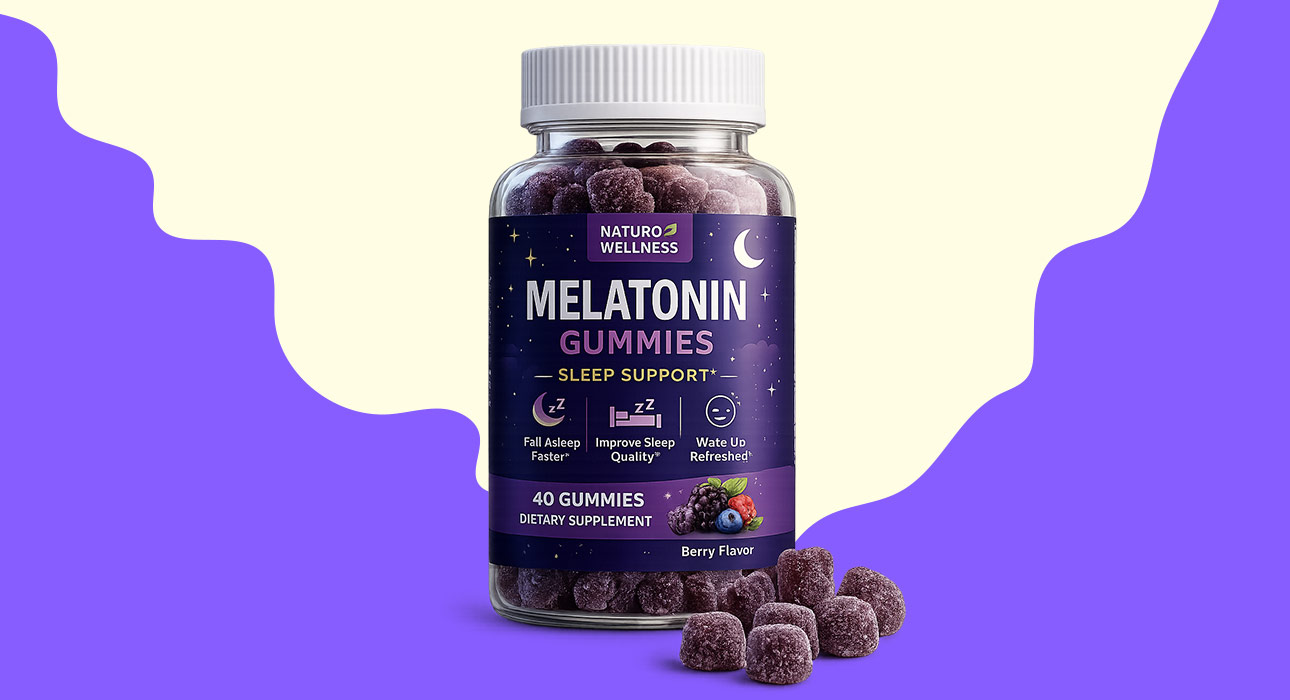
You can now find melatonin gummies at nearly every pharmacy, as consumer-grade sleep medication packaging almost emulates prescription packaging using phrases like “clinically tested,” “deep sleep formula,” and “fall asleep faster, wake up refreshed.” The global melatonin supplements market was valued at $5 billion in 2023. The actual question is whether sleeping consumers or the common consumer problem of sleep, really, of worse sleep, or worse sleep solutions or just what’s more? Furthermore, how can individuals be motivated to take action when they are mentally exhausted and overstressed? How has the wellness industry successfully marketed shortcuts as self-care?
Read More: The 11 P.M. Amygdala: Why Your Rational Brain Sabotages Sleep Every Night
What Melatonin Really Does and Doesn’t Do
Melatonin, from the brain, is a hormone naturally produced by the pineal gland in response to darkness. It tells the body that it is time to sleep. It also has legitimate use as a supplement in certain situations: when sleeping later than usual due to shift work, when travelling around the world causes time changes, and when a person with a delayed sleep phase wants to sleep before their body tells them to (Ferracioli-Oda et al., 2013). For these targeted uses, the research is reasonably solid.
One thing melatonin doesn’t do, and most product packaging suggests otherwise, is actually address the underlying causes of poor sleep. Chronic sleep disruption is attributable to diminished melatonin levels, heightened stress, excessive screen exposure, irregular sleep schedules, anxiety, or suboptimal sleep practices. Cognitive-behavioral therapy for insomnia (CBT-I) is a systematic psychological intervention. It has been shown to provide long-lasting benefits for improving sleep.
Also, it is currently the established treatment for chronic insomnia (Morgenthaler et al., 2006). It requires time, diligence, and perseverance. The idea of sleep is a complex one. Sleep health has been conceptualised as a multidimensional phenomenon that includes sleep duration, continuity, timing, efficiency, and satisfaction (Buysse, 2014). A gummy that helps someone feel they have “done something” about their sleep may actually delay the moment when they address what is genuinely disrupting it.
Read More: The Language of Dreams: Symbols, Archetypes, and The Science of the Sleeping Brain
The Health Belief Model: Why the Gummy Wins
One of the most popular models in health psychology used to explain health processes or lack of processes is the Health Belief Model (HBM) (Becker, 1977). This suggests that the likelihood of engaging in health action is based on several key beliefs: the severity of the problem, sensitivity, effectiveness of the response, and barriers to response.
Apply this model to the melatonin gummy purchase, and the psychology becomes immediately clear. A person who has been sleeping badly for weeks perceives the threat as high; they feel the seriousness of fatigue in every part of their day. The perceived benefit of the gummy is high: the packaging promises results, the reviews confirm them, and the product is available within minutes. The perceived barrier is almost zero: it costs less than a therapy session, requires no prescription, involves no lifestyle change, and takes three seconds to consume (Jones et al., 2014).
Compare this to CBT-I: a multi-week program that requires keeping sleep diaries, resisting the urge to nap, getting out of bed when you cannot sleep, and actively working against ingrained habits. The perceived benefit may be equal or higher, but the perceived barrier is enormous. Under the HBM, the gummy wins almost every time, not because it is more effective, but because it is psychologically easier to choose.
Read More: The Psychology and Neuroscience of Sleep Deprivation in Modern Society
Persuasion Theory and the Shortcut to Yes
The way melatonin gummies are marketed is not accidental. This is the most advanced application of the science of persuasion. Petty and Cacioppo formulated the Elaboration Likelihood Model (ELM), positing that individuals digest persuasive communications via two pathways: the central route, characterised by meticulous and strenuous assessment of evidence, and the periphery route, marked by a more cursory and less rigorous appraisal. The peripheral path employs cognitive shortcuts termed “heuristics” and depends on surface indicators like attractiveness, authority, and social validation (Petty & Cacioppo, 1986).
When most people watch a melatonin gummy ad, they’re not doing it through the central processing route. They are tired, they are preoccupied, they are looking for an escape. Then comes peripheral processing. The colourful packaging, the friendly font, the cherry flavour, the “#1 recommended by pharmacists” badge, the before-and-after testimonials- none of these require careful analysis. They simply feel reassuring (Slovic et al., 2007). And when you are exhausted at 11 pm scrolling your phone, “feels reassuring” is often enough to convert a browser into a buyer. “The melatonin gummy does not sell sleep. It sells the feeling of having tried, and in a world of overwhelmed, time-poor people, that feeling has enormous market value.”
Social proof is another powerful lever. Online reviews, influencer endorsements, and visible purchase numbers all signal that “everyone is doing this.” Boyland et al. concluded that advertising for health-related products has a significant impact on purchasing behaviour, even when consumers express scepticism about the claims (Boyland et al., 2016). Algorithms reward engagement, not accuracy, leading to an increase in the influence of wellness information on social media.
Read More: How Sleep Shapes Mental Health: A Psychological Perspective
Shortcut mindset: buying growth instead of doing it
There is a broader psychological pattern worth naming here. Melatonin gummies are one example of a wider cultural tendency to purchase solutions to problems that actually require sustained personal investment. Productivity apps instead of developing focus. Detox teas instead of changing eating habits. Sleep gummies instead of addressing anxiety or screen time. The purchase creates a sense of action, and that sense of action temporarily relieves the discomfort of the problem, without actually resolving it.
BJ Fogg’s behaviour model is useful here. Fogg argues that behaviour occurs when motivation, ability, and a prompt converge at the same moment (Fogg, 2009). Melatonin gummies score highly on all three: the motivation is high (poor sleep is acutely uncomfortable), the ability is high (the product is easy to obtain and use), and the prompt is constant (social media, pharmacy placement, influencer content). CBT-I, by contrast, is high motivation, low ability in terms of ease, and low prompt in daily life. The asymmetry is striking.
What this creates at a psychological level is what might be called purchased progress. The illusion of self-improvement through consumption rather than through change. The person who buys the gummy has not made themselves a better sleeper. But by feeling like they’re trying, they’ve created enough discomfort to avoid doing more. The goal serves as a psychological safety valve, allowing the real problem to persist.
Read More: How Emotional Stress Affects Sleep: Insights from Neuroscience Research
Consumer awareness and mental health implications
All of this doesn’t necessarily mean that melatonin gummies are hazardous in all situations. If a person has difficulty travelling across time zones and has jet lag or occasional sleep disruptions, a low-dose melatonin supplement for the short term is an acceptable tool. The problem is not the product. The issue is that the product doesn’t align well with its intended outcomes, especially its psychological effect on people when they are bored and unsuspecting.
From a mental health perspective, chronic sleep disruption is not just a sleep disorder. It is almost always associated with anxiety, low mood, stress, or lifestyle issues that are beyond the patient’s control. People who use melatonin for long periods of time may unknowingly delay discussing with a doctor or therapist the use of the medication that is causing the problem. The gummy keeps them functional enough not to seek more meaningful help (Bechtoldt & Schneider, 2016).
For psychologists, educators, and health communicators, the melatonin gummy phenomenon is a reminder that health behaviour is rarely rational. It is emotional, social, and contextual and can be strongly influenced by the way in which choices are given and who provides them. This is not just bookish teaching. It is the foundation of building health communication that actually works communication that meets people where their psychology is, rather than where we wish it were.
Read More: Jet-Lagged Minds: How Frequent Travel Disrupts Sleep, Mood, and Mental Clarity
Conclusion
The Melatonin gummies boom is not primarily a story about sleep science. It is a story about human psychology under pressure. This discussion focuses on HBM in action, the act of pushing a shopping cart, and an industry that has perfected the technique of substituting human fatigue with a continuous flow of cash through shortcuts.
But if you are a better-informed consumer, don’t discount all supplements or all health products. Before making a purchase, it is a valid question to consider: Does one truly need a cure for their problem, or are they simply buying into their current feelings? In the case of poor sleep, that question is worth losing a few minutes of scrolling time to sit with. The answer might be more useful than the gummy.
However, if you have been having trouble sleeping for more than a few weeks, it may be more helpful to talk to a doctor, psychologist, or sleep specialist than anything found in the pharmacist’s bestseller. Behaviours, environments, and occasionally clearing the way for your brain contribute to the development of sleep health, enabling your body to rest. That work is harder than opening a packet. It is also considerably more likely to last.
Read More: The Psychology of Sleep Disorders: Causes, Symptoms & Treatment
References +
- Bechtoldt, M. N., & Schneider, V. K. (2016). Predicting stress from the ability to eavesdrop on feelings: Emotional intelligence and testosterone jointly predict cortisol reactivity. Emotion, 16(6), 815–825. https://doi.org/10.1037/EMO0000134
- Becker, M. H. (1977). The Health Belief Model and Sick Role Behaviour. Health Education & Behaviour, 2(4), 409–419. https://doi.org/10.1177/109019817400200407;WEBSITE:WEBSITE:SAGE;REQUESTEDJOURNAL:JOURNAL:HEBA;WGROUP:STRING:PUBLICATION
- Boyland, E. J., Nolan, S., Kelly, B., Tudur-Smith, C., Jones, A., Halford, J. C. G., & Robinson, E. (2016). Advertising as a cue to consume: a systematic review and meta-analysis of the effects of acute exposure to unhealthy food and nonalcoholic beverage advertising on intake in children and adults. The American Journal of Clinical Nutrition, 103(2), 519–533. https://doi.org/10.3945/AJCN.115.120022
- Buysse, D. J. (2014). Sleep Health: Can We Define It? Does It Matter? Sleep, 37(1), 9–17. https://doi.org/10.5665/SLEEP.3298
- Ferracioli-Oda, E., Qawasmi, A., & Bloch, M. H. (2013). Meta-Analysis: Melatonin for the Treatment of Primary Sleep Disorders. PLOS ONE, 8(5), e63773. https://doi.org/10.1371/JOURNAL.PONE.0063773
- Fogg, B. (2009). A behaviour model for persuasive design. ACM International Conference Proceeding Series, 350. https://doi.org/10.1145/1541948.1541999;WGROUP:STRING:ACM
- Jones, C. L., Jensen, J. D., Scherr, C. L., Brown, N. R., Christy, K., & Weaver, J. (2014). The Health Belief Model as an Explanatory Framework in Communication Research: Exploring Parallel, Serial, and Moderated Mediation. Health Communication, 30(6), 566. https://doi.org/10.1080/10410236.2013.873363
- Morgenthaler, T., Kramer, M., Alessi, C., Friedman, L., Boehlecke, B., Brown, T., Coleman, J., Kapur, V., Lee-Chiong, T., Owens, J., Pancer, J., & Swick, T. (2006). Practice Parameters for the Psychological and Behavioural Treatment of Insomnia: An Update. An American Academy of Sleep Medicine Report. Sleep, 29(11), 1415–1419. https://doi.org/10.1093/SLEEP/29.11.1415
- Petty, R. E., & Cacioppo, J. T. (1986). The Elaboration Likelihood Model of Persuasion. Advances in Experimental Social Psychology, 19(C), 123–205. https://doi.org/10.1016/S0065-2601(08)60214-2
- Slovic, P., Finucane, M. L., Peters, E., & MacGregor, D. G. (2007). The affect heuristic. European Journal of Operational Research, 177(3), 1333–1352. https://doi.org/10.1016/J.EJOR.2005.04.006




Leave feedback about this