








Interventions like medication, psychotherapy, and even electroconvulsive therapy (ECT) sometimes fail to provide lasting relief for individuals living with Major Depressive Disorder. And it happens for roughly 30% of individuals living with depression. This condition is known as treatment-resistant depression (TRD).
It leaves the patient with a feeling of “stuckness” and a constant questioning of what’s next. Emerging research from institutions like UT Southwestern Medical Centre and UCSF, however, tells a different story. It suggests that Deep Brain Stimulation (DBS) may offer a “second chance” for those who have exhausted all other options (Hitti, 2026; UCSF, 2026).
What Is Deep Brain Stimulation?
It involves surgically implanting thin wire electrodes into specific brain regions. And it is connected to an Implantable Pulse Generator (IPG) placed under the skin near the collarbone. It acts much like a cardiac pacemaker, where the IPG delivers continuous, low-level electrical pulses to modulate abnormal neural activity (Abbott, 2025). While DBS is a well-established therapy for movement disorders like Parkinson’s disease, its application in psychiatry targets the brain’s “mood circuits” rather than motor pathways.
The Target: Area 25 and the Subcallosal Cingulate
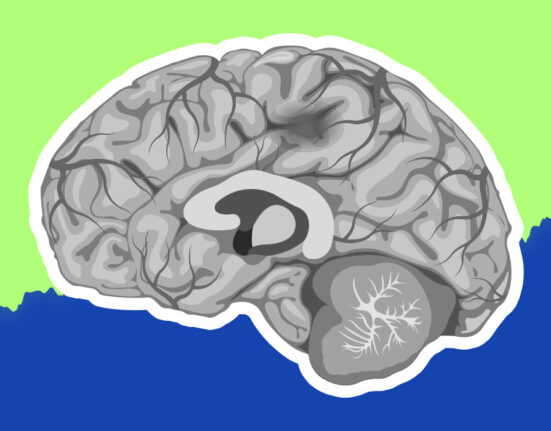
Unlike Parkinson’s treatment, which targets grey matter, DBS for depression focuses on the Subcallosal Cingulate White Matter (SCCwm), also known as Brodmann Area 25. This region acts as a critical junction in the brain’s communication network, linking areas responsible for mood, motivation, and emotional regulation (Hitti, 2026).
In patients with TRD, Area 25 often shows pathological overactivity. By delivering targeted stimulation to the surrounding white matter, DBS aims to “recalibrate” the flow of information. Researchers emphasise that this process is gradual; unlike the near-instant relief seen in motor disorders, mood improvement in depression unfolds over weeks or months as neural pathways are slowly “unstuck” (Hitti, 2026; BMJ Mental Health, 2025).
The Evidence: Efficacy and Long-Term Hope
Early trials used to provide mixed results. But now this narrative is slowly changing due to long-term follow-up data. A landmark study published in The American Journal of Psychiatry observed patients over eight years, reporting that three-quarters of participants maintained a robust antidepressant response (Crowell et al., 2019).
Recent clinical trials are further refining this precision:
- The TRANSCEND Trial: A multi-centre study evaluating the Infinity™ DBS system. It utilises a “delayed-stimulation” design, where a control group remains “blinded” with the device turned off for 12 months to rigorously measure the true effect of stimulation against the placebo effect (Abbott, 2026; CenterWatch, 2026).
- The Presidio Trial: Researchers at UCSF are investigating “closed-loop” DBS. This personalised approach detects specific brain signals associated with an individual’s depression and delivers stimulation only when needed, rather than constantly (UCSF, 2026).
Helping the Brain Help Itself
A common misconception is that DBS “forces” a patient to feel happy. Clinical experts clarify that the goal is to lower the biological “floor” of the depressive episode. By reducing the heavy biological weight of TRD, DBS allows patients to re-engage with therapy and meaningful life activities—tools that were previously inaccessible due to the severity of their illness (Hitti, 2026; Neuroscience News, 2026).
The Road Ahead
As we stand on this frontier, psychiatry is moving toward an era of precision neuromodulation. However, the path requires caution. DBS involves invasive neurosurgery. It is currently employed only for those who have failed at least four different antidepressant treatments (Studypages, 2026). If current trials continue to demonstrate safety and efficacy, DBS could become a standardised, life-saving option within the next five years. For the millions trapped in the silence of TRD, the “brain pacemaker” represents the possibility of finally feeling like themselves again.
Read More: Widely Used Antidepressant Shows Symptom Relief in Just Two Weeks
References +
Abbott. (2025). TRANSCEND study: Treatment-resistant depression subcallosal cingulate network DBS. Neuromodulation.Abbott. https://www.neuromodulation.abbott/us/en/campaigns/transcend-study.html
Abbott. (2026, March 12). Treatment ResistAnt Depression Subcallosal CingulatE Network DBS (TRANSCEND) (ClinicalTrials.gov Identifier: NCT06423430). https://clinicaltrials.gov/study/NCT06423430
BMJ Mental Health. (2025, February 27). Lack of neuropsychological effects following short-term subcallosal cingulate gyrus deep brain stimulation in treatment-resistant depression: A randomised crossover study. https://mentalhealth.bmj.com/content/28/1/e301408
CenterWatch. (2026, March 12). Treatment-resistant depression subcallosal cingulate network DBS (TRANSCEND) | Clinical research trial listing. https://www.centerwatch.com/clinical-trials/listings/NCT06423430/
Crowell, A. L., Riva-Posse, P., Holtzheimer, P. E., & Mayberg, H. S. (2019). Long-term outcomes of subcallosal cingulate deep brain stimulation for treatment-resistant depression. The American Journal of Psychiatry, 176(11), 949–956. https://doi.org/10.1176/appi.ajp.2019.18121427
Hitti, F. (2026, March 24). Exploring deep brain stimulation to manage treatment-resistant depression. UT Southwestern Medical Centre MedBlog. https://utswmed.org/medblog/deep-brain-stimulation/
Mount Sinai. (2019, October 4). Long-term study data show DBS is an effective treatment for the most severe form of depression. ScienceDaily. https://www.sciencedaily.com/releases/2019/10/191004074901.htm
Neuroscience News. (2026, March 28). Can deep brain stimulation unlock treatment-resistant depression? https://neurosciencenews.com/dbs-treatment-resistant-depression-30409/
Studypages. (2026). Deep brain stimulation for treatment-resistant depression: The TRANSCEND study. https://studypages.com/s/deep-brain-stimulation-for-treatment-resistant-depression-988224/
UCSF Clinical Trials. (2026, March 4). Closed-loop deep brain stimulation for major depression (PReSiDio). University of California, San Francisco. https://clinicaltrials.ucsf.edu/deep-brain-stimulation


Leave feedback about this