







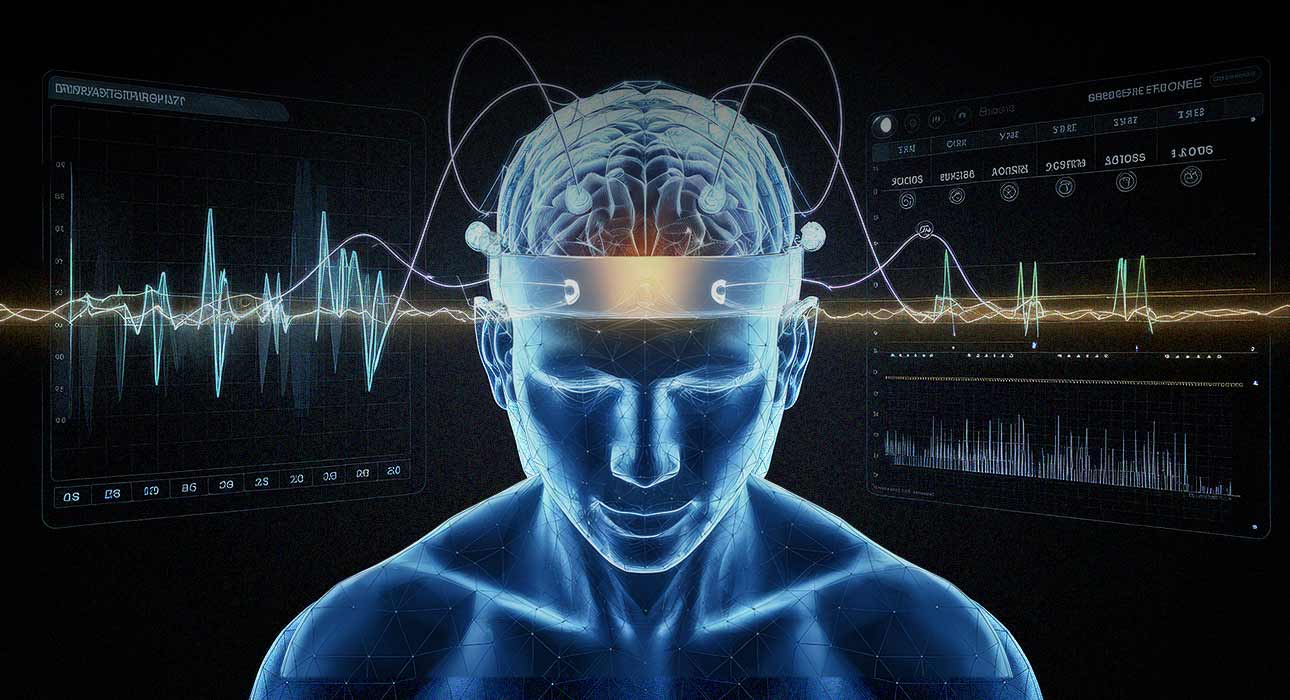
For many families, the diagnosis of epilepsy is slow and ambiguous because seizures caused by abrupt spikes in electrical activity do not typically show up during a standard 20-minute EEG test. This study is significant because it demonstrates how artificial intelligence (AI) can interpret “hidden” patterns in EEG recordings and identify early indicators of epilepsy even in the absence of a seizure. This could lead to earlier, more precise, and less stressful diagnoses, particularly for youngsters.
In this study, researchers from Nemours Children’s Health and the University of Delaware investigated whether a machine-learning system could detect minute EEG irregularities associated with a hereditary form of epilepsy in mice. The first issue they tackle is the diagnostic bottleneck, which frequently requires medical professionals to wait for a seizure. This will lead to a delay in treatment and cause significant anxiety in patients and families.
Understanding the Main Theme
The main idea of this research is that the brain’s background electrical activity, its “baseline” rhythms, contains meaningful clues about epilepsy, even when no seizures are present. Instead of looking for obvious seizure spikes, the AI model learns the everyday waveform “language” of the brain and then identifies patterns that differ in animals with epilepsy‑related gene changes.
Epilepsy is often linked to genetic factors, such as mutations in the TSC1 gene, which can alter how groups of neurons fire and communicate. The researchers treat the EEG like a foreign language: the algorithm first discovers which small wave shapes repeat frequently, then uses these as “words” to understand whether a brain is typical or carries an epilepsy‑related genotype.
Research Details
Before going on to human patients, this proof-of-concept investigation was conducted on mice. Over forty mice from three distinct genetic strains had multi-day EEG data taken by the team; some of the mice had a mutation in the TSC1 gene that causes epilepsy, while others did not.
The researchers focused solely on baseline activity and extracted EEG segments free of seizures from five days of data per mouse. They used a machine‑learning framework called a “bag‑of‑waves” classifier: the algorithm builds a customised dictionary of short EEG waveforms that best represent each genotype, then counts how often each waveform type occurs and feeds these counts into logistic regression models to predict genotype.
Along with collaborators like Maria Isabel Cano Achuri and others, Drs. Austin Brockmeier (electrical and computer engineering, University of Delaware) and Amanda Hernan (psychological and brain sciences, UD, and Nemours Children’s Health) oversaw the work, which was published in the Journal of Neural Engineering. They are currently using the same method for shorter EEGs from kids being assessed for epilepsy at Nemours Children’s Health with funding from the Delaware Clinical and Translational Research ACCEL Program.
Major Findings
The AI system was able to reliably detect differences in EEG patterns linked to both mouse strain and epilepsy genotype using only seizure‑free baseline activity. For predicting mouse strain, the waveform‑dictionary method reached about 70% accuracy, clearly better than chance (38%).
For two of the three mouse strains (DBA2 and C57B6), the classifiers could correctly identify the epilepsy‑related TSC1 knockout genotype with accuracies of about 86% and 67%, even though none of these mice showed visible seizures in their EEGs. These results suggest that neurological changes associated with epilepsy leave a measurable “signature” in everyday brain rhythms long before obvious seizures appear.
Compared with a state‑of‑the‑art time‑series classifier (Hydra), the bag‑of‑waves method had slightly lower raw accuracy but offered much better interpretability, meaning researchers could see which types of waveforms were driving the predictions. Clinically, the most important change is not a specific behaviour but the ability to detect risk earlier and more objectively, which can directly affect when and how treatment is started.
Authors’ Perspective
The researchers interpret these findings as strong evidence that EEG waveforms can act as interpretable biomarkers for epilepsy‑related genotypes. They argue that a bag‑of‑waves approach provides a transparent way to link specific waveform patterns to underlying genetic and neurological differences, bridging the gap between basic neuroscience and clinical decision‑making.
From their perspective, this work is a step toward precision medicine: “brain‑wave typing” could help doctors identify which interventions are likely to work best for particular patients and avoid misjudging treatment effects during natural seizure lulls. They also emphasize the emotional impact—objective biomarkers could reduce the intense anxiety seen in families while waiting for a diagnosis or wondering if a new medication is truly working.
In the future, the authors hope to expand their pattern-recognition technology to wearable EEG devices and possibly to improve similar disorders like autism and ADHD, where minute changes in brain rhythms may also be useful. They stress that it is difficult to translate the technique from lengthy mice records to brief pediatric EEGs, but they are still hopeful that reliable indicators can still be identified.
Conclusion
Overall, the study demonstrates that by learning a tailored dictionary of brain waveforms and using these as interpretable indicators of genetic risk, AI may detect early, hidden signs of epilepsy in seizure-free EEG recordings. The technique is currently being explored in children to make epilepsy diagnoses quicker, more accurate, and less emotionally exhausting. In mice, it accurately detects both genetic background and genotypes relevant to epilepsy, even in the absence of overt seizures.
The most important lesson is that routine EEGs may provide significantly more diagnostic information than the human eye can detect. Clinicians can use interpretable AI techniques to access this hidden signal in order to direct earlier intervention and more individualised treatments. Long-term, this strategy might enable ongoing wearable device monitoring and possibly expand to other neurological and developmental conditions causing mild impairment in brain activity.
References +
- News, N. (2026j, June 4). AI Detects Early Epilepsy Signs in EEG Data – Neuroscience News. Neuroscience News. https://neurosciencenews.com/epilepsy-ai-eeg-waveform-30823/
- Schauwecker, P. E. (2011). The relevance of individual genetic background and its role in animal models of epilepsy. Epilepsy Research, 97(1-2), 1–11. https://doi.org/10.1016/j.eplepsyres.2011.09.005


Leave feedback about this