







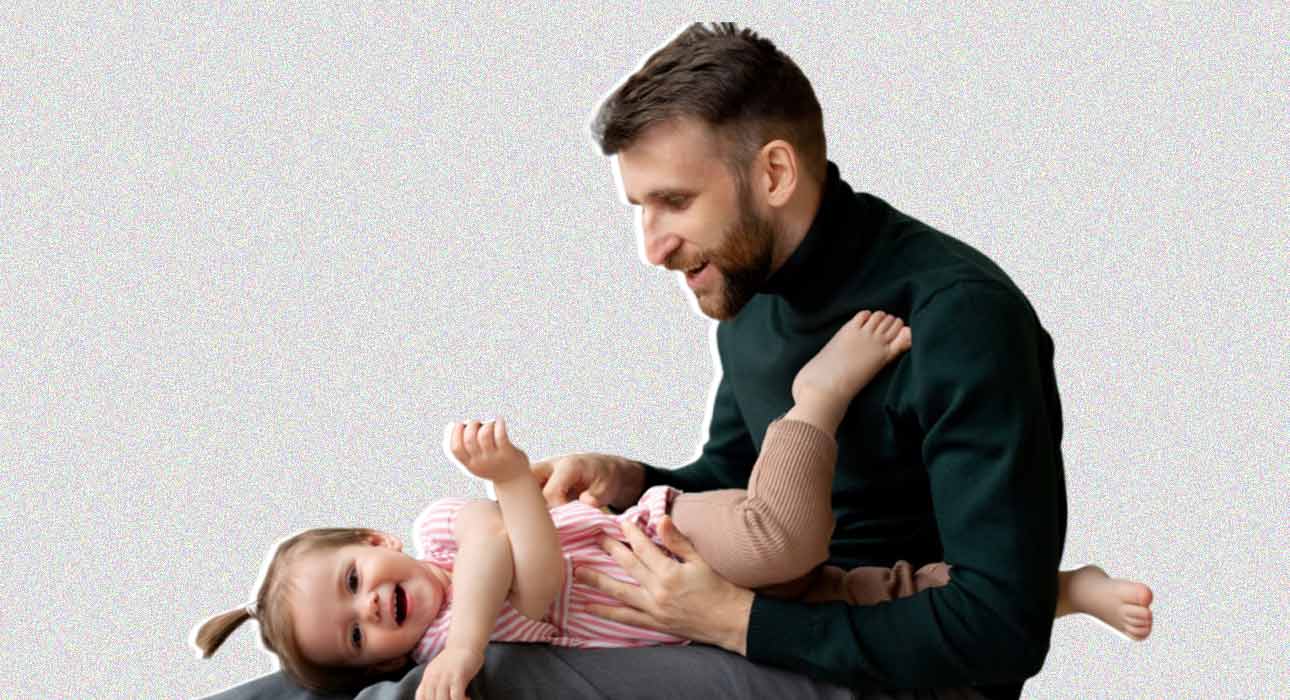
Bonding with their mother is quick for each child. The first human bond that they have is with their mothers, immediately after birth. The mother and child remain inseparable even after birth, primarily because they share the same body as a result of the physiology that entails breastfeeding and other factors that increase their bond. The father’s role is diminished and is seemingly very small throughout the entire period. But it is not that way.
If each one of us tries to recollect whom we go to for permissions, advice or something as simple as whom we meet right after school ends, who puts us to bed at night, etc., the answer to these for most of us would be our mother. Does that mean that our fathers play no role in our development? Through the course of this article, we will debunk this thought process by evaluating multiple reasons, like culture and financial pressure, that distance the bond between a child and their father.
What is attachment?
Attachment is defined as the deep and enduring emotional bond that connects an infant to a primary caregiver. It is a biologically driven, evolutionary need that motivates young children to seek proximity to caregivers for safety, comfort, and survival. These foundational bonds directly influence an individual’s later emotional development, mental health, and adult relationship dynamics (APA, 2018).
Read More: Exploring Human Connection: A Look at Attachment Theory
What is meant by attachment styles?
The theory of attachment, formulated by Bowlby, is a psychological model that looks at how emotional connections to primary caretakers during infancy affect emotional development and can be transferred to other personal and romantic relationships in adulthood, impacting trust, intimacy, and conflict. (Kendra Cherry, 2026)
Psychologist Mary Ainsworth built on Bowlby’s findings to discover four types of attachment. Childhood experiences usually shape these attachment styles, and these styles strongly influence relationship patterns in adulthood. (L. Alan & June Sroufe, 2025) The 4 main attachment styles are the following:
Read More: How Does a Child Develop Attachment Style?
Secure:
- Childhood: The child goes into distress when the caregiver is gone, and when they come back, things are settled, the child understands that they will be taken care of.
- Adult: Happy with intimacy, vulnerability, and independence. They interact effectively with others, know how to handle differences and are trustworthy with partners.
Anxious-Preoccupied:
- Childhood: The child is very distressed when the caregiver leaves and is not easily comforted when the caregiver returns. This is due to inconsistent caregiving.
- Adult: Very close to others and fears being abandoned. They can become clingy, desperate for approval and overanalyse their partner’s behaviour.
Read More: How Childhood Validation Shapes Adult Self-Worth
Dismissive-Avoidant:
- Childhood: The child is not distressed when the caregiver leaves and shows no reaction when the caregiver returns, usually due to the caregiver’s emotional unavailability or rejection.
- Adult: Very independent and may be able to keep feelings bottled up. They are more interested in being independent than in any other aspect, and they may pull back or withdraw when their relationships are too close.
Fearful-Avoidant (Disorganised):
- Early childhood: There are disorganised and confused behaviours observed with the caregiver that are typically the result of trauma, fear, or inconsistency in caregiving.
- Adult: Needs love, but is not very trusting of others. They fear that others will hurt them. People in these relationships often create a push-and-pull dynamic by wanting closeness while also pulling away from others (Kendra Cherry, 2026; L. Alan Sroufe & June Sroufe, 2025).
Read More: How Childhood Trauma Influences Narcissistic Personality Formation
The significance of attachment styles
The study of attachment theory is important as it helps to understand the impact of early childhood relationships on emotional regulation, mental health, and relationships throughout life. It allows people to become aware of their own relationship patterns (secure, anxious or avoidant) and offers a means of disrupting intergenerational patterns of trauma and enhancing communication. Knowing these dynamics can have several applications:
Enhancing Romantic and Personal Relationships
An individual can learn by studying attachment to be able to recognise their own and others’ psychological attachment models. Understanding if they are anxious, avoidant or secure in their attachment pattern helps to explain how they deal with emotional closeness and conflict. This insight can minimise relationship conflict and improve communication.
Enhance Parenting and Child Development
Responsive parenting is a key factor in a child’s socioemotional development, as emphasised by attachment theory. Empowering caregivers with knowledge of attachment helps them offer a secure base for their children, fostering their independence, resilience, and ability to trust others well into adulthood (Mikulincer & Shaver, 2012) (Darling et al., 2024; Hong & Park, 2012).
Mental Health and Therapy
Emotional dysregulation and coping strategies are addressed by mental healthcare providers, who use the attachment theory. A therapist’s understanding of a patient’s attachment history can also foster deeper therapeutic relationships and lead to more effective interventions for addressing depression, anxiety, and trauma (Mikulincer & Shaver, 2012; Darling et al., 2024).
Social and Healthcare applications
The understanding of attachment is not only limited to the field of education but also to public policy, child welfare and medicine. It offers clinical understanding of patient engagement with the healthcare system, the reasons for which individuals seek to cope with stress through risky behaviours and the role of social support in determining overall human survival and wellbeing (Mikulincer & Shaver, 2012; Darling et al., 2024; Hong & Park, 2012).
After learning so much about attachment styles, there’s one question of utmost importance that remains. Is there a possibility for change in Attachment Styles? Styles of attachment are not lifelong characteristics. They can change over time through healthy, supportive relationships and/or through intentional building of relational skills through self-awareness and therapy (Lybia Ma, 2026).
The Father’s role in fostering Secure Attachment
Fathers promote secure attachment through their unique “scaffolding” approach. This encourages greater exploration and emotional regulation. Mothers are often a secure base for comfort, whilst Fathers are generally a secure base for play, challenge and boundary testing, helping to develop child resilience and their social confidence. Key Behavioural Mechanisms:
- Stimulation & Play is activated: Fathers are involved in more stimulating, unpredictable, and novel play. This “activating” parenting assists children in learning how to regulate excitement, how to undertake physical difficulties and how to deal with frustrations beyond their comfort zone.
- Giving Children Room to Explore: When fathers step in just enough to get children to take the chance to take risks and find their way around, they help kids to be self-reliant and to be independent learners.
- Emotional Regulation: Emotionally responsive fathers can support their children to safely regulate their emotions, thereby teaching children important skills for social competence and emotional regulation (Cimino et al., 2024).
- Offering a Complementary Perspective: A supportive father-child relationship provides an extra “internal working model” to the child, showing him/her that the world is safe, people are helpful, and relationships are worth and secure (Stern et al., 2025).
Read More: The New Face of Fatherhood: How Gen Z Fathers Are Redefining Masculinity
Our Culture’s influence on transforming the father’s role as the major financial support
Cultural norms and gender stereotypes have historically reframed fatherhood by prioritising men’s economic contributions over hands-on nurturing. Society limits fathers to the “financial giver” role through distinct mechanisms: rigid workplace expectations, the framing of motherhood as natural, and the stigmatisation of emotionally expressive masculinity.
- Workplace Penalties and Long Working Hours: Employers often expect fathers to prioritise careers over family, penalising them for taking paternity leave or actively participating in daytime childcare. Consequently, structural demands force men into the primary provider role (Lobo et al., 2025)
- Socialisation of Masculinity: Traditional socialisation discourages men from exhibiting vulnerability and deep emotional expression. Society frames masculine ideals around authority, discipline, and material protection rather than daily nurturing (Alsager et al., 2024).
- Biological Essentialism and the “Motherhood Mandate”: Cultural paradigms equate parenting primarily with physical and emotional motherhood. Childcare is frequently viewed as an inherently feminine domain, casting fathers as supplementary helpers rather than equal co-parents (Osborne & Ahinkorah, 2024)
Effects of a Lack of Secure Father-Child Attachment
Mental Health Consequences of Absent Secure Attachment
Large population studies show that chronic father absence correlates with mental health problems in children. The Avon Longitudinal Study of Parents and Children (ALSPAC) study of up to 8,409 children reported an association between early childhood father absence and greater depression symptoms in offspring. Father’s absence in early childhood increased trends in depression symptoms during adolescence and early adulthood (Culpin et al., 2022)
The Father’s Own Attachment and Its Transmission
The cycle can be intergenerational. Fathers who have a secure attachment style in adult relationships tend to have lower levels of parenting stress, lower levels of abuse potential, and a greater amount of knowledge about child development. Researchers have found that lower levels of parenting stress correlate with higher levels of attachment security in the father-child relationship.
Father involvement and paternal sensitivity independently predicted father-child attachment security. Moreover, sensitivity moderated the association between involvement and attachment security, where involvement was positively related to attachment security when fathers were relatively less sensitive (Brown et al., 2012)
Read More: The Psychology of Parenting: Balancing Rewards and Mental Health Challenges
Conclusion
Biology is not the only way to form attachment; it is the way of being present, being responsive and being emotionally available. Fathers are an important part of the child’s life and development, even though mothers are the most significant attachment figures due to the biological connection that is created in early infancy, fathers play an important role in the emotional security and development of the child. An Involved Father is a second source of comfort and protection and validation of children; they are more confident in themselves and the world.
Studies on attachment show that children do best when they receive nurturing and consistent care from a variety of people. Fathers play a different and important role here in helping to encourage exploration, build resilience and expand the child’s sense of relational safety. Their participation increases the internal working model, supporting beliefs of the child about being loved, supported, and able to build healthy relationships.
If fathers’ roles are not valued or appreciated, or if it is perceived as primarily economic, remember that emotional participation can have psychological consequences. Active father-child bonding is associated with better family functioning, as well as better emotional regulation and interpersonal functioning in adulthood.
But attachment isn’t just to mom. Fathers’ love, reliability, and engagement also nurture children’s emotions. Secure attachment is a two-parent phenomenon which includes responsibilities of a loving, responsive and safe environment.
References +
- APA. (2018). Attachment theory. APA Dictionary of Psychology. https://dictionary.apa.org/attachment-theory
- Lybia Ma. (2026). Attachment. Psychology Today. https://www.psychologytoday.com/us/basics/attachment
- L. Alan Sroufe & June Sroufe. (2025). The Rise of Meaning in Psychology. Cambridge University Press. https://www.cambridge.org/core/books/abs/development-and organization-of-meaning/attachment-theory/D9576D1BAE9F393E7480A52C4647B35C
- Kendra Cherry. (2026). What Is Attachment Theory?. VeryWellMind. https://www.verywellmind.com/what-is-attachment-theory-2795337
- Mikulincer & Shaver. (2012). An attachment perspective on psychopathology. PubMed. https://pmc.ncbi.nlm.nih.gov/articles/PMC3266769/
- Darling et al. (2024). The Critical Role of Attachment Theory in Child and Adolescent Mental Health Care. PubMed. https://pmc.ncbi.nlm.nih.gov/articles/PMC11246728/
- Hong & Park. (2012). Impact of attachment, temperament and parenting on human development. PubMed.https://pmc.ncbi.nlm.nih.gov/articles/PMC3534157
- Gien Palm. (2014). Attachment Theory and Fathers: Moving From “Being There” to “Being With”. Online Library Wiley.
- https://onlinelibrary.wiley.com/doi/10.1111/jftr.12045?__cf_chl_tk=FZLVHleFbqa7sVEW5 6cmI_28SvNadeZxnhoUjsBE86s-1779036120-1.0.1.1-zIMDZDyoiTDH_gHluMg0_omRBXZpePaaTjqx4wRSskU
- Stern et al. (2026). Fathers’ Contributions to Attachment in Adolescence and Adulthood:
- The Moderating Role of Race, Gender, Income, and Residential Status. PubMed. https://pmc.ncbi.nlm.nih.gov/articles/PMC11269005/
- Lobo et al. (2025). Becoming fathers, becoming caregivers: A qualitative exploration of intersectional influences shaping caregiving in an urban poor South Indian setting. PubMed. https://pmc.ncbi.nlm.nih.gov/articles/PMC12548844/
- Osborne & Ahinkorah. (2024). The paternal influence on early childhood development in Africa: implications for child and adolescent mental health. PubMed. https://pmc.ncbi.nlm.nih.gov/articles/PMC11622458/
- Alsager et al. (2024). “Good fathers”: Community perceptions of idealised fatherhood and reported fathering behaviours in Mwanza, Tanzania. PubMed. https://pmc.ncbi.nlm.nih.gov/articles/PMC11238964
- Cimino et al. (2024). Fathers as Key Figures Shaping the Foundations of Early Childhood Development: An Exploratory Longitudinal Study on Web-Based Intervention. PubMed. https://pmc.ncbi.nlm.nih.gov/articles/PMC11642843/
- Brown et al. (2012). Father involvement, paternal sensitivity, and father-child attachment security in the first 3 years. PubMed. https://pubmed.ncbi.nlm.nih.gov/22468691/
- Culpin et al. (2022). Father absence and trajectories of offspring mental health across adolescence and young adulthood: Findings from a UK birth cohort. PubMed. https://pmc.ncbi.nlm.nih.gov/articles/PMC10666570/



Leave feedback about this