







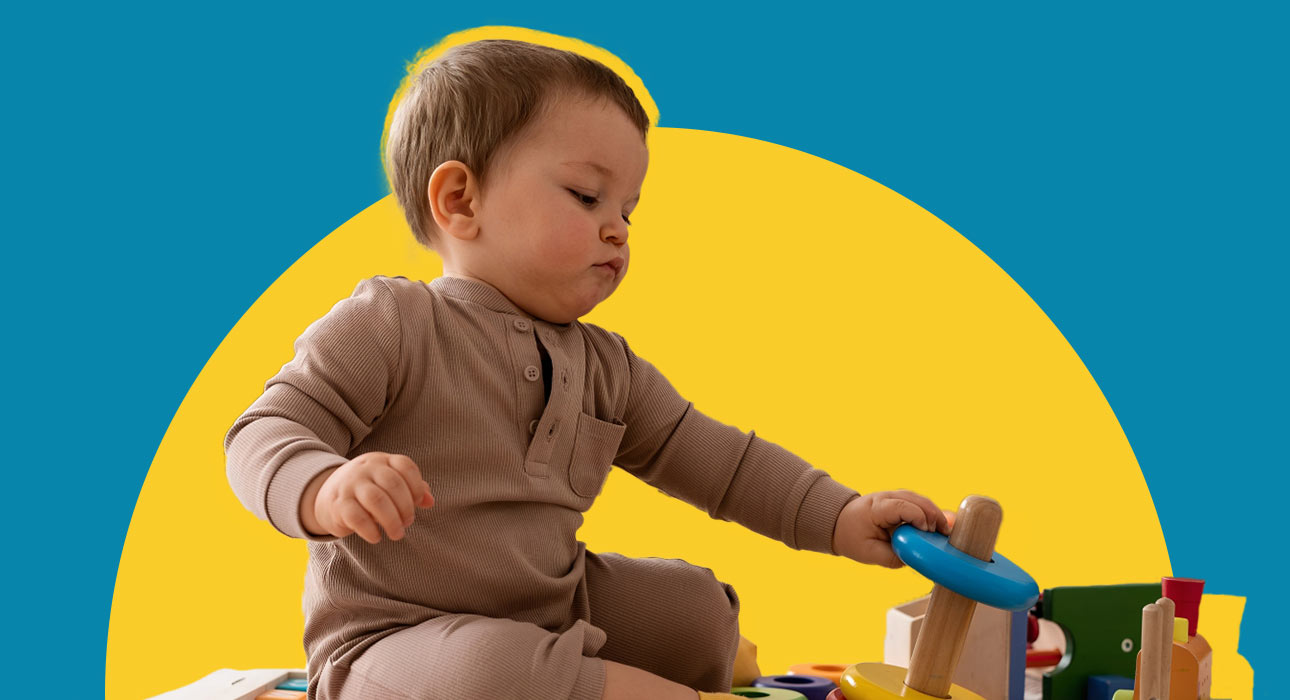
A small hand suddenly waves. A startled parent jumps back in shock. In an instant, a toddler has left their imprint literally and even figuratively. The untrained observer may witness legitimate toddler striking as simply and solely a tantrum, or an act of defiance or bad behaviour. However, there seems to be far more under the surface, a more complex story of emotions and unmet needs.
“Toddlers don’t hit because they’re bad,” asserts clinical psychologist Dr Laura Markham. “They hit because they’re overwhelmed, misunderstood, or trying to get across a communication they can’t yet put into words” (Markham, 2012). This one sentence cuts through the agitation that comes with seeing our toddlers punch and transforms the behaviour from “badness” to potentially very useful behaviour, using their body to speak words they don’t yet know how to say.
Now, let’s look behind the hitting that children are doing, from the viewpoints of development, brain function, attachment, and family experiences, to see what the message might be in toddler hitting that is truthful and practical at the same time.
Read More: Small Talks: Assessing Social Communication in Neurodivergent Children
Hitting is a rudimentary form of communication
The header might sound absurd, but think about what it’s like to be inside the mind of a toddler: the use of language is barely beginning, feelings are huge, and regulation of oneself is still a work in progress. Toddlers really do live up to their name, as the word “toddle” refers to the action of walking awkwardly, as everything they do is a precursor to something that will be done flawlessly later on in life (Gopnik, Meltzoff, & Kuhl, 1999). Hitting is exactly that.
Renowned early childhood expert Jean Piaget described young children as being in a stage of thinking where actions precede thinking (Piaget, 1954). They learn by doing. If a toddler is yelling, pushing, or hitting others or other objects, it can be because they are unable to express frustration, fear, or even love, for that matter, in other ways than by acting out physically.
In a Developmental Psychology journal article from 2020, it was found that children who did not have great skills at expressing what they meant or wanted through language were more likely to hit as a means of communicating than children who knew a better vocabulary of words or gestures (Lunkenheimer et al., 2020). This means that if a child knew the words “I’m frustrated” or “No, not yet,” then they would use these before using their hands.
So, what’s the meaning of the hit song? It’s all in toddler talk: “You’re not listening—in a way I can understand!”
Read More: Virtual Autism Alert: Dangers of Excessive Screen Time for Your Toddlers’ Development
Emotional Floodgates: When Feelings Overflow
Toddlers don’t have temper tantrums. What they have are emotional floods. Their emotions are intense, their nervous systems are immature, and their world is both awe-inspiring and overwhelming to them.
“Developmental psychiatry” connects this process with the prefrontal cortex of the brain, which controls impulses and does not mature completely until well into adulthood (Casey et al., 2015). In two-year-old children, the brain’s “brakes” are still in the building stage. They can control their emotions with a moderate level of emotional load. They cannot work with a high level of emotional load.
So, what does this look like in reality? Perhaps it is a startling noise in the room, loss of a toy, hunger, a delayed naptime, or absence of a parent in the house, and boom! This tremendous display of internal feelings manifests itself in hitting.
Paediatrics found that physical aggression, such as striking, peaked during early toddlerhood and decreased gradually with improvements in communication skills and regulation (Alink et al., 2006). Most crucially, this aggression presented as mildly unstable; most toddlers outgrow this stage of aggression once regulation skills are developed. In this way, hitting in toddlerhood is not a character issue but rather a picture of progress of emotional development.
Read More: Role of Play in Child Development and Emotional Expression
Hitting as a Social Signal: “Help Me Understand Others”
Toddlers are not lone individuals. Toddlers are emerging social learners. One of the pioneering concepts in social psychology is known as social referencing. It has been found that from a very young age, children refer to their caregivers in order to make sense of uncertain events (Campos et al., 2000). Toddlers, however, refer to actions in situations where, in fact, they are unable to use words.
Consider, for example, two toddlers wanting the same toy. The socially competent child can use phrases such as “mine” or “please.” The child who is developing this skill may use violence, not in a mean-spirited way, but through action to send an ownership message. In laboratory settings, preschoolers who used more terms related to emotions were less aggressive when dealing with disputes and were more apt to employ negotiation skills (Denham et al., 2012). Phrases such as “I would like a turn” or “Can we share?” are not automatically developed but evolve as toddlers develop emotional language skills.
These observations go a long way in answering why children who were spanked will eventually reduce the incidence of hitting as the interactions between children become more verbal and less physical as their language and reasoning skills mature.
Seekers of Connection, Not Chaos
One of the most common myths about toddler hitting is that children hit to get attention. Although attention may be a reward, hitting is a reaction of a child’s need to be understood. Attachment theory, led by John Bowlby and developed further by Mary Ainsworth, shows that children need to attach to their parents to become emotionally stable (Ainsworth, Blehar, Egeland, & Sroufe, 1978). Children exhibit confident behaviour if they are understood, whereas children who are confused display escalations in their behaviour.
Toddler Autonomy Meets Adult Expectations
Toddlers are little explorers. They need control—control of their actions, their movement, and their play activities. But there are demands from the world of the adult that call for obedience, for compliance with rules and regulations, and for patience.
On the other hand, research on development in psychology shows that children are most likely to be struck during the struggle with autonomy when they say no or during the restriction of choices or the transitioning phase (Putnam et al., 2008). At this point in development, the nervous system is maturing in terms of the development of autonomy, whereas control of impulses and frustration is delayed.
Parents may unwittingly fuel this conflict through conscientious but misguided reactions such as “You must share right now!”; “Stop hitting, or else.” and “No hitting.” These messages could be too much for the toddler, whose brains are not developed well enough to follow. Rather than viewing striking as defiance, think of it instead as a developmental conflict, much like toddlers declaring “me do it!” due to the hard-wired impulse to learn through doing.
Tantrums and Hits: Both have Emotional Differences
The hitting and the tantrums are related, but not the same thing. The tantrum has a progression: the child cries, shouts, and throws him- or herself to the floor. The hitting is immediate, a literal crunching action that defies words. Both are a consequence of emotional overload, but hitting is taking the shortcut because the emotional system has derailed the language system. It’s a survival mechanism if the toddler’s brain cannot handle the emotional intensity to talk it out or wait it out.
Neuroscience supports this theory. The amygdala, or emotional warning system, fully develops in children before the prefrontal cortex, or decision-making area, where reason and good judgment reside (Tottenham et al. 2010). When emotions flare, the amygdala gets behind the wheel. It’s no wonder that toddlers tend to act first, then think.
Read More: How the Amygdala Shapes Our Emotions and Behaviour
When Parents Misinterpret the Purpose of Hitting
When the parents label the behaviour “naughtiness,” “spite,” or “rebellion,” they tend to punish to correct the behaviour. However, punishment is a quick fix for the behaviour, but it adds to the tension pool.
Experimental: Punishments by physical means for children in early childhood were linked to aggression in later life, whereas positive guidance was a predictor for enhanced emotional adjustment, as found in one study (Gershoff & Grogan-Kaylor, 2016). In one experiment, it was found that when parents utilised more cognitive-emotional guidance, it led to higher levels of self-control at a younger age for preschoolers (Bernier et al., 2010).
At the same time, using the term “bad” to label hitting also overlooks the chance to teach emotional words—the very thing children lack when they turn to hitting.
Read More: Using punishment as an intervention for temper tantrums in Autism Spectrum Disorder
Toward a New Interpretation: Listening to the Body
Since hitting is also viewed as a form of communication, might it be saying something in human language?
- “I’m frustrated.”
- “Help me calm down.”
Rather than “Stop hitting!” you could say, “I can see that your feelings are very strong. Now we can think about what your needs are.” This is not accomplished through isolation but through co-regulation—when the parent assists in soothing the nervous system (Schore, 2001). It does not mean being permissive but rather enabling the child to label the experience: “You wanted the toy. You were feeling upset. Your body grew big. But let’s take a breath together.”
Practical Steps for Parents (That May Work)
These are research-supported ways to handle hitting in toddlers:
- Label the Emotion: To help the toddler recognise the feeling, say, ‘You look angry at the moment.’ Labelling emotions decreases tantrums and improves affective understanding (Denham et al., 2012).
- Calm Regulation Model: Your calm body is a message of safety. Deep breathing, slow speech, and gentle touch help regulate the child’s physiology along with that of the adult, according to
- Give Words Before Discipline: A more effective way would be teaching each basic phrase: “I feel upset,” ‘Help me,’ ‘Stop, please.’ Children with a wider word vocabulary are hit less often (Lunkenheimer et al., 2020).
- Offer Limited Choices: Choice = autonomy + predictability: “Do you want the red cup or the blue cup?” Feelings of having power can result in fewer spankings in toddlers (Putnam et al., 2008).
Read More: The Silent Impact of Emotionally Distant Parents on a Child’s Development
A Deeper Shift: From Punishment to Partnership
Instead of managing behavioural specifics in the realm of threats/punishments with statements containing comprehension of the need underlying behaviour, teaching skills rather than directing behaviours, and nurturing a relationship that promotes emotional development. That is, teaching small children how to have emotions and how to identify what those emotions are. One study from 2018 demonstrated in a review of early interventions for emotions that interventions based on emotionally intelligent strategies and caregiver responses significantly reduce physical aggression in young children (Webster-Stratton et al., 2018). This is not hearsay; this is evidence.
Conclusion: The True Value Of A Toddler Hitting Moment
The next time a toddler smacks you, try thinking of it not so much as a defiance gesture but rather as a call for help, like a warning signal flashing a signal, a signal for a need that is waiting to be articulated. Attempting to make sense of toddler hitting, a form of prelanguage, a form of flourishing from poorly developed emotional regulation, is a blueprint for emotional development when approached with curiosity, calm, and understanding. How preschoolers mean, or what preschoolers are really saying, may be as simple and as profound as “You’re not listening in a way I can understand—yet.” So when adults are really listening, this message becomes a bridge and not a battleground. The body stops communicating in hits, and language begins to bloom.
Reference +
Ainsworth, M. D. S., Blehar, M. C., Waters, E., & Wall, S. (1978). Patterns of attachment: A psychological study of the strange situation. Lawrence Erlbaum.
Alink, L. R. A., Mesman, J., Van Zeijl, J., Stolk, M. N., Juffer, F., Koot, H. M., & Bakermans-Kranenburg, M. J. (2006). The empirical protection of toddler aggression from harsh parenting: A meta-analysis. Journal of Paediatrics, 149(1), 125–131.
Bernier, A., Carlson, S. M., Deschênes, M., & Matte-Gagné, C. (2010). Caregiver emotional coaching predicts better emotion regulation in preschoolers. Social Development, 19(2), 326–347.
Campos, J. J., Anderson, D. I., Barbu-Riordan, C., Hubbard, E. M., Hertenstein, M. J., & Witherington, D. C. (2000). Social referencing in infancy: Theory, evidence, and practice. Monographs of the Society for Research in Child Development, 65(4).
Casey, B. J., Heller, A. S., Gee, D. G., & Cohen, A. O. (2015). Development of the emotional brain. Neuroscience Letters, 600, 57–59.
Denham, S. A., et al. (2012). Preschool emotional competence: Pathway to social competence? Child Development, 81(1), 108–123.
Gershoff, E. T., & Grogan-Kaylor, A. (2016). Spanking and child outcomes: Old controversies and new meta-analyses. Journal of Family Psychology, 30(4), 453–469.
Gopnik, A., Meltzoff, A. N., & Kuhl, P. K. (1999). The scientist in the crib: Minds, brains, and how children learn. HarperCollins.
Kochanska, G., & Kim, S. (2013). Early attachment organisation with both parents and children’s externalising behaviour. Child Development, 84(4), 1124–1138.
Lunkenheimer, E. S., et al. (2020). The emergence of toddler aggression: Behaviour and language links. Developmental Psychology, 56(3), 501–514.
Markham, L. (2012). Peaceful Parent, Happy Kids: How to Stop Yelling and Start Connecting. TarcherPerigee.
Piaget, J. (1954). The construction of reality in the child. Basic Books.
Putnam, S. P., et al. (2008). Development and correlates of toddler temperament. Child Development, 79(6), 1927–1945.
Schore, A. N. (2001). The effects of early relational trauma on right brain development, affect regulation, and infant mental health. Infant Mental Health Journal, 22(1–2), 201–269.
Siegel, D. J. (2012). The Whole-Brain Child. Delacorte Press.
Tottenham, N., et al. (2010). Prolonged institutional rearing is associated with atypically large amygdala volume and difficulties in emotion regulation. Developmental Science, 13(1), 46–61.
Webster-Stratton, C., Reid, M. J., & Beauchaine, T. (2018). Prevention of behaviour problems in early childhood: Evidence and implications. Journal of Pediatric Psychology, 43(6), 653–662.



Leave feedback about this