






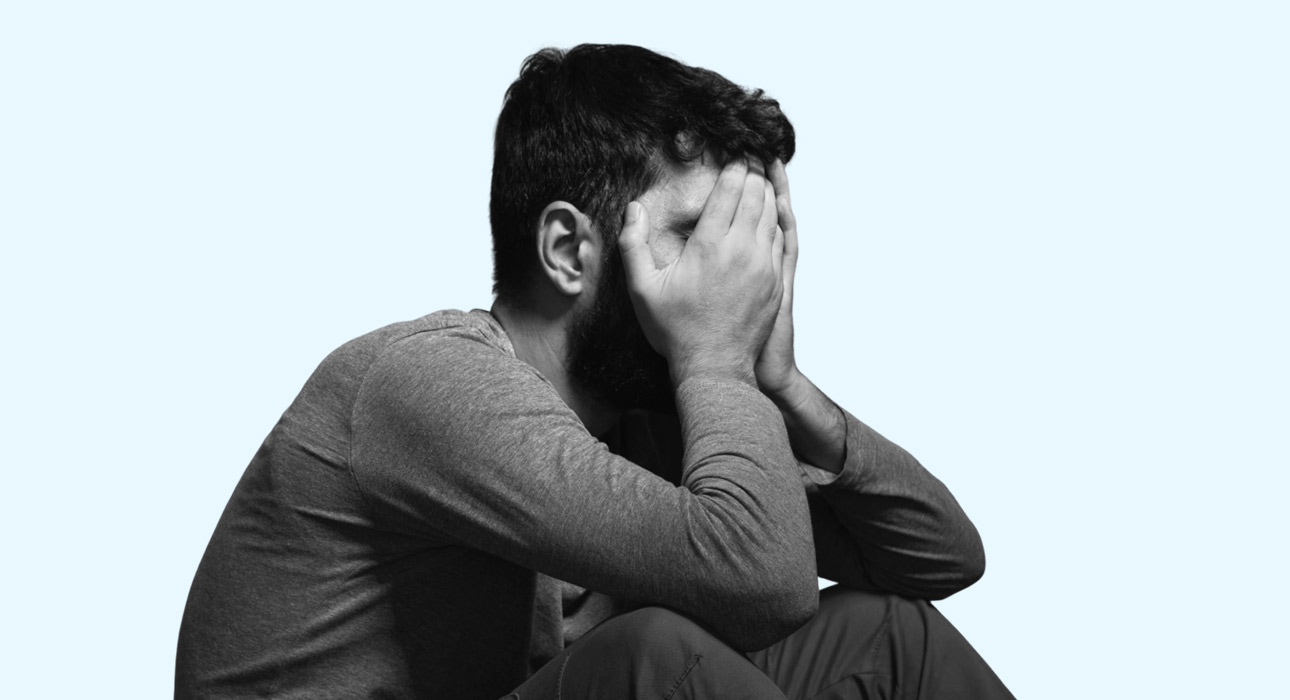
The day before, an email arrived regarding a job interview. Upon seeing it, excitement set in, a prompt reply was sent, and an interview was successfully scheduled for the following week. On the day of the interview, waking up early, getting ready, and gathering all essentials, the individual left home only to head to a local café instead. After sitting down for a cup of coffee, the return home followed, along with telling parents a lie that the interview had gone average.
Why did this happen?
The interview remained unattended because doing so felt physically and psychologically impossible. Having faced countless rejections in the past, choosing not to show up became the default defence. The sheer fear of facing yet another rejection was simply too overwhelming to handle.
There is enough evidence present to tell us that social bonds form easily. In fact, people in every society on earth belong to small primary groups that involve face-to-face, personal interactions (Mann, 1980). Many of the strong emotions people experience (negative or positive) are linked to belongingness. Moreover, considerable research shows us that people who do not have adequate support or relationships experience greater stress than those who do (Baumeister & Leary, 1995).
Hence, any threat to potential social inclusion is registered as danger, which further advances into ‘fear of rejection’ (Downey & Feldman, 1996). This article explores how neurobiology looks at rejection, rejection across life domains, emotional and behavioural consequences of rejection, and a cognitive-behavioural perspective on rejection.
Read More: The Psychology of Rejection Therapy
The Neurobiology of Rejection
“For as long as we remember, we’ve seen poetry and literature describe rejection using physical metaphors such as ‘heartache,’ ‘scars,’ ‘wounds,’ etc. Social neuroscience has gathered evidence on how these are not simple metaphors but literal neurological mechanisms.” Neuroimaging studies have shown that our brain perceives the social exclusion pain at a similar intensity as it would physical pain (MacDonald & Leary, 2005).
An fMRI study was conducted on social exclusion to see if similar regions in our brain would be activated, similar to those found in physical pain studies. Participants were placed in an fMRI scanner while playing a virtual ball-tossing game, and then they were suddenly excluded by other computerised players. Results concluded there is a region called the anterior cingulate cortex (ACC), or the dorsal ACC more specifically, which acts like an alarm system that detects when something is wrong or in conflict with current goals.
‘Pain’ is the early signal for this feeling of ‘something is wrong’ (Eisenberger et al., 2003). “So, now imagine you give a job interview; for reasons unknown, you don’t get the job, meaning you get rejected. Commonly, you feel this sharp, stinging pain”. According to social neuroscience, this ‘emotional pain’ is perceived by the brain as physical pain or a physical threat.
“So just like you would fear getting hit when someone raises their hand after being struck once, you fear rejection after being rejected once.” Eventually, over time, repeated rejections make this neural alarm sensitive, causing the brain to treat minor social slights as survival threats (Downey & Feldman, 1996; Eisenberger et al., 2003). In summary, a pattern of activation very similar to physical pain studies emerged during social exclusion. This provided evidence that social and physical pain regulation share a common neuroanatomical basis (Eisenberger et al., 2003).
Read More: The Psychology Behind Why Being Ignored Hurts More Than Criticism
Rejection Across Life Domains
Humans have this innate need to belong, to interact, connect, and make friends and are driven by this fundamental need to form significant positive interpersonal relationships. The formation of these relations and the solidifying of social bonds are the primary sources of positive affect. Whereas threats to these bonds give birth to negative affect (Baumeister & Leary, 1995).
Moreover, most people fail to understand that individuals all differ individually in their preferences, likes-dislikes, strengths-weaknesses, values, morals, etc., so every social interaction cannot lead to a mutual caring connection. This lack of understanding disappoints their emotional expectations, forming a psychological threat called ‘rejection,’ which is evidently feared. Any sort of rejection is painful; the following are a few such instances.
1. Interpersonal Relationship
- “15 years ago, a friend of mine rejected my proposal to study together.”
- “I have always tried approaching people, but something always made them get away from me.”
Instances like these and much more are something we face and hear about commonly. They stay in individuals’ minds and become a huge part of their social life. Whether it was one particular experience or a series of experiences, our perceptions and inferences of these events give rise to various emotions (Leary, 2015). People not only react strongly when they perceive rejection from others, but they also develop behaviours influenced by their desire to avoid future rejection (Leary, 2015).
2. Academics and Workplace
Workplace harassment is less harmful and less psychologically impactful than being left out at lunch by fellow colleagues (O’Reilly et al., 2015). Workplace ostracism, as defined by O’Reilly et al. (2015) (ostracism: an individual or a group neglecting to take actions that engage another organisational member when it would be appropriate to do so), has been defined as ‘social death.’ When excluded by the organisational group, employees become non-existent, or dead, to others; thus, being rejected by one’s colleagues is perceived as a more serious threat than harassment (O’Reilly et al., 2015).
For students who put all their time, energy, and resources into a project, seeing it get rejected feels more humiliating and embarrassing than failure. They start questioning their life choices. They sometimes attribute prior and repeated rejections to aspects of their personal identity, questioning their skills and capability to be studying the chosen subject or field (Jaremka et al., 2020).
3. By Peers and Friends
People often perceive peer rejection or exclusion from a social group as a threat to their identity and self-esteem. Children and adolescents often take one of two pathways: they either engage in people-pleasing behaviours or seek out antisocial peers (Laird et al., 2001). Kupersmidt and colleagues (1990) suggest that social ostracism may deprive children of essential peer experiences, preventing them from developing important social and cognitive skills.
Emotional and Behavioural Consequences of Rejection
“Oh yeah, cool! No problem, don’t worry about me; I’m fine. Sounds familiar? Isn’t this what people say every time someone rejects their proposal, cancels their plans, or criticises them? However, people often experience an intense feeling of sadness after rejection. They feel embarrassed and disappointed; they may begin sweating, notice damp palms, lock themselves in their rooms, or pace around as they struggle with these emotions. Although this is a psychological threat, it does lead to various emotional and behavioural consequences.
1. Emotional Consequences
The most common affective consequence of rejection is anxiety. According to the social exclusion theory, studies have found a common link between jealousy, anxiety, loneliness, and depression (Leary, 1990). Depression is a common mental disorder. It involves a depressed mood or loss of pleasure or interest in activities for long periods of time. World Health Organisation. Various childhood and adolescent studies have presented evidence regarding negative emotional consequences of rejection. Constant rejection has led to increased aggressiveness, anger, resentment, and fear (Laird et al., 2001).
2. Behavioural Consequences
Individuals who fear rejection often experience a strong drive to fit in. To avoid rejection or the painful emotions associated with it, they engage in behaviours such as people-pleasing and self-silencing. To avoid rejection, people often choose to pretend to be someone else rather than live as their true, authentic selves (Laird et al., 2001).
On the other hand, when rejection feels unfair or unjust, the resulting pain often leads to defensive aggression and hostility. Studies have shown that social rejection often leads to hostile attribution bias, and individuals often interpret social cues as intentionally malevolent (Twenge et al., 2001). Most individuals engage in lashing-out behaviour, including verbal or physical outbursts, to regain a sense of control and protect their egos. Researchers identify these fear-driven aggressive behaviours as a reason for strained social ties (Downey & Feldman, 1996).
Read More: Reframing Social Rejection Through Cognitive Behavioral Techniques
Conclusion
Yes, rejection stings. It threatens humanity’s most fundamental biological and psychological need: ‘the need to belong. From interpersonal relationships and academic and workplace rejection to rejection by peers and friends, it doesn’t matter what kind of rejection an individual faces; the end result is ‘fear.’
This fear later leads to certain consequences, both emotional and behavioural, some of which are harmful either to self or others. This fear alters world perception; individuals look at themselves and others around them differently. However, even though the human brain uses these defences to protect individuals from ‘pain,’ they ultimately become the reason for barriers between connections.
Rejection is a part of life. It is something that everyone experiences at some point. With the right mindset, individuals can learn to deal with it and come out stronger on the other side. Rejection is not the end of the world, nor is it a definition of who people are as individuals. People are more than their experiences, and humans are capable of overcoming any obstacle that comes their way.
References +
- Baumeister, R. F., & Leary, M. R. (1995). The need to belong: Desire for Interpersonal attachments as a fundamental human motivation. Psychological Bulletin, 117(3), 497–529. https://doi.org/https://doi.org/10.1037/0033-2909.117.3.497
- Brown, B. (2017, September 11). Finding our way to true belonging. Ideas.Ted.Com. https://ideas.ted.com/finding-our-way-to-true-belonging
- Downey, G., & Feldman, S. I. (1996). Implications of rejection sensitivity for intimate relationships. Journal of Personality and Social Psychology, 70(6), 1327–1343. https://doi.org/10.1037/0022-3514.70.6.1327
- Eisenberger, N. I., Lieberman, M. D., & Williams, K. D. (2003). Does rejection hurt? An fMRI study of Social exclusion. Science, 302(5643), 290–292. https://doi.org/10.1126/science.1089134
- Jaremka, L. M., Ackerman, J. M., Gawronski, B., Rule, N. O., Sweeny, K., Tropp, L. R., Metz, M. A., Molina, L., Ryan, W. S., & Vick, S. B. (2020). Common academic experiences no one talks about: Repeated rejection, impostor syndrome, and burnout. Perspectives on Psychological Science, 15(3), 519–543. https://doi.org/10.1177/1745691619898848
- Laird, R. D, Jordan, K. Y., Dodge, K. A., Pettit, G. S., & Bates, J. E. (2001). Peer rejection in childhood, involvement with antisocial peers in early adolescence, and the development of externalizing behavior problems. Development and Psychopathology, 13(2), 337–354. https://doi.org/10.1017/s0954579401002085
- Leary, M. R. (1990). Responses to Social exclusion: Social anxiety, jealousy, loneliness, depression, and low Self-Esteem. Journal of Social and Clinical Psychology, 9(2), 221–229. https://doi.org/10.1521/jscp.1990.9.2.221
- Leary, M. R. (2015). Emotional responses to interpersonal rejection. Emotions, 17(4), 435–441. https://doi.org/10.31887/dcns.2015.17.4/mleary
- MacDonald, G., & Leary, M. R. (2005). Why does social exclusion hurt? The relationship between social and physical pain. Psychological Bulletin, 131(2), 202–223. https://doi.org/10.1037/0033-2909.131.2.202
- O’Reilly, J., Robinson, S. L., Berdahl, J. L., & Banki, S. (2015). Is negative attention better than no attention? The comparative effects of Ostracism and harassment at Work. Organization Science, 26(3), 774–793. https://doi.org/10.1287/orsc.2014.0900
- Twenge, J. M., Baumeister, R. F., Tice, D. M., & Stucke, T. S. (2001). If you cannot join them, beat them: Effects of social exclusion on aggressive behaviour. Journal of Personality and Social Psychology, 81(6), 1058–1069. https://doi.org/10.1037/0022-3514.81.6.1058



Leave feedback about this