







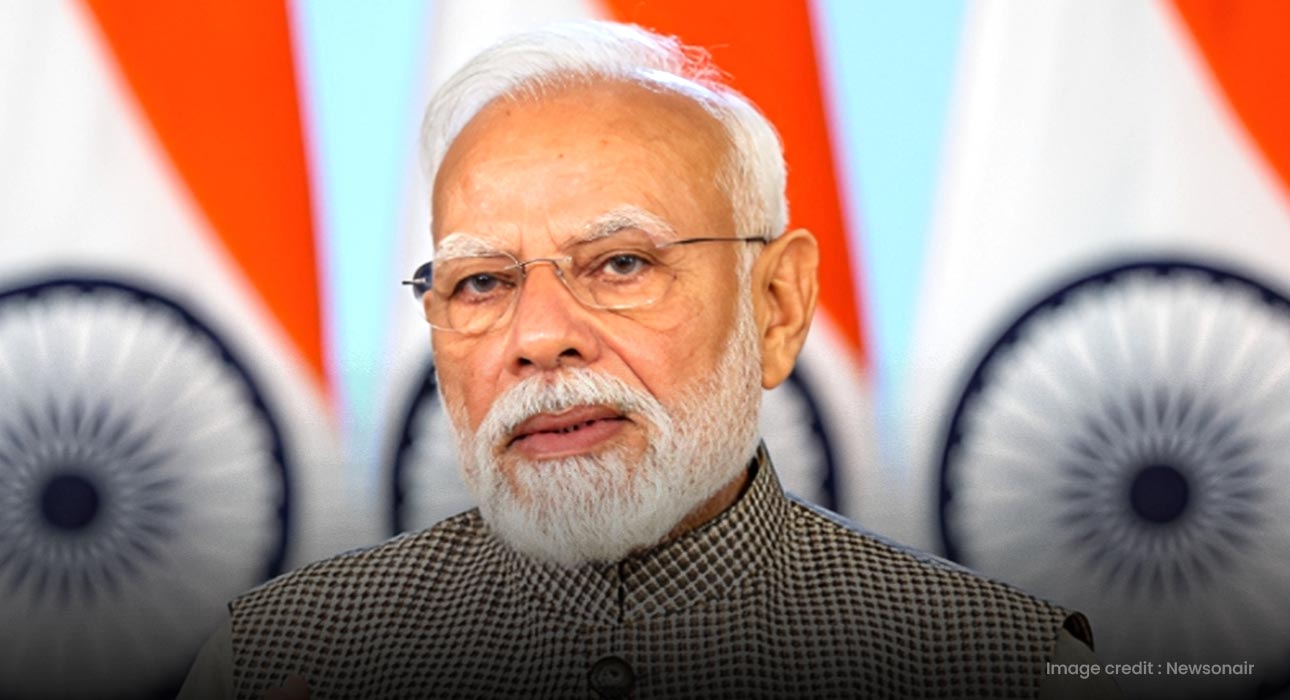
Prime Minister Narendra Modi launched the ‘Nasha Mukt Yuva for Viksit Bharat Sankalp Abhiyan’ on the 2nd of August, 2026. Through this campaign, the government aims to progress in building a drug-free India. At the launch of the ‘Nasha Mukt Yuva for Viksit Bharat Sankalp Abhiyan,’ Prime Minister Modi addressed the issue of rising drug use among youth. He further stated the need for taking care of young minds for a sustainable future. Through this campaign, the government aims to spread awareness and preventive education to reduce drug use among young adults. This initiative highlights the government’s active recognition of drug abuse as a significant public health and social concern.
Rising Concern of Drug Usage Among Young Adults
Around the globe, the rising substance use among young adults has become a major concern. Research states that adolescence is the critical stage of brain development when the neural system responsible for cognitive and emotional regulation continues to mature (Casey et al., 2008). During this period, exposure to drugs increases the risk of long-term addiction and cognitive impairment.
Studies have consistently shown that early initiation of drug use is associated with greater susceptibility to substance dependence later in life (Jordan & Andersen, 2017). While drug addiction affects physical health, it also risks the psychological well-being of individuals, often enhancing violent behaviour and increasing the risk of mental disorders (Degenhardt et al., 2013).
Studies support the concept of disciplinary measures to restrict addiction. However, experts have stated that a supportive environment can be extremely beneficial in helping individuals to recover (Hawkins et al., 1992). Against this backdrop, India has actively prioritised preventive interventions promoting awareness, resilience, and healthy lifestyle choices, especially among the youth.
Vision of ‘Nasha Mukt Yuva’ Campaign: Bulletin, Significance & Impact
The nationwide campaign is dedicated to spreading public awareness through education, community outreach, and youth participation. The initiative further emphasises reducing the stigma associated with addiction by encouraging families to identify warning signs early and seek appropriate psychological and clinical support. This ideology reflects the growing understanding that substance use requires consistent support, treatment, and timely intervention alongside preventive awareness.
The government urges every organisation to come forward and help in promoting awareness against drugs before they become a dependency. Research has concluded that the most effective prevention programs are the ones that help the individual in regulating their emotions. Furthermore, consistent family support and social competence benefit the process (Botvin & Griffin, 2007).
Research has also indicated the co-occurrence of addiction with poor mental health. This finding supports the necessity of psychological services alongside awareness campaigns (Volkow et al., 2016). By encouraging collective responsibility among families, professionals, and communities, the initiative possesses the potential to actively increase mental health literacy while promoting healthy lifestyle choices among the youth.
The Long-term Objective of the ‘Nasha Mukt Yuva’ Campaign
Provided the campaign receives sustained community engagement, the campaign holds the potential to become a significant step towards demolishing substance abuse and promoting healthier youth development in India. While the campaign can actively reduce drug use among youth, it is important for the communities to engage with the initiative and help in promoting healthier youth in India.
References +
- Botvin, G. J., & Griffin, K. W. (2007). School-based programmes to prevent alcohol, tobacco and other drug use. International Review of Psychiatry, 19(6), 607–615.
- Casey, B. J., Jones, R. M., & Hare, T. A. (2008). The adolescent brain. Annals of the New York Academy of Sciences, 1124, 111–126.
- Degenhardt, L., Whiteford, H. A., Ferrari, A. J., et al. (2013). Global burden of disease attributable to illicit drug use and dependence: Findings from the Global Burden of Disease Study 2010. The Lancet, 382(9904), 1564–1574.
- Faggiano, F., Minozzi, S., Versino, E., & Buscemi, D. (2014). Universal school-based prevention for illicit drug use. Cochrane Database of Systematic Reviews.
- Hawkins, J. D., Catalano, R. F., & Miller, J. Y. (1992). Risk and protective factors for alcohol and other drug problems in adolescence and early adulthood. Psychological Bulletin, 112(1), 64–105.
- Jordan, C. J., & Andersen, S. L. (2017). Sensitive periods of substance abuse: Early risk for the transition to dependence. Developmental Cognitive Neuroscience, 25, 29–44.
- Squeglia, L. M., Jacobus, J., & Tapert, S. F. (2009). The influence of substance use on adolescent brain development. Clinical EEG and Neuroscience, 40(1), 31–38.
- Volkow, N. D., Koob, G. F., & McLellan, A. T. (2016). Neurobiologic advances from the brain disease model of addiction. New England Journal of Medicine, 374(4), 363–371.





Leave feedback about this