







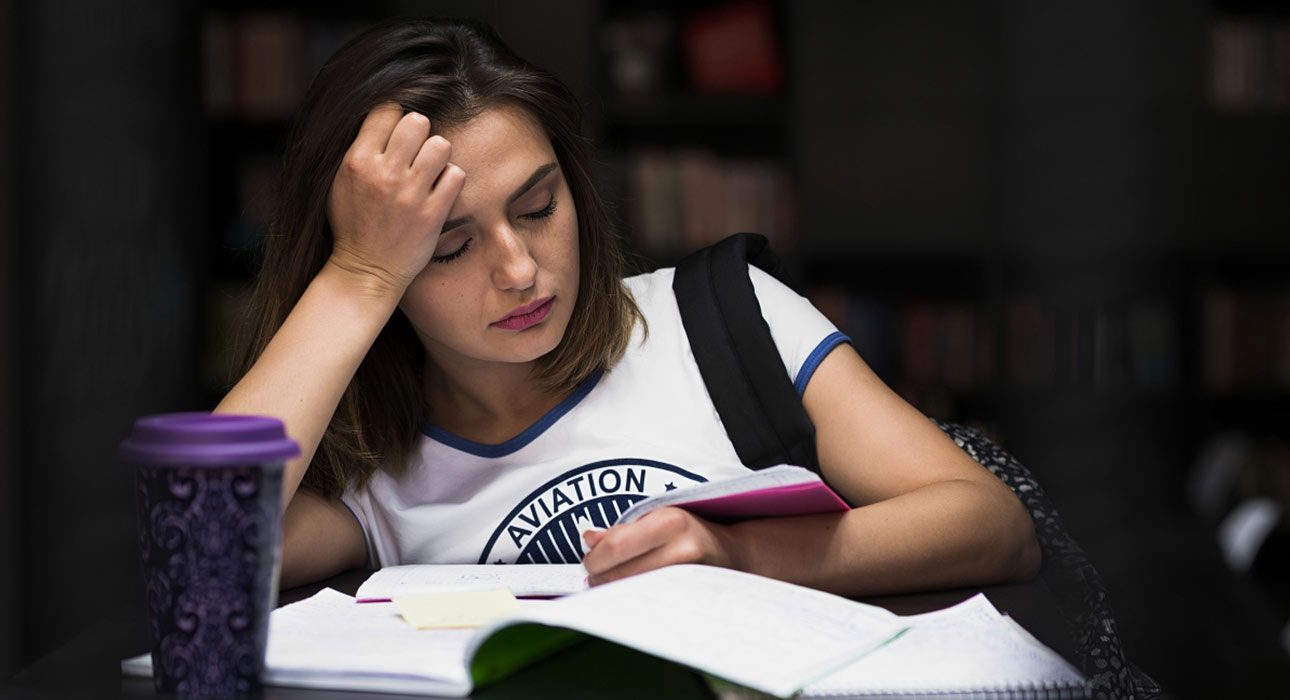
Adolescence is a time of big shifts in one’s emotions, social interactions and academic development. These changes, however, are in line with increased expectations for girls already at school and at home. A girl could be required to perform well academically or go for competitive exams. There may also be a requirement for them to assist with tasks around the household chores.
There might be a need for them to look after their younger siblings and be expected to act in a socially appropriate manner. Each responsibility may seem manageable on its own. The trouble comes if they coincide. Academic pressure has also been found to be a substantial contributing factor to female students’ stress in adolescence. Gendered domestic responsibilities can further limit their time and energy (Rentala et al., 2019; Sharma & Shah, 2025).
Consistently high demands can eventually lead to prolonged emotional and mental fatigue, generally known as emotional burnout (Maslach & Leiter, 2016). The article dives deep into the academic and domestic life of girls moving through their adolescence. Also, the emotional impact it can have by fulfilling what is expected from them academically and domestically.
When “Doing Well” Becomes a Constant Demand
Excellence in the classroom is viewed as a key indicator for success in life. A high grade can have a positive impact on acceptance to college, job advancement, and family dreams. This sometimes can make learning at school seem more like a continuous test of attainment. When one exam comes to an end, a girl may begin to concern herself with the next exam. There may also be a feeling that anything below her best performance means she has failed. Research among Indian adolescents has linked academic stress with anxiety symptoms over time. This shows that academic pressure can have effects beyond temporary examination worry (Trevethan et al., 2022).
Indian research provides a similar picture. Rentala et al. (2019) examined academic stress among 314 adolescent girls aged 16–19 years in Karnataka. The researchers found substantial levels of stress in the sample. There were high levels of academic stress and perceived parental academic pressure among participants. It highlighted the importance of family and educational factors in understanding this stress (Rentala etal., 2019).
The Second Shift at Home
For some girls, the school day does not end when they leave school. There may be another set of responsibilities waiting at home. Household chores such as preparing meals or cleaning, while being asked to care for siblings, assist parents, and also run errands, can define daily life for a girl. These roles do not always have a negative impact. Being an effective helper at home can instil responsibility and cooperation skills. The concern arises when domestic duties become excessive or are distributed unequally because of gender (Gibby, 2022; Sharma & Shah, 2025).
Indian research reveals that domestic labour is gendered among adolescents. Gibby (2022) analysed the time-diary data of over 1,100 South Indians adolescents. The study revealed that parental attitudes towards gender shape girls’ participation in household activities. Less egalitarian (impartial) parents seemed to encourage their daughters to do more household chores. Let’s assume a girl who has a 4 pm arrival time at home. The following morning, she has an assignment and an exam later in the week. Before she can study,
- she has to help prepare dinner,
- watch her younger sibling, and
- complete other household tasks.
She is already exhausted by the time she comes to open her textbook. If she fails the next day, her performance failure might not be attributed to lack of time and energy, but to lack of effort. This creates a difficult cycle (Gibby, 2022).
The Pressure of Two Worlds
Academic and domestic expectations can interact rather than operate separately. A girl may be expected to be academically successful while also being available whenever her family needs help. Her academic responsibilities are planned around deadlines. Household responsibilities may be unpredictable. A request to complete a chore can arrive precisely when she has planned to study (Ganguly & Vikram, 2025; Sharma & Shah, 2025).
Both educational stress and gendered household responsibilities have been recognised as stressors for adolescent research in India. According to a qualitative study of urban school-going adolescents, the pressure to succeed in school comes from parents, teachers and one’s own aspirations. Girls also reported sexism, gender discrimination, and a greater burden of household chores (Parikh et al., 2019). This creates a form of competing demand.
- If a girl studies instead of helping at home, she may feel guilty.
- If she helps at home instead of studying, she may worry about her grades.
When either option is selected, she may feel like she let someone else down. It is emotionally draining to consistently have to make these choices over time (Ganguly & Vikram, 2025; Sharma & Shah, 2025).
From Stress to Emotional Burnout
There is a link between burnout and stress, but they are not synonymous. Emotional burnout is a condition that can develop due to ongoing demands and stress, is characterised by feeling detached, and having a diminished sense of competence (Maslach & Leiter, 2016). Stress can happen when one perceives that demands are higher than resources.
Burnout is a more enduring state of tiredness, isolation and diminished perceptions of self-effectiveness. In academic settings, student burnout is commonly described through exhaustion. It could be from studying, detachment or cynicism toward academic work, and reduced academic efficacy (Morgan et al., 2014). For an adolescent girl, burnout may begin quietly.
- She may initially study longer hours and sleep less.
- Later, she may find it difficult to concentrate.
- Subjects that once interested her may begin to feel meaningless.
- She may postpone assignments because starting them feels overwhelming.
- Eventually, a minor work commitment or responsibility may seem to pose as a huge task.
That’s why “burnout” isn’t an excuse for falling into some serious time management issues. Three interrelated components of academic burnout overstimulation, cynicism, and decreased effectiveness have been identified through research (Maslach & Leiter, 2016). Sometimes burnout will even involve loss of motivation. If a student consistently feels the struggle to succeed is too big, they become more likely to assume that it cannot be overcome.
The girl might think, “What is the point of studying? I am already doing everything I can.” This is different from simply not caring about school. It may be a sign of an increasing lack of efficacy. Research among adolescents has found that school exhaustion, scepticism, and feelings of inadequacy are related to educational aspirations and motivation (Widlund et al., 2020).
The Guilt Trap
Guilt can induce pressure. Girls may feel guilty when they study because someone at home needs help. When a female rests, there might be a similar rush of feelings because she thinks there is work that needs to be done. In another case, someone might feel guilty when spending time with friends as there are unfinished tasks left to complete (Zimmer-Gembeck et al., 2023). This can leave them with an out-of-touch impression of being constantly productive. Rest begins to feel undeserved. Leisure becomes as if it were lost time. The mind never rests at the end of the day when people are seeking to sit down and relax. Even while working, people may feel overwhelmed by unfinished tasks.
Such patterns can make recovery from stress more difficult (Zimmer-Gembeck et al., 2023). The problem is not simply the number of responsibilities. It is also the belief that a “good daughter” should always be available and a “good student” should always perform well. It can serve as a challenge to live up to these expectations. A girl’s sense of obligation to her schoolwork may lead her to believe that she must be successful at both school and at home. In South India, research showed that girls spend more time at home caring, indulging in housework and studying than boys. Boys, in contrast, have more ‘protected’ time to attend school, enjoy leisure time and sleep (Ganguly & Vikram, 2025).
When Exhaustion Looks Like Laziness
Burnout is not always obvious. Emotional exhaustion may cause a girl to become quieter. Another may become irritable. Others may come to dislike the schoolwork and procrastinate. People often interpret these behaviours as signs of a lack of effort, discipline, or self-control (Maslach & Leiter, 2016; Widlund et al., 2020). However, school-related stress can also have negative psychological effects on adolescents.
Research in India has linked academic stress with depression and other mental health difficulties (Jayanthi et al., 2015). More recent longitudinal research has also shown that academic stress can predict changes in anxiety symptoms among adolescents in India (Trevethan et al., 2022). This is why behavioural changes deserve attention. A student who suddenly withdraws from activities, has difficulty focusing, has lost her motivation, or sounds more than usual irritated is not just in need of more discipline. She may need support (Widlund et al., 2020; Zimmer-Gembeck et al., 2023).
The Cost of Losing Study Time
Domestic responsibilities can also have direct educational consequences. A 2025 study analysed data from adolescents and young adults in Uttar Pradesh and Bihar.
An increase in unpaid domestic work hours was related to lower educational outcomes. Individuals who spent more time on domestic responsibilities had higher rates of terminating schooling, missing school, and having poorer educational performance.
The researchers also found evidence suggesting that the burden could be greater for girls (Sharma & Shah, 2025). This does not mean that household work automatically causes academic failure. Family circumstances, economic conditions, school quality, and many other factors matter. These findings highlight the importance of considering students’ available time and energy when discussing academic performance. When unpaid responsibilities consume most of a student’s available time, they can limit the student’s ability to maintain academic performance (Sharma & Shah, 2025).
Why Support Matters
Care and attention are crucial. Youth require spaces in which they can talk about challenges without undergoing any judgment.
- Family support is particularly important. In an adolescent longitudinal study, parents’ support was related to more adaptive coping strategies to academic stressors. Adolescents who experienced negative interactions with their parents were more likely to disengage and use escape-based coping strategies (Zimmer-Gembeck et al., 2023).
- Schools also have an important role. It is helpful for teachers to acknowledge that success or failure in schoolwork is not a standalone experience. A student could be juggling exams with tasks that are out of sight within the walls of the classroom. Schools can offer counselling assistance, manage school workload, support with study skills and allow students to talk about stress before it escalates (Rentala et al., 2019; Zimmer-Gembeck et al., 2023).
- Stress-management programmes can also help. Researchers conducted a randomised controlled trial to evaluate a holistic stress-management programme for adolescent girls in Karnataka. There was a decrease in the level of psychological outcomes such as anxiety and depression, which led to reduced academic stress. This further generated an improved overall well-being for the girls. Adolescents benefit from structured support rather than having to manage pressure on their own (Rentala et al., 2019).
Creating Space to Breathe
Reducing burnout does not mean removing every responsibility from adolescents. Household participation can be healthy. Academic effort is important. The goal is balance. Family members can share household chores equally. Families should not expect girls to take responsibility for caring for everyone simply because of their gender. Families should treat study time as an important responsibility, just like any other commitment. Additionally, rest is a normal part of an overall healthy regimen (Ganguly & Vikram, 2025; Sharma & Shah, 2025).
Schools can play a part by acknowledging over-academic stress and providing a positive atmosphere. Parents can consider effort and learning instead of viewing any and all results as a measure of worth. Encourage adolescents to openly express their concerns when their responsibilities become overwhelming. The social context around adolescents can impact their experience and response to stress, and these changes are especially relevant. There are studies that suggest that parental pressure is a cause of increased stress. Parental support can counteract the impact of rising stress on adolescents (Kulakow et al., 2021).
Conclusion
Academics are an incomplete lens to view adolescent girls’ emotional burnout. Some females become used to carrying the stress of school with their chores, gender expectations, social obligations, and wanting everyone in their circle to be happy. There could be overwhelming feelings that can make the person seem despondent and lacking any drive or purpose in life (Sharma & Shah, 2025; Trevethan et al., 2022). Supporting girls involves more than just encouraging them to work harder. At times, the person just needs less pressure, more understanding and ample room to be an adolescent.
References +
- Ganguly, D., & Vikram, K. (2025). Gendered time use, body mass index, and well-being among adolescents in resource-poor settings in India: The adverse role of domesticity. Journal of Research on Adolescence, 35(1), e70007. https://doi.org/10.1111/jora.70007
- Gibby, A. L. (2022). Gendered housework among adolescents in India. Journal of Marriage and Family, 43(11), 3015–3032. https://doi.org/10.1177/0192513X211038071
- Jayanthi, P., Thirunavukarasu, M., & Rajkumar, R. (2015). Academic stress and depression among adolescents: A cross-sectional study. Indian Paediatrics, 52(3), 217–219. https://doi.org/10.1007/s13312-015-0609-y
- Kulakow, S., Raufelder, D., & Hoferichter, F. (2021). School-related pressure and parental support as predictors of change in student stress levels from early to middle adolescence. Journal of Adolescence, 87, 38–51. https://doi.org/10.1016/j.adolescence.2020.12.008
- Maslach, C., & Leiter, M. P. (2016). Understanding the burnout experience: Recent research and its implications for psychiatry. World Psychiatry, 15(2), 103–111. https://doi.org/10.1002/wps.20311
- Morgan, B., de Bruin, G. P., & de Bruin, K. (2014). Operationalising burnout in the Maslach Burnout Inventory–Student Survey: Personal efficacy versus personal inefficacy. South African Journal of Psychology, 44(2), 216–227. https://doi.org/10.1177/0081246314528834
- Parikh, R., Sapru, M., Krishna, M., Cuijpers, P., Patel, V., & Michelson, D. (2019). “It is like a mind attack”: Stress and coping among urban school-going adolescents in India. BMC Psychology, 7, 31. https://doi.org/10.1186/s40359-019-0306-z
- Pienyu, K., Margaret, B., & D’Souza, A. (2024). Academic stress, perceived parental pressure, and anxiety related to competitive entrance examinations and the general well-being among adolescents: A cross-sectional survey from Karnataka, India. Journal of Education and Health Promotion, 13(1), 474. https://doi.org/10.4103/jehp.jehp_2094_23
- Rentala, S., Nayak, R. B., Patil, S. D., Hegde, G. S., & Aladakatti, R. (2019). Academic stress among Indian adolescent girls. Journal of Education and Health Promotion, 8, 158. https://doi.org/10.4103/jehp.jehp_116_19
- Rentala, S., Thimmajja, S. G., Tilekar, S. D., Nayak, R. B., & Aladakatti, R. (2019). Impact of holistic stress management program on academic stress and well-being of Indian adolescent girls: A randomised controlled trial. Journal of Education and Health Promotion, 8, 253. https://doi.org/10.4103/jehp.jehp_233_19
- Sharma, A., & Shah, A. (2025). The role of time spent in unpaid domestic work on educational outcomes among adolescents and young adults: Quantitative evidence from India. Discover Education, 4, 22. https://doi.org/10.1007/s44217-025-00408-7
- Trevethan, M., Jain, A. T., Shatiyaseelan, A., Luebbe, A. M., & Raval, V. V. (2022). A longitudinal examination of the relation between academic stress and anxiety symptoms among adolescents in India: The role of physiological hyperarousal and social acceptance. International Journal of Psychology, 57(3), 401–410. https://doi.org/10.1002/ijop.12825
- Widlund, A., Tuominen, H., Tapola, A., & Korhonen, J. (2020). Gendered pathways from academic performance, motivational beliefs, and school burnout to adolescents’ educational and occupational aspirations. Learning and Instruction, 66, 101299. https://doi.org/10.1016/j.learninstruc.2019.101299
- Zimmer-Gembeck, M. J., Skinner, E. A., Scott, R. A., Ryan, K. M., Hawes, T., Gardner, A. A., & Duffy, A. L. (2023). Parental support and adolescents’ coping with academic stressors: A longitudinal study of parents’ influence beyond academic pressure and achievement. Journal of Youth and Adolescence, 52, 2464–2479. https://doi.org/10.1007/s10964-023-01864-w



Leave feedback about this