






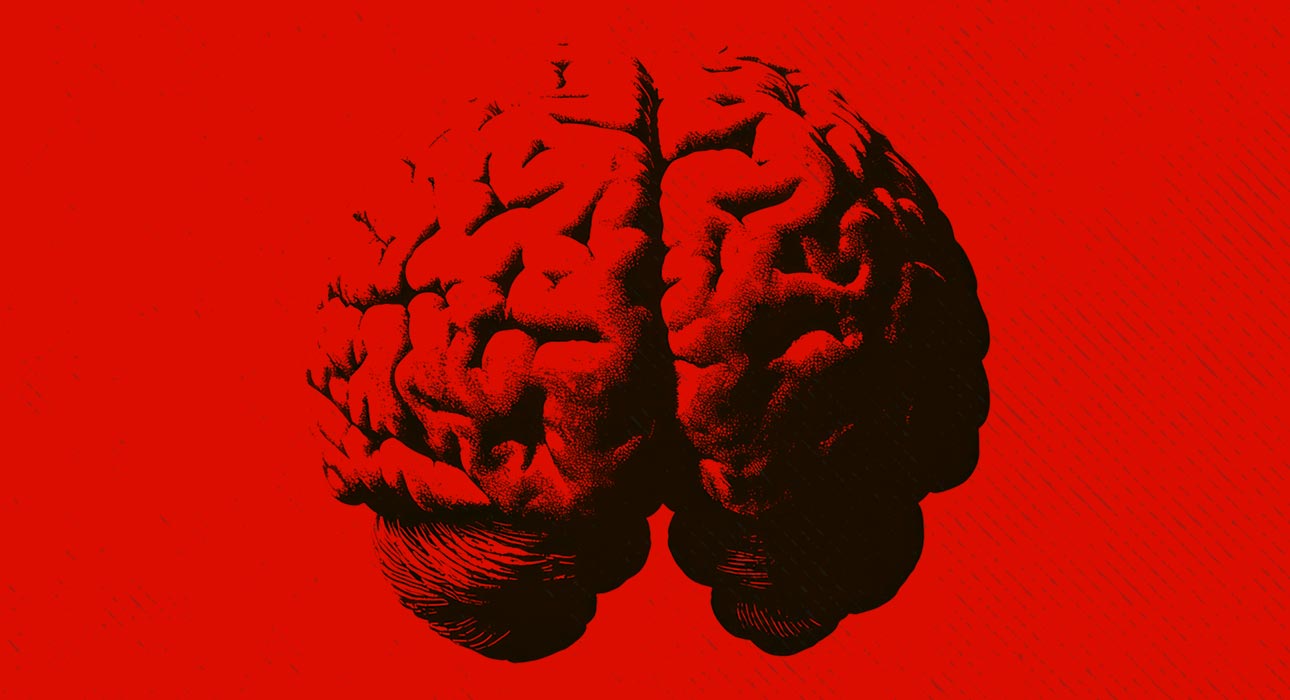
Can one brain hold two minds? Imagine you reach for your favourite shirt with your right hand, but your left hand reflexively pushes it back toward the shelf. Or maybe you see a known object perfectly clearly, but you’re unable to name it, even though you know exactly what it is. While it sounds like a scene straight out of a science fiction movie, these are the kinds of odd phenomena researchers first discovered when they began to study people with split brains individuals whose cerebral hemispheres (the right & left halves of the brain) were surgically separated to treat severe epileptic seizures.
As a result of the surgery, their experience challenged one of the most deeply ingrained assumptions of humanity that everyone possesses a single, unified consciousness. The study of Split-brain patients helped neuroscience and psychology to understand that human brains have two specialised hemispheres which can work separately from one another under certain circumstances. They showed how separation of the hemispheres revealed different aspects of cognition, perception, language, and consciousness that actually lie hidden under integrated brain activity.
These findings transformed our understanding of how the mind works and raised profound philosophical questions about the nature of consciousness itself (Gazzaniga et al., 1962; Sperry, 1968). Today, split-brain research continues to influence debates about free will, self-awareness, artificial intelligence, and the neural foundations of human experience.
Read More: Most Powerful Ways Neuroplasticity Changes the Brain
What Are Split-Brains?
In the human brain, there are two distinct cerebral hemispheres which are connected through a thick bundle of nerve fibres known as the Corpus Callosum. The two hemispheres have approximately 200 million axons which help in communicating the left and right halves of the brain (Bear et al., 2020).
During the 1940s and 1950s, some epileptic patients’ seizures were getting uncontrollable though they were on complete medication. So, to prevent epileptic seizures, neurosurgeons decided to perform a procedure called the corpus callosotomy; it severed the corpus callosum, the connection between the two hemispheres (Gazzaniga, 2005).
Through this procedure many people got relief from epilepsy, and it increased their quality of life. It created a unique opportunity for researchers such as Michael Gazzaniga and Roger Sperry to investigate the cognition and behavioural functioning in two halves of the brain. Sperry won a Nobel Prize in medicine and physiology in 1981 for the discovery of functional specialisation of the cerebral hemispheres.
Read More: Sensory Play and Brain Development: How Messy Play Builds Healthy Minds
The Brain’s Communication Highway
Under normal circumstances,
- ∙ Information received by one hemisphere is rapidly shared with the other.
- ∙ The integration process is so seamless that people with intact hemispheres live life with a unified consciousness.
- ∙ Perception, language, memory and motion all occur smoothly across both sides of the brain, regulated by an interconnection of nerves called the corpus callosum (Pinel & Barnes, 2018).
When this information highway is disrupted, the brain may independently process information which are normally masked by the smooth interconnection of information between hemispheres.
Read More: Capgras Syndrome: When Loved Ones Become Imposters
Discovering the hemispheric specialisations
Famous visual field tests are one of the most important discoveries concerning the split brain. They arose from experiments with presentations of information through the visual system. Information in the visual system on the right centre is sent to the left brain, and information in the left centre vision goes to the right hemisphere of the brain. Thus, researchers are able to temporarily give information to only one side of the brain by presenting images in either one or the other hemisphere at a time (Gazzaniga et al., 1962). In a classic experiment:
- A word shown to the right visual field could be named easily.
- The same word shown to the left visual field could not be verbally reported.
- Yet patients could identify or select the correct object using their left hand.
The findings revealed that the right hemisphere has an understanding of the information, but it could not express it verbally (Sperry, 1968).
Read More: Why Night Owls Don’t Respond to Antidepressants: The Social Jetlag–Brain Connection
Language: A Left-Hemisphere Speciality
Researchers have also indicated that for the majority of individuals, language functions are concentrated in the left hemisphere of the brain. This includes functions such as:
- Speech production,
- Reading and writing,
- Grammar,
- Verbal memory
When information was presented exclusively to the left hemisphere, patients could describe it accurately. When the same information was presented only to the right hemisphere, verbal reporting became difficult to express (Gazzaniga, 2005). These findings provided some of the strongest evidence for the localisation of language functions in the brain.
Read More: Predictive Processing: Is the Brain Really a Prediction Machine?
The Remarkable Abilities of the Right Hemisphere
Some people previously considered the right side to be non-superior due to its lack of verbal functioning. Later research has revealed that this view is not correct. For the right hemisphere, such specialised abilities include:
- Spatial orientation,
- Pattern & facial recognition,
- Visual imagery,
- Understanding abstract concepts,
- Non-literal communication and emotional understanding (Corballis, 2014).
For instance, split-brain patients could identify familiar faces or arrange spatial patterns accurately using their right hemisphere, even though they were unable to articulate how it worked nor verbally name what they were doing (Bear et al, 2020).
Read More: The Cognitive Psychology of Doubt and Certainty: How Your Brain Shapes Beliefs
Understanding Emotions and Social Signals
In one series of studies, researchers had patients pick out different images of emotional expression when they were presented in each visual field. This showed that the right brain is the dominant one when it comes to the understanding of emotional and social cues. Studies found that it is particularly effective at:
- Recognising facial expressions
- Interpreting tone of voice
- Understanding social context
- Detecting emotional nuances (Springer & Deutsch, 1998).
Therefore, it has become apparent that intelligence cannot be defined purely in language skills and has indeed expanded into multiple modes of thought and consciousness. Different forms of cognition are distributed across the hemispheres, each contributing unique strengths to human functioning.
Read More: The Risk-Taker’s Brain: The Dopaminergic Drive in Entrepreneurship
What Can The Split Brain Studies Teach About the Human Mind?
1. Consciousness
Consciousness is likely less unified than everyone thinks. Many people experience themselves as having a single consciousness and mind. Split brain studies, however, have indicated that our sense of a single mind arises from a complex coordinated interplay between many different brain structures. The data from these studies suggest that individuals likely have many conscious and subconscious processes going on in the human brain at any one time. The concept of self as a single, undivided entity is thus likely a product of several interdependent cognitive processes (Tononi et al., 2016).
2. Perception
Perceptions are active constructs. Many of us believe that humans directly perceive and interact with the world. In reality, human brains select and interpret specific features of the environment to construct a coherent conscious experience. People have demonstrated this with split-brain studies, as researchers have shown the left brain attempts to make a sensible account of the actions carried out by the right hemisphere. It would appear that through an interpretative process, the left side generates a perceived world (Bear et al, 2020).
Read More: The 11 P.M. Amygdala: Why Your Rational Brain Sabotages Sleep Every Night
The Implications For Modern Day Neuroscience
The influence of split-brain research extends far beyond epilepsy treatment. It has contributed to advances in:
- Cognitive neuroscience
- Neuropsychology
- Brain imaging research
- Rehabilitation following brain injury
- Artificial intelligence models of cognition
- The scientific study of consciousness (Gazzaniga, 2018)
Modern investigations using functional neuroimaging continue to build upon insights first revealed by split-brain patients. Although no more patients have had the surgery performed for decades now, their sacrifice and willingness to become scientific test subjects continues to impact modern research by providing a foundation for how the human brain functions at its fundamental levels. Modern neuroscience and future research based on these discoveries could result in further improvements in the understanding of consciousness and of human behaviour itself, as people continue to learn to decode the brain.
Read More: The Youth Brain and Peer Review: When Cultural Comments Turn into Brain Power
Conclusion
The study of split-brain patients is an important part of the history of psychology and neuroscience. When researchers separated the two halves of the brain, they found proof that different brain parts handle different tasks. These findings revolutionised individuals’ understanding of language, perception, emotion and decision making, and overturned the most basic assumptions about the unity of consciousness.
Perhaps the most lasting lesson of split-brain research is that the human mind is more divided and more integrated than it looks. Behind the seamless experience of self is a complex network of specialised processes working in concert to create awareness. The brain’s remarkable adaptability is proven by the fact that consciousness can remain coherent in the face of such complexity.
As scientists keep studying how our brains work, especially when it comes to being aware of who we are and how we think, the stories of people with split-brain still teach us a lot. These people’s experiences show us that to really get consciousness, we need to look deeper than what seems normal and check out the processes that make us ‘us.’ The split-brain patients did more than reveal how the brain works; they showed that the greatest mystery of consciousness may be the story our minds tell to make many processes feel like one self.
References +
- Gazzaniga, M. S., Bogen, J. E., & Sperry, R. W. (1962). Some functional effects of sectioning the cerebral commissures in man. Proceedings of the National Academy of Sciences, 48(10), 1765–1769.
- Sperry, R. W. (1968). Hemisphere deconnection and unity in conscious awareness. American Psychologist, 23(10), 723–733.
- Sperry, R. W. (1982). Some effects of disconnecting the cerebral hemispheres. Science, 217(4566), 1223–1226.
- Springer, S. P., & Deutsch, G. (1998). Left brain, right brain: Perspectives from cognitive neuroscience (5th ed.). W. H. Freeman.
- Gazzaniga, M. S. (2000). Cerebral specialisation and interhemispheric communication. Brain, 123(7), 1293–1326. https://doi.org/10.1093/brain/123.7.1293
- Gazzaniga, M. S. (2005). The ethical brain. Dana Press.
- Corballis, M. C. (2014). Left brain, right brain: Facts and fantasies. PLoS Biology, 12(1), e1001767. https://doi.org/10.1371/journal.pbio.1001767
- Tononi, G., Boly, M., Massimini, M., & Koch, C. (2016). Integrated information theory: From consciousness to its physical substrate. Nature Reviews Neuroscience, 17(7), 450– 461. https://doi.org/10.1038/nrn.2016.44
- Gazzaniga, M. S. (2018). The consciousness instinct: Unravelling the mystery of how the brain makes the mind. Farrar, Straus and Giroux.
- Pinel, J. P. J., & Barnes, S. J. (2018). Biopsychology (10th ed.). Pearson. ∙ Bear, M. F., Connors, B. W., & Paradiso, M. A. (2020). Neuroscience: Exploring the brain (4th ed.).




Leave feedback about this