







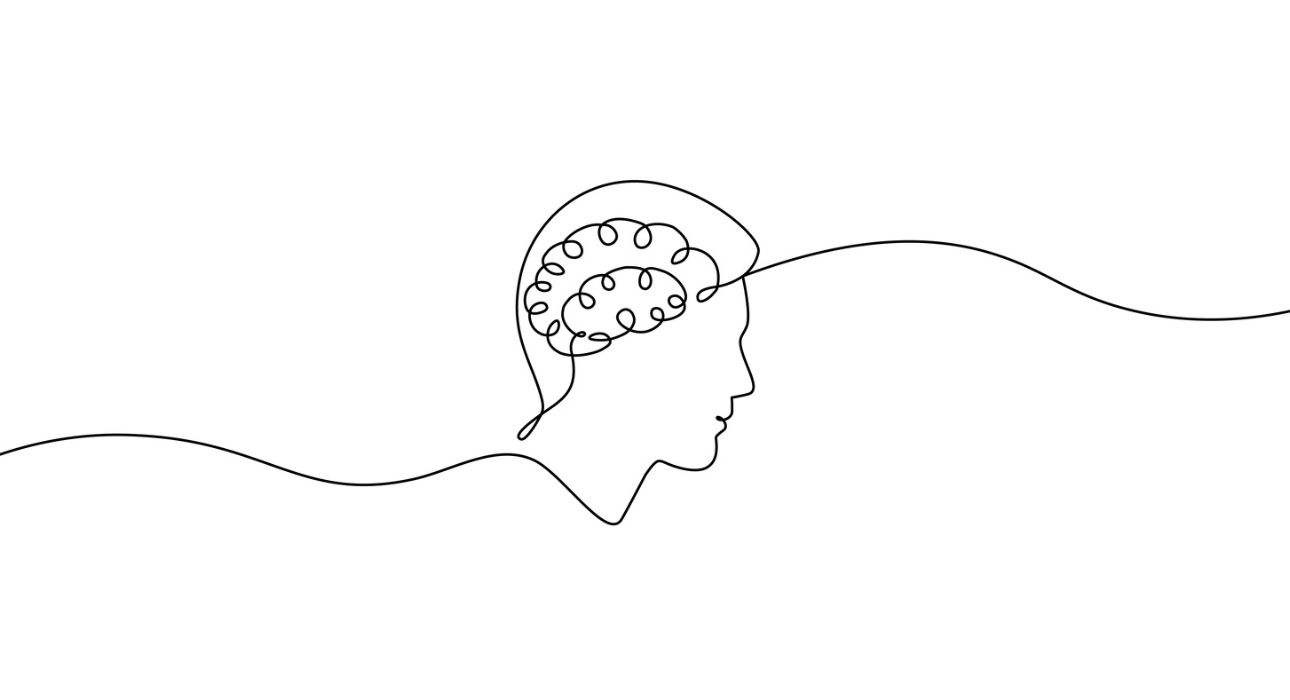
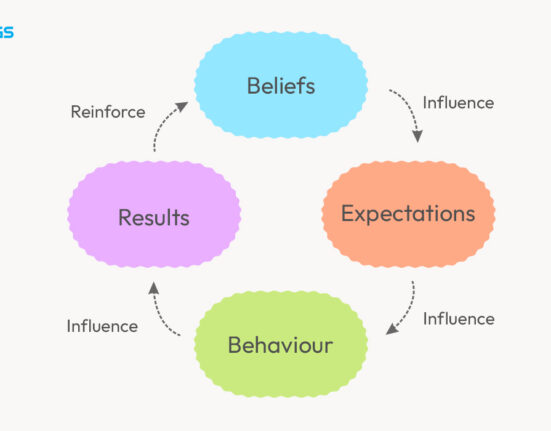
Let us consider two employees who applied for the same promotion and were unfortunately not chosen for the position. One of them reacts with poise, asking her supervisor what skills she needs to continue improving herself, enrolling in a training program, and looking forward to the next available promotion. Another employee, on the other hand, regards this setback as a hint that all his efforts went unnoticed by anyone, thus losing the will to work and the motivation to continue doing what he was doing until the moment that the news was announced to him.
The situation is interesting because two employees who were treated the same way arrived at different conclusions and actions. The topic of this kind is of great importance in psychology. Normally behavior cannot be attributed to a single cause, instead it is a combination of thoughts, biology, history, and the environment (Bandura, 1977; Gazzaniga et al., 2019). This means that the study of behavior is insufficient, one should look at the individual experience as well.
Psychology can be defined as a broad scientific field comprising several specialisations that show various aspects of human behaviour. Cognitive psychology deals with thought processes and memory, social psychology investigates the influence of others on human behaviour, developmental psychology deals with changes in the course of one’s life, and biological psychology studies the relationship between the brain and behaviour. While clinical psychology deals with the examination and treatment of psychological disorders, it explains how human behaviour is formed by learning and consequences of choices. Hence, these fields represent a more holistic view on human behaviour (APA, 2025).
Cognitive and Social Psychology
Cognitive psychology identifies methods of using language and communication to express thoughts and guidance in reasoning process. The process of cognitive psychology is involved in computation of different mental functions leading to decision making and acts of a person (Neisser, 1967). This field of research includes several mental processes such as perception, information storage, reasoning, learning of languages, solving problems, and attention. A person’s perception of a situation has a strong impact on his or her emotions regarding that situation. For instance, students who receive criticism in the form of advice for improvement will feel more energized than their peers who perceive the same criticism as an indication of failure (Sternberg & Sternberg, 2016). Cognitive processes influence human behaviour in several important ways:
- Making choices: Mental phenomena can affect decision making in some cases employing helpful simplifications which may lead to making mistakes.
- The process of recollection: Particular states of mind and emotions can change the process of recollection.
- Resolution of problems: Reasoning and prior knowledge assist one to analyze problems.
- Interpretation: Personal belief affects one’s reaction to certain situations.
Social psychology primarily studies how the sociocultural environment shapes an individual’s beliefs, emotions, and actions. It is all known that people often change their attitude or behavior depending on social norms, relationships, and situational factors. Conformity serves the best example of this concept. Asch’s (1956) experiment demonstrated that even when the correct answer is clear, people tend to agree with the wrong answer given by the group of people they belong to. In addition to that, studies conducted by social psychologists cover stereotypes, attraction, attitudes, and social characteristics of behavior.
The theory of social learning explains how each person learns behavior through observation ( Bandura’s, 1977). Thus, through study of sociology, it becomes possible to understand how family relationships, friendships, culture, and social environment influence human behavior.
Developmental and Biological Psychology
Developmental psychology is about how people develop over time right through their lifespan including the different aspects of one’s life such as physical development, cognitive development, emotional development, and social development. Different theories help to understand the development through the different stages. For instance, adolescence is viewed as a process of developing identity, independence, and relationships. According to Erikson (1968), people are facing both psychological and social problems in their life through his theory of psychosocial development. The debate has been raised in the field concerning nature and nurture in the context of genetic inheritance and the environmental factors (e.g. family, education, culture, life experiences) influencing personal life and its aspects.
The study of biological psychology focuses on how the brain, nervous system, hormones, and genes influence thought process, emotion, and behaviour of human beings. The working of the brain has an important role in terms of memory, language, emotions, movements, and decision making (Gazzaniga et al., 1999). The major concept in this discipline is neuroplasticity, which is defined as the brain’s ability to change its structure and reorganize its connection as a result of experience (Gazzaniga et al., 1999). By doing this the neural pathways responsible for the skill will become stronger and the corresponding behaviour can eventually become habitual (Kolb & Gibb, 2014).
Read More: Growing Up with Smart Machines: A Developmental Psychology Analysis
Clinical Psychology
Clinical psychology is concerned with studying the mental disorders that affect individuals with respect to their thinking, emotions, and actions. They learn to investigate the possible causes of mental distress and the behaviours associated with it. The clinical psychologists will employ special tests, interviews, and therapy techniques in order to find the answers to their questions. There are many different approaches to clinical psychology, such as bio-psychosocial approaches which assume that behaviour is a product of biology, psychology, and social surroundings.
Read More: 10 Signs Your Therapy Is Actually Working
Behavioural Psychology
Behavioral psychology is a branch of psychology that studies how human behavior is shaped and influenced by environmental experience. This branch of psychology clarifies the reasons for certain behaviors to be repeated, avoided, or changed over the period of time. The most important concepts of behavioral psychology are:
- Reinforcement. This principle increases the possibility of a behavior occurring again. For example, a child gets praised for doing their homework regularly.
- Punishment. The principle of punishment reduces the likelihood that the behavior will occur again.
- Classical conditioning. This principle clarifies the way people learn to connect stimuli with response to the stimuli.
- Observational learning. According to Bandura (1977), this is the way of learning behavior by observing the behavior of other people.
These principles contribute to understanding the way habits develop and how changing the behavior through learning occurs. Behavioral psychology has application in child rearing and education.
Conclusion
A study of human behaviour means more than looking at isolated actions; it requires looking at the complexity behind how someone thinks, feels or behaves, and how relationships, experiences and physiological functioning combine to influence a person’s actions. Researchers can better understand human behaviour by integrating insights from different fields of science. This will enable psychologists to devise better solutions to problems of people by working within the framework of their environment.
Scientific methods of research have put forth a much deeper understanding of human behaviour as well as methods of assessment and getting help according to them. Despite progress in research, researchers acknowledge that various theories cannot explain every aspect of human behaviour. Cultural, personal and environmental aspects make studying each case even more complicated and put lots of barriers in the way of scientific research.
References +
- American Psychological Association. (2023). APA dictionary of psychology.
- Asch, S. E. (1956). Studies of independence and conformity: A minority of one against a unanimous majority. Psychological Monographs: General and Applied, 70(9), 1–70.
- Baddeley, A., Eysenck, M. W., & Anderson, M. C. (2020). Memory (3rd ed.). Psychology Press.
- Bandura, A. (1977). Social learning theory. Prentice Hall.
- Beck, A. T. (1976). Cognitive therapy and the emotional disorders. International Universities Press.
- Bronfenbrenner, U. (1979). The ecology of human development. Harvard University Press.
- Coon, D., Mitterer, J. O., & Martini, T. (2022). Introduction to psychology: Gateways to mind and behavior. Cengage Learning.
- Engel, G. L. (1977). The need for a new medical model: A challenge for biomedicine. Science, 196(4286), 129–136.
- Erikson, E. H. (1968). Identity: Youth and crisis. W. W. Norton.
- Gazzaniga, M. S., Ivry, R. B., & Mangun, G. R. (2019). Cognitive neuroscience: The biology of the mind (5th ed.). W. W. Norton.
- Kahneman, D. (2011). Thinking, fast and slow. Farrar, Straus and Giroux.
- Kolb, B., & Gibb, R. (2014). Searching for the principles of brain plasticity and behavior. Cortex, 58, 251–260.
- Neisser, U. (1967). Cognitive psychology. Appleton-Century-Crofts.
- Pavlov, I. P. (1927). Conditioned reflexes. Oxford University Press.
- Santrock, J. W. (2021). Life-span development. McGraw-Hill.
- Skinner, B. F. (1953). Science and human behavior. Macmillan.
- Sternberg, R. J., & Sternberg, K. (2016). Cognitive psychology. Cengage Learning.

Leave feedback about this