







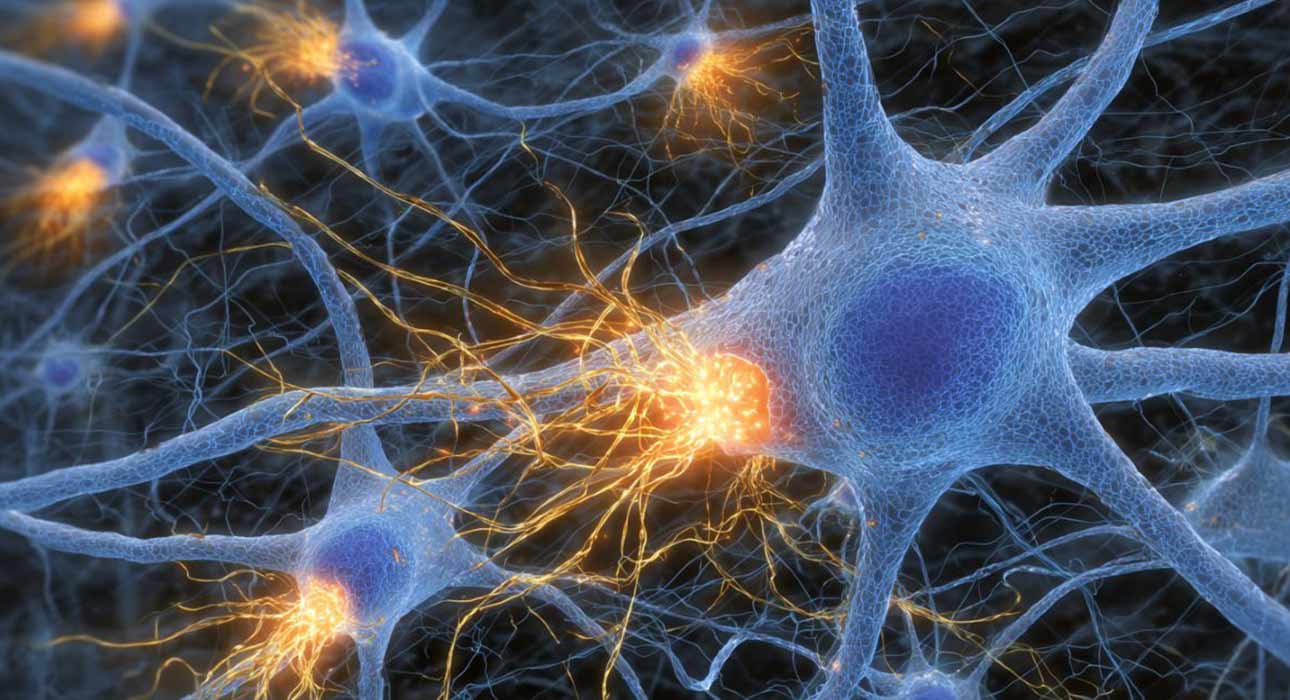
A recent study conducted by the neurobiologists of New York University studied the movement of dopamine and the way in which it manages different functions inside the brain. For years it has been a continuous struggle for the scientists to explain and uncover how a single hormone can manage the work of handling various tasks of the human body like working on the task of managing rewards, memory, attention as well as the motor control of the human body. This new study finally provides people with all the answers to these questions.
Dopamine: the brain’s reward chemical
Dopamine, over the years, has always been one of the extremely curious topics of research for neuroscientists. It is a hormone that is mainly considered to be responsible for the tasks of controlling a person’s attention and memory of a person, along with the movement of their body. Not only this, but dopamine also functions as the brain’s pleasure chemical. A recent study conducted at New York University on laboratory rats has uncovered some new results and findings that would help neurobiologists understand more about the functions of dopamine. This research took the neurobiologists a step closer to identifying how different disorders like Parkinson’s disease and other mental health problems like schizophrenia, as well as depression, are caused in the human body due to disturbances in dopamine activities.
Read More: The Role of Dopamine in the Mind
Research details
The major purpose of the researchers while conducting this study was to understand and examine how a single hormone, dopamine, performs dual functions of learning, along with the work of controlling the movements of the human body. To understand it in a better way, the neuroscientists focused on the activities of dopamine along with another neurotransmitter inside the human body, which is known as acetylcholine. The work of acetylcholine is to aid muscle contraction inside the body as well as support memory and learning.
While researching laboratory rats, the neurobiologists simultaneously focused on both dopamine and acetylcholine. The rats were tested while performing tasks related to decision making that involved a mix of both learning and movement, to find the hidden rewards.
The rats were left to find the source of water after being trained with sound cues, which could help them identify the amount and location of the water. The scientists discovered that the amount of interaction between dopamine and acetylcholine would be the determining factor in whether they would promote learning or movement of the body.
Research findings
The researchers found that the timing during which acetylcholine was released played the determining factor in whether dopamine promoted learning or body movement. Neurobiologists discovered that the movement of dopamine and acetylcholine was very similar to the see-saw movements, as when dopamine was present with a reduced amount of acetylcholine, it promoted the task of learning and helped in functions of memory as well as other attentive works. However, on the other hand, when dopamine was found with a high and burst in the level of acetylcholine, it focused on the tasks of body movements. The results also showed that the difference and gap between these timings was 10 milliseconds.
Read More: How the Dopamine Economy Creates Digital Fatigue
Author’s perspective
Christine Constantinople, a professor at the New York University Centre for Neural Science and the senior author of this research, which was published in the Journal nature neuroscience state ‘’ this study addresses the very single largest question in the dopamine field, which is how to reconcile its double roles in learning and motor controls’’.
Conclusion
Dopamine can perform both functions, which include helping in the learning process, rewarding behaviours, as well as in upcoming movements of the human body; it all practically depends upon the timing in which the other neurotransmitter chemical, which is known as acetylcholine, is released by the body. This research proves that the brain changes itself, and has the ability to change in order to learn something.
References +
https://neurosciencenews.com/dopamine-acetylcholine-timing-learning movement-30382/



Leave feedback about this