







The nightly battle we never intended to fight, it often starts as harmless. You finish your work, do your chores, answer a few messages, and you’re finally in bed by 11 p.m. You know you have to get up early tomorrow, and you know how much essential sleep is, but one video becomes ten, one quick scroll through Instagram or YouTube shorts turns into an hour, and suddenly, it’s 1 a.m. Now your morning routine is met with exhaustion and regret, followed by the promise to “go to sleep earlier tonight.” Does it sound familiar to you?
This nightly struggle is now incredibly common in almost everyone, and for some obvious reasons, in today’s hyper-connected world, smartphones, computers, and televisions are everywhere, constantly providing stimulating content at our fingertips. What makes it so puzzling is that people often choose to stay up even when they know the negative consequences, and the problem isn’t always a lack of awareness but rather a temporary change in the brain’s operating system that happens late at night.
When we’re tired enough, parts of our brain which are responsible for thoughtful decision-making start to shut down and besides emotion and reward circuits take over (Killgore, 2010). Understanding the neuroscience behind this nightly struggle can help explain why intelligent, responsible people repeatedly undermine their own sleep, and how environmental strategies can succeed where willpower fails.
The Prefrontal Cortex Clocks Out
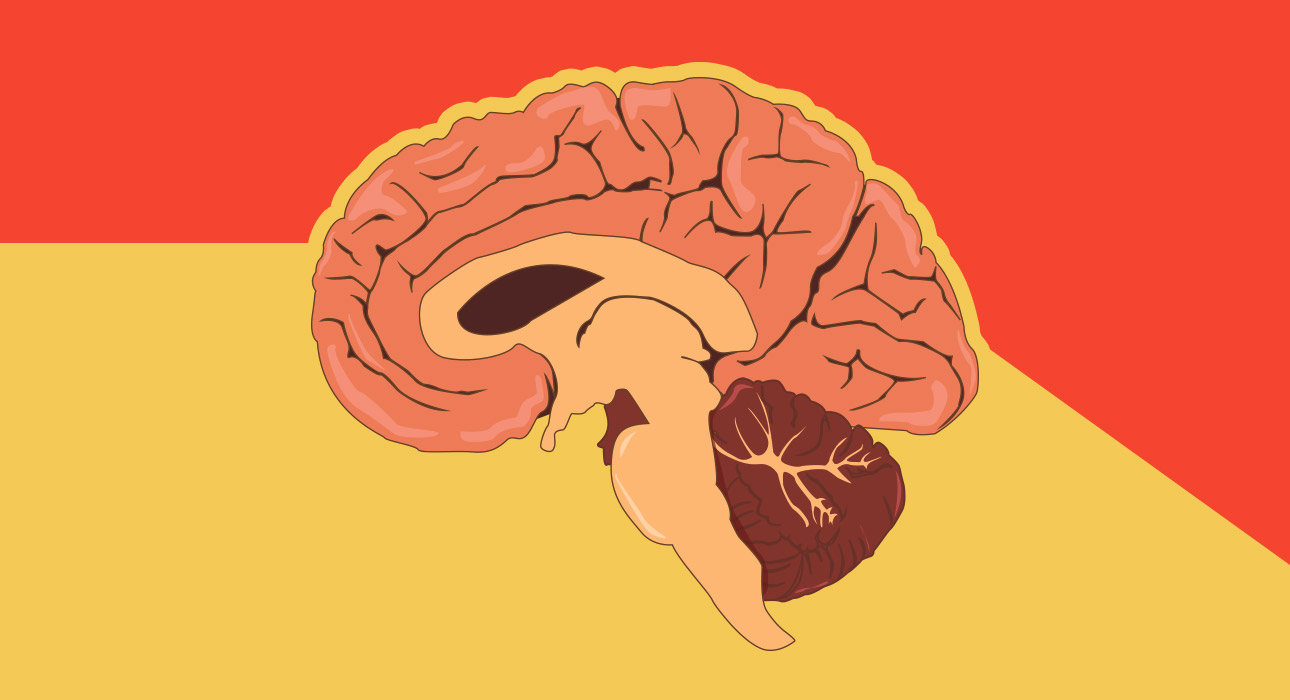
The prefrontal cortex is essentially the brain’s executive centre. It deals with higher levels of thinking processes like planning, decision-making, and self-control. Throughout the day, this part of the brain helps individuals to resist temptation and plan for the future. However, the prefrontal cortex isn’t always in fully functional mode, and research shows that the more hours people are awake, the more depleted this portion becomes. When individuals are sleep-deprived, the ability for judgment, attention, and impulse control is impaired (Goel et al., 2009).
Around 11 p.m. to midnight, the brain’s current situation differs greatly from its morning operating system. When the prefrontal cortex is tired, it loses some of its ability to keep impulsive urges in control, which may lead to:
- The long-term goal (tomorrow’s early wake-up call) feels less appealing.
- The immediate reward (a funny video, a compelling Instagram thread or a YouTube short) becomes highly desirable.
- Decisions begin to feel emotionally driven.
- Making healthy choices requires more mental effort.
As a result, there’s a neurological imbalance: the little part of the brain saying, “Get to sleep! You have to wake up early and go to work tomorrow!” is now a weak voice in a room where the louder parts of the brain are shouting about how much fun there is to stay online right now. This is where night-time procrastination begins.
Revenge Bedtime Procrastination: Reclaiming Own Time
The concept of “revenge bedtime procrastination” refers to intentionally delaying sleep despite knowing it is beneficial. According to Kroese et al. (2014), it can be considered as a recovery of personal time that was taken during the daytime due to occupational commitments, childcare, household tasks, academic studies and so on. Therefore, when one reaches to their bedtime, the time is seen as belonging to the individual, staying up late can be perceived as acting freely or ‘me time’. Common thoughts like:
- “This is my time to relax”
- “I deserve a break”
- “Just one more episode, and then I’ll go to sleep”.
Studies have found that it is not often due to ‘laziness‘, but it is more connected to low self-control, and difficulty with emotion regulation rather than low understanding of the importance of sleep (Kroese et al., 2014). Ironically, the experienced fatigue is a result of not getting enough sleep, which further creates a perpetuating self-regulation cycle:
- Stressful day.
- Desire for personal time.
- Delayed bedtime.
- Reduced sleep.
- Increased fatigue.
- Weaker self-control the next evening.
Over time, this cycle can become a deeply ingrained behavioural pattern in individuals.
The Dopamine Trap: Why Screens Feel Impossible To Leave
A major factor in the nightly dilemma is the neurotransmitter dopamine, which is involved in learning, motivation, and reward seeking (Volkow et al., 2011). Dopamine is not actually a “feel good” chemical; rather, it’s what drives people to seek rewards, and technology provides constant, unpredictable streams of potential reward, like a text, an interesting article, a funny meme, or a compelling reel. This unpredictability is what makes technology so addictive, as people don’t know when the next exciting reward will come, so they keep scrolling. Reduced control from the tired prefrontal cortex in the evening further increases the drive for stimulation. There are multiple contributing factors, including:
- High stimulation from easily accessible digital devices,
- Increased sensitivity to emotional stimuli
- Decreased emotional reasoning
- Lack of competing responsibilities at night
The overall outcome is a powerful dopamine-seeking feedback loop in which people are no longer enjoying scrolling, but just anticipating the next potential reward.
Read More: The Role of Dopamine in the Mind
The 11 p.m. Amygdala: Emotional Vulnerability At Night
For many people, worries can feel much more magnified after it gets dark, with personal concerns like relationships, finances, career changes, and personal failures seemingly amplified when they’re trying to sleep. The amygdala is the region in the brain that is responsible for threat detection, fear processing, and emotional responsiveness (LeDoux, 2000). Sleep deprivation has been found to make the amygdala more reactive, while simultaneously diminishing the regulatory input from the prefrontal cortex (Yoo et al., 2007). In layman’s terms, emotional alarm systems become more active while emotional control systems become less effective. This means it can lead to:
- Heightened anxiety
- Increased sensitivity
- Catastrophic thinking,
- Difficulty in disengaging from ruminative thoughts
A worry people would dismiss in the morning can feel like a major crisis at midnight. After enough sleep, the brain’s control mechanisms reassert themselves, and the heightened emotional reactivity is replaced by a more realistic outlook. This phenomenon helps to understand why many nighttime fears appear less convincing in the morning.
Reason Behind Willpower Fails At Bedtime
A major approach to many plans aimed at helping people sleep better depends on motivation and discipline. Although willpower and motivation are important, they are unlikely to work because they presuppose that a person will always make the “right” decision when they have no more cognitive resources. Behavioural scientists now increasingly recognise more about the utility of altering environments compared to forcing self-control (Thaler & Sunstein, 2008). By the time one goes to bed, they may be dealing with:
- Decision fatigue
- Mental exhaustion
- Emotional stress
- Loss of impulse control
These factors are making it unrealistic to expect that the brain can always overcome highly powerful digital rewards. Rather than asking, “How can I be more disciplined?”, a more productive question might be, “How can I make healthier choices easier than the unhealthier ones?” This shift focuses on changing the environment rather than fighting biology.
Making Sleep Easier By Redesigning The Space
Instead of fighting biology, some clever strategies leverage it:
1. Make screens harder to access
According to habit formation research, introducing ‘friction’ (obstacles) makes it harder to complete less-desirable actions (Wood & Rünger, 2016). This could include activities like:
- Charging a mobile phone outside the bedroom
- Setting a traditional alarm clock instead of relying on your phone
- Logging out of social media before bedtime
Keeping phones and other electrical devices away from the bed can be a simple yet powerful tool for reducing the temptation to stay up too late.
Read More: How to spend less time on Social Media? and activities to do instead
2. Introduce the Digital Sunset
A ‘digital sunset’ refers to implementing screen-free time before going to bed. It may include:
- Not using social media 60 minutes before bedtime,
- Using blue-light filters when you are using screens at night,
- Replace time spent on screens with time reading or light stretching.
These habits reduce both stimulation and exposure to light that can interfere with melatonin production (Walker, 2017).
3. Create Automatic Sleep Cues
When the environment becomes constant, the brain recognises and responds to it. This is why useful cues include:
- Dimming the lights at a consistent time every night,
- Listening to calming music,
- Having a routine to count on before going to bed, and
- Having a consistent bedtime and waking schedule.
The repeated exposure to the cues will help condition the brain to associate the specific behaviours with sleep preparation.
Read More: Digital Insomnia: Why the Brain Refuses to Shut Down at Night
4. Take care of daytime deprivation
Since unmet psychological needs are part of what drives revenge bedtime procrastination, improving daytime activities efficiently with a balance may help to decrease bedtime resistance. Try to:
- Schedule some time to do enjoyable things during the day,
- Taking short breaks for ‘me-time’,
- Set realistic boundaries between personal and professional life,
- Practising ways to deal with stress effectively.
When people experience greater autonomy and satisfaction throughout the daytime, they may intend to feel less compelled to reclaim more personal time late at night.
Conclusion
The struggle to go to bed on time does not stem from a lack of self-control or willpower; rather, it is the natural interaction between biology, technology and psychology in modern society. As night falls, our prefrontal cortex, the brain’s executive centre, loses its control while the reward centres, which are particularly driven by dopamine, and the emotionally charged portions of the brain gain power, making it an optimal state for feeling vulnerable, craving stimulation, and a lack of long-term decision-making.
Understanding this struggle can be helpful as it allows people to begin designing the environment around them rather than blaming themselves when they are unable to make the right decisions. By taking simple steps such as maintaining distance from screens, creating consistent bedtime rituals, and scheduling personal time during the day, people can decrease revenge bedtime procrastination and take away its power before going to bed. The aim is to prevent the nightly battle against our brains by establishing conditions where the battle never needs to happen.
References +
- LeDoux, J. E. (2000). Emotion circuits in the brain. Annual Review of Neuroscience, 23, 155–184.
- Miller, E. K., & Cohen, J. D. (2001). An integrative theory of prefrontal cortex function. Annual Review of Neuroscience, 24, 167–202.
- Yoo, S. S., Gujar, N., Hu, P., Jolesz, F. A., & Walker, M. P. (2007). The human emotional brain without sleep, A prefrontal amygdala disconnect. Current Biology, 17(20), R877– R878.
- Thaler, R. H., & Sunstein, C. R. (2008). Nudge: Improving decisions about health, wealth, and happiness. Yale University Press.
- Goel, N., Rao, H., Durmer, J. S., & Dinges, D. F. (2009). Neurocognitive consequences of sleep deprivation. Seminars in Neurology, 29(4), 320–339.
- Killgore, W. D. S. (2010). Effects of sleep deprivation on cognition. Progress in Brain Research, 185, 105–129.
- Volkow, N. D., Wang, G. J., Fowler, J. S., Tomasi, D., & Baler, R. (2011). Addiction: Beyond dopamine reward circuitry. Proceedings of the National Academy of Sciences, 108(37), 15037–15042.
- Kroese, F. M., De Ridder, D. T. D., Evers, C., & Adriaanse, M. A. (2014). Bedtime procrastination: Introducing a new area of procrastination. Frontiers in Psychology, 5, 611. ∙ Wood, W., & Rünger, D. (2016). Psychology of habit. Annual Review of Psychology, 67, 289–314.
- Walker, M. P. (2017). Why we sleep: Unlocking the power of sleep and dreams. Scribner. ∙ Montag, C., & Diefenbach, S. (2018). Towards homo digitalis: Important research issues for psychology and the neurosciences. Sustainability, 10(2), 415.





Leave feedback about this