







From the first few weeks of existence, before we have developed an ability to use language or recall the past, something significant is happening. A baby cries and waits for comfort to be provided or for nothing at all to happen. The interactions that occur during these elementary experiences, i.e., the baby receiving food, feeling frustrated, being close to someone, or feeling abandoned by someone, form the foundation of the baby’s mind (Klein, 1935; Segal, 1973).
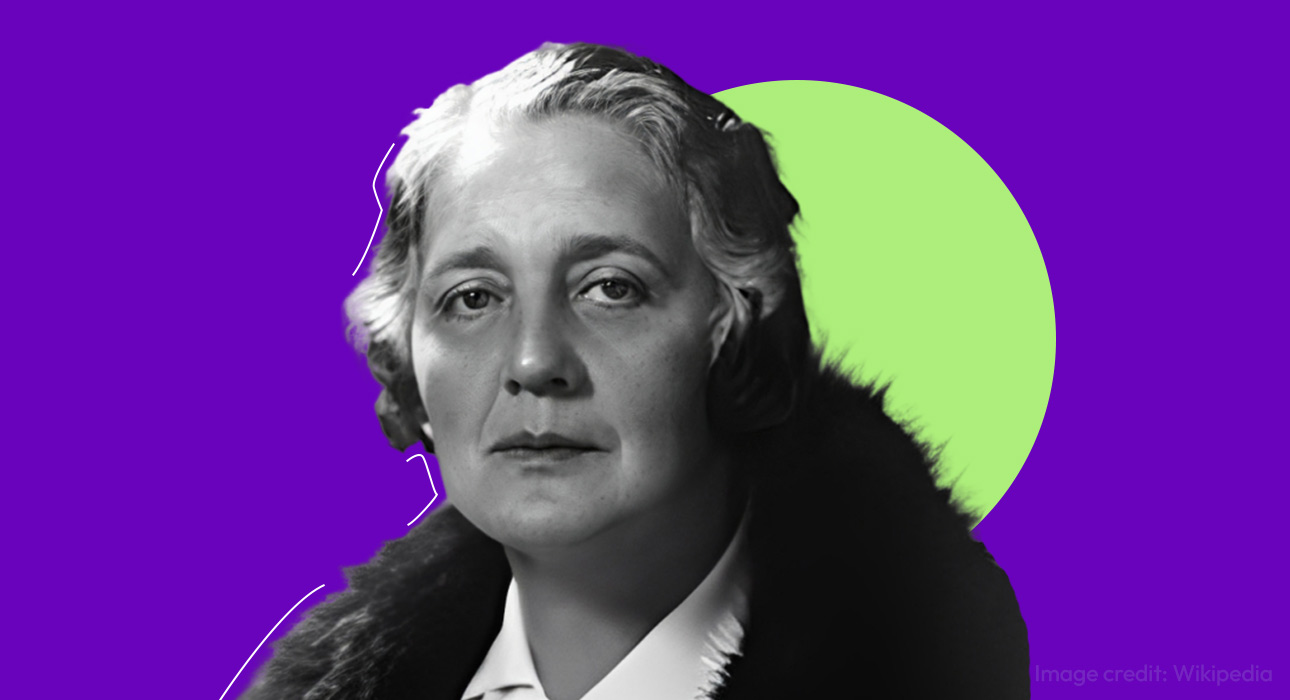
Few psychologists took this emotional world of the infant as seriously as Melanie Klein. Klein’s theory of object relations provides a radical perspective to psychoanalysis by claiming that our psychological lives start much sooner than Freud suggested they would (Klein, 1946). She viewed the infant as an active participant in a world of emotional intensity, rather than simply a passive being gradually acquiring feelings (Hinshelwood, 1991).
An additional reason for Klein’s fascinating theories is the relationship between her life experiences and the emotional patterns in her life. Her experiences of loss, anxiety, and unstable attachments to one another were premonitions of the emotional development of others and ultimately guided her work with object relations, splitting, and the paranoid schizoid position (Klein, 1946). The richness of Klein’s theories about object relations, splitting, and the paranoid-schizoid position is enhanced by understanding them in the context of her development as an adult (Segal, 1973).
Read More: Object Relations Theory: How Early Relations Determine the Course of Our Life
A Childhood Marked by Attachment
Melanie Klein was the youngest of the four children, born in 1882 into a Jewish family (Grosskurth, 1986). Her father, Moriz Reizes, was a physician who encountered financial difficulty until he established himself. Klein’s mother, Libussa Deutsch, was characterised by her intelligence, ambition and tenacity.
Because of the close bond both had, most biographers also observe the particularly strong nature of their relationship. Libussa played a central emotional role in the household, and Klein appeared deeply attached to her (Grosskurth, 1986). This early maternal bond would later mirror one of Klein’s most famous theoretical claims: that the mother–infant relationship forms the psychological foundation of the human mind (Klein, 1935). But Klein’s childhood was not only defined by closeness—it was also defined by loss.
The First Loss
When Klein was four years old, her close sister Sidonie died of tuberculosis (Grosskurth, 1986). Sidonie had an extraordinary relationship with little Melanie and used to help her learn how to read and do arithmetic. Children often have difficulty processing the loss of someone special to them through their own eyes as a person, so the loss of a special person through the eyes of a child is difficult and causes confusion (Bowlby, 1980). This is sometimes the first direct encounter with a missing person that the child has.
Psychoanalysts have often noted how such experiences may shape a child’s inner world. In Klein’s (1940) later theoretical writings, the infant is portrayed as struggling with powerful anxieties about losing the loved object. The mind becomes preoccupied with protecting, attacking, or restoring the relationship with that object. It is difficult not to see echoes of Klein’s own early loss in these ideas.
Read More: Outgrowing My Closest Friend: A Silent Grief
A Second Blow
Loss returned to Melanie Klein’s life again in early adulthood. Her brother Emmanuel, who had been a major intellectual influence and emotional support, died in 1902 at the age of twenty-five (Hinshelwood, 1991). Emmanuel had encouraged Klein’s academic ambitions and reportedly inspired her early desire to study medicine. His death was deeply destabilising for her.
Melanie Klein also began experiencing periods of severe depression around this time, something she would suffer from for several years (Grosskurth, 1986). Her emotional problems eventually led to Klein seeking psychoanalytic treatment. Ironically, the same path that led to personal healing also changed the field of psychoanalysis forever.
Entering Psychoanalysis
Melanie Klein first encountered psychoanalysis as a patient. In 1914, she commenced analytical work together with Sándor Ferenczi, who had been an associate of Sigmund Freud (Segal, 1973). Ferenczi encouraged Klein’s intellectual curiosity and stimulated her interest in children’s psychology. Afterwards, Klein went on to continue her training as a psychoanalyst in Berlin, where she was a student of Karl Abraham, another significant Freudian psychoanalyst (Hinshelwood, 1991). It was at this point in time that Klein began to establish her theories, which would ultimately provide a new framework for the field of psychoanalysis. Her most radical insight came from observing children.
Melanie Klein did not just want to use verbal free-association (the method Freud used for adults) (Klein, 1932). She preferred to work with children using play. She thought there was no better way for children to express their emotions than through the use of toys, drawings or storytelling (Segal, 1973); she also found that children have a more intricate emotional life than Freud assumed and that children have developed a very sophisticated emotional life at a much earlier age than Freud assumed.
Read More: The Psychoanalytic Roots of Resistance: Freud and Anna Freud’s Psychoanalytic Perspectives
The Infant’s Emotional Universe
Klein’s most influential concept is object relations. In psychoanalytic language, an “object” refers to a person who becomes emotionally significant—most often the caregiver(Fairbairn, 1952). According to Klein, infants quickly begin forming internal mental representations of these figures (Klein, 1935). These representations become what she called internal objects.
For Klein, the infant’s first and most important object is the mother’s breast. When the infant is fed and comforted, the breast is experienced as good. When the infant feels hunger or frustration, it becomes experienced as bad (Klein, 1946). The Emotional Life Of An Infant Is Shaped By Their Initial Experiences Of Pleasure And Pain; However, In The Beginning Stages Of Development, An Infant’s Brain Cannot Harmoniously Integrate These Opposing Forces, Therefore An Infant Will Create A Unique Psychological Response (Klein, 1946). It splits them.
Splitting and the Paranoid-Schizoid Position
Melanie Klein’s (1946) concept of the paranoid-schizoid position is applied in the first phase of psychological development during infancy. This division creates a ‘paranoid’ state through the infant’s sense of there being good and bad objects in their environment. To the infant, the good object offers a source of comfort, nourishment, and security. The bad object represents frustration, absence, or threat.
The word paranoid refers to the infant’s anxiety that the bad object might attack or destroy the self. The word schizoid refers to the mind’s splitting of experience into separate compartments (Klein, 1946). By splitting themselves in half, the splitting protects them from experiencing too much emotional turmoil at once as they grow up. After developing into an adolescent, the adolescent learns and can grasp that their ‘good’ part of themselves and the ‘bad’ part belong to one single object, or parent.
The Depressive Position
The infant enters the depressive position when they come to understand that the primary caregiver (the one with whom they have been feeling so much love and attachment) can also be the one who has frustrated them in some way (Klein, 1940). With the acquisition of this new awareness, there have been two new emotional experiences: one is guilt at wanting to injure their caregiver, who is both a person they love and wish to please and, for the first time, there’s also a fear that their caregiver could injure them.
In addition, with the realisation of his/her own guilt, the child wishes to remedy or repair the damage done to their caregiver as a result of both their own behaviours and the feelings of guilt they now experience towards him/her. The child wants to restore the loved relationship. For Klein, this moment marks the beginning of empathy, concern, and emotional integration.
When Theory Reflects Life
Many historians of psychoanalysis have observed that Klein’s theories seem to echo her personal experiences (Grosskurth, 1986). Her mother has been a constant source of strength for the author and has influenced her concepts of relationships. The author’s views on guilt, loss, and the process of repair stem from emotional experiences she had with her deceased siblings. Even her understanding of depression appears deeply informed by her own struggles (Hinshelwood, 1991).
Yet Klein’s genius was not simply autobiographical insight. She transformed personal emotional questions into a systematic theory about the earliest stages of human development. Her work suggested that the roots of adult emotional life—love, anxiety, jealousy, compassion—are already present in the infant’s first relationships.
A Lasting Legacy
Melanie Klein’s ideas were controversial. During the Freud–Klein controversies of the 1940s in the British Psychoanalytic Society, her theories sparked intense debates about the nature of childhood development (King & Steiner, 1991). But despite these conflicts, her influence grew. The ideas developed by later theorists will lend themselves to further development based on Klein’s ideas through what we now call object relations theory: Donald Winnicott, Wilfred Bion, and Ronald Fairbairn (Mitchell & Black, 1995).
Melanie Klein’s contributions to psychoanalytic psychotherapy, developmental psychology, and attachment theory remain influential today, as they remind us that relationships established at birth persist throughout adult life as part of an internal world (Klein, 1957). Klein may have appreciated this truth more than others due to her own experience.
References +
Bowlby, J. (1980). Attachment and Loss LOSS SADNESS AND DEPRESSION A Member of the Perseus Books Group. https://sycofx.wordpress.com/wp-content/uploads/2012/11/john bowlby-loss-sadness-and-depression-attachment-and-loss-1982.pdf
Grosskurth, P. (1986). Melanie Klein : her world and her work : Grosskurth, Phyllis : Free Download, Borrow, and Streaming : Internet Archive. Internet Archive. https://archive.org/details/melanieklein00phyl
Klein, M. (1935). A Contribution to the Psychogenesis of Manic-Depressive States 11. Int. J. Psychoanal, 16, 145–174.https://www.jungiananalysts.org.uk/wpcontent/uploads/2024/09/Klein-M.-1935-A-Contribution-to-the-Psychogenesis-of-Manic Depressive-States-1.pdf
Klein, M. (1940). Mourning and Its Relation to Manic-Depressive States 11. Int. J. Psychoanal, 21, 125–153.https://www.jungiananalysts.org.uk/wp-content/uploads/2024/09/Klein-M.- 1940-Mourning-and-its-Relation-to-Manic-Depressive-States-1.pdf
Klein, M. (1946). APA PsycNet. Psycnet.apa.org. https://psycnet.apa.org/record/1948-02558-001 Klein, M. (1957). APA PsycNet. Psycnet.apa.org. https://psycnet.apa.org/record/1958-01263-000 Klein, M. (2026). PEP | Browse | Read – The Psycho-Analysis of Children: By Melanie Klein.
Authorised translation by Alix Strachey. (Hogarth Press and the Institute of Psycho Analysis, London, 1932. Pp. 393. Price 18 s. net.). Pep-Web.org. https://pep web.org/browse/document/ijp.014.0119a
Mason, A. A. (1991). A Dictionary of Kleinian Thought. By R. D. Hinshelwood. London: Free Association Books, 1989, 482 pp., $40.00. Journal of the American Psychoanalytic Association, 39(1), 271–274. https://doi.org/10.1177/000306519103900121
Mitchell, S.A, & Black, M. J. (1995). APA PsycNet. Psycnet.apa.org. https://psycnet.apa.org/record/1995-98511-000
Scharff, D., Fairbrain, W. R. D., & Fairbrain, E. (1952). Psychoanalytic Studies of the Personality. https://kuswoyoaji.wordpress.com/wp
content/uploads/2014/01/psychoanalytic-studies-of-the-personality.pdf Segal, H. (1973). Introduction to the work of Melanie Klein: Segal, Hanna: Free Download, Borrow, and Streaming: Internet Archive. Internet Archive. https://archive.org/details/introductiontowo0000sega
Tuckett, D., King, P., & Riccardo Steiner. (1991). The Freud Klein: controversies: 1941-45. Routledge.





Leave feedback about this