







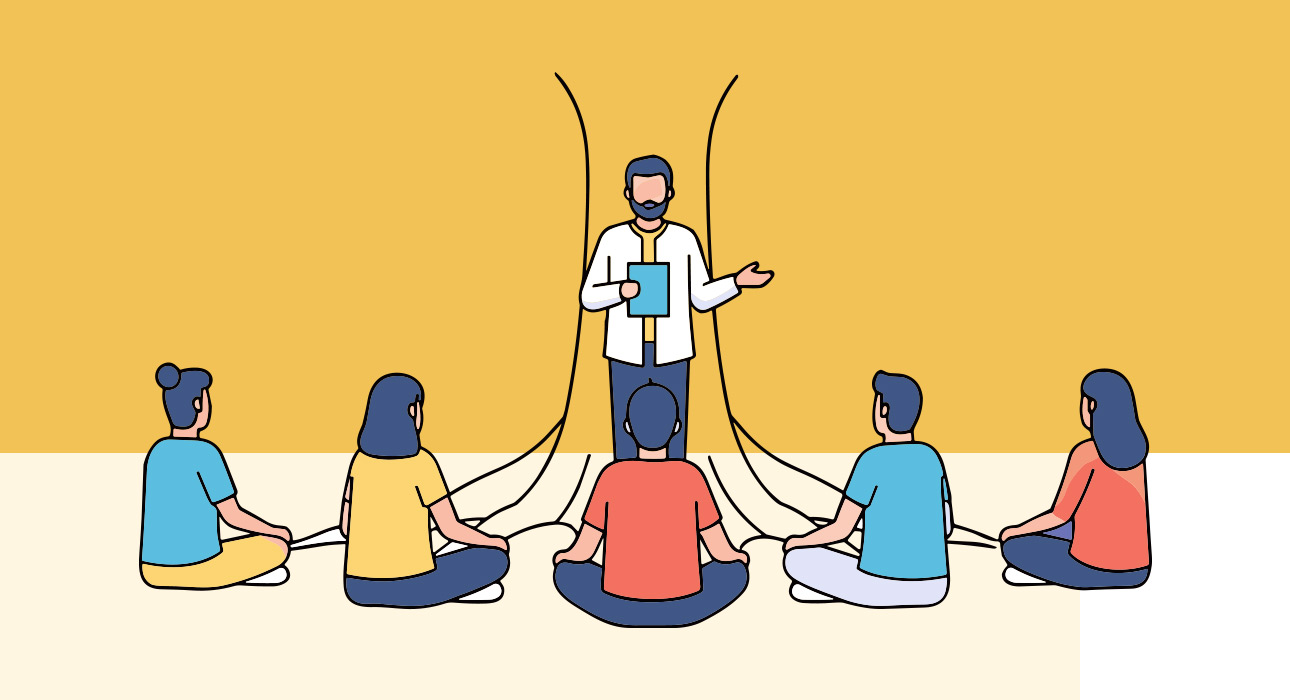
Over the past decade, India has witnessed a rising concern towards the mental well-being of individuals. Social media has played a pivotal role in spreading awareness among the common people. Exposure to content relating to mental health and psychological well-being has made it a topic of active discussion among the common people of the country. Companies have started to celebrate Mental Health Day. Universities across the country have been actively organising mental health awareness campaigns. For the first time, mental health conversations have shaped themselves to become a part of the everyday conversation in India.
Although India is speaking of mental health more than ever before, millions are still suffering in silence. The National Mental Health Survey reported treatment gaps ranging from 70% to 92% across mental health disorders, indicating that the majority of individuals requiring care still do not receive formal treatment (Gururaj et al., 2016). The reason is not a lack of awareness. It is something way older, deeper, more orthodox and much more difficult to challenge: social stigma.
For many Indians, seeking psychiatric help for psychological distress is accompanied by a familiar question that has restrained generations: “What will people say?”
Read More: The Rise of Self-Diagnosis on Social Media
If You Are Emotionally Suffering, Then It Must Be a Secret
In many Indian households, a homemaker experiencing depression due to years of emotional neglect or a professional having sleep disturbances due to anxiety are not viewed as health concerns. Rather, they are dismissed as weakness, laziness or attention-seeking. From the very beginning, society shapes the individual’s mind such that mental health struggles are not discussed with anyone or shared with relatives or friends because it might affect how society perceives them. Individuals are rather encouraged to “stay strong”, “be positive”, or simply “move on”.
Research and surveys have shown that there are significant treatment gaps in India due to social stigma and reluctance to seek professional assistance (Indian Psychiatric Society, 2026). Ironically, the impact of most mental health illnesses can be significantly restrained if treated at an early stage, but most people never make it to the chambers of a professional. Supportive family and social relationships can help in reducing the social stigma and promote early help-seeking, thereby reducing the treatment gap.
Read More: Enhancing Help-Seeking Experience: Choosing the Right Professional Help
The Real-World and Social Media are not the Same
Social media has been playing a crucial role over the decade in helping to normalise the conversation on mental well-being in places like India, where mental health issues were kept hidden due to the fear of social stigma. The younger generation is more exposed to terminologies like ‘anxiety‘, ‘depression’ and ‘emotional regulation‘. They acknowledge the psychological struggles more than the previous generations. However, awareness and acceptance are two distinct terms.
As of today, mental health is socially accepted online, but continues to be an uncomfortable reality. Although socially, an individual accepts the need for therapy, they fail to admit that they need therapy themselves. On the digital platform, the same person who likes and reposts content relating to mental health may maintain a deeply stigmatised attitude in real life.
Why Are Individuals Choosing AI Over Professional Therapists?
The world is witnessing a rise in the number of individuals seeking advice from AI chatbots when feeling sad, anxious, ignored, angry or overwhelmed. Surprisingly, most reports have found these interactions to be positive and helpful for the individual (McBain et al., 2025). The question that arises is not whether AI might replace therapists. It is rather something deeper.
Why are young minds choosing AI in the first place?
It is because AI doesn’t judge and doesn’t question or declare the individual’s problems as insignificant. It does not compare and listen. And most importantly, it eliminates the long, suffocating question, “What will people think?” and is free of cost. While individuals feel suffocated, being unable to converse freely, a lack of awareness and understanding makes them question the effectiveness of a counsellor.
Researchers suggest that individuals are choosing AI chatbots despite knowing that it does not possess a human-like consciousness because it provides a safe space to speak freely within. A space with no fear of judgement, comparison or misinterpretation (Li, 2025; Kim et al., 2025).
Read More: When AI Thinks for Us: The Silent Decline of Human Intelligence
Humans Fear Being Judged More Than Their Well-Being
The increase in usage of AI chatbots to have conversations about emotional distress highlights the uncomfortable, deeper reality of society, i.e., although mental health is highly spoken of, fear of being judged restrains an individual from seeking professional help. The choice of young adults, individuals, to speak to AI over seeking professional psychological assistance also signifies that all they want is someone to listen to them. Researchers have concluded a connection between AI usage and loneliness (Jain et al., 2026). The conclusion suggests that for individuals, AI becomes someone who is available when they need it and to whom sharing remains secretive and unjudged.
The usage of AI chatbots for emotional assistance is not a technical achievement but rather a concerning scenario. Speaking to a machine indeed feels easier than expressing oneself to another human. However, overly relying on AI chatbots affects the individual’s social life. Although the AI is able to provide words of empathy, it cannot hold the hand of the person in distress, and it cannot provide the presence that makes the individual feel really heard and secure (Qi et al., 2020). All it can do is speak with empathy, but not satisfy the need for physical availability. It can keep the individual in an illusion. But once the bubble of the illusion pops, the individual may find themselves lost.
Read More: AI Chatbots for People with Disabilities: Bridging the Accessibility Gap
Conclusion
In many rural areas, the conversation of mental well-being is still a topic of amusement. While spreading awareness about emotional well-being is an important task, what India needs is more mental health acceptance. The real change in perspective will happen when individuals can feel free to consult a mental health professional just as they can consult a physician when they have a fever. Mental health struggles are real. They take a toll on the individual’s well-being, and the day when society understands the severity and necessity of these experiences being addressed, individuals will no longer hesitate to express themselves. Then the real progress in society will actually happen.
Until then, AI will continue to fill the gap that society continues to avoid. In the era where human intellect has developed machines to be capable enough to listen, understand and respond accordingly, humans fail to create a space where they can listen, understand and respond or be responded to and speak to without fearing judgment. The future of mental health in India does not depend on the triumphs in the domains of technology and innovation. Rather, it depends on how well and quickly the question “What will people think?” is replaced by “How are you feeling?”
Reference +
- Gururaj, G., Varghese, M., Benegal, V., Rao, G. N., Pathak, K., Singh, L. K., Mehta, R. Y., Ram, D., Shibukumar, T. M., Kokane, A., & NMHS Collaborators. (2016). National Mental Health Survey of India, 2015–16: Summary. National Institute of Mental Health and Neurosciences (NIMHANS).
- Qi, Y., Herrmann, M. J., Bell, L., Fackler, A., Han, S., Deckert, J., & Hein, G. (2020). The mere physical presence of another person reduces human autonomic responses to aversive sounds. Proceedings of the Royal Society B: Biological Sciences, 287(1919), Article 20192241.
- Kim, Y., Chen, S., Li, S. S., Alhamoud, K., Mun, J., Grau, C., Jung, M., Gameiro, R. R., Lin, T., Yoon, J., McDuff, D., Lee, H., Park, H. W., Tulebaev, S. R., Breazeal, C., Liang, P. P., Xu, X., Liu, X., Tsvetkov, Y., & colleagues. (2025, March 3). Medical hallucination in foundation models and their impact on healthcare [Preprint]. medRxiv.
- Li, Y. (2025). Human–AI emotional interaction and psychological well-being among emerging adults. International Journal of Human-Computer Studies, 191, 103456.
- Jain, N., Majeed, A., Bhattacharya, S., & Anand, N. (2025). Associations among loneliness, social anxiety, and conversational artificial intelligence use in digitally connected youth: A cross-sectional study. Journal of Adolescent Health, 77(4), 678–686.
- McBain, R. K., Bozick, R., Diliberti, M., Zhang, L. A., Zhang, F., Burnett, A., Kofner, A., Rader, B., Breslau, J., Stein, B. D., Mehrotra, A., Uscher-Pines, L., Cantor, J., & Yu, H. (2025). Use of generative AI for mental health advice among US adolescents and young adults. JAMA Network Open, 8(11), e2542281.
- Indian Psychiatric Society. (2026). Mental health awareness and treatment gap in India. Indian Psychiatric Society.
- Reuters. (2026, May 5). Young Europeans turn to AI chatbots for emotional support, survey shows. Reuters.
- Boyd, R. L., & Markowitz, D. M. (2026). Artificial intelligence and the psychology of human connection. Perspectives on Psychological Science, 21(2), 192–220.
- Paul, M. K., Kulal, N., Singla, A., Sabhahit, G. G., Hegde, P. R., Rahul, P., Manjunatha, N., Math, S. B., & Kumar, C. N. (2026). Leveraging technology to bridge the psycho social care gap in mental health care: A case series. Indian Journal of Psychological Medicine, 48(1 Suppl.), S128–S134.



Leave feedback about this