







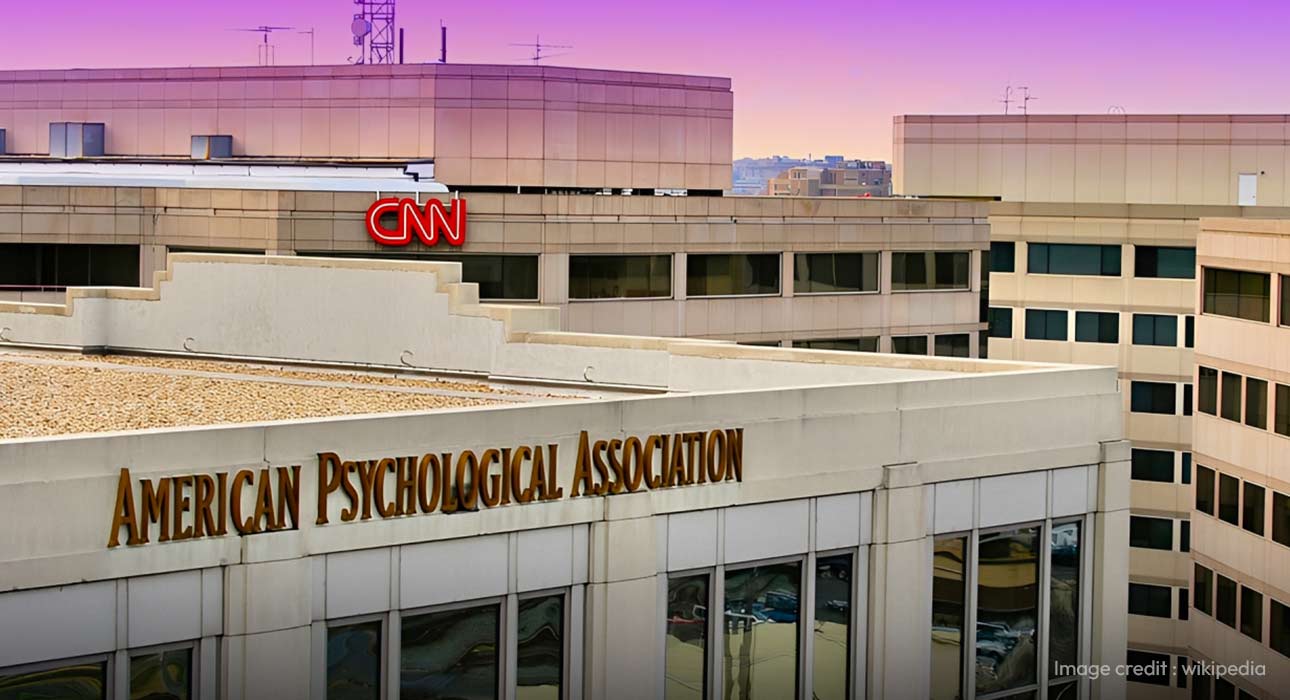
Have you ever wondered who decides what counts as “real” psychology? Who accredits the program that trains your therapist, or sets the citation style you use in every single one of your assignments? Chances are, somewhere behind that answer is one organisation: the American Psychological Association(APA).
Now we know it as a global organisation, but it did not start big. It started with twelve people working from one man’s office, arguing about whether psychology even deserved to be called a science. That was 1892. Today it is the largest organisation of psychologists on the planet, with a hand in almost everything the field touches: research, training, therapy rooms, even national policy. This is the story of how it got there.
Why an Association Was Needed
Why did psychology even need an association? In the late 1800s, Psychology was trying to break away from philosophy and finally stand on its own as a science. Laboratories kept opening. Doctoral programs kept starting. Journals kept getting printed. And still, nobody was speaking for any of it as a whole. Anybody with an interest could call themselves a psychologist, and honestly, nobody could say what that title was even supposed to mean anymore at that time.
Psychology was not alone in this. Economics, political science, and physiology were all going through the same growing pains around the same time, each scrambling to look like a “real” discipline with real credentials (APA, n.d.-a). Psychology needed the same thing everyone else was building: a way for scattered researchers to actually find each other, compare notes, and be taken seriously instead of being written off as amateur philosophers who happened to run experiments on the side.
Read More: Is Psychology a Science, an Art, or a Philosophy?
The Founding Meeting and G. Stanley Hall
Granville Stanley Hall was the person who pushed hardest for this, and by 1892 his name was already attached to a fairly long list of firsts. The first PhD in psychology ever awarded in the United States, for one. He had also built the first American psychology laboratory at Johns Hopkins University in 1883 and started the American Journal of Psychology, the country’s first journal devoted entirely to the subject (Hulse & Green, 1986; Greenwood, 2017).
On July 8, 1892, Hall called a small group of American psychologists to his office at Clark University, where he was president. Only about a dozen actually came. But that was enough, and in that one room, they founded the American Psychological Association. A few others agreed to join afterwards without even being there, John Dewey among them. Two more scholars, Hugo Münsterberg and Edward Titchener, came along a little later on (Greenwood, 2017). At the end, 31 people made up the founding membership (Fernberger, 1932). Hall was elected the Association’s first president, and the group set its first real meeting for December 1892 at the University of Pennsylvania.
From a Handful of Founders to a Growing Profession
Growth was slow at first. Membership increased from 42 people in 1892 to just over 1,100 by 1930, and even that number is a little misleading, since a new, less demanding “associate member” category had been added in 1926 for people doing applied psychological work rather than laboratory research (Fernberger, 1932; APA, n.d.-a). For decades, APA stayed a small, tight circle of academics.
Everything changed with World War II. APA’s leaders realised applied psychology had gotten too big to keep treating as a side branch, so during the war the association merged with several other psychological organisations and rebuilt itself around divisions. Nineteen of them got approved in 1944, and clinical and personnel psychology, counselling, in today’s language, pulled in the most members by far (APA, n.d.-a). This was the moment APA’s mission widened, from just laboratory science to professional practice and public welfare, and that broader scope never really shrank back (APA, n.d.-a).
What came after has been called psychology’s “Golden Age” (APA, n.d.-a). Soldiers coming home from the war had seen up close how badly mental health support was needed, and money started pouring in: the GI Bill, a new Veterans Administration training program for clinical psychology, and the newly created National Institute of Mental Health. For once, psychology, both the science side and the practice side, was actually well funded. The numbers say it better than any of this: between 1945 and 1970, APA’s membership grew by 630 per cent, from 4,183 members to 30,839 (APA, n.d.-a).
Growing Influence Across the Field
That growth never really slowed down after that. APA’s divisions grew from 19 in the 1940s to 54 active ones today. Everything from behavioural neuroscience to media psychology to the psychology of religion falls under one of them (APA, n.d.-a). These days, the Association counts more than 190,000 researchers, educators, clinicians, consultants, and students as members. It is formally tied to 60 state, territorial, and Canadian provincial psychological associations (APA, n.d.-b; APA, 2011).
Its influence today is honestly hard to miss, and it shows up everywhere the field touches. Take research: it publishes over 70 peer-reviewed journals, its flagship being American Psychologist, established in 1946. Its own citation format, APA Style, has basically become the default across the social sciences worldwide (APA, n.d.-c). Then there is education. It accredits the doctoral, internship, and postdoctoral programs that train the next generation of clinical, counselling, and school psychologists. Almost every psychologist practising today passed through a program APA had some hand in shaping (APA, n.d.-b).
Clinical practice works the same way. APA writes the guidelines and ethical standards licensed psychologists are expected to follow every single day. Whether that is a child struggling in school or an adult managing a diagnosis. Public policy is the fourth piece. Its task forces regularly weigh in on things like human rights, gender equality, and mental health care access, and that gives psychology an actual seat at the table in conversations most people never even realise psychologists are part of (APA, n.d.-b).
Read More: What Is APA Style? A Complete Guide to Academic Writing and Citations
A Legacy Still Growing
What began as twelve people arguing in a university office in 1892 is now the largest organisation of psychologists in the world, one with enough reach to shape how research gets published, how psychologists get trained, how clinicians treat their patients, and how mental health gets talked about at a national level. That is a long way to travel in just over a century.
The story of the APA is really the story of psychology itself growing up. From a handful of academics trying to prove their field deserved a seat at the scientific table, to an organisation whose standards now touch nearly every psychologist’s daily work, its growth mirrors the growth of psychology as a discipline the world eventually could not ignore.
References +
- American Psychological Association. (n.d.-a). APA history and archives. https://www.apa.org/about/apa/archives/apa-history
- American Psychological Association. (n.d.-b). About APA. https://www.apa.org/ about American Psychological Association. (n.d.-c). American Psychologist. https://www.apa.org/pubs/journals/amp
- American Psychological Association. (2011, February 21). Statement of the American Psychological Association. https://www.apa.org/news/press/releases/2011/02/apa-statement
- Fernberger, S. W. (1932). The American Psychological Association: A historical summary, 1892–1930. Psychological Bulletin, 29, 1–89.
- Greenwood, J. (2017, August 10). The long and winding road: 125 years of the American Psychological Association. Behavioural Scientist. https://behavioralscientist.org/long-winding-road-125-years-american psychological-association/
- Hulse, S. H., & Green, B. F., Jr. (1986). One hundred years of psychological research in America: G. Stanley Hall and the Johns Hopkins tradition. Johns Hopkins University Press.




Leave feedback about this