







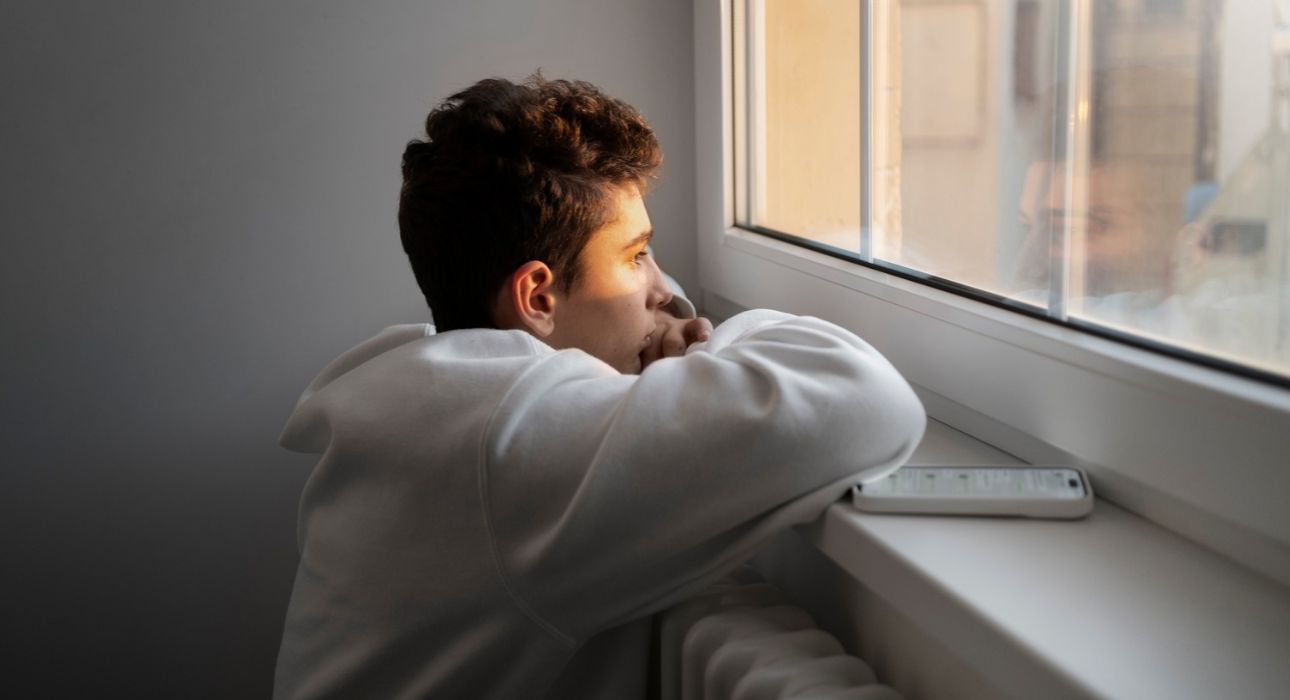
We have never had more ways to stay connected than we do now. We can message someone on the other side of the world and watch what our friends are doing without speaking to them, order everything from daily necessities to luxury items online and have it delivered to our doorstep within a week, and access almost any information we want with a few taps on our phone. Yet it is now entirely possible to go an entire day without a single meaningful conversation with another person, either online or offline.
Technology has made life and social contact easier than ever, but it has also raised a new question: are we using the technology to become better connected, or is social isolation easier than ever? Moreover, how does it affect us?
What is Social Isolation and Why Should Anyone Care About it?
Social isolation and loneliness are closely related; however, they are not the same. Social isolation is the objective state of having too few relationships and interactions with others (World Health Organisation (WHO), 2025). Loneliness, however, is a subjective feeling of isolation (National Academies of Sciences, Engineering, Medicine, 2020). One person may have less social interaction and be comfortable with it, while another may interact regularly with others and still feel lonely. These differences occur because social connection is more than simply being around people. Social connection is the relationship between two people, how often they interact, the support they receive from others and whether those interactions feel positive or negative (WHO, 2025).
As social beings, humans need connection, and social connection matters in areas of life people may not immediately think connect to their relationships. It is associated with better mental and physical health and helps manage stress, anxiety, depression and sleep quality. Strong social connections have also been associated with protection against chronic diseases like heart disease, stroke, and dementia (U.S. Centres for Disease Control and Prevention (CDC), 2024). It goes to show that human connection and the need for belonging isn’t simply something nice to have; it is a need for survival.
Risks of Prolonged Social Isolation
The World Health Organisation (WHO) recognises social isolation as a global health concern (WHO, 2025b), research also shows it affects multiple aspects of well-being, including mood, cognition, stress, and overall mental well-being; but what are the risks of prolonged social isolation?
Effects on mood seem like the most obvious result of prolonged social isolation, and the pandemic gave everyone a sense of what social isolation looks and feels like. It also sparked a new wave of research to understand the consequences of prolonged social isolation on happiness and chances of depression or anxiety. While it is not that social isolation inevitably leads to depression, research suggests social connection plays an important role in protecting mental health.
A review of longitudinal studies shows people with greater social support tend to experience fewer depressive symptoms over time. In case of pregnant women, lower social support tends to show more postpartum depressive symptoms (Wickramaratne et al., 2022). A different study on social isolation and depression with over a lakh participants from seven countries found that socially isolated older adults had higher odds of depression (Liu et al., 2025).
Another risk of social isolation is anxiety (Hwang et al., 2024). A decrease in life satisfaction, particularly among older women (Kim & Park, 2024). A 2009 study suggests social isolation may also influence the body’s response to stress, finding that greater social isolation was associated with slower cardiovascular recovery after a stressful task and a greater cortisol response throughout the day in middle-aged adults (Grant et al., 2009), clearly showing the effects of social isolation should not simply be a future worry, but could be a current cause for concern in many people’s lives.
Beyond mood, life satisfaction, and stress, social isolation also affects cognition and dementia risk in later adulthood. MRI research has found differences in grey-matter volume: socially isolated individuals have lower grey-matter volume in several brain regions, including temporal and frontal areas and the hippocampus, which are involved in memory, cognition, and other aspects of social and emotional processing. It was also found to increase the risk of dementia by 1.26-fold, which may sound small, but the association remained even after separating loneliness and other relevant factors, making social isolation a hard-to-ignore factor (Shen et al., 2022).
Individual Needs
While social isolation can have negative consequences, not everyone has the same capacity for social interaction, and there is no universal amount of social interaction required every month. Many individual differences like personality, occupation, or existing physical or mental health conditions can affect how much social interaction an individual needs or can handle.
Liking alone time is not a problem either. An introvert, for instance, may genuinely enjoy spending time by themselves, making their need for social interaction less than that of an extrovert. They can still have close friends and family and a strong sense of connection with others. In other words, spending less time socialising does not automatically mean someone is socially isolated.
Some neurodivergent people may also find certain forms of social interaction more demanding on their senses or mentally demanding. However, preferring or needing more time alone does not necessarily mean someone is socially isolated. What matters is whether a person has meaningful social connection and whether their level of interaction meets their own needs.
On the other hand, there could be people who want and need more social interaction or stimulating social activities, like going out with friends and family, playing sports or going to the theatre for movies, but may be unable to participate because of a temporary physical injury, while recovering from an illness, or because of a physical disability. In these situations, social isolation may not reflect a person’s preference for being alone, but rather circumstances that limit their opportunities for social connection.
These situations can also create a cycle of social isolation: a person’s health condition may limit their ability to connect with others, while the resulting isolation can further affect their well-being. Alternatively, unwanted social isolation due to a health condition or other factors, like economic conditions, may affect health and lead to more isolation.
How to Maintain Healthy Social Connections
The first step to maintaining healthy social connections may be accepting that it doesn’t always happen naturally. Social connections take time and reciprocal effort, and maintaining them can be more of a skill than a natural trait. Below are some ways to make building and maintaining meaningful social connections easier and a part of everyday life.
1. Reach out and take action
If someone in your life is recovering from an illness or injury, or living with a disability, going through a difficult period, or seems to be withdrawing socially, reach out to them. This can look like checking in with a phone call or message, sharing a meal, going for a walk or drive, or arranging an activity you both enjoy. If someone is withdrawing because they are struggling, waiting for them to initiate contact may keep the cycle of isolation going.
2. Ask for help
Social connections are a two-way street, and knowing their importance also means reaching out when you are struggling or going through a difficult period, instead of waiting for someone to notice. Letting someone know you would appreciate company or someone to talk to can make it easier for the people you support to support you as well.
3. Practice mutual respect and communication
Every relationship has its ups and downs, and people’s needs can change over time. That’s why maintaining a healthy relationship also means communicating and respecting each other’s boundaries. Maybe an activity you used to do together no longer works for you, or they don’t want to talk about a certain topic. Every relationship, whether between parents and children, partners or friends, requires mutual respect and open communication.
4. Prioritise quality over quantity
Social connection does not mean having a huge social circle. The quality of interaction and connection matters more than the number of connections you have. Instead, focus on building and maintaining relationships that make you feel supported, understood, seen, heard, and comfortable.
5. Make connection intentional and routine
Technology makes staying in touch easy, but passive connection differs from active connection. Make the effort to plan with friends and schedule dinners and activities with family. Create traditions with your family and friends, even with colleagues; it can be as simple as a board game night once a month, a potluck, a weekly movie night with your family, or the whole family cooking together once a month. Make connection part of your routine, so it takes less effort to reach out to someone, whether for you or for them.
Conclusion
Social connection matters, but there is no universal amount of social interaction that everyone needs. Moreover, social interaction can happen both offline and online; what matters more is having meaningful relationships and enough connection to meet our individual needs. Sometimes that means reaching out when someone begins to withdraw, and sometimes it means accepting that a person may need a different kind or amount of interaction than we do. In a world where staying connected has never been easier, perhaps the challenge is not finding more ways to connect, but making sure our connections lead to meaningful interactions and a genuine sense of connection.
Resources +
- Grant, N., Hamer, M., & Steptoe, A. (2009). Social Isolation and Stress-related Cardiovascular, Lipid, and Cortisol Responses. Annals of Behavioral Medicine, 37(1), 29–37. https://doi.org/10.1007/s12160-009-9081-z
- Hwang, Y., Massimo, L., Aryal, S., Hirschman, K. B., Cacchione, P. Z., & Hodgson, N. A. (2024). Does cognitive impairment moderate the relationship between social isolation and anxiety? A 5-year longitudinal study of a nationally representative sample of community residing older adults. BMC Geriatrics. https://doi.org/10.1186/s12877-024-04685-z
- Kim, J., & Park, G. (2024). Cumulative Exposure to Social Isolation and Longitudinal Changes in Life Satisfaction among Older Adults. Society and Mental Health, 14(2), 113–128. https://doi.org/other10.1177/21568693241232410
- Liu, Y., Zhou, Y., Sun, D., Wen, Y., Zhao, H., Long, Y., Yu, Q., Jia, Q., & Yu, Y. (2025). Association between social isolation and depression, and sex differences in older adults: A systematic review and meta-analysis. [Meta-Analysis]. Archives of Gerontology and Geriatrics. https://doi.org/10.1016/j.archger.2025.105915
- National Academies of Sciences, Engineering, Medicine. (2020). Social Isolation and Loneliness in Older Adults: Opportunities for the Health Care System (2020). In National Academies Press eBooks. The National Academies Press. https://doi.org/10.17226/25663
- Shen, C., Rolls, E. T., Cheng, W., Kang, J., Dong, G., Xie, C., Zhao, X.-M., Sahakian, B. J., & Feng, J. (2022). Associations of Social Isolation and Loneliness With Later Dementia. Neurology, 99(2), e164–e175. https://doi.org/10.1212/WNL.0000000000200583
- U.S. Centers for Disease Control and Prevention (CDC). (2024, May 15). Social Connection. U.S. Centers For Disease Control And Prevention (CDC). Retrieved September 28, 2026, from https://www.cdc.gov/social-connectedness/about/index.html
- Wickramaratne, P. J., Yangchen, T., Lepow, L., Patra, B. G., Glicksburg, B., Talati, A., Adekkanattu, P., Ryu, E., Biernacka, J. M., Charney, A., Mann, J. J., Pathak, J., Olfson, M., & Weissman, M. M. (2022). Social connectedness as a determinant of mental health: A scoping review. PLoS ONE, 17(10), e0275004. https://doi.org/10.1371/journal.pone.0275004
- World Health Organization (WHO). (2025a, June 30). Social connection. Retrieved September 28, 2026, from https://www.who.int/news-room/questions-and-answers/item/social-connection
- World Health Organization (WHO). (2025b, June 30). Social isolation and loneliness. Retrieved September 29, 2026, from https://www.who.int/teams/social-determinants-of-health/demographic-change-and-healt hy-ageing/social-isolation-and-loneliness





Leave feedback about this