







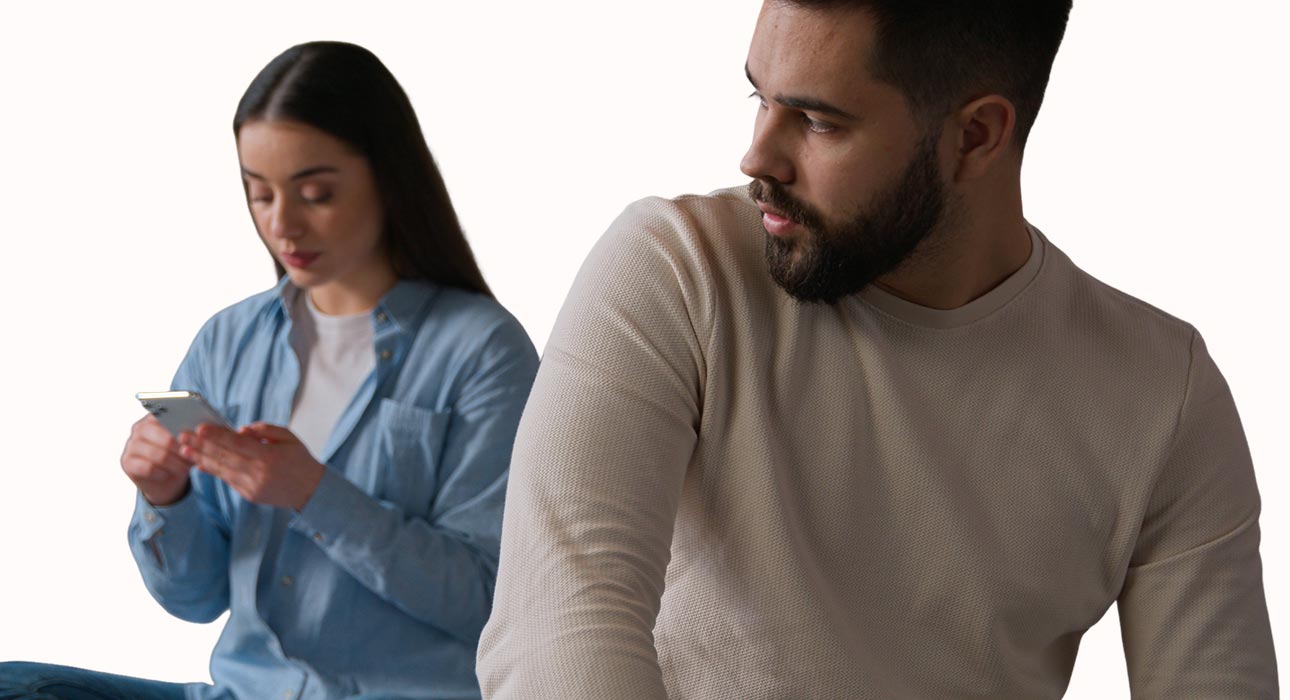
Plenty of people say they know someone who’s dealing with this. And a lot of the internet jokes about it too: the “sneaky link.” What began as Gen Z slang turned into an actual label for a relationship type. It usually means a romantic or physical connection that can stay vague on purpose. One person or both may choose to keep it out of sight from friends, family, or the rest of their circle.
A “sneaky link” is not just another kind of connection, and it is not like a public deal or something casual with no labels. The main difference is that one or both people want it kept out of view. That raises a question fast. Why hide a thing that feels close and enjoyable? The usual explanation is not one clean reason. It often points to how people attach, and how worried they get about being judged or rejected, not only about attraction.
The Fear of Commitment and Emotional Intimacy
People choose to hide their relationships because they want to avoid commitment. When a person publicly names a relationship or connection, they invisibly sign a contract that they are committed and will take responsibility if anything happens. However, when the connection is private or undefined, they feel the thrill of closeness without taking much responsibility. In psychological terms, this is called commitment aversion. According to research, people who follow this pattern are more likely to fail in their relationships (Birnie et al., 2009).
The reason behind this phenomenon can be explained by attachment theory. According to the theory, the attachment styles a child develops in childhood are very important, as it defines their adult relationships later in life. Individuals who have an avoidant style are more inclined to follow this pattern of commitment aversion. Their fear that closeness and losing independence might crowd out their freedom lowers their satisfaction level in close relationships (SeyedEbrahimi & Hamedani, 2024). Childhood emotional abuse is a contributing factor in why people fear intimacy in the first place (Finzi-Dottan & Abadi, 2024).
Read More: The Psychology of Situationships: Why People Avoid Commitment
When Privacy Matters More Than Secrecy
Keeping something private doesn’t automatically mean someone is trying to avoid pain. We all value privacy. We only share limited personal information with others. Whether someone is hiding is often neither here nor there. Maybe your niece is keeping her new relationship a secret but enjoys going out and having fun with her new partner. Maybe she just moved out of a messy ex or just isn’t ready to show her life to the world.
Social Pressure and the Fear of Being Judged
According to a 2006 study by Lehmiller & Agnew, social disapproval and fear of judgment are strong forces behind secret relationships. In India, this is a well-known reality: marriage decisions are made by the whole family and the community rather than by the one being married. Most people still wouldn’t want a relative marrying outside their caste or family, and going against that can mean real backlash from relatives (Thorat et al., 2020; Chand et al., 2024). It’s not the only thing that draws judgment either. An age gap, a different religion, being LGBTQ+, dating a coworker- any of these can get the same reaction.
Read More: Marriage Pressure in Your 20s: Understanding Its Psychological Impact
The Psychological Appeal of Secret Relationships
Secret behaviors are not something that needs to be fixed. According to psychologists, suppressing thoughts about a secret lover is very difficult. It gets a person to the extent where even if they do their utmost not to think about the topic, the mind naturally gravitates back to it. Such an invasion of thoughts can only result in a greater desire (Wegner et al., 1994). In psychology, a related pattern is referred to as the forbidden fruit effect, which results when one is not allowed to get or have something. Many of us have gone through this reality. The more we try to resist a thought or feeling, the more memorable and desirable it becomes (DeWall et al., 2011). Sneaking around and knowing that only two people share a secret adds a layer of excitement that an openly known relationship doesn’t offer.
Classic research on arousal and attraction further explains this pattern. Intense nerves or excitement can make people misread the signals coming from their own bodies. For instance, the fear of possibly getting caught may be confused with romantic and sexual chemistry, which can make attraction feel stronger (Dutton & Aron, 1974). Additionally, there is evidence that being close and sharing secrets are connected. Sharing private details with just one person is seen as the most reliable way to build deep closeness (Aron et al., 1997). Apart from what happens inside the relationship itself, some individuals truly benefit from the sense of freedom a private bond creates, because believing they are in control of their own choices is directly linked to better mental health.
Read More: Rizz: The New Language of Attraction in Today’s Dating Game!
The Emotional and Psychological Consequences of Secrecy
Hiding the truth costs something too. In a study conducted by Lehmiller & Agnew (2006), they studied couples in secret and open relationships. They found that individuals in hidden relationship have lower relationship commitment, self-esteem, and higher physical symptoms of stress, nervousness, and fear. Their secrecy reduces their cognitive interdependence. Another study tracks how much time a person spent on hiding their secret and found that they spent more time thinking about the secret than about the concealment, leading to lower well-being (Slepian, Chun, & Mason, 2017).
So researchers went looking for a silver lining: maybe secrecy at least helps new couples, even if it wrecks older ones. The result came back negative. No matter the nature of the relationship, old or new, romantic secrecy hurt relationship quality (Foster et al., 2010). Another study found similar results when they tested married couples at different stages of life. A habitual tendency to keep secrets predicts lower relationship authenticity, which further predicts lower happiness levels in the marriage (Bimantara & Karel Karsten, 2024).
Conclusion
None of this makes every sneaky link a red flag. Two people can hide their relationship for completely different reasons. Figuring out why people resort to sly tricks matters, but grasping what pushes them to do so matters just as much. Some see the world as too cruel and choose to handle everything by themselves. They value their freedom. Others shy away from close bonds because they do not want to get hurt. Sometimes keeping secrets can completely break the core of trust and cause confusion and unhealthy bonds. So secrecy might help some people, but not everyone. It is better if people avoid the tension and stress that come with hiding.
References +
- Aron, A., Melinat, E., Aron, E. N., Vallone, R. D., & Bator, R. J. (1997). The experimental generation of interpersonal closeness: A procedure and some preliminary findings. Personality and Social Psychology Bulletin, 23(4), 363–377. https://doi.org/10.1177/0146167297234003
- Bimantara, M., & Karel Karsten, H. (2024). Exploring the impact of secrecy on marital happiness: Relationship authenticity as a mediator. Bulletin of Counseling and Psychotherapy, 6(1). https://doi.org/10.51214/00202406806000
- Birnie, C., McClure, M. J., Lydon, J. E., & Holmberg, D. (2009). Attachment avoidance and commitment aversion: A script for relationship failure. Personal Relationships, 16(1), 79–97. https://doi.org/10.1111/j.1475-6811.2009.01211.x
- Chand, G., Lal, S., & Lucy. (2024). ShodhKosh: Journal of Visual and Performing Arts, 5(5), 821–827. https://doi.org/10.29121/shodhkosh.v5.i5.2024.4597
- DeWall, C. N., Maner, J. K., Deckman, T., & Rouby, D. A. (2011). Forbidden fruit: Inattention to attractive alternatives provokes implicit relationship reactance. Journal of Personality and Social Psychology, 100(4), 621–629. https://doi.org/10.1037/a0021749
- Dutton, D. G., & Aron, A. P. (1974). Some evidence for heightened sexual attraction under conditions of high anxiety. Journal of Personality and Social Psychology, 30(4), 510–517. https://doi.org/10.1037/h0037031
- Finzi-Dottan, R., & Abadi, H. (2024). From emotional abuse to a fear of intimacy: A preliminary study of the mediating role of attachment styles and rejection sensitivity. International Journal of Environmental Research and Public Health, 21(12), 1679. https://doi.org/10.3390/ijerph21121679
- Foster, C. A., Foster, J. D., & Campbell, W. K. (2010). Are secret relationships hot, then not? Romantic secrecy as a function of relationship duration. The Journal of Social Psychology, 150(6), 668–688. https://doi.org/10.1080/00224540903365547
- Lehmiller, J. J., & Agnew, C. R. (2006). Secret romantic relationships: Consequences for personal and relational well-being. Personality and Social Psychology Bulletin, 32(11), 1452–1466. https://doi.org/10.1177/0146167209342594
- SeyedEbrahimi, S. A., & Hojjati Hamedani, A. (2024). The effect of avoidant attachment style on marital satisfaction with the mediating role of fear of intimacy. KMAN Counseling and Psychology Nexus, 2(2), 236–244. https://doi.org/10.61838/kman.psynexus.2.2.29
- Slepian, M. L., Chun, J. S., & Mason, M. F. (2017). The experience of secrecy. Journal of Personality and Social Psychology, 113(1), 1–33. https://doi.org/10.1037/pspa0000085
- Thorat, A., Khalid, N., Srivastav, N., Hathi, P., Spears, D., & Coffey, D. (2020). Persisting prejudice: Measuring attitudes and outcomes by caste and gender in India. Caste: A Global Journal on Social Exclusion, 1(2), 1–16. https://doi.org/10.26812/caste.v1i2.172


Leave feedback about this