







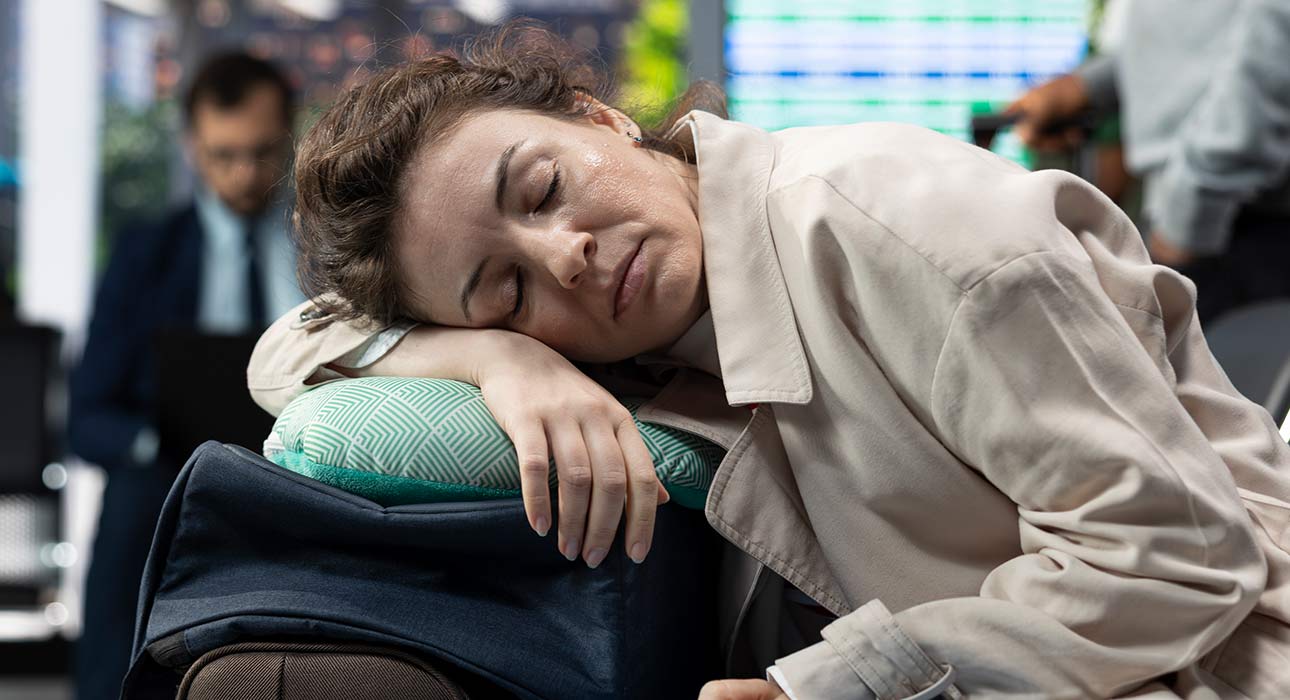
Long-distance travel combined with several time zones can often leave some people feeling sleepy, groggy, and “out of sorts,” also commonly referred to as jet lag. But what many people may not realize is that, as reported by a new study, this condition can also contribute to disrupted patterns within the gut and the trillions of microorganisms that live there, also called “gut jet lag.” Understanding the mechanisms by which time zone changes, circadian rhythms, and the microbiome are related is important since the latter has been intimately associated with both our metabolism and immunity rates and even our mood.
The study was focused on how altering time zones affect the circadian timing of intestines and the changes that can be expected from the activity of microbial communities. The vital question that the scientist posed was whether disturbed circadian time causes improper gut function, whether a desynchronized timing is a cause of intestinal problems, obesity, diabetes, and metabolic diseases.
Read More: Jet-Lagged Minds: How Frequent Travel Disrupts Sleep, Mood, and Mental Clarity
Understanding circadian rhythm, the body’s master clock
The idea for investigating is a very simple one. These are your internal 24-hour biological timekeeping systems, managing all kinds of things, hormones, digestion, body temperature, and sleep patterns, and it has always been assumed that a “master clock” in our brain oversees them all. But this research indicates our individual organs have their own “assistant” clocks working within the system too.
The gut microbiome of the digestive tract also demonstrates circadian rhythms, periodic fluctuations in the abundance and metabolic activity of microorganisms in the intestines. Displacement of a person’s central clock, intestinal clock, and microbiome in relation to each other when traveling through time zones leads to a state similar to jet lag for intestinal microorganisms. A number of studies have found that desynchronization can cause dyspepsia, uncomfortable fullness or bloating after eating, and constipation; in addition, weight gain and impaired glucose tolerance may also occur.
Read More: How Circadian Rhythms Shape Daily Functioning: Biological Clock and Mental Health
Experimental design
The article comprises research based on animal experiments and clinical studies that establish connections between time zone differences and gut microbiome function with the involvement of previous influential research. In the former case, scientists analyze the process of desynchronization by placing mice in a chamber with artificially shifted light-darkness cycles to simulate jet lag. Researchers take note of the changes in gut bacteria composition and overall activity of the digestive system at specific time points during the experiment. In turn, clinical studies usually involve volunteers that fly across several time zones and provide scientists with stool samples for analysis before the flight, within the period of time zone changes, and after arriving at the destination.
The primary goals are to characterize temporal patterns in gut microbial composition and function, as well as to define circadian clock gene expression in the gastrointestinal tract. The impact of disrupted host circadian clocks on these processes will be determined. The effect of chronodisrupted gut microorganisms on the host is studied in animal models, including germ-free mice, that have received microbiota transplanted from jet-lagged human volunteers or mice. These investigations usually appear in the joint efforts of different research groups representing various areas such as chronobiology and microbiology and clinicians from the Center of Neurosciences and Metabolism.
Correlation between jet lag and obesity & diabetes
The main finding is that the shifts in time zones disrupt the natural rhythmic patterns of both the intestinal tissue and the microbiome. And what they find is that in healthy people, the microbiome cycles—some types and metabolic processes increase and decrease at the same times as they are “waking up” in the intestines or resting; they time the clockwork of gut-sleep through a distinct code. But also the rhythm in the lining of your own intestines becomes disordered and misaligned with each other and the time zone by things such as shift work, airplane flights, etc., and for two to three weeks after a sleep cycle disruption, those bacterial cycles are not restored.
Researchers who induced jet lag in people found that the jet-lagged group had more variety of bacteria linked to obesity and diabetes than control individuals, and fewer were identified among those who had readjusted. The bacteria extracted from jet-lagged participants, when administered to completely microbe-free mice, seemed responsible for weight gain and impaired blood-sugar control in mice. In animals, constant disruption of the circadian rhythm has also been connected to increased intestinal inflammation and progression of metabolic liver disease, which suggests that jet lag of the gut can have consequences both in the intestines and in other organs.
Read More: The Connection Between Obesity and Mental Health
Author’s interpretation
The authors and the experts believe that these results suggest that the microbiome shapes, and is not simply a part of, the circadian system. The gut bacteria can make the circadian rhythm more regular and balanced, and, on the contrary, disrupt and damage it when their activity is hampered by unhealthy lifestyles, such as untimely feeding and sleeping. The hypothesis explains why the microbiome dysbiosis and irregular day-night cycles often occur in tandem, which leads to impaired metabolism. The ‘two clock’ or ‘multiple clocks’ model postulates that there is a master clock in the brain (which mostly responds to day:light cues) and also secondary oscillators such as ‘gut clocks’ or ‘microbiome clocks’ that respond to ‘eating and living cues.’
However, more generally, the study suggests lifestyle factors associated with long-distance journeys, shift work, or social jet lag, being out late on the weekends and having late sleep-wake periods, may affect health largely by influencing chronobiology both in the gut and in the intestinal bacteria. Taking steps to harmonize mealtime, light exposure, and sleeping schedules and perhaps even using strategies aimed at the gut microbiome could prevent negative health consequences. This work has psychological and behavioral implications too, because it highlights how everyday choices about sleep and eating can influence not only mood and cognition but also the invisible “ecosystem” in the gut.
Conclusion
In general, the research demonstrated that changing time zones and disrupting circadian rhythms can “jet lag” the gut, causing misalignment between intestinal clock genes and the circadian rhythm of the microbiome, leading to dyspepsia and an increased risk of developing metabolic syndrome, including obesity and impaired glucose tolerance, and can be transferred to the gastrointestinal tract of animals through the transplantation of a microbiome.
The main point of this article is jet lag is not only a problem of sleep or psychological state but also of the whole body, including the gut and its microbiome. Therefore, it is essential to care about circadian hygiene in order to avoid negative changes in the microbiome, which may lead to a number of health issues.
References +
1. Neuroscience News. (2026e, July 23). How time zone shifts disrupt intestinal rhythms. Neuroscience News. https://neurosciencenews.com/microbiome-jet-lag-circadian-31113/.




Leave feedback about this