






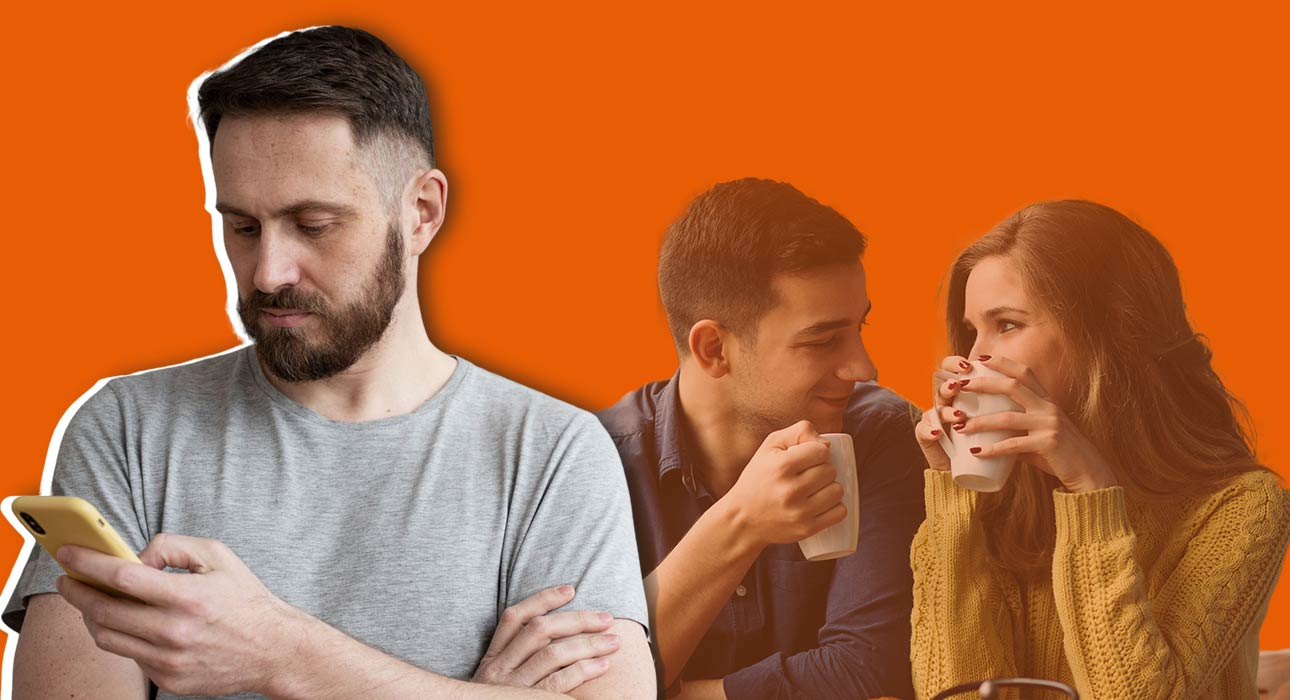
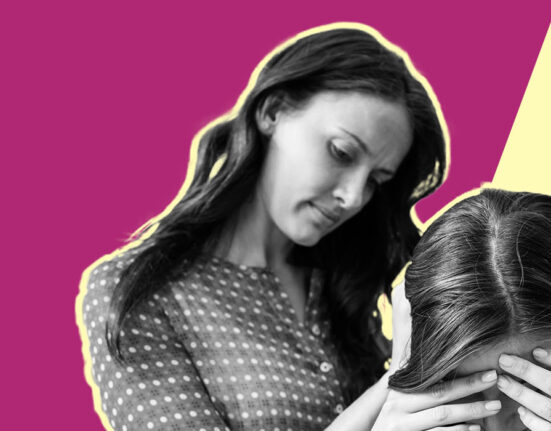
Smita received a text on her phone, it was from her old college friend, a simple check-in after years of silence. She didn’t expect it to stir anything. But when she mentioned that text to her husband, Arjun. His face tensed, “I’m just uncomfortable with the closeness of you both”, he spoke. Nothing romantic had ever happened between them, but their easy conversation and deep connection suddenly felt like a problem. For Smita, the friendship was nostalgic and harmless, but for Arjun, it awakened a sense of uncertainty he couldn’t easily explain.
Conversations like Smita and Arjun’s are more common than most couples admit. Jealousy is often dismissed as irrational or immature, yet psychologists argue that it is a complex emotional response connected to attachment, self-worth and feelings of security within a relationship. It typically arises when one partner senses a threat to the bond they are sharing (Guerrero, 2014). In the context of marriage, old friendships, especially once formed before the relationship, can sometimes become emotional landmines, even when no real danger exists.
In this article, we will explore why jealousy arises in marriages around old friendships. How it affects males and females differently, the psychological mechanism behind it and how couples can understand and manage these feelings with empathy and clarity in their relationship.
What Jealousy Really Is
cis an emotional response triggered by the perception of a threat to a valued relationship. It’s wrapped in fear, insecurity and anxiety, not always losing a partner physically but losing emotional closeness or relational importance (Guerrero, 2014). Jealousy itself is inherently destructive. It’s a signal that something feels uncertain or unprotected in the emotional territory of a relationship.
It’s also important to distinguish jealousy from envy. Envy is the desire for something another person has. Jealousy is the fear of losing something we already value. The bond with a partner to someone else, even if that someone isn’t a romantic rival (Parrott & Smith, 1993; Guerrero, 2014). When it comes to old friendships, the emotional brain can misinterpret familiarity or emotional closeness as a sign of competition, particularly if security, communication, or relational priorities aren’t clearly established.
Read More: Jealousy and Envy: Difference of feelings
Why Old Friendships Can Trigger Jealousy
1. Attachment Patterns and Emotional Security
Attachment theory provides a foundational lens for understanding the roots of jealousy, as humans form deep emotional bonds throughout life, and these bonds shape how we respond to relational threats in adult relationships. People with anxious attachment styles, often nurtured by inconsistent caregiving in their early life, may be more sensitive to experiencing jealousy when they feel their partner’s attention or emotional availability may shift. (Hazan & Shaver,1987)
In married life, where emotional intimacy is in a central position, old friends who held emotional space earlier can suddenly feel threatening, because their historical closeness seemed to be a competitor to the present bond.
Read More: Is Emotional Intimacy Key to a Lasting Relationship?
2. Identity, Self-worth and Relational Threat
Jealousy can also reflect internal questions about self-worth. When someone fears they cannot measure up to another connection, even a platonic one, this can trigger emotional vulnerability. Partners may fear that friends know aspects of their spouse in ways they don’t; all that shared history may offer emotional comfort they worry they can’t match. Research on religion and jealousy shows that when individuals feel insecure about their own value, they’re more likely to perceive friendships as threatening, even when no real danger exists (Guerrero and Anderson, 1998)
Read More: Importance of Emotional Vulnerability in Relationships
3 . Changing Social Roles after Marriage
Marriage itself recognises a person’s social world. Friends who were central before marriage may no longer hold the same place. Shared priorities, routines, and emotional needs start to boost around the marital relationship. When one partner continues to invest emotional energy in an old friendship with no clear transparency or mutual understanding, it may be consciously or unconsciously interpreted as emotional competition within the relationship. Jealousy doesn’t appear from boredom or antagonism; it often stems from fear of losing emotional significance.
Gender Patterns of Jealousy
Psychological research suggests that individuals may experience jealousy differently, not because one is more jealous than the other, but because the type of perceived threat varies.
- Men tend to be more sensitive to situations involving sexual or physical proximity between their spouse and another person, which can trigger indent instinctual concerns about relational exclusivity (Buss et al 1992).
- Women, on the other hand, are often more alert to emotional proximity when a spouse appears emotionally connected through someone else in ways that feel more than friendly.
These patterns are influenced by social and evolutionary factors and can vary widely among individuals. What matters is who is “right” or “wrong”, and more is understanding how each partner’s emotional brain perceives threat and security.
Read More: The Psychology Behind Social Influence
When Jealousy Crosses the Line
It is normal to feel an occasional flicker of jealousy. It might encourage people to engage in conversations, reassurance or a deeper connection. But when jealousy becomes chronic, reactive or controlling, then it will start to harm the relationship. Related signs include:
- Checking phones or messages
- Repeated accusations without evidence
- Criticising friendship rather than discussing feelings
- Attempts to isolate a spouse socially
These patterns don’t foster closeness. They foster distance, mistrust, and emotional distress. In a relationship where one partner constantly monitors or limits the other, the social world becomes less about connection and more about control.
How Couples Can Navigate Jealousy with Care
1. Communicate needs clearly
Couples can share their emotional experiences with openness instead of assuming that a friend is a threat for relationship. “When I noticed you spending time with your old friend, I felt a little insecure because I am uncertain about my existence in your emotional world.”
2. Define Boundaries Together
Boundaries are not restrictions. Some agreements honour both partners, comfort zones, and couples can discuss:
- How much time is spent with certain friends?
- What type of conversations feel comfortable to both partners?
- How to include spouses in social planning?
When boundaries are negotiated with respect, jealousy becomes less reactive and more relationally intelligent.
3. Reaffirm Commitment Frequently
Reassurance isn’t weakness; it’s clarity. When partners articulate their love priorities and emotional focus, it dampens the brain’s threat signals and supports relational safety. Studies on Relational communication suggest that responsive empathy, where one partner consistently acknowledges and validates the other’s emotions, strengthens the bond and reduces insecurity (Reis and Shaver, 1988).
Read More: The Need for Reassurance in a Relationship
Old Friends Can Be Allies, Not Rivals
Rather than seeing old friendships as rivals to marriage, some couples learn to include, understand, and celebrate those connections. When a spouse meets an old friend in a social setting, transparency and comfort usually follow. Turning potential jealousy into shared social richness. If both partners understand and trust each other’s purpose, friendships can become community assets that support mental health, broaden perspective, and add joy to a couple’s life.
Case in point: Growing Through Jealousy
For Smit and Arjun, the shift didn’t come from avoiding the topic, but it came from leaning into honest emotional conversation. “I am not trying to control who you spend time with”, Arjun said gently, “but I do need to feel secure in our relationship.” Instead of reacting defensively, Smita responded with empathy and care:” Your feelings matter. Let’s talk about what is making you uneasy and work through it together.”
Instead of turning into conflict, they leaned into emotional attunement; listening to each other, offering reassurance and adjusting social norms, all whilepreserving the friendships that were valued by them. Over time, jealousy weakened as a threat and became a threshold into deeper interpersonal understanding.
Read More: How to deal with conflicts in a relationship?
Conclusion
Jealousy isn’t an enemy of love. It can act as a signal that intense emotions are asking to be noticed. Jealousy doesn’t have to be a destructive force; when approached with care, curiosity, and empathy, it can become a gentle guide. It may point to unmet needs or moments when reassurance is needed. Seen this way, jealousy becomes more about connection, guiding couples towards clarity, empathy and deeper understanding of one another in their emotional connection.
Old friendships don’t have to be seen as threats to a marriage because often they’re simply part of someone’s history. When partners communicate openly, set boundaries with respect, and genuinely support each other’s sense of safety, both marriage and friendships can help love and connection truly last.
References +
Buss, D. M., Larsen, R. J., Westen, D., & Semmelroth, J. (1992). Sex differences in jealousy: Evolution, physiology, and psychology. Psychological Science, 3(4), 251–255.
Guerrero, L. K. (2014). Communication about jealousy: Relationship satisfaction, attachment, and communication patterns. Journal of Social and Personal Relationships, 31(3), 327–350.
Guerrero, L. K., & Andersen, P. A. (1998). Jealousy in close relationships: An interpersonal communication perspective. In Close romantic relationships:
Maintenance and enhancement (pp. 237–259). Lawrence Erlbaum Associates.
Hazan, C., & Shaver, P. (1987). Romantic love is conceptualised as an attachment process. Journal of Personality and Social Psychology, 52(3), 511–524.
Reis, H. T., & Shaver, P. (1988). Intimacy as an interpersonal process. In S. Duck (Ed.), Handbook of Personal Relationships (pp. 367–389). Wiley.
Do people know what they want: A study of jealousy and rival characteristics. Personality and Individual Differences, 45(6), 524–529.
https://doi.org/10.1016/j.paid.2008.06.005
Romantic jealousy and adult romantic attachment. Journal of Personality and Social Psychology, 72(3), 627–640.
https://doi.org/10.1037/0022-3514.72.3.627
Parrott, W. G., & Smith, R. H. (1993). Distinguishing the experiences of envy and jealousy. Journal of Personality and Social Psychology, 64(6), 906–920.
Guerrero, L. K. (2014). Attachment-style differences in the experience and expression of romantic jealousy. Personal Relationships, 21(2), 155–168.

Leave feedback about this