







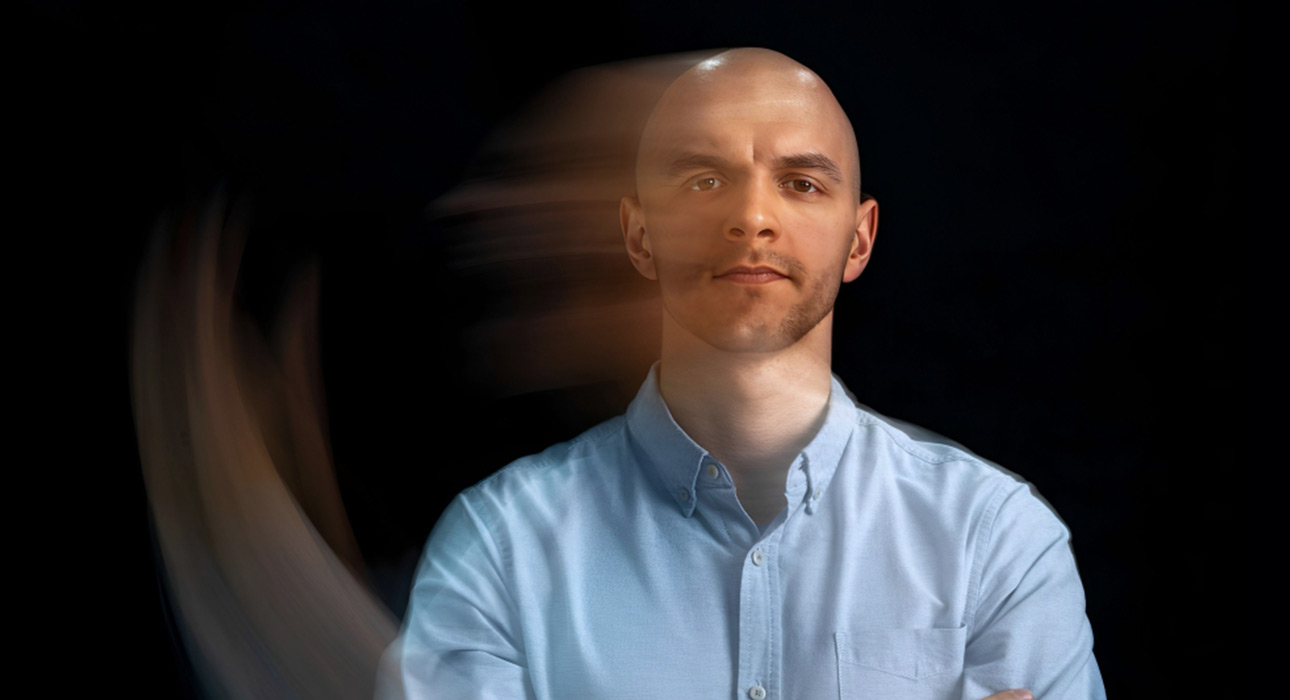
Every human being has, at some point, had an experience where a smell, sound, or glance from a person causes a powerful emotional reaction that appears disproportionate to the circumstances. For many, this is not an accident; it is merely the nervous system doing what it was trained to do. Trauma is not a thing that just passes along with time. Studies always indicate that traumatic events may reconfigure the brain, modify stress response systems, and become fixed in everyday behaviour in such a way that the trauma survivors themselves tend to be unaware of them (van der Kolk, 2014). Understanding why the past continues to occur in the present is not only academically interesting but also a necessity for people seeking to end cycles that are no longer beneficial to them.
How the Brain Stores Traumatic Memories
Ordinary memories and traumatic memories are processed in the brain in a very different way. When everything goes well, the memory organiser of the brain. The hippocampus writes experiences into a logical story with a defined start, middle and end. Trauma interferes with this process. The amygdala (the alarm system in the brain) releases a flood of stress hormones into the body, such as cortisol and adrenaline, which actually disables hippocampal activity when there is a threat (Bremner, 2006).
The outcome is a situation where traumatic memories are usually stored in fragments of sensory pieces that lack a definite timeline. That is why a trauma survivor may not recall an event in the form of a story, but he/she re-experiences it in a flash of an image, or a physical sensation or a flash of a wave of emotion. The memory did not disappear; it is just stored in such a manner that it does not actually involve the thinking brain (Brewin et al., 2010).
Triggers: When the Past Pretends to Be the Present
Any stimulus, such as a sound, a place, a facial expression, or a tone of voice, is a trigger that the nervous system will relate to a threat that has occurred in the past. The brain favours speed over accuracy, as the brain is programmed to survive. Upon detecting a trigger, the stress response activates prior to the conscious part of the brain determining the presence or absence of actual danger (Porges, 2011).
That is why trauma reactions may be so baffling and humiliating. An individual may be aware intellectually that his or her partner yelling is not a threat, and yet the body responds as though it is. It is not weakness and irrationality. It is the nervous system having an outdated programme that is meant to keep one safe in a situation that is not there anymore. The triggers will usually include senses (smells or songs), relationships (feeling neglected, judged or controlled), anniversaries of traumatic experiences and situations similar to those in which the trauma happened.
Trauma and Repeated Behavioural Patterns
The tendency to form repetitive patterns of trauma is one of the most examined and misconceived ones. Even in cases where they have made a deliberate effort to avoid it, survivors often end up in a similar relationship, job, or situation. Psychologists call this the repetition compulsion, an idea that was first formulated by Freud and re-interpreted by a neurobiological perspective (van der Kolk, 1989).
Neuroscientifically, it is logical to have repeated patterns. The brain is a prediction engine. It relies on experience to predict the future, and it even falls back to environments it is familiar with, even when the same environment was damaging to the body, as familiarity is safer than unfamiliarity (van der Kolk, 2014). An individual brought up in a dysfunctional family might subconsciously seek dysfunctional relationships because calm is something that is totally alien to them and thus evokes fear in their nervous system.
Also, unresolved trauma tends to become an important part of the fundamental beliefs regarding the self, beliefs like I am not safe, I am not enough or people always leave. Such beliefs are very much subconscious, operating in the background and determining all aspects of decisions, relationships and responses that a given individual takes (Ehlers and Clark, 2000).
The Role of the Body in Trauma
Trauma is not merely a psychological process – it is a physical process. The body records what the mind might have attempted to forget. Other commonly reported somatic symptoms are chronic tension, gut issues, fatigue, and increased startle reflexes among the survivors of trauma (Levine, 2010).
The polyvagal theory by Stephen Porges (2011) can be useful as a framework in this case. This theory suggests that the autonomic nervous system has three states: a safe and socially engaged state, a mobilised fight-or-flight state, and a shut-down or freeze state. Trauma may lead to the nervous system being unable to switch between the last two; that is, one may experience alternating hyperavailability (scanning the surroundings, constantly seeking danger) and emotional numbness, with little access to the relaxed, connected state of healthy relationships with others and mental clarity.
That is why methods that can make a difference only with thoughts and language, like traditional talk therapy by itself, are not always effective with trauma. The experience is retained in the body, and at times, healing involves direct involvement of the body.
Read More: Why Trauma Talk Is Everywhere Today and What It Says About Society
Breaking the Cycle: Pathways Toward Healing
The key to ending the cycle of trauma is first knowing why it repeats. Several evidence-based methods are effective in managing trauma and its long-term consequences.
- Trauma-Focused Cognitive Behavioural Therapy (TF-CBT) assists in the process of identification and reorganisation of distorted beliefs developed in the course of traumatic events and the progressive processing of the memories in a safe environment (Cohen et al., 2017).
- Eye Movement Desensitisation and Reprocessing (EMDR) consists of bilateral stimulation to have the brain reprocess fragmented memories of the traumatic experience so that it makes more sense. And the degree of emotion is lessened (Shapiro, 2018).
- Body-based models include Somatic Experiencing, created by Peter Levine, which is based on relieving the tension stored in the nervous system by being conscious of bodily experience instead of narrating the happenings (Levine, 2010).
Research findings alongside formal therapy positively affirm the worth of safe relationships, routine maintenance, mindfulness, and psychoeducation, merely learning about trauma and its impact, as significant factors in recovery. The understanding that the reactions are normal, that they are neurobiological responses and not individual failures. It is in itself very healing.
Conclusion
Trauma never remains in the past. It inhabits the nervous system, influences the predictions of the brain, and writes, without any noise, the behaviour now and may be fragmented memories or repetitive relationship patterns. It may be physical symptoms, it may be emotional triggers; whatever the case. The past has an extraordinary power to do so, although the events have taken place long ago. The positive thing is that the brain can also change. With proper knowledge, encouragement, and equipment, the old programmes can be revised, the nervous system can be educated that the danger has been overcome, and a person can start to live in the present instead of in the darkness of the past.
References +
Bremner, J. D. (2006). Traumatic stress: Effects on the brain. Dialogues in Clinical Neuroscience, 8(4), 445–461. https://doi.org/10.31887/DCNS.2006.8.4/jbremner
Brewin, C. R., Gregory, J. D., Lipton, M., & Burgess, N. (2010). Intrusive images in psychological disorders: Characteristics, neural mechanisms, and treatment implications. Psychological Review, 117(1), 210–232. https://doi.org/10.1037/a0018113
Cohen, J. A., Mannarino, A. P., & Deblinger, E. (2017). Treating trauma and traumatic grief in children and adolescents (2nd ed.). Guilford Press.
Ehlers, A., & Clark, D. M. (2000). A cognitive model of posttraumatic stress disorder. Behaviour Research and Therapy, 38(4), 319–345. https://doi.org/10.1016/S0005-7967(99)00123-0
Levine, P. A. (2010). In an unspoken voice: How the body releases trauma and restores goodness. North Atlantic Books.
Cherland E. (2012). The Polyvagal Theory: Neurophysiological Foundations of Emotions, Attachment, Communication, Self-Regulation. Journal of the Canadian Academy of Child and Adolescent Psychiatry, 21(4), 313–314.
van der Kolk B. A. (1989). The compulsion to repeat the trauma. Re-enactment, revictimization, and masochism. The Psychiatric Clinics of North America, 12(2), 389–411.
van der Kolk, B. A. (2014). The body keeps the score: Brain, mind, and body in the healing of trauma. Viking.





Leave feedback about this