







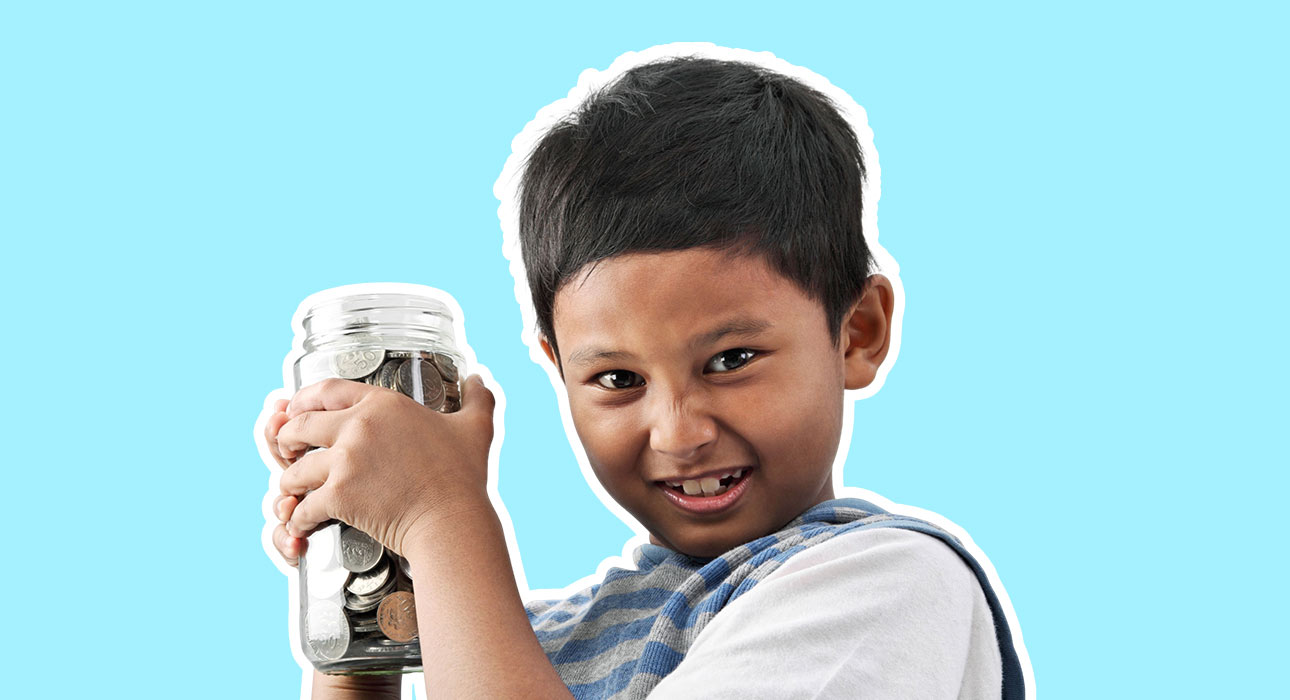
We all think money lessons start when we get a job or start earning something. But that isn’t true. Money lessons start way before our first paycheck; they start the moment we begin receiving pocket money from our parents. According to researchers, this kind of socialisation occurs when children start to form habits, beliefs, and a sense of ease when it comes to money.
They learn how to spend money by watching their parents, brothers and sisters, and other people in their family. According to a major review, parents are the biggest influence here, more than anyone else in a child’s life (LeBaron & Kelley, 2021). So the real question isn’t when a parent should start giving their child money lessons; it’s what they might already be teaching them without realising it.
For instance, remember how many times you have checked your grocery list, prices, and groaned out loud, or how many times you have bought cheaper products, saying the other one is too expensive, or mentioned that the store down the street has a sale on, so that’s where you’ll shop instead. All of this happens naturally in a household, and most parents never stop to think about how much it’s shaping their child’s own money habits. So when kids finally get pocket money of their own, it becomes their first real chance to make that kind of decision for themselves: where to spend it, or how.
Read More: Research Shows Our Food and Money Habits as Sign of Impulsivity
What Pocket Money Actually Teaches
Pocket money isn’t just something children receive. It’s one of the earliest opportunities they get to practice real psychological skills, decision-making, self-efficacy, and delayed gratification, all at once, using something concrete they can hold in their hands.
1. Decision-Making
Kids aren’t born good at making decisions. It’s something they get better at by doing it over and over. When children are given pocket money, they use it to practice money decisions, such as: Should I buy now or wait for something better? Is the thing I am buying worth my money? When they ask themselves questions like this, they become better at the same kind of thinking adults use for bigger money decisions later on.
A study from the 1990s that’s still cited to this day illustrates this clearly. Researchers gave $4 to a group of kids; some got it in cash, some as store credit, and asked them to spend it in a pretend store. The kids who already got a regular allowance at home spent about the same amount either way, cash or credit. Kids who didn’t get pocket money at home tended to spend more when using credit instead of cash, because the money didn’t feel real to them.
The researchers also found that girls spent more than boys (Abramovitch et al., 1991). Children with allowance experience weren’t smarter or more disciplined by nature. They simply had more practice making actual spending decisions, and that practice showed the same way, whether it was cash or credit.
Read More: A Psychology-backed Guide to Decision-Making
2. Self-Efficacy
Children who pick up habits by watching their parents or talking to them about money get some of the picture, but researchers have found that hands-on experience, actually handling money themselves, builds something the other two methods don’t: real confidence in one’s own ability to manage money.
A follow-up study found that children with direct, hands-on money experience felt considerably more confident managing their finances as adults, compared to those without that experience (LeBaron-Black et al., 2023). This lines up with a simple truth about how people learn generally. A child can’t learn to ride a bike by imagining it. They need to actually ride it, wobble a little, and eventually get it right. Money works the same way.
3. Delayed Gratification
Delayed gratification might be the most psychologically interesting of all. Researchers studying how children relate to money found that simply activating the concept of money, prompting kids to think about it, measurably increased their preference for delaying a reward and improved their ability to persevere on a difficult task (Trzcińska & Sekścińska, 2016).
In other words, the mere presence of money in a child’s hands seems to nudge their brain toward more future-oriented thinking, exactly the mental skill involved in choosing to save rather than spend immediately. Put together, this is really what pocket money teaches. Not just “how to spend.” It’s a hands-on training ground for the decision-making, confidence, and patience that show up in financial behaviour for the rest of a person’s life.
Read More: Why We Procrastinate: The Psychology Behind Delayed Decisions and How to Fix It
Why These Early Habits Stick Around
Teaching kids financial lessons through pocket money isn’t just a nice idea; it’s backed by research. A 2013 study looked at adults and asked about their experiences with money as children. It found that adults who’d had hands-on money experience as kids, things like having their own bank account or having a parent check in on their spending, were more likely to own financial assets like savings and investments later in life, and generally felt more positive about money overall (Kim & Chatterjee, 2013).
That doesn’t mean giving an 8-year-old an allowance guarantees they’ll be great with money by 30. Life’s messier than that; income, luck, education, and socioeconomic status all play a role too. Even so, adults’ financial lives are clearly shaped by what they experienced as kids. How comfortable someone is with money as an adult often comes down to how much financial stability they built up, one small habit at a time, starting in childhood.
What Actually Works
We know pocket money lessons matter. The harder question is how to actually give them well, so kids come away with a genuinely good relationship with money.
Hands-On Experience
A recent study looking at what makes money lessons effective found two things that mattered most: letting kids get real, hands-on experience with money instead of just lecturing them about saving, and keeping parents actively involved instead of leaving the whole thing to a school program (Mancone et al., 2024).
Parental Involvement
Parental involvement is crucial because parents are the first people kids ever learn from. Left completely alone with money, a kid will often spend it impulsively; they’re still kids, after all. But when a parent steps in with real guidance, teaching them to wait for something worthwhile or save up instead of spending on impulse, that lesson actually sticks. Sometimes it even helps to let them blow it on something pointless once in a while; that’s often the fastest way for a kid to really feel what loss means.
Age-Appropriate Lessons
Money lessons also depend a lot on the child’s age. A 5-year-old might just be learning that a dollar can turn into candy, or that money disappears once it’s spent. And a 9-year-old might still be figuring out that saving for two weeks gets them something better later, instead of using it all right away. However, a teenager is in a completely different league. Depending on their financial situation, they’re learning how they need to spend some money, save some for difficult times, and give some to a person in need. Kids learn all of this step by step, by doing, not just by being told.
Letting Kids Make Mistakes
Letting kids make mistakes as they learn something is actually a good thing. The lessons they learn from their mistakes when they’re young are the ones that keep them from repeating those same mistakes as adults. For instance, losing a small amount of money at eight years old may hurt a bit. In comparison to losing as adults, when the stakes are higher and the losses are greater.
Tips for Parents
Parents don’t need a formal plan to put any of this into practice. A few small habits can go a long way.
- Give your child pocket money on a regular basis, like every week or every two weeks. This is better than giving them money whenever you feel like it. As your child gets used to this, they will start to think and make plans for the money they get. They will not just spend it right away.
- Avoid lecturing your kid every time they spend their pocket money. Let them buy something they will regret later. The lesson they learn from this failure can’t be taught to them in words.
- Be open with your kids about money instead of keeping it behind closed doors. Talk to them directly, in a way that makes sense for their age, about how you budget, save, or decide what’s worth buying. Letting them into these conversations, instead of just hoping they’ll pick it up by overhearing, helps them feel included and gives them an early sense of responsibility for how money works in your home.
- Teach them good money habits early. Give them lessons on three categories: save, spend, and give. Adopting all of these might support better financial habits later.
- Change the lesson as your child grows; what works for a 6-year-old won’t mean much to a teenager.
Conclusion
Pocket money is more than a little cash that parents give their children to buy something that they need. It is a financial lesson that parents unconsciously teach their children. Children who get monthly allowances from their parents and learn how to spend it wisely are better at handling money than those who don’t get an allowance. However, parents shouldn’t give pocket money freely; they need to watch how their kids are using money, whether they are using it for good purposes or bad ones. A lesson that is learned in early childhood is better than a lesson learned in adulthood, when there is more to lose than gain.
References +
- Abramovitch, R., Freedman, J. L., & Pliner, P. (1991). Children and money: Getting an allowance, credit versus cash, and knowledge of pricing. Journal of Economic Psychology, 12(1), 27–45. https://doi.org/10.1016/0167-4870(91)90042-R
- Kim, J., & Chatterjee, S. (2013). Childhood financial socialisation and young adults’ financial management. Journal of Financial Counselling and Planning, 24(1), 61–79.
- LeBaron, A. B., & Kelley, H. H. (2021). Financial socialisation: A decade in review. Journal of Family and Economic Issues, 42, 195–206. https://doi.org/10.1007/s10834-020-09736-2
- LeBaron-Black, A. B., Curran, M. A., Marks, L. D., Hall, J. A., & Hill, E. J. (2023). Talk is cheap: Parent financial socialisation and emerging adult financial well-being. Family Relations, 72(3), 1046–1064. https://doi.org/10.1111/fare.12751
- Mancone, S., Tosti, B., Corrado, S., Spica, G., Zanon, A., & Diotaiuti, P. (2024). Youth, money, and behaviour: The impact of financial literacy programs. Frontiers in Education, 9, Article 1397060. https://doi.org/10.3389/feduc.2024.1397060
- Trzcińska, A., & Sekścińska, K. (2016). The effects of activating the money concept on perseverance and the preference for delayed gratification in children. Frontiers in Psychology, 7, Article 609. https://doi.org/10.3389/fpsyg.2016.00609





Leave feedback about this