







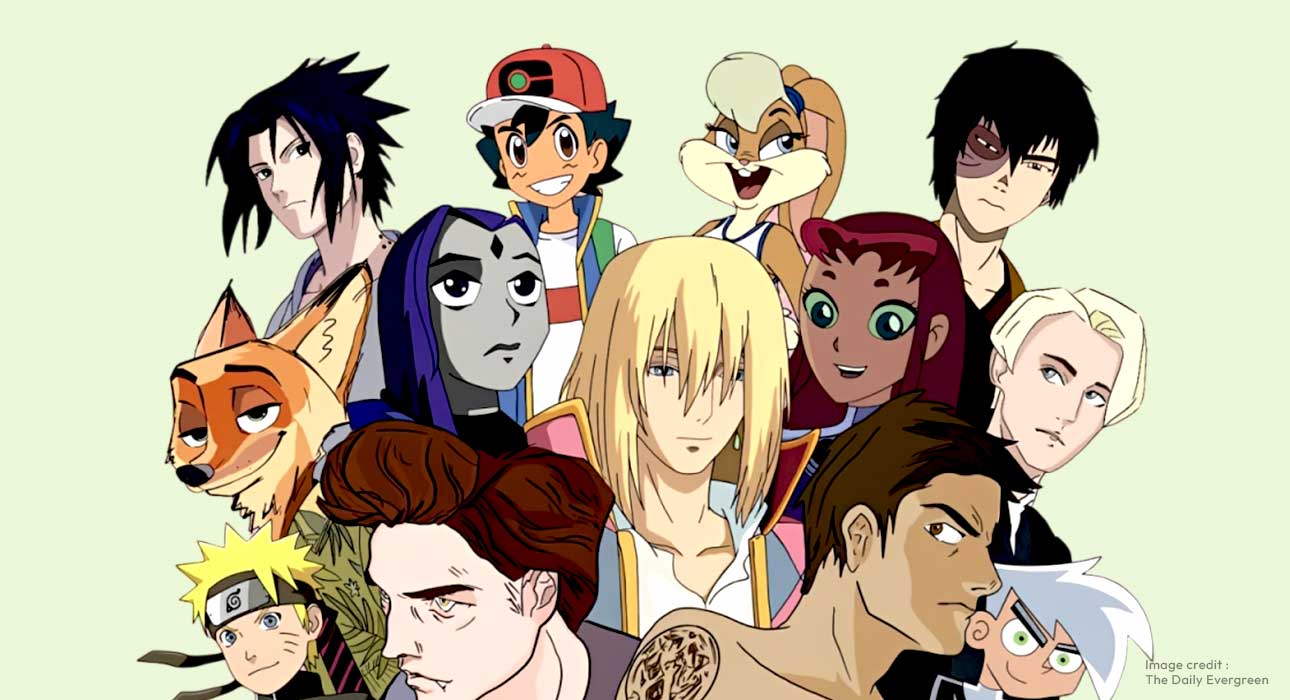
Have you ever felt your heart sink when a beloved character died, or caught yourself defending a fictional hero against a friend’s criticism? Maybe you had a crush on a character because of their loyalty, wit, or the quiet kindness they showed when no one was watching, and you found yourself missing them long after the last page or final episode.
If so, you are far from alone. Millions of people grieve for fictional characters, root for them, and feel a real sense of connection with them, and while it may seem strange, it is not irrational. It is a well-researched psychological phenomenon that researchers have struggled to understand for decades. Why do we care so deeply about people who do not exist? Why can a character’s loss feel like a real one? And what does this attachment say about us? This article explores the answers, from one-sided “parasocial” bonds and identification to getting lost in a story and the human need to belong.
Read More: Investigating the Psychology of ‘Fangirl’ Culture and Female Attachment to Fictional Characters
The One-Sided Relationship
The first explanation of this phenomenon was given by Horton and Wohl (1956), and it is called the concept of parasocial interaction. It is an experience of intimacy and closeness to a media character despite the absolutely one-sided nature of the relationship. A person may feel he knows everything about this character, can predict the latter’s behaviour, and miss him when a new episode isn’t coming out, while the character has no idea the person exists. What Horton and Wohl (1956) discovered is that the fact that the relationship is absolutely one-sided does not mean the person’s feelings are fake. A human brain perceives the stimuli equally whether the interaction is reciprocal or not.
However, there is a variety in parasocial interactions, as Tian and Hoffner (2010) discovered that the individual’s attitude toward a character determines the nature and the strength of the interaction. It is not necessary for the character to be liked in order to find him fascinating. But the emotional colouring of the bond depends greatly on the character’s evaluation.
Read More: Limerence: Understanding Intense One-Sided Attachment in Today’s Relationships
Identification versus Liking
Another aspect that may be mistaken for parasocial interaction is identification. As was mentioned by Cohen (2001), it is not about liking a specific character and finding something similar to oneself in its actions. It is about taking a character’s point of view, its goals, and self-image while being engaged in watching the story. The identification with the character is so intense that one stops being a distant spectator of the actions of other people and begins to see the whole situation through the character’s eyes, as if performing actions themselves. This feature is vital because identification is not a straightforward attitude of liking something and operates at a more sophisticated level of perception.
The process of identification may have biological explanations. According to Broom et al. (2021), individuals who highly identify with some characters perceive them in their brains similarly to the way they perceive themselves.
Getting Lost in the Story
The third aspect of character attachment is the phenomenon of transportation, which was invented by Green and Brock in order to describe a mental state of total attention, emotionality and visualisation of the world presented in a story. When the process of transportation through the story takes place, this might result in the personal relevance of events and characters, as they are seen as something more familiar to one’s own experience. It is easy to explain the reasons for which the problems of the fictional character make a person feel anxious, relieved and sad because, in this period of time, a person does not stay apart from what is happening in the story.
As well as character attachment, individual differences also influence transportation. According to Rain et al., people with high levels of attachment anxiety tend to experience strong transportation into stories. This means that a personal trait of absorption, and therefore character attachment, also differs between people.
Read More: Parasocial Relationships and Their Impact on Mental Health
Attachment Styles and the Need to Belong
Perhaps the best explanation of why certain people create strong attachments towards fictional characters is offered by adult attachment theory. According to Rain and Mar (2021), the connections between adult attachment orientations and parasocial interaction and identification with one’s favourite television show characters were studied and proved to correlate with attachment to both real and fictional figures. For certain individuals, an ideal character may perform the functions of an interpersonal figure, as it can be stable and reliable.
This phenomenon has several practical implications. According to Derrick, Gabriel, and Hugenberg (2009), favourite TV shows and the characters in them are able to substitute real human contacts and are referred to as “social surrogacy”. However, television shows cannot completely replace human connections even though they can alleviate the feeling of loneliness to some degree.
Read More: The Role of Attachment Styles in Romantic Relationships
More Than Entertainment
Fictional characters influence readers beyond providing comfort and satisfaction during the reading process. According to Kaufman and Libby (2012), temporary adoption of another’s perspective, “experience-taking”, may change one’s views, self-concepts, and actions. Thus, it becomes clear that even temporary adoption of another identity, regardless of its being fictional, may have some long-lasting results.
The given discovery helps one to understand the reason why a fictional loss is treated as an authentic one. According to Schiavone (2019), people are preparing themselves for their own loss and mortality by experiencing it in fiction and reflecting on the death of fictional characters and their feelings in this context. Recently, the hypothesis has been supported by Mula-Márquez, Nava-Arquillo, and Matías-García (2024). In their systematic review, the authors claim that there is a connection between attachment to characters and personality development, identity formation, and psychological well-being, as well as possible negative consequences of the process such as stigma due to the specific bond with a character.
A Fully Human Response
All in all, it seems like there is only one thing to be concluded: attachment to fictional characters does not mean madness or any mental disorder. On the contrary, it is caused by the same psychological mechanisms as many other processes, namely the natural need of a human brain to recognise familiar faces as social interaction, the ability to adopt someone else’s point of view, the need for storytelling, and the need for belonging. Even though the fictional characters themselves are not real, their influence on people via empathy and identification is real enough.
Conclusion
The connection of an audience with a fictional character is a complex phenomenon that includes a number of different things. First, it starts from an illusion of an already established relationship. It is then continued by the identification with the internal world of the character and immersion into the plot due to its strong narrative pull. Finally, among all others, it is also based on the same need for attachment that underlies so many relationships (Horton & Wohl, 1956; Cohen, 2001; Green & Brock, 2000; Rain & Mar, 2021).
Sometimes, a connection with a character turns out to be a source of a sense of belonging for those who lack human relationships at a particular moment in time (Derrick et al., 2009). At other times, it becomes a place of practising empathy, acquiring new perspectives, and mourning over the loss which cannot be grieved in any other way (Kaufman & Libby, 2012; Schiavone, 2019).
This does not diminish the importance and significance of fiction in any way. Instead, it proves them. Feeling emotions towards a character one encounters on the pages of a book or on the screen is not a sign of poor judgement. Instead, it is a demonstration of the flexibility of human empathy. The very same brain mechanisms enable humans to connect with characters.
References +
- Broom, T. W., Chavez, R. S., & Wagner, D. D. (2021). Becoming the King in the North: Identification with fictional characters is associated with greater self–other neural overlap. Social Cognitive and Affective Neuroscience, 16(6), 541–551. https://doi.org/10.1093/scan/nsab021
- Cohen, J. (2001). Defining identification: A theoretical look at the identification of audiences with media characters. Mass Communication & Society, 4(3), 245–264. https://doi.org/10.1207/S15327825MCS0403_01
- Derrick, J. L., Gabriel, S., & Hugenberg, K. (2009). Social surrogacy: How favoured television programs provide the experience of belonging. Journal of Experimental Social Psychology, 45, 352–362. https://doi.org/10.1016/j.jesp.2008.12.003
- Green, M. C., & Brock, T. C. (2000). The role of transportation in the persuasiveness of public narratives. Journal of Personality and Social Psychology, 79(5), 701–721. https://doi.org/10.1037/0022-3514.79.5.701
- Horton, D., & Wohl, R. R. (1956). Mass communication and parasocial interaction: Observations on intimacy at a distance. Psychiatry, 19(3), 215–229. https://doi.org/10.1080/00332747.1956.11023049
- Kaufman, G. F., & Libby, L. K. (2012). Changing beliefs and behaviour through experience-taking. Journal of Personality and Social Psychology, 103(1), 1–19. https://doi.org/10.1037/a0027525
- Mula-Márquez, Y., Nava-Arquillo, B., & Matías-García, J. A. (2024). Parasocial relationships and identification with fictional characters in adolescents and adults: A systematic review. Research Square [Preprint]. https://doi.org/10.21203/rs.3.rs-4154497/v1
- Rain, M., & Mar, R. A. (2021). Adult attachment and engagement with fictional characters. Journal of Social and Personal Relationships, 38(9), 2792–2813. https://doi.org/10.1177/02654075211018513
- Rain, M., Cilento, E., MacDonald, G., & Mar, R. A. (2017). Adult attachment and transportation into narrative worlds. Personal Relationships, 24(1), 49–74. https://doi.org/10.1111/pere.12167
- Schiavone, D. (2019). Losing an imagined friend: Deriving meaning from fictional death in popular culture. Participations. https://www.participations.org/16-02-07-schiavone.pdf
- Tian, Q., & Hoffner, C. A. (2010). Parasocial interaction with liked, neutral, and disliked characters on a popular TV series. Mass Communication and Society, 13(3), 250–269. https://doi.org/10.1080/15205430903296051




Leave feedback about this