







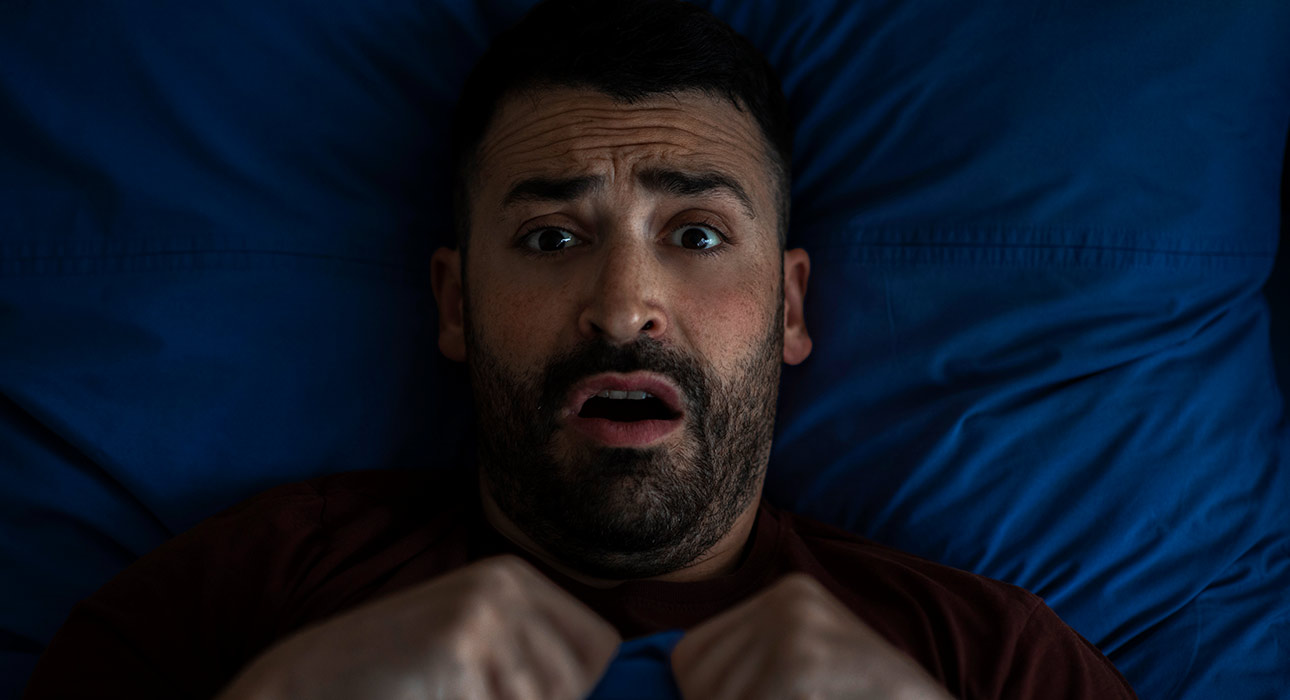
There are few things more disturbing than waking up to find that your body has concluded it is still asleep. Even though a person can see the room, know the familiar sounds and be certain of their location, they are entirely unable to move. They might attempt to raise a hand, turn their head or shout, but nothing takes place. And while they’re trying to make sense of this odd loss of control, something even more frightening can happen: it seems as if there’s another person in the room.
This could be a dark shape close to the door, footsteps coming towards the bed, a shadow in the corner or simply a strong sensation that someone is watching you. Some individuals also feel pressure on their chest, as if someone is sitting on them or physically restraining them. For centuries, such experiences have been seen as meetings with ghosts, demons, witches, spirits, jinn and, in more modern accounts, even aliens.
What is so interesting about sleep paralysis is that the experience is entirely real to the person going through it: the paralysis is real, the fear is real, and the feeling of another presence can be so convincing that it is hard to tell the difference from a real encounter. It is not real, however; the external explanation given for the experience. Modern sleep research indicates that sleep paralysis happens when elements of REM sleep carry on into waking consciousness.
The brain becomes sufficiently awake to perceive the surroundings while the body is still under the muscle inhibition associated with REM, and dream-like perceptions may continue to affect conscious experience (Cheyne et al., 1999; Sharpless, 2016). Sleep paralysis is therefore not merely a strange condition in which a person is unable to move after waking; it provides a fascinating insight into how the brain constructs perception, interprets unexplained bodily sensations and uses existing beliefs to make sense of experiences that do not fit easily into ordinary waking reality.
Read More: New Treatment Option for REM Sleep Behavior Disorder: Study
When the Brain Wakes First
1. What Is REM Sleep?
Sleep paralysis happens when conscious awareness comes back even though the temporary muscle paralysis, which is linked to REM sleep, is still there. REM, or rapid eye movement sleep, is the stage most closely connected with vivid dreaming; in this stage, the brain is very active while most of the skeletal muscles are temporarily suppressed by a process called REM atonia.
2. When Waking Up Goes Out of Sync
This mechanism serves a protective function since it stops most of the movements associated with dreams from being carried out in reality. Normally, moving from REM sleep to wakefulness involves a smooth change: consciousness returns, the inhibition of the muscles associated with REM disappears, and voluntary movement becomes possible. In the case of sleep paralysis, these processes momentarily become misaligned. Consciousness returns before the motor system has completely reverted to its waking state, so that the person is aware but is temporarily unable to move (Sharpless, 2016; Sharpless & Kliková, 2019).
3. Dream Activity in Waking Awareness
The fact that this accounts for the paralysis does not fully account for the strange sensations which can occur with it. During sleep paralysis, one may have visual and auditory experiences, feel as though one is moving, experience a pressure in the chest and have the sensation that someone or something is there. These experiences take place because the shift from REM sleep to wakefulness is not always an immediate transition from one entirely distinct state to another. Even after awareness of the external environment has returned, elements connected with dreaming can still affect one’s conscious experience (Cheyne et al., 1999; Sharpless & Kliková, 2019).
4. A Real Room and an Unreal Figure
A person may therefore be looking at a real bedroom while at the same time having a perception that does not match anything actually present in the room. The room is real, but the figure in it may not be. It is this overlap between waking awareness and activity associated with REM sleep that makes sleep paralysis so convincing and, for many people, so frightening.
Read More: The Psychology Behind Lucid Dreaming
When Dreams Spill Into Reality
1. Three Types of Experience
The perceptual experiences associated with sleep paralysis are not identical for everyone. Cheyne et al. (1999) identified three broad categories that help explain the range of experiences reported during episodes:
- Intruder experiences involve sensing or perceiving another presence. A person may see a figure, hear footsteps or other sounds, or simply experience an overwhelming certainty that someone is nearby. These experiences are often accompanied by fear and a strong sense of threat.
- Incubus experiences involve sensations of chest pressure, breathing difficulty, suffocation or physical restraint. The person may feel as though another entity is sitting on the chest or physically attacking them.
- Vestibular-motor experiences involve unusual sensations of movement despite physical immobility, including floating, falling, spinning, flying or experiences resembling leaving the body.
2. When Experiences Overlap
These categories are not necessarily separate. A single episode can involve several experiences at once. Someone may wake unable to move, sense a presence beside the bed, feel pressure on the chest and simultaneously experience a sensation of floating. Clinical research has similarly shown that isolated sleep paralysis can involve a range of visual, auditory, tactile and vestibular experiences rather than being limited to paralysis alone (Sharpless & Kliková, 2019).
This is important because it explains why sleep paralysis can feel less like a conventional sleep disturbance and more like an encounter. The person is not simply dreaming, because there is awareness of the actual environment; nor are they fully awake, because processes associated with REM sleep continue to influence perception.
Read More: Revenge Bedtime Procrastination: Why We Delay Sleep, Its Effects, and How to Overcome It
Why a Presence Feels So Real
1. The Felt Presence
One of the most unsettling features of sleep paralysis is that a person doesn’t always have to see anything; at times there is merely a strong sense that someone is present. This is typically referred to as a felt presence, which is the feeling that another person or entity is nearby even though there is no clear external evidence of it. Studies into felt-presence experiences indicate that the phenomenon may involve the systems related to bodily self-awareness and movement and the way other agents in the surrounding environment are represented (Barnby et al., 2023).
2. Fear and Heightened Vigilance
Sleep paralysis brings about a rare set of circumstances for these systems since the person is conscious, the body cannot move, and dream-related activity can still affect perception. Because one cannot move, there is at once a feeling that something is wrong, which in turn causes fear to raise attention to possible threats and so makes it more likely that unclear sounds, shadows or bodily sensations will be seen as significant. Cheyne et al. (1999) suggested that the threatening Intruder experience might in part result from increased vigilance and threat detection during sleep paralysis, while more recent research into felt presence likewise points out the connection between bodily representation, perception and the experience of another agent being present (Barnby et al., 2023).
3. The Fear Feedback Cycle
This may result in a feedback cycle in which a state of immobility leads to fear, the fear in turn raises alertness, and increased alertness causes a threatening presence to seem more and more realistic. The brain will not tend to treat unexplained paralysis with indifferent curiosity; on the contrary, it is geared towards quickly identifying possible threats, especially when the origin of the danger is unclear. The figure that is perceived might thus be the brain’s way of coming up with a reasonable explanation for a confusing physical condition. The experience is not something that is consciously made up, but rather it is constructed by the brain using a combination of bodily sensations, perception, emotion and expectation.
Read More: How Sleep Shapes Mental Health: A Psychological Perspective
Why Something Seems to Sit on the Chest
1. The Incubus Experience
A feeling of pressure in the chest is also a typical symptom of sleep paralysis. In some cases, people say that it is as if someone is sitting on them, while in others they describe feeling smothered, choked or physically restrained. In the past, such experiences led to the creation of tales involving supernatural beings attacking people who were asleep. Researchers who study sleep call this kind of experience the Incubus experience, since there has always been a close connection between nighttime paralysis, the sensation of pressure in the chest and attacks by supernatural entities (Cheyne et al., 1999).
2. The Physiology Behind the Pressure
This feeling can be explained by the peculiar physiology that occurs during REM sleep. In REM sleep, there are considerable changes in muscle activity and breathing, while voluntary skeletal movements are still suppressed. If awareness returns before these processes have fully switched over to a wakeful state, the person may experience bodily sensations in a strange context. Although they are aware enough to know that something is going on, they are not able to move enough to investigate or react to it. The brain is thus forced to make sense of a mix of immobility, altered bodily sensations and fear in the absence of a clear external cause (Sharpless, 2016; Hefnawy et al., 2024).
3. How Fear Makes It Worse
Fear can make this experience more severe. Any strange sensation that happens at the same time as total physical immobility is naturally alarming, especially since the person does not know that they are experiencing sleep paralysis. As a result, a physical sensation may be seen as an external force. After such an interpretation has formed, the experience can become even more terrifying and can feel physically real. This is therefore why sleep paralysis is usually remembered not as an odd sleep episode but as a real physical attack.
Read More: The Psychology and Neuroscience of Sleep Deprivation in Modern Society
Why the “Ghost” Changes Across Cultures
1. Same Experience, Different Meanings
If sleep paralysis is a biological phenomenon, it is natural to ask why people from different cultures see different supernatural beings. The reason is partly due to the difference between the experience itself and the meaning that is attached to it. Research shows that many of the main features of sleep paralysis, such as temporary paralysis, fear, unusual perceptions, the feeling of a presence and chest pressure, are found in all cultures. Nevertheless, the explanation provided for these experiences can vary greatly according to cultural beliefs and expectations (Jalal & Hinton, 2013; Jalal et al., 2014).
2. Jinn, the Old Hag and Kanashibari
For instance, in Egypt sleep paralysis has been linked to attacks by jinn; historical records from other societies have also connected identical experiences with witches, demons and other supernatural entities. In Newfoundland, the phenomenon has traditionally been linked to the «Old Hag», and the Japanese idea of kanashibari has likewise been applied to describe experiences similar to sleep paralysis. The fact that there are such cultural differences does not mean that people are undergoing completely different biological phenomena; rather, it shows that culture can affect the way an ambiguous experience is interpreted.
3. Biology Gives the Experience, Culture Gives the Story
A person who has heard a lot of stories about ghosts might see a felt presence as a ghost; someone who knows stories concerning jinn might do the same using that particular framework, and a person who hears tales of alien abduction might well explain a similarly strange event in terms of extraterrestrial activity. The biological aspect can give rise to the experience, but it is culture that supplies the story.
Research into sleep paralysis in different cultures confirms this point. It reveals that the basic features of the phenomenon are generally similar. However, cultural beliefs can affect how people interpret it and the level of distress it causes (Jalal & Hinton, 2013; Jalal et al., 2014). Sleep paralysis thus illustrates a more general principle regarding human perception. The brain does not simply receive an experience and then leave it uninterpreted. Instead, it always makes an attempt to work out what the experience means.
Read More: The Language of Dreams: Symbols, Archetypes, and The Science of the Sleeping Brain
Why Does Sleep Paralysis Happen?
1. Sleep-Related Risk Factors
Researchers link sleep paralysis to a number of factors which can interfere with normal sleep patterns. A systematic review found associations with sleep deprivation, an irregular sleep schedule and low sleep quality. In addition, it found associations with stress, trauma and psychiatric symptoms. Finally, it found associations with other problems related to sleep (Denis et al., 2018). This is especially pertinent in today’s world. People frequently give up sleep in order to deal with work, exams, social obligations, travel, or simply to spend another hour scrolling on a phone. For this reason, sleep loss has become common.
2. Sleeping Position and Sleep Disorders
Research has also shown a connection between sleep paralysis and sleeping in the supine position. However, this does not imply that sleeping on the back either directly or inevitably leads to an episode (Sharpless & Barber, 2011; Sharpless, 2016). Moreover, sleep paralysis can occur in association with various sleep disorders, such as narcolepsy. Because of this, clinicians may at times need to evaluate frequent or very disruptive episodes professionally. They should not simply treat them as a standalone and harmless curiosity.
3. How Common Is Sleep Paralysis?
Sleep paralysis is by no means a rare condition. A systematic review of more than 36,000 people estimated the lifetime prevalence in the general population to be about 7.6 per cent. However, the rate was higher among students and those with psychiatric disorders (Sharpless & Barber, 2011).
Another systematic review and meta-analysis was carried out later. It also found that prevalence varies considerably from one population to another. Moreover, it varies from one study method to another (Hefnawy et al., 2024). There are differences. Because of these differences, it is not possible to assign a single universal prevalence figure. However, it does show that sleep paralysis is a recognised and relatively common sleep phenomenon.
Read More: The 11 P.M. Amygdala: Why Your Rational Brain Sabotages Sleep Every Night
Understanding the Experience
1. Reducing the Frequency of Episodes
Researchers usually regard sleep paralysis as harmless, even though it can be incredibly scary (Sharpless, 2016). Sleep deprivation, an irregular sleep schedule and low sleep quality are all linked to the condition. Therefore, sticking to a regular sleep schedule might help to reduce the frequency of episodes. Likewise, ensuring that one gets enough sleep might help in the same way (Denis et al., 2018; Sharpless, 2016). If people can understand what is taking place during an attack, this can also stop the fear from getting worse. It is possible to understand the experience better. This is because REM-related muscle inhibition can persist into the awake state. Even so, the paralysis and the associated sensations are still very real.
2. Real Experience, Unreal Figure
It is important to make this distinction. If a person sees a figure next to the bed, they have genuinely seen a figure. However, the fact that the figure might not have been physically there does not mean that the person has fabricated the experience. The brain is capable of generating a perception which seems entirely external. This is especially true when dream-like activity, bodily sensations and fear are all taking place at the same time (Cheyne et al., 1999; Barnby et al., 2023).
3. When to See a Healthcare Professional
Sleep paralysis thus shows the difference between the reality of an experience and the correctness of the explanation given for it. However, in cases where the episodes are recurrent or particularly disruptive, one should still consult a healthcare professional. This is especially true when other odd sleep symptoms are present. This is because sleep paralysis can occur in association with conditions such as narcolepsy (Sharpless, 2016).
Read More: Better Sleep or Better Sales? The Psychology Behind Melatonin Gummies
Conclusion
Sleep paralysis occupies a unique position at the intersection of sleep, perception and belief. In such an episode, awareness may come back. However, the REM-associated muscle inhibition is still in effect. As a result, a person is conscious but temporarily unable to move. At the same time, perceptions associated with dreams may affect waking awareness. As a result, they may cause the person to feel that someone is present. In addition, they may cause the person to hear odd sounds and experience a pressure in the chest. Furthermore, they may even cause the person to see a clearly perceived figure (Cheyne et al., 1999; Sharpless, 2016)
For centuries, people explained these experiences in the light of the cultural beliefs that were current at the time. For example, these beliefs included ghosts, demons, jinn and other supernatural beings. Nowadays, however, researchers give a different explanation. This one connects them with the interaction between REM sleep, perception, bodily awareness and expectation. Maybe it is this which makes sleep paralysis so intriguing.
It demonstrates that the brain does not merely observe reality but actively constructs the experience of it. For a short while, the situation is terrifying. During this time, the distinction between dreaming and being awake becomes unclear. As a result, that ordinary, unseen process becomes visible. The person might never have seen a ghost. Instead, the brain could simply have produced the experience of one. This could have happened while it was in a state between sleep and wakefulness.
References +
- Barnby, J. M., Park, S., Baxter, T., Rosen, C., Brugger, P., & Alderson-Day, B. (2023). The felt-presence experience: From cognition to the clinic. The Lancet Psychiatry, 10(5), 352–362. https://doi.org/10.1016/S2215-0366(23)00034-2
- Cheyne, J. A., Rueffer, S. D., & Newby-Clark, I. R. (1999). Hypnagogic and hypnopompic hallucinations during sleep paralysis: Neurological and cultural construction of the nightmare. Consciousness and Cognition, 8(3), 319–337. https://doi.org/10.1006/ccog.1999.0404
- Denis, D., French, C. C., & Gregory, A. M. (2018). A systematic review of variables associated with sleep paralysis. Sleep Medicine Reviews, 38, 141–157. https://doi.org/10.1016/j.smrv.2017.05.005
- Hefnawy, M. T., Amer, B. E., Amer, S. A., Moghib, K., Khlidj, Y., Elfakharany, B., Mouffokes, A., Alazzeh, Z. J., Soni, N. P., Wael, M., & Elsayed, M. E. (2024). Prevalence and clinical characteristics of sleeping paralysis: A systematic review and meta-analysis. Cureus, 16(1), e53212. https://doi.org/10.7759/cureus.53212
- Jalal, B., & Hinton, D. E. (2013). Rates and characteristics of sleep paralysis in the general population of Denmark and Egypt. Culture, Medicine, and Psychiatry, 37(3), 534–548. https://doi.org/10.1007/s11013-013-9327-x
- Jalal, B., Simons-Rudolph, J., Jalal, B., & Hinton, D. E. (2014). Explanations of sleep paralysis among Egyptian college students and the general population in Egypt and Denmark. Transcultural Psychiatry, 51(2), 158–175. https://doi.org/10.1177/1363461513503378
- Sharpless, B. A. (2016). A clinician’s guide to recurrent isolated sleep paralysis. Neuropsychiatric Disease and Treatment, 12, 1761–1767. https://doi.org/10.2147/NDT.S100307
- Sharpless, B. A., & Barber, J. P. (2011). Lifetime prevalence rates of sleep paralysis: A systematic review. Sleep Medicine Reviews, 15(5), 311–315. https://doi.org/10.1016/j.smrv.2011.01.007
- Sharpless, B. A., & Kliková, M. (2019). Clinical features of isolated sleep paralysis. Sleep Medicine, 58, 102–106. https://doi.org/10.1016/j.sleep.2019.03.007



Leave feedback about this