







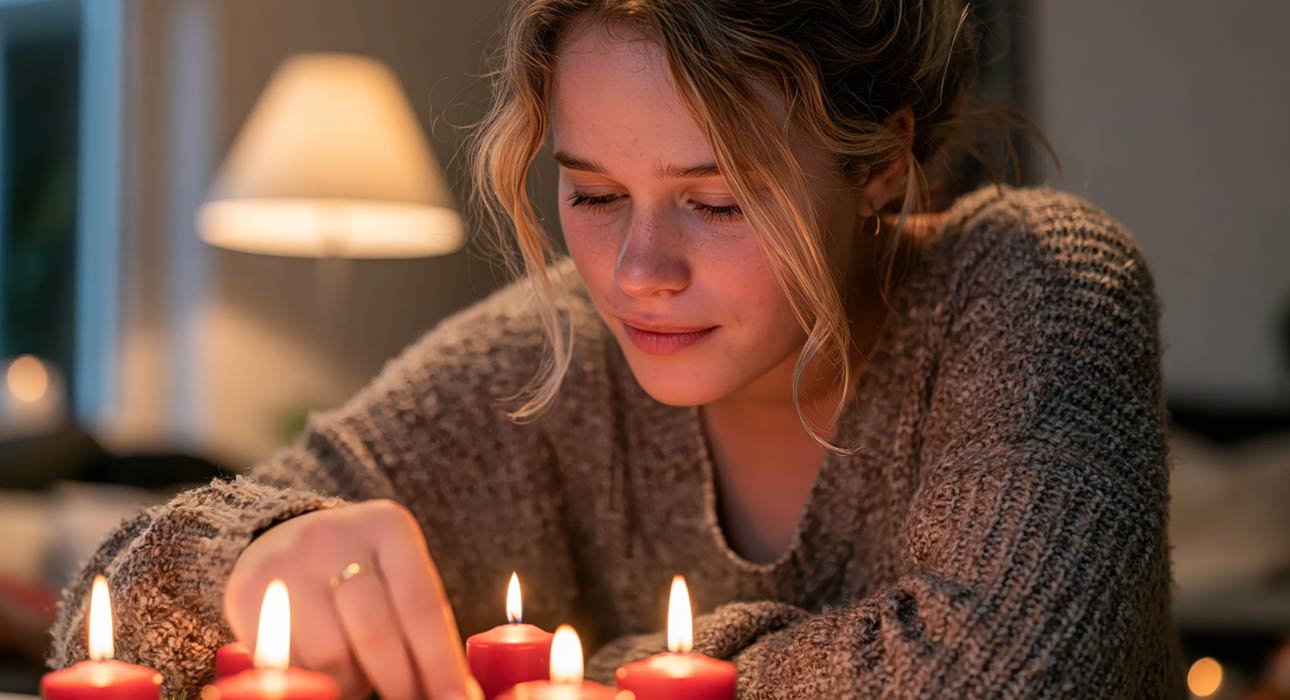
After the lights have been switched off and the guests have left, ordinary life can go on again. Yet, why does a certain desire within us remain for the celebrations that have just taken place? There is a rather overwhelming aspect about the day that follows a festival. The lights that once brightened every corner of the house are now switched off, and people are removing the decorations. They are also packing the remaining sweets to share with others. As a result, the usual sounds of laughter and conversation give way to an almost uncomfortable silence. Although the house appears to be the same, it sits with a different atmosphere.
For several days, everything had a slightly deeper meaning. During this time, there were things to prepare for, people to meet, meals to share, and instances that made ordinary life seem remarkable. In some cases, the days after Diwali result in an unexpected emotional void. People then go back through photographs, repeat conversations, recall family dinners or just wish that the celebrations could go on a bit longer. It can feel unusually difficult to go back to work, to studies and to ordinary duties.
We can understand this experience through the concept of post-event blues. It refers to a temporary drop in mood after an event that people had expected to enjoy. However, it is not a formal clinical diagnosis or a recognised psychiatric disorder. However, the phenomenon has been the subject of some formal research. According to Heidl (2024), post-event blues cause a sudden drop in mood among festival participants. People often experience sadness and lethargy after a celebration they had eagerly anticipated. This raises questions such as: Why does something that brings us such happiness also leave us feeling so empty when it is over?
In this article, we explore some of the psychological factors that may contribute to this experience. These factors include attachment, the need to belong, the sadness of being separated from loved ones, and feelings of nostalgia. They also involve the contrast between festive and ordinary days, as well as the role of social connectedness in how we cope afterwards.
Diwali: More Than Just a Festival
In India Diwali is more than about its religious and cultural aspects. It stands for hope, resilience, renewal, togetherness and the prospect of starting a new life. The act of lighting diyas is not merely an aesthetic custom. It also serves as a symbolic reminder that light can appear even after times of darkness. There is another aspect of Diwali that is to be considered: the beauty of people returning home.
As people grow up, the distance between places gradually becomes an established part of their lives. Children go to other cities in order to receive their education, to find a job or to take advantage of better opportunities. Many of them move abroad and gradually build lives that take them further away from the homes where they grew up.
Parents then learn to make do with video calls, infrequent conversations and the expectation of the next visit. When Diwali comes around, it turns out to be one of those rare times when everyone makes an effort to return. Parents are able to see their children after several months or even after years have passed. Siblings reunite, childhood friends reconnect, and homes that have remained quiet throughout the year become lively again.
Psychology helps us to see why these reunions matter so much. Attachment theory, first developed by Bowlby (1969), suggests that close bonds with family members give us a sense of security and a base from which we can face the wider world. Closely related is the need to belong, which Baumeister and Leary (1995) describe as a basic human motivation to form and maintain lasting, positive relationships. A family reunion meets both needs at once. Physical distance can also cause separation-related distress. It refers to the feelings of unease or longing we experience when we are away from people to whom we feel attached. Many people learn to live with this distress during the year. But a festival can bring it to the surface again when the reunion comes to an end.
For a couple of days, geographical distance becomes less significant. Age, one’s professional obligations and the demands of adult life temporarily cease to matter. Maybe that is the reason why Diwali seems such a personal occasion. It does not just bring people together but reminds them of the relationships that still exist even though there is a physical distance between them. And when those moments are over, what vanishes is not merely the festive atmosphere. It is also the temporary revival of a familiar emotional world.
The Psychology of Nostalgia: Why We Miss What Has Passed
A major psychological factor responsible for the sadness that follows a festival is nostalgia. Nostalgia is generally regarded as a sentimental desire to return to the past. Current psychological research indicates that it is far more complicated than merely recalling earlier times. According to Wildschut and his colleagues in 2006, nostalgic memories usually include close relationships, family members, friends and significant shared experiences. Interestingly, feelings of loneliness and negative emotions often trigger nostalgia. However, reflecting on past experiences can strengthen social connections and bring about positive emotions.
This points to the two functions nostalgia serves. Its emotional function is to comfort us: recalling a warm memory can lift our mood and soften sadness or loneliness for a while. Its social function is to remind us that we are connected to other people. This can make us feel more loved and supported. After a festival, nostalgia can therefore do both things at once. It brings a bittersweet ache, but it also reminds us of the bonds we have.
Furthermore, research by Sedikides and colleagues (2016) showed that nostalgia can strengthen social connections and self-continuity. Self-continuity refers to the sense that our past and present selves remain meaningfully connected. Take a simple example. A young professional living in another city makes the dish their mother used to cook at Diwali. As they taste it, they remember the kitchen at home, the people around them and the person they were then. For a moment they feel that the child in that kitchen and the adult in a rented flat are the same person, and that the life they have now grew out of the one they had. That feeling is self-continuity. This helps to explain why memories of festivals hold such aftereffects.
Remembering things that were done back at the festival times, like a song played at the party, the taste of the food you had back at the festivities, photographs popping up in your gallery, flashbacks, etc. The reason why these memories have an emotional impact is not always because of the perfect state of the past. It is due to the fact that the people, places and relationships connected with those times are familiar. It is not always our desire to go back and become children again. Rather, what we long for is the feeling of being surrounded by people who make the world seem familiar and safe.
When Happiness Makes Its Absence More Noticeable
A further explanation involves the psychological process of adaptation. People gradually adjust to changing emotional circumstances and eventually return to their usual emotional states. Psychologists refer to this process as hedonic adaptation.
Diener, Lucas and Scollon (2006) state that people’s emotional reactions to positive and negative life events may vary over time, even though the degree and speed at which they adapt differ from person to person. At Diwali, a number of positive experiences take place simultaneously, such as social interaction, family gatherings, eating food, following traditions, travelling, looking forward to the occasion and having a temporary interruption of the normal routine. These experiences give structure to our daily lives. We have something to look forward to, someone to meet, and something to prepare for.
It helps to separate this from what many of us feel right after the festival. Hedonic adaptation is a gradual process: over time we drift back to our usual emotional level, however good or bad the event was. The emptiness after Diwali is different, because it comes suddenly, within a day or two, and it comes from emotional contrast, the sharp gap between the richness of the festive days and the plainness of the ordinary routine we step back into. Adaptation explains why the glow fades over weeks and months, whereas contrast explains why the first morning after can feel so flat.
Almost at the same time that the festival comes to an end, these experiences vanish. The difference between the emotional depth of the festive period and the ordinary predictability of daily life can cause the resumption of normal routines to seem especially disappointing. It should be clear that this does not always indicate that a person is unhappy with their ordinary life. At times the contrast alone is sufficient to lead to a feeling of emptiness. Even if our professional and personal lives are completely satisfying, we can still long for the special kind of togetherness that a festival provides.
The Unspoken Loneliness of Growing Up
One of the main reasons, perhaps, for the sadness that follows Diwali is the emotional aspect of growing up. When children celebrate festivals, there is usually a certain sense of permanence about them; the house is something you know well, the family members are close by, and the celebrations stick to traditions which appear unlikely to ever change. We do not realise at the time how valuable these situations are. The situation is quite different in adulthood.
People move about; families end up being spread out over different places. As the parents get older, the children take on their own duties, and the usual family arrangements slowly change. The festival, which previously involved dressing up in new clothes, getting presents and staying up late overnight, may eventually turn into a series of efforts to arrange travel dates, adjust work schedules and make sure that everyone can get back home. It is filled with the joy of knowing that these get-togethers are happening.
Changing family structures can affect emotional well-being in quiet ways. When the joint household gives way to smaller families living in different cities. The daily contact that once met our need to belong is replaced by occasional visits. The sense of security that came from having family close by is then felt mostly during reunions. This can make the separation that follows feel sharper. Over time, living far from loved ones may leave some people with a lingering loneliness, even when their life is otherwise full and busy.
For some people, the sense of emptiness that follows Diwali is not just due to the absence of the celebrations. It also indicates an awareness of the passage of time, of relationships changing and of childhood growing more and more remote. In the case of those who have lost close relatives, have undergone family separation or are unable to go back home, the festival creates a greater emotional impact. The absence of someone who once held an important place at the family table can feel especially noticeable during celebrations that families traditionally spend together. As a result, the same festival can bring happiness to one person, loneliness to another and a complex blend of both emotions to a third person.
Nostalgia Is Not Always Something We Need to Escape
People often believe that they should return to their usual routines as soon as possible after a celebration. They resume their daily activities, complete unfinished tasks, and tell themselves that the festival was simply a pleasant break from everyday life. Yet emotional experiences do not always conform to the schedule we have. It is important to realise that feeling missing something significant is not always a sign of emotional weakness. It may in fact show how much we value our relationships and experiences.
The study carried out by Juhl and Biskas (2023) emphasises the social aspect of nostalgia, showing that reflective nostalgia can enhance people’s sense of belonging, their perception of meaning and their connections with others. Instead of viewing nostalgia as an emotion that should always be suppressed, we can learn how to deal with it in a constructive way.
Social connectedness, the feeling of being close to and valued by other people. It is one of the most useful things we can hold on to once a festival has ended. Relationships are kept alive through the year. The end of a reunion feels less like a loss and more like a pause, so the loneliness that follows tends to be lighter. Regular contact reminds us that the bond did not end with the festival.
A few simple practices may help
- Keep in touch; Simply making a phone call, sharing a photograph or having some occasional family get-togethers can help keep the emotional bond strong.
- Meeting people you love shouldn’t be confined to one festival; set up little traditions during the year, maybe small get-togethers once in a while or a vacation.
- Let yourself feel the emotions; there is no guilt in missing the celebrations. Admit the sadness but don’t let it be the only way you experience the present.
- Take the meaning forward by not seeing the festival as just a separate period of happiness. But rather identifying what gave it significance. Such as connection, gratitude, generosity, or a sense of belonging, and then finding ways to include these values in ordinary life.
Conclusion
When the last diya is put out, the decorations are removed, and everyone returns to their respective cities, and everyone is back to their routines. But something from those few days remains. Perhaps it is the memory of a parent waiting for their child to arrive. Perhaps it is the sound of siblings laughing together after months of living separate lives. And perhaps it is the comfort of sitting around a dining table where, for once, nobody is in a hurry to leave.
We often measure festivals by the celebrations they offer. But their deeper significance may lie in the emotional connections they temporarily bring within our reach. The sadness that follows does not necessarily take away from the happiness we experienced. In some ways, it reflects its significance. Maybe the answer to post-Diwali blues is not to force ourselves to forget the celebrations or immediately replace them with something equally exciting. Perhaps it is to recognise that the warmth we experienced was never meant to remain confined to a few festive days.
The lights may come down, the guests may leave, and the house may return to silence. But the relationships, memories and sense of belonging that made those moments special do not have to disappear with them. After all, perhaps the most beautiful thing about a festival is not that it makes us forget our everyday lives for a few days. Instead, it reminds us what makes those lives worth returning to.
References +
- Diener, E., Lucas, R. E., & Scollon, C. N. (2006). Beyond the hedonic treadmill: Revising the adaptation theory of well-being. American Psychologist, 61(4), 305–314. DOI: 10.1037/0003-066X.61.4.305
- Heidl, S. E. (2024). When the Event Ends: Post-Event Blues after Attending a Festival. Journal of Festive Studies, 6, 279–299. DOI: 10.33823/jfs.2024.6.1.245
- Hepper, E. G. (2024). Pancultural nostalgia in action: Prevalence, triggers, and psychological functions of nostalgia across cultures. Journal of Experimental Psychology: General, 153(3), 754–778. DOI: 10.1037/xge0001521
- Juhl, J., & Biskas, M. (2023). Nostalgia: An impactful social emotion. Current Opinion in Psychology, 49, 101545. DOI: 10.1016/j.copsyc.2022.101545
- Sedikides, C., Wildschut, T., Cheung, W. Y., Routledge, C., Hepper, E. G., Arndt, J., Vail, K., Zhou, X., Brackstone, K., & Vingerhoets, A. J. J. M. (2016). Nostalgia fosters self-continuity: Uncovering the mechanism (social connectedness) and consequence (eudaimonic well-being). Emotion, 16(4), 524–539. DOI: 10.1037/emo0000136
- Wildschut, T., Sedikides, C., Arndt, J., & Routledge, C. (2006). Nostalgia: Content, triggers, functions. Journal of Personality and Social Psychology, 91(5), 975–993. DOI: 10.1037/0022-3514.91.5.975



Leave feedback about this