







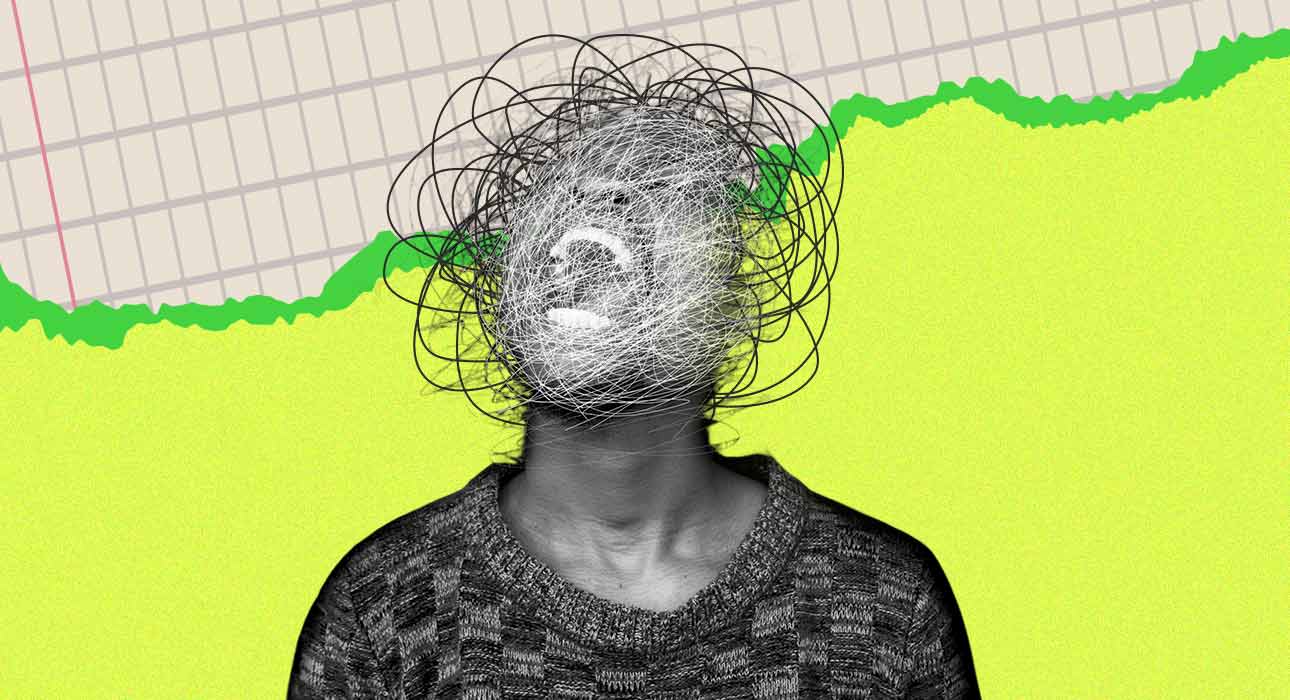
We have occasionally been asked about our feelings and the emotions we are going through. Even if our response isn’t totally truthful, the majority of us have a ready response. Consider how frequently someone asks, “How are you?” and you automatically respond, “I’m fine” or “I’m doing well,” even on a day when you’re not. Regardless of the truth, social conditioning leads us to give that simple response. However, even though most people wear that mask occasionally, they are aware of their true emotions beneath it. The problem extends well beyond social politeness for people who have no idea how to express or recognise emotions. Researchers call this condition alexithymia.
Alexithymia is a personality trait that involves difficulty identifying, expressing, and more external direction of thought process (Schroeders et al., 2022; Tsubaki & Shimizu, 2024). A study indicated that 10% of people have it, with notable cases occurring in those with various psychotic or psychosomatic disorders (Schroeders et al., 2022). This type of behaviour may appear cold or callous to others, but for the individual, it’s a genuine, continuous fight that prevents them from expressing themselves. Comprehending this is crucial as emotions are not individual experiences.
They have an impact on how we interact with people, make choices, deal with stress, and go about our daily lives. When someone is unable to understand their emotions, it becomes awkward to keep talking to them. We don’t know how to help them resolve conflicts and realise what they need. In this article, we will look at what alexithymia is, where it originates, its effects on relationships, its assessment, and its treatment.
Read More: ALEXITHYMIA: When You are Not Sure What You Feel
What is Alexithymia?
In 1973, psychiatrist Peter Sifneos introduced the term “Alexithymia”, meaning no words for emotions. Researchers later divided alexithymia into three categories: difficulty identifying feelings, difficulty describing emotions, and difficulty verbalising thoughts that focus more on external events than internal experiences. In 1994, researchers developed the TAS-20 scale to evaluate these characteristics in individuals with alexithymia (Schroeders et al., 2022). It is important to note that alexithymia is not a disease; it is a trait and can vary from person to person (Hogeveen & Grafman, 2021; Schroeders et al., 2022).
Some may have more, and some may have less (Schroeders et al., 2022). Also, another study found that alexithymia can occur in various settings, including everyday life and serious mental health conditions, and it is often more pronounced in the latter (Tsubaki & Shimizu, 2024). People with alexithymia often experience emotional isolation at home, which makes it difficult for them to express their emotions verbally to others (Taylor et al., 1997; Hogeveen & Grafman, 2021).
Another thing that makes it more complicated is that it doesn’t always look very obvious. For example, your friend or colleague may have it, but you don’t know. Because individuals with this trait keep up with their daily tasks and responsibilities and may not seem affected by it. However, although they are okay socially out there, internally their feelings are confusing, which makes expressing those inner states hard. It means alexithymia isn’t only an unhealthy pessimistic character but rather a problem with emotion processing skills of people.
Where It Comes From
Researchers attribute alexithymia to multiple factors, including biological, neurological, developmental, and environmental influences, rather than a single cause. The neurological paradigm suggests that brain dysfunction in regions responsible for emotional processing can contribute to alexithymia (Hogeveen & Grafman, 2021; Kinnaird et al., 2019). The biological paradigm argues that it is because of genetic differences in individuals.
According to developmental factors, early childhood experiences and limited opportunities to learn emotional vocabulary play a role (Lane & Schwartz, 1987; Hogeveen & Grafman, 2021). Lastly, some environmental factors cause alexithymia, such as childhood trauma, adverse childhood experiences, and an emotionally restricted family environment where emotions are taboo to talk about (Taylor et al., 1997; Hogeveen & Grafman, 2021). Another study investigating the link between attachment theory and the early trauma hypothesis revealed that alexithymia derives from childhood experiences characterised by feelings of insecurity or lack of parental support or early exposure to adverse events.
Insecure attachment styles and early childhood trauma undermine the individual’s ability to understand and regulate internal emotional states (Zdankiewicz-Ścigała & Ścigała, 2020). When a child grows up in an environment where their feelings and emotions are rarely talked about, either punished or ignored. They become prone to expressing their feelings or emotions to others or themselves. It affects how individuals think, speak, and handle everyday challenges as they get older. A 2008 study found that parental emotion socialisation techniques also play a role in the development of alexithymia.
When parents attempt to help their children recognise their emotions by asking them, “Are you angry?” “Does that make you feel bad?” “Why did that make you feel that way?” It helps youngsters develop better emotional awareness and regulation skills (Vallotton, 2008). If not taught how to do so, kids have trouble identifying and comprehending their emotions.
Furthermore, alexithymia is linked to certain neurological and psychiatric illnesses, such as traumatic brain injury, autism spectrum disorder, anxiety disorders, and depression. Hogeveen and Grafman claim that in certain individuals, alexithymia can function as both a stable personality feature and the outcome of a neurological or psychological disease (Hogeveen & Grafman, 2021; Kinnaird et al., 2019). All of these medical conditions can occur together, but are different in aspects of their severity and clinical assessment (Kinnaird et al., 2019).
Read More: Attachment Patterns Across Relational Contexts: A Psychological Overview
The Relationship Cost
People normally tend to share their feelings. However, as per one study, the presence of alexithymia leads to poor-quality marriages. In particular, persons with this disorder risk feeling lonely and detached since they cannot communicate their emotions to their partners effectively and intimately enough (Frye-Cox & Hesse, 2013). According to another study, this inability causes partners to be less satisfied with the closeness of their relationships (Humphreys et al., 2009). In fact, these sources explicitly demonstrate that interpersonal bonds, as well as the involved parties, suffer from this disorder.
This fact evidently complicates diagnosis, since persons with alexithymia may seem aloof and non-emotional to their partners who do not possess the same disorder, although they may have difficulties expressing their feelings themselves. A person with alexithymia may actually feel sorry for their partners; however, they have difficulty understanding their feelings and are not able to express them to their partners (Frye-Cox & Hesse, 2013; Humphreys et al., 2009). For instance, if asked what is wrong, one might not say anything, but the other will get the wrong idea. Thus, leading to disputes in the relationship.
These situations might become an ongoing cycle of interaction between couples. Specifically, if one partner persistently tries to force the other to talk about their feelings, whereas the latter cannot do this due to alexithymia, this will lead to emotional detachment for both partners. This will result in additional problems deriving from a misunderstanding between partners who are convinced that they are right and accuse the other side of being cruel or aloof. Thus, alexithymia not only undermines people’s ability to understand their emotions but also impairs their communicative abilities, severely damaging their relationships.
Read More: How Alexithymia, Psychological Distress, and PTSD Symptoms Interact Over Time
Assessment
The Toronto Alexithymia Scale–20 (TAS-20) is the most used tool for assessing alexithymia. It requires participants to respond to items measuring the core difficulties associated with alexithymia. This includes difficulty identifying feelings, difficulty describing feelings, and externally oriented thinking (Bagby et al., 1994; Schroeders et al., 2022). Although these self-report tools have limitations, they remain the preferred tool for screening and research purposes due to their strong reliability and validity (Schroeders et al., 2022; Hogeveen & Grafman, 2021).
Nevertheless, since alexithymia is characterised by deficits of emotionality perception, relying solely upon self-reports might miss out on some aspects of emotional processing challenges. Therefore, researchers have suggested the use of another scale, performance-based measures such as the Levels of Emotional Awareness Scale (LEAS), to measure emotional awareness more objectively (Hogeveen & Grafman, 2021). This scale is used to assess how participants describe their own emotions and the emotions of others in specific situations. Then the results are scored based on the complexity and differentiation of emotional understanding (Lane et al., 1990; Hogeveen & Grafman, 2021).
Read More: Cognitive Behavioural Therapy: Concepts, Types & Techniques
Treatment
Alexithymia is often regarded as a relatively stable personality trait; research shows therapeutic approaches could decrease these traits while enhancing empathy with emotions as well as managing them better. Tsubaki and Shimizu discovered that various psychotherapeutic interventions resulted in significant improvements in alexithymia symptoms.
For example, acceptance and commitment therapy (ACT), a type of cognitive behavioural therapy, has been demonstrated to enhance emotional regulation abilities by encouraging acceptance of thoughts and feelings and focusing on psychological flexibility. According to the review, people with alexithymia may need prolonged psychotherapy to acquire sufficient emotional regulation skills.
This highlights the significance of long-term and continuous treatment as opposed to short-term therapies (Tsubaki & Shimizu, 2024). Psychodynamic therapy, as well as those rooted within a framework of mentalizing, can be used to treat alexithymia disorders effectively. According to Pinna et al., short-term psychodynamic psychotherapy and mentalization-based therapy can increase emotional awareness. They help people recognise emotions, understand the connection between emotions and body sensations, and express their internal states.
These strategies might be helpful for people with chronic problems of emotion regulation. These methods offer a structured setting to explore and understand previously unacknowledged emotions. However, because emotional awareness develops slowly, such interventions often require therapeutic involvement and continued emotional exploration (Pinna et al., 2020).
Why It Matters
The inability to identify and comprehend emotions is a major characteristic of alexithymia rather than the impaired ability to feel emotions (Schroeders et al., 2022). Therefore, it is vital to remember that persons with alexithymia do not feel empty, although they do not realise that they may have emotions. It is even more important to remember that alexithymia can make people feel ‘emotionally numb.’ This could help in reducing stigma. The disorder is not necessarily connected with one’s personality. Rather, it is a condition that can be treated (Tsubaki & Shimizu, 2024).
In particular, understanding this subtle difference could help both the partners of persons with alexithymia. It could also help the affected people themselves to reduce the levels of frustration and recrimination in their relationships (Frye-Cox & Hesse, 2013). In fact, the disorder is not something one needs to live with. It is something that one can overcome with the use of the appropriate psychological interventions to understand and describe their emotions (Tsubaki & Shimizu, 2024). Therefore, it is possible to claim that alexithymia is not about being empty. It is about being aware, communicating, and managing one’s feelings (Tsubaki & Shimizu, 2024).
Read More: The Art of Self-Discovery in Psychotherapy
Conclusion
There are numerous terms to describe alexithymic persons, such as weird, cold, unsympathetic, and emotionally numb. In fact, these individuals have difficulties understanding and expressing their emotions. For alexithymic people, however, it is equally crucial to comprehend how others see them. This enables them to overcome subsequent social boundaries and foster intimacy with their spouses or other close individuals.
Furthermore, it is critical to recognise that alexithymia is a treatable condition that can be successfully treated with psychotherapy. In other words, people with alexithymia should not be saddened by their diagnosis. Developing psychological awareness and learning to deal with emotional challenges requires time and patience. Despite the difficulties associated with alexithymia. It is possible to infer that this condition can be improved and managed by a good lifestyle and relationships.
References +
- Bagby, R. M., Taylor, G. J., & Parker, J. D. A. (1994). The Twenty-Item Toronto Alexithymia Scale—I. Item selection and cross-validation of the factor structure. Journal of Psychosomatic Research, 38(1), 23–32.
- Frye-Cox, N. E., & Hesse, C. R. (2013). Alexithymia and marital quality: The mediating roles of loneliness and intimate communication. Journal of Family Psychology, 27(2), 203–211. https://doi.org/10.1037/a0031961
- Humphreys, T. P., Wood, L. M., & Parker, J. D. A. (2009). Alexithymia and satisfaction in intimate relationships. Personality and Individual Differences, 46(1), 43–47. https://doi.org/10.1016/j.paid.2008.09.002
- Kinnaird, E., Stewart, C., & Tchanturia, K. (2019). Investigating alexithymia in autism: A systematic review and meta-analysis. European Psychiatry, 55, 80–89. https://doi.org/10.1016/j.eurpsy.2018.09.004
- Lane, R. D., Quinlan, D. M., Schwartz, G. E., Walker, P. A., & Zeitlin, S. B. (1990). The Levels of Emotional Awareness Scale: A cognitive-developmental measure of emotion. Journal of Personality Assessment, 55(1–2), 124–134.
- Pinna, F., Manchia, M., Paribello, P., & Carpiniello, B. (2020). The impact of alexithymia on treatment response in psychiatric disorders: A systematic review. Frontiers in Psychiatry, 11, Article 311. https://doi.org/10.3389/fpsyt.2020.00311
- Redondo, I., & Luyten, P. (2020). Alexithymia mediates the relationship between insecure attachment and eating disorder symptoms. Journal of Rational-Emotive & Cognitive-Behavior Therapy, 39(4), 491–508. https://doi.org/10.1007/s10942-020-00376-w
- Schroeders, U., Kubera, F., & Gnambs, T. (2022). The structure of the Toronto Alexithymia Scale (TAS-20): A meta-analytic confirmatory factor analysis. Assessment. https://doi.org/10.1177/10731911211033894
- Tsubaki, K., & Shimizu, E. (2024). Psychological treatments for alexithymia: A systematic review. Behavioral Sciences, 14(12), Article 1173. https://doi.org/10.3390/bs14121173
- Vallotton, C. D. (2008). Signs of emotion: What can preverbal children “say” about internal states? Infant Mental Health Journal, 29(3), 234–258.
- Zdankiewicz-Ścigała, E., & Ścigała, D. K. (2020). Attachment style, early childhood trauma, alexithymia, and dissociation among persons addicted to alcohol: Structural equation model of dependencies. Frontiers in Psychology, 10, Article 2957. https://doi.org/10.3389/fpsyg.2019.02957



Leave feedback about this