







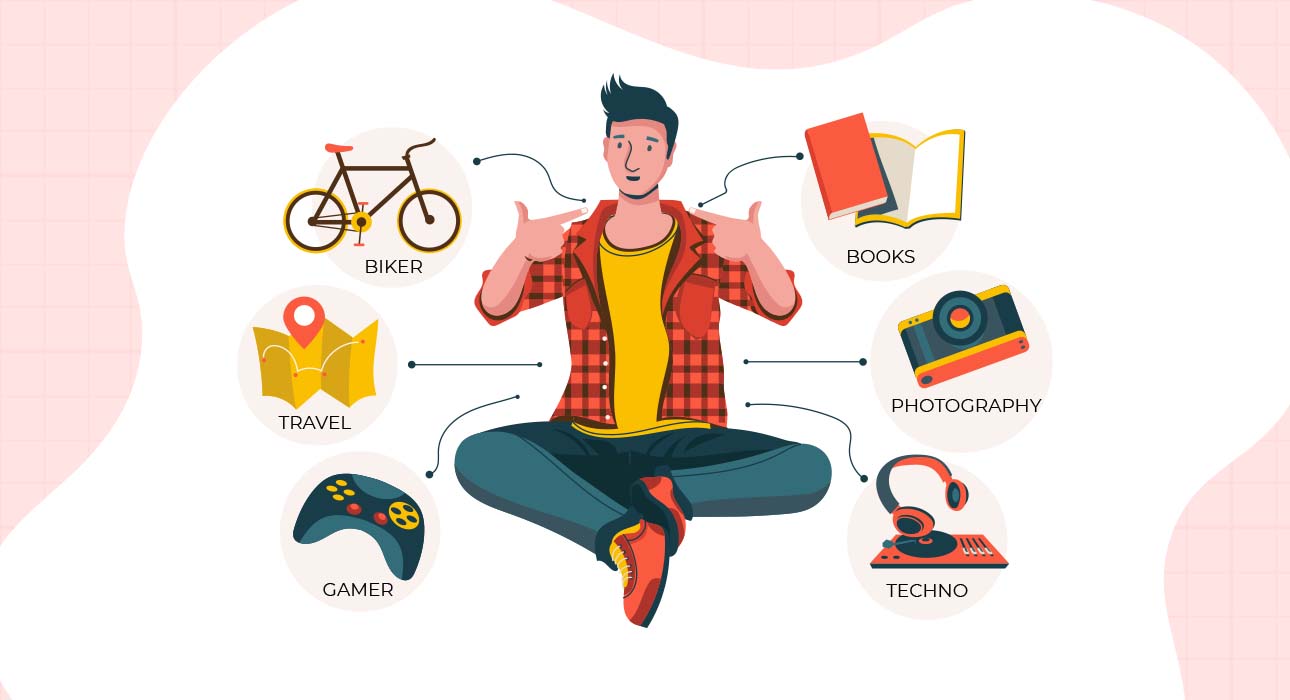
When Sarah was working as a designer, she loved drawing digital images in her spare time, and so she began to post her drawings on social media. At first, many people saw the work as interesting but didn’t pay her any money for her work. As time went by, people began to notice her artwork, start to follow her, and ask for custom drawings. Over the course of this time period, she went from being a creative hobbyist to working on freelance jobs from the custom drawing requests she was getting from her fans. This story is representative of a larger trend that business experts and economists refer to as the “passion economy”, a new model of earning money through developing and marketing products or services based on your skills, creative interests, or both (Li Jin, 2020).
The growth of digital platforms/remote jobs/marketplaces for creators is completely transforming the way we generate income. You can earn additional income while doing what makes you feel fulfilled and valued through the passion economy. Many great examples of individuals earning income in many different ways can be found in research (Ryan & Deci, 2020). Individuals who find satisfaction through a career will typically be more successful in terms of their mental and emotional well-being than those who are working solely for financial compensation. (Ryan & Deci, 2020).
In the present times, a hobby like photography or writing is no longer just for fun but can become a sustainable business with proper planning. If you know how to identify value, develop an audience and generate different types of income streams from your hobby, then there is potential for growth.
Read More: The Psychological Toll of Financial Instability on Freelancers
Identify the Market Value of Your Hobby
The first step for turning hobbies into income is establishing if there are value opportunities by providing people with something they need or want. A hobby becomes profitable when it gives someone something they would pay for, like a solution to solving a problem, or just a simple pleasure. Entrepreneurs who have success as entrepreneurs often do so because they identify what they can offer customers with their skill set (Blank & Dorf, 2020).
- Evaluation of Strengths: Determine the abilities or qualities that differentiate your hobby.
- Research Demand in the Market: Look through social channels, other online communities and ecommerce websites to discover what people want and need as it relates to your hobby.
- Identify Your Niche: As per Kotler and associates, honing in on a specific area of your hobby can help you create a loyal following.
- Validate Your Idea: Before making a more considerable investment in your product/service, use a test group to see how it performs.
A person with a passion for baking may be able to sell custom cakes, while someone with a passion for photography may be able to sell portrait photography or stock photos. Niche specialisation can improve customer trust and add to the business’s chance of succeeding (Frederiksen & Berglund, 2020).
Read More: Interests vs. Parental Expectation: Why Indian Youth Struggle With Career Choices
Build Your Personal Brand and Audience
Not only should you have a valuable skill, but others should know that you possess that skill as well. Due to the rise of technology and digital media, audiences are now much more likely to support creators whom they trust and feel an individual relationship with (Edelman Trust Barometer, 2023). Best practices for making your skill identifiable:
- Build an online community using social networks, blogs, or a personal website.
- Publish content to share expertise and talent.
- Connect with others by participating in conversations and building a community.
- Be genuine by showing your stories, challenges and growth journey.
According to research performed by Labrecque et al. (2011), those with demonstrated expertise can expect to attract followers as well as opportunities for their work within an organisation based on the credibility they establish through continual authenticity in demonstrating their skills. When an avid fitness participant shares workout-related content regularly, they develop trust in their followers as they do so, which in turn allows them to eventually monetise this trust through such avenues as coaching, digital products or sponsorship/branding.
Although the process of attracting a dedicated following takes time, the long-term success of creating an engaged community around the business you create will lead to increased growth and revenues (Hollebeek et al., 2022).
Read More: The Burnout Generation: How Early Exposure to Hustle Culture Shaped Gen Z’s Need for Boundaries
Create Multiple Revenue Streams
The majority of businesses built around passion share one thing in common – multiple revenue streams. Running a business on a single income stream is potentially precarious, and even more so in today’s digital economy, where industries are changing at an unprecedented rate (Ries, 2017). Ways you can monetise your business:
- Sell products which can be things like: Art Work, Handmade Items, Merchandise, and Online Courses.
- Offer services, such as: Coaching, Consulting, Freelancing, and Tutoring.
- Monetise your Content by: Advertising, Sponsorships, Memberships and Subscriptions.
- Earn commission through Affiliate Marketing, promoting products.
- Digital Products to sell that can include: E-books, Templates, Presets and Downloadable Assets.
Studies show that artists with multiple sources of revenue are financially secure and likely to survive in the long term (Cunningham & Craig, 2019). For example, a musician might earn money through gigging, teaching, and digital stream royalty payments, and a writer might work freelance as well as sell books and use a newsletter. Not only does diversifying revenue increase earnings, but it also establishes a more resilient and sustainable business.
Read More: Understanding the Psychological Impact of the Gig Economy
Conclusion
What has happened is a redefinition of the connection between our working lives and the areas we are truly interested in. Something we previously regarded as a hobby is now able to define our income, our profession and ultimately our sense of self-worth. The identification of a market need, building of a personal brand, and the cultivation of multiple sources of revenue are what allow individuals to sustain their passions as professions (Li Jin, 2020; Ryan & Deci, 2020).
Making money out of something you enjoy isn’t easy. It involves commitment, persistence and careful thought, but the rewards go far beyond money. Individuals who turn their passions into their careers are reported to have increased commitment, creativity, satisfaction, and life purpose (Wrzesniewski et al., 2013). In our increasingly networked, globalised, and digital age, it has become possible to work doing what you love. The issue is no longer if it’s possible, but if you’re willing to do it.
References +
- Blank, S., & Dorf, B. (2020). The startup owner’s manual: The step-by-step guide for building a great company (2nd ed.). K&S Ranch.
- Cunningham, S., & Craig, D. (2019). Social media entertainment: The new intersection of Hollywood and Silicon Valley. New York University Press.
- Edelman. (2023). 2023 Edelman trust barometer. https://www.edelman.com/trust/2023/trust-barometer
- Frederiksen, L., & Berglund, H. (2020). Building trust through specialisation in entrepreneurial ventures. Journal of Small Business Management, 58(4), 723–739.
- Hollebeek, L. D., Macky, K., & Sprott, D. E. (2022). Customer engagement and consumer trust in digital environments. Journal of Retailing and Consumer Services, 64, 102799. https://doi.org/10.1016/j.jretconser.2021.102799
- Kotler, P., Keller, K. L., & Chernev, A. (2022). Marketing management (16th ed.). Pearson.
- Labrecque, L. I., Markos, E., & Milne, G. R. (2011). Online personal branding: Processes, challenges, and implications. Journal of Interactive Marketing, 25(1), 37–50. https://doi.org/10.1016/j.intmar.2010.09.002
- Li Jin. (2020). The passion economy and the future of work. Harvard Business Review. https://hbr.org
- Ries, E. (2017). The startup way: How modern companies use entrepreneurial management to transform culture and drive long-term growth. Currency.
- Ryan, R. M., & Deci, E. L. (2020). Intrinsic and extrinsic motivation from a self-determination theory perspective: Definitions, theory, practices, and future directions. Contemporary Educational Psychology, 61, 101860. https://doi.org/10.1016/j.cedpsych.2020.101860
- Wrzesniewski, A., McCauley, C., Rozin, P., & Schwartz, B. (2013). Jobs, careers, and callings: People’s relations to their work. Journal of Research in Personality, 31(1), 21–33. https://doi.org/10.1006/jrpe.1997.2162





Leave feedback about this