








Memory is the process of encoding, storing and retrieving the information. Memory is a fascinating phenomenon. From remembering someone’s name and contact number to remembering some difficult mathematical equations, memory plays a prominent role in encoding, retrieving and storing the information. It is the memory that makes our tasks easy, from giving a signal to wake up early in the morning for a presentation to submitting an important assignment on time. It is the memory that helps us to get our work done on time. Imagine what would have happened if an individual kept on forgetting every single thing. Life would have been difficult.
Can memory be false? Can individuals construct false memories based on others’ suggestions? Consider this example: Tom is an adolescent, but he was falsely made to believe that he was lost in a crowded market. This memory of getting lost in the crowded market became so ingrained that Tom even made a story by himself about how he was lost in the market. Even though he was never lost in the market. This memory was easily ingrained in Tom’s memory because his family kept on saying the same incident in order to make him scared to go alone, as Tom used to love going out a lot instead of sitting at home and studying.
This is a case of False Memory Syndrome. This article aims to develop an understanding of False Memory Syndrome and other theories which make an attempt to best explain it.
What is False Memory Syndrome?
False Memory Syndrome is a condition where an individual’s memory and interpersonal relationships are influenced by a false traumatic memory that is false. What makes a false memory a matter of study in psychology is that individuals hold a strong belief that these false memories are true. Even though evidence is being provided to them, they refuse to accept that their memories are false. Another reason why it is studied extensively is that these false memories start to disrupt an individual’s daily functioning. It is not given in DSM-5 and ICD-11. False Memory Syndrome is not given an official diagnosis criterion (Masson, 1992).
Read More: Psychology of False Memory Syndrome
The Emergence of the Syndrome
The origin of False Memory Syndrome (FSM) is as interesting as the phenomenon itself. False Memory Syndrome can be traced back to the 1990s. A controversy or allegations started emerging that patients were able to remember their childhood sexual abuse, which never actually happened. This led to further allegations of harmful therapeutic practices by clinicians and therapists. Also known as an iatrogenic condition.
It was reported that the psychotherapist encouraged patients to remember their childhood sexual abuse and asked them to search for repressed memories. This form of therapy came to be known as ‘Recovered Memory Therapy’. The main aim behind this therapy was to trace childhood and understand the present adult distress. This therapy also involved the use of Hypnosis.
Patients undergoing treatment eventually came to believe that whatever they imagined was true. Especially patients with heightened suggestibility were more prone to this. This led to the initial emergence of False Memory Syndrome (FMS)(Mendez & Fras, 2011). After a certain point in time, individuals cannot make a difference between their reality and imagined thoughts. The syndrome of false memories is very important among the forensic and criminal population, along with eyewitness testimony in legal proceedings.
Can Freud be Blamed?
False Memory Syndrome also gained more attention because of Sigmund Freud. The father of Psychoanalysis. The patients who were given Hypnosis or the above-discussed patients were Freud’s patients or were seeking psychotherapy. When Freud visited Charcot in 1886. Charcot, Freud’s friend and a colleague. Charcot claimed that most of his patients’ neurologically unexplained problems stem from traumatic memories that were not completely available to the unconscious state.
These episodes/ instances show that False Memory Syndrome had its roots back in the 1880s, but to this date, no scientific journals have provided Signs, symptoms, and concrete causes for False Memory Syndrome (FMS)(Mendez & Fras, 2011).
Read More: Freud’s Secret Society: Political Power and the Foundations of Psychoanalysis
Understanding the psychology behind the Syndrome
Are there any other psychological theories that explain False Memory Syndrome?
Other theories provide some link to False Memory Syndrome. According to Jones (2026), Suggestibility is a tendency where individuals incorporate misleading information from external sources, such as misinformation, imagery, comments from others, etc. Suggestibility is the mechanism, whereas Memory Distortion is the result. For example, an individual who has not completely witnessed a fire break in a building ends up believing that some individuals died in that incident because he heard a comment saying that “The fire break was massive and disastrous.”
“Our memories are reconstructive. It’s like a little Wikipedia page – you can change it, but so can other people.” – Elizabeth Loftus.
Classic Paradigms and Famous Studies on Memory Distortions
- The car crash Study: Individuals who witnessed a complex event like a car crash have different memories. For instance, individuals who witnessed the event but got half-truths and misinformation about the event had more chances of not recalling the event properly; on the other hand, individuals who got no false information were able to recall the event properly.
- Lost in the mall: This study showed how a false event of getting missed in the mall made individuals actually believe that they experienced such an event. In this study, a close relative gave a fake story of a boy who got lost in the mall when he was five years old. After a clinical interview, the boy claimed that he believed that he was lost in the mall and attempted to explain it through a sequence. Even though the boy was never lost in the mall, this study demonstrates the Suggestibility(Loftus, 2003).
The Misinformation Effect
The misinformation effect happens when the recall of our episodic memory changes because of post- event information. Our brain has to accommodate the new information by challenging the already existing information. For example, after discussing a crime story with your friends, family, watching it on TV, and reading articles about it, the brain has a tendency to change the information.
Constructive Memory
It is a type of memory where the brain is actively constructing the events that happened in the past rather than actively recalling them. In this process, the brain does not retrieve what has actually happened. Constructive Memory is influenced by external sources such as prior knowledge, emotions and external information( Schacter et al., 1998).
Source Monitoring Theory
It was developed by Psychologist Marcia Johnson. This theory advocates that our memories do not come from built-in tags or labels; rather, our brain rapidly attributes sources to the memory whenever we try to retrieve them. The brain performs a rapid unconscious decision to the memory (ScienceDirect Topics, n.d.). There are 2 Types of sources:
- External Source: It involves distinguishing between two or more external sources of information. For example, did Ana tell me about the upcoming test? Or did I read it on the notice board?
- Internal Source: This involves distinguishing between internal thought processes. Especially distinguishing between what one actually did and what one imagined. For example, did I lock the door while coming to the office, or did I just imagine doing it?
If any individual is unable to distinguish between reality and their sources, the brain ends up creating an error, which again leads to: Bias, Misinformation Effect or False Memory Syndrome. When an event is continuously imagined vividly, it gets ingrained in the brain, requiring little cognitive effort. What happens next is that the perceptual details make the imagination more realistic, and the brain gets tricked into thinking that something actually happened.
Schema Theory
Schema Theory was proposed by Developmental Psychologist Jean Piaget. This advocates that schemas are built from our past experiences, knowledge, memories, etc. Schemas help us to navigate the world efficiently rather than focusing on every given piece of information. Piaget proposed two essential components of Schema :
- Assimilation: Assimilation is a process where we fit new information into the already existing schema.
- Accommodation: Accommodation is a process where the already existing schema is challenged. An individual has to alter their existing schema in order to fit their new information(Feldman, 2015).
Schema Theory and Memory Error: For instance, an individual witnessing a car crash might end up thinking about broken glass and injury to the drivers. Even though nothing like this happened, the individual was able to recall this information because he had the schema of broken glass and injury to the driver.
Read More: Why Jean Piaget Studied His Own Children: Origins, Insights, and Limits
Neuropsychological Perspective: False Memory Syndrome and brain areas
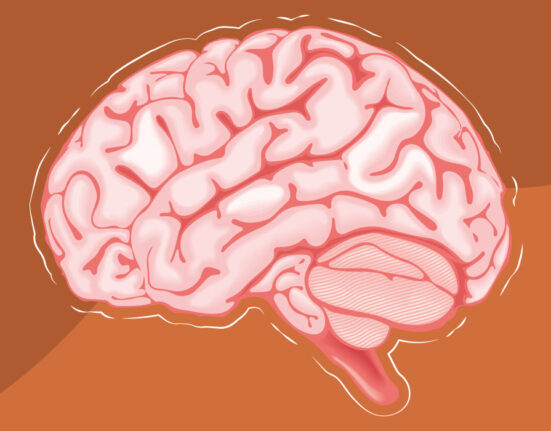
Neuropsychological studies show that certain forms of brain damage, such as combined Frontal and Medial Temporal Brain Lesions, result in source confusion that is known as confabulation.
The frontal and medial temporal lobes are two different brain regions, but they are highly connected. Both are responsible for memory, short-term memory, working memory, etc. Further research claims that memory distortions lead to dysfunctional Cognitive processing(Johnson & Raye, 1998).
Real – Life Implications
Child Sexual Abuse
According to Kalpan et al. (2001), many cases of childhood sexual abuse were reported by individuals. One of the most shocking aspects is that when these cases were investigated for the individuals, there was no evidence of childhood sexual abuse. Most of these cases emerged where therapists made their clients go back to their childhood and think about traumatic events. The families of the individuals who were blamed for sexual abuse had to face shame and humiliation in society. These cases rose in alarming ways, and somewhere, Recovered Memory Therapy needed to be stopped. Even though sexual abuse never happened during childhood, an individual would strongly claim that either their friend, relative or sibling abused them. Later, a different therapy was given to them to make them understand that their claims were false.
Read More: Psychological Recovery After Sexual Assault: Understanding Trauma and Healing
Committing Crime
According to Shaw et al. (2015), in a controlled experiment conducted by their team, researchers concluded that with highly suggestible interview individuals were able to generate false memories about committing crimes in adolescence. Participants were also able to provide a full story about the crime that they committed. A total of 70% of participants were classified as having committed a crime and also being held by the police.
Conclusion
These theories give us evidence and explanation of how our brain can alter our memories and how easily our memories can actually change. This answers one simple question: how memories are reconstructed rather than replayed exactly. Indeed, memories are reconstructed every time rather than being replayed because our brain keeps on receiving new external cues, sources and explanations and importantly, information. Memories often get influenced more by external sources rather than internal ones.
False Memory Syndrome (FMS) should be studied more, and the scientific community should make an attempt to at least create a formal diagnosis of the problem because it would be really useful in Forensic Cases, as many times individuals cannot actually recall the exact Event or scene. Making the case even more complicated. Memory has been a theme of research in psychology for 100 years and is one of the most fascinating phenomena to study. What lies between true memory and a strongly held belief? A false memory.
References +
- Schacter, D. L., Norman, K. A., & Koutstaal, W. (1998). The cognitive neuroscience of constructive memory. Trends in Cognitive Sciences, 2(12), 475–482.
- Patihis, L., Ho, L. Y., Tingen, I. W., Lilienfeld, S. O., & Loftus, E. F. (2014).
- Are the “memory wars” over? A scientist-practitioner gap in beliefs about repressed memory. Psychological Science, 25(2), 519–530.
- Loftus, E. F. (2003). Memory distortion and false memory creation. Bulletin of the American Academy of Psychiatry and the Law, 31(3), 367–373.
- The Decision Lab. (n.d.). Constructive memory. Retrieved May 17, 2026, from thedecisionlab.com
- Schacter, D. L., Guerin, S. A., & St. Jacques, P. L. (2011). Memory distortion: An adaptive perspective. Trends in Cognitive Sciences, 15(10), 467–474.
- Source monitoring. (n.d.). In ScienceDirect Topics. Retrieved May 17, 2026, from sciencedirect.com
- Masson, J. M. (1992). Freud and false memory syndrome. Retrieved from truthcloud.net
- Mendez, M. F., & Fras, I. A. (2011). The false memory syndrome: Experimental studies and comparison to confabulations. Medical Hypotheses, 76(4), 492–494. https://doi.org/10.1016/j.mehy.2010.12.023
- Johnson, M. K., & Raye, C. L. (1998). False memories and confabulation. Trends in Cognitive Sciences, 2(4), 137–145. https://doi.org/10.1016/S1364-6613(98)01152-8.
- Feldman, R. S. (2015). Development across the life span (8th ed.). pearson.com
- Shaw, J., & Porter, S. (2015). Constructing Rich False Memories of Committing a Crime. Psychological Science, 26(3), 291-301.
- Manicavasagar, V. (2001). Is there a false memory syndrome? A review of three cases. Comprehensive Psychiatry. https://doi.org/10.1053/COMP.2001.24588



Leave feedback about this