







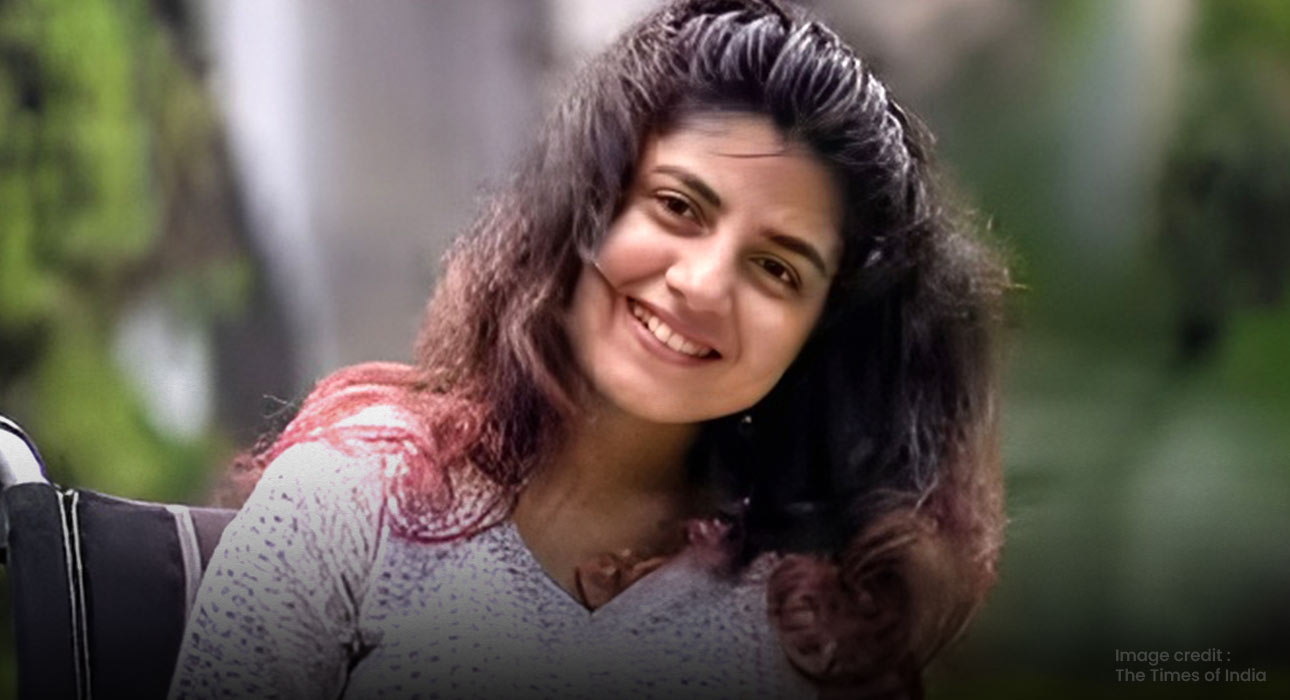
Delhi University guest lecturer Vinayana Khurana fights stereotypes about cerebral palsy through her writings and disability rights advocacy. She teaches English Literature at the Non-Collegiate Women’s Education Board of the University of Delhi. She also demands greater representation for and inclusion of people with disabilities in India.
Vinayana Khurana is a life coach, guest lecturer, writer, poet and inclusion activist who is working for better representation of the disabled community. She was born with cerebral palsy and could barely write or move, but she did not allow disability to become her identity. Today, she is a recipient of several awards as well as a beacon of hope for many youth with disabilities.
Read More: AI Detects Early Epilepsy Signals in EEG Data Before Seizures Appear
Disability In India
In India, people from the disabled community are still judged and kept away from mainstream opportunities in many social settings. Many individuals from underprivileged backgrounds are forced to beg for a living, while many others are still viewed through a negative lens. In some illiterate communities, it is also seen as an evil omen of possession or spirits.
In July, the Supreme Court had directed the central government to take inputs from experts and litigants before filing rules under section 40 of the Rights of Persons with Disabilities Act, 2016. This was regarding the implementation of accessibility options for persons with disabilities. The top court also directed for a Chief Commissioner and two additional Commissioners be appointed for Persons with Disabilities.
Read More: Mental Disorders Overtake Cancer and Heart Disease as the World’s Biggest Cause of Disability
About Cerebral Palsy
Cerebral Palsy (CP) is defined as a disorder that limits a person’s control over movement and posture, with cerebral relating to the brain and palsy meaning weakness in using the muscles. It is caused by damage to the developing brain and occurs during childhood. It is also one of the most common physical and motor disabilities to affect children. The degree of Cerebral Palsy can vary, with severe CP requiring special equipment and lifelong care, while mild CP will have symptoms but not need special help. There are four types of Cerebral Palsy, and the impact of each can differ for individuals.
Spastic Cerebral Palsy
This is the most common type, which affects at least 80% of people with cerebral palsy. Those with spastic CP have stiff muscles, which can make their movements different from normal. The most severe form is spastic quadriplegia, which affects the face, limbs and trunk moving extremely difficult. People with this form of CP usually cannot walk and also suffer from intellectual disability, seizures, or problems with vision, hearing and speech. The milder versions are spastic diplegia, which usually affects the legs and sometimes mildly the arms. Spastic hemiplegia affects one side of the person’s body, usually the arm more than the leg.
Read More: How Paralympic Athletes Build Identity and Self-Concept Beyond Disability
Dyskinetic Cerebral Palsy
People with this form of CP find it difficult to sit and walk because they find it difficult to control movement in their arms, hands, legs and feet. In some cases, it also affects the face and tongue, making it difficult to suck, swallow and talk. A person with diskynetic CP has muscle tones that can change in a single day, going from too tight to too loose.
Ataxic Cerebral Palsy
People with this form of CP have trouble with balance and co-ordination and could often be unsteady when they walk. They might face challenges especially with actions that require quick movements or movements that need a lot of control, like writing. They could face challenges in controlling their arms or hands, especially while trying to reach for an object.
Mixed Cerebral Palsy
This means that some people have symptoms of more than one kind of CP, with the most common type of mix being spastic-dyskinetic CP. Signs and symptoms of each CP can vary, given that there are many types and levels of disability.
Conclusion
While Cerebral Palsy cannot be cured, it can certainly be controlled if it is identified and treated at an early stage. Vinayana Khurana is an example of how awareness and timely intervention can help someone with CP reach their highest potential without stigma or rejection. Her story also highlights why awareness and education can help people with CP succeed beyond society’s closed perception of people with disabilities.





Leave feedback about this