







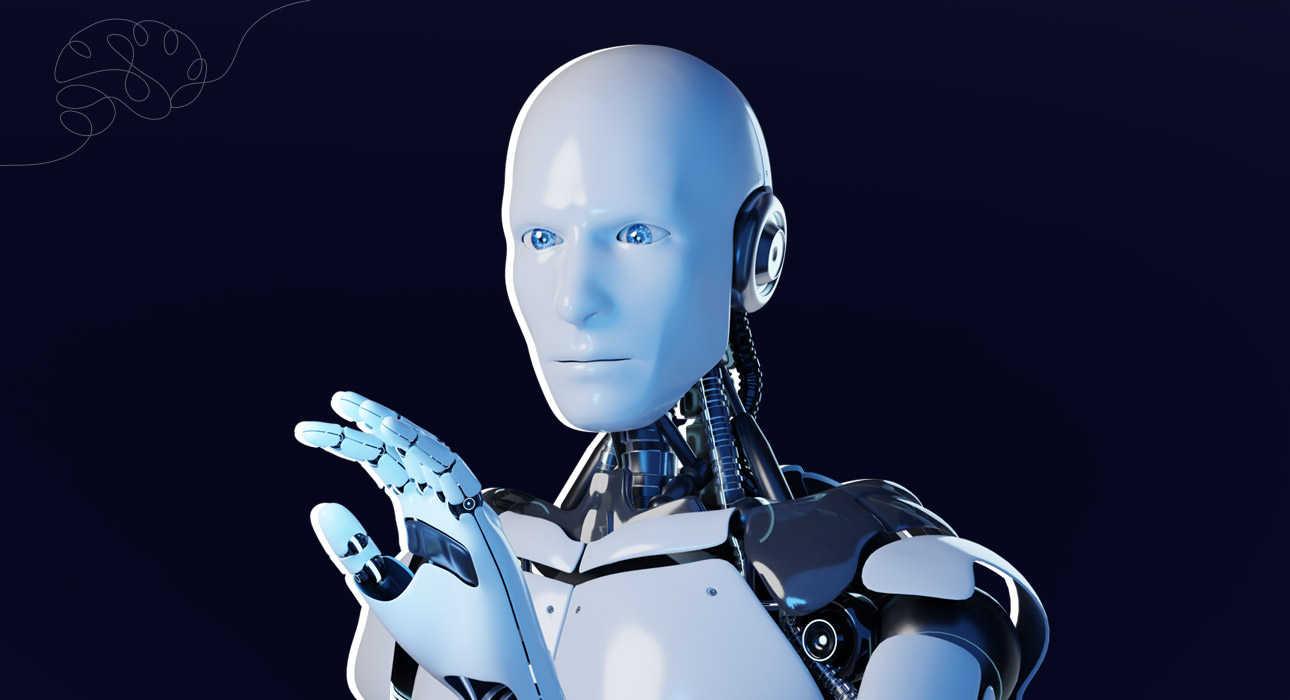
What happens when the machine next to you starts thinking with you? Imagine you wake up and tell an AI assistant to organise your day, filter your emails, suggest a nutritious breakfast, and help write that research paper you’re struggling with. For millions of people across the globe, this isn’t science fiction; it becomes part of their day-to-day life.
From smartphones and GPS to advanced generative AI models, artificial intelligence (AI) is rapidly becoming an unseen cognitive partner that shapes the way humans remember, decide, learn, and create. This ever-increasing immersion raises a critical question from a psychological perspective: Will our human cognition effectively adapt to a future where intelligence is increasingly shared with machines? The outlook is neither entirely optimistic nor despairing.
AI possesses the power to amplify our capabilities, yet it also poses risks such as cognitive dependency, reduced critical thinking, and lack of skill development. Thus, grasping the dynamics of technological adaptation is crucial for shaping a future where an AI-assisted future supports, rather than diminishing, human cognition (Brynjolfsson & McAfee, 2014; Russell & Norvig, 2021).
Read More: The Dopaminergic Loop of Predictive AI Feeds: How Algorithms Hijack the Brain’s Reward System
The Emergence of Shared Intelligence
It’s important to note that human cognition has always evolved alongside the tools and technologies of the time. Written language revolutionised individuals’ memory, the advent of calculators transformed arithmetic practices, and the internet redefined information retrieval. AI marks the next stage in this evolutionary process because it does more than store information; it can analyse the information, generate new insights, and provide recommendations (Russell & Norvig, 2021).
This burgeoning partnership between human and machine intellects is frequently referred to as ‘augmented intelligence’, a model where artificial systems enhance rather than replace human capabilities. Here’s how AI can be a cognitive ally:
- Processing enormous datasets within seconds,
- Identifying patterns imperceptible to the human eye,
- Assisting in complex decision-making,
- Streamlining routine cognitive tasks,
- Offering personalised recommendations in fields ranging from education to healthcare.
Researchers acknowledge that humans have always engaged in “cognitive offloading” the practice of keeping information within external supports like notebooks or smartphones to conserve mental energy. AI takes this to the next level by actively contributing to the thought process rather than becoming just a passive storage device (Risko & Gilbert, 2016). The key to successful adaptation is achieving a balance. While cognitive offloading is a natural strategy that frees up mental resources for higher-level cognition, becoming overly dependent on external systems may weaken the very abilities AI seeks to support.
Read More: Setting up Reminders Can Reduce Our Cognitive Load
AI and Human Decision-Making: Better Choices or Blind Trust?
One of AI’s most profound potential contributions lies in its ability to improve decision-making. AI systems are already being used to support medical diagnoses, predict market trends, and assist individuals in financial planning. By leveraging vast datasets and impartial analyses, AI can mitigate human biases, leading to more informed choices (Topol, 2019).
However, the human-AI interaction introduces a new challenge known as ‘automation bias ’: the phenomenon of accepting recommendations from an AI without sufficient scrutiny simply because the technology is perceived as inherently more accurate than humans (Parasuraman & Riley, 1997). Studies demonstrate that people frequently adopt incorrect AI-generated advice, even when aware of its limitations. The prospect of using AI:
- More efficient and objective decision-making,
- Reduced information overload,
- Enhanced diagnostic and analytical capabilities,
- Better support for problem-solving.
Nevertheless, the risk of using AI may include:
- Becoming overly reliant on automation,
- Difficulty in making independent judgements,
- Reduced analytical skills,
- Increased vulnerability when technology fails to give desired results.
Thus, adapting to an AI-integrated future does not mean surrendering decision-making to machines. Instead, it involves developing the ability to critically evaluate AI outputs while preserving human judgment and responsibility (Topol, 2019).
Read More: Intelligence Without Awareness: A Neuroscientific Case Against AI Consciousness
Creativity in the Age of AI: Competition or Collaboration?
Creativity is widely regarded as a hallmark of human intellect. Yet, as AI systems can now produce poetry, art, music, and literature, questions arise about potential replacement. Many researchers, however, view AI as more of a collaborator than a rival in the creative process (Boden, 2016). AI tools can assist people by:
- Suggesting new ideas through brainstorming,
- Offering alternative perspectives,
- Automating monotonous creative tasks, and
- Enhancing productivity in domains like writing, design, and research.
For writers struggling with inspiration or designers seeking to explore various prototypes rapidly, AI offers a valuable assistive technology. Though, the concern is whether increasing reliance on AI-generated content could inhibit independent creativity over time or may potentially cause a lack of originality (Boden, 2016). The future of creativity depends on humans continuing to nurture their curiosity, imagination, and critical engagement while leveraging AI’s creative potential.
Read More: Raising Kids in a Digital World: How Screen Time Affects Children’s Health and Development
Cognitive Dependency and Skill Displacement
One of the most anticipated consequences of using AI in thinking is the potential for cognitive dependency: the tendency of over-reliance on machines to perform tasks that were previously done internally. This isn’t an entirely new phenomenon. Research has indicated that one’s memory capacity can significantly decrease if the individual knows that they can easily access information from online resources, sometimes referred to as the “Google Effect” (Sparrow et al., 2011). The abilities at risk of diminishing may include:
- Mental arithmetic due to calculators and AI tools,
- Fact memorisation,
- Navigation skills because of GPS systems,
- Independent problem-solving strategies,
- Sustained attention and deep reading skills.
Furthermore, AI-driven skill displacement could occur when individuals gradually lose proficiency because machines perform tasks more efficiently. This issue is especially relevant in education and professional settings, where excessive AI reliance may reduce opportunities for practice and mastery (Carr, 2020). Educational systems and workplaces must address this by ensuring that students and professionals continue to engage in meaningful cognitive practice. However, history suggests that humans often shed one skill in favour of acquiring another; the crucial challenge lies in safeguarding core cognitive capacities while embracing new technologies.
Read More: How to Work Through Cognitive Distortions: Practical Strategies for Healthier Thinking
Can the Human Brain Adapt? Evidence from Cognitive Plasticity
Fortunately, the human brain possesses a remarkable capacity for change and adaptation known as ‘neuroplasticity’. This phenomenon describes the brain’s ability to rewire itself in response to new experiences and environments (Kolb & Gibb, 2011). Throughout history, humans evolved along with technological advancements:
- Literacy reshaped individuals’ memory strategies,
- Printing enhanced analytical thinking,
- Computers revolutionised workplace cognition,
- The internet fundamentally altered the approach to information-processing.
Similarly, the integration of AI may foster the development of new competencies, such as:
- Effective critical assessment of AI outputs,
- Management of human-machine collaborative workflows,
- Integration of multiple information streams,
- Creative problem-solving beyond algorithmic solutions,
- Navigating complex ethical challenges in high-tech environments.
Modern education is already recognising the importance of these emerging skills, shifting the focus less on memorisation to comprehension, critical thinking, and application of knowledge effectively (Luckin et al., 2016). Therefore, adaptation is not just possible; it is already in progress.
Read More: When the Mind Relives the Past: Understanding Cognitive Flashbacks and Trauma Memories
Building a Healthy Relationship with AI
To ensure AI-assisted cognition remains beneficial, individuals must foster a healthy partnership with technology. This entails some practical approaches including:
- Using AI as a support tool rather than an outright replacement for one’s thinking,
- Meticulously verifying AI-generated information through independent review,
- Diligently maintaining fundamental cognitive skills,
- Promoting creativity that extends beyond algorithmic suggestions,
- Fostering comprehensive digital literacy and ethical considerations of AI.
The ultimate objective is not to compete with AI but to cultivate complementary strengths. Human capabilities like empathy, emotional understanding, moral judgment, and situational awareness are still profoundly difficult to fully replicate through algorithms (Russell & Norvig, 2021). Success in an AI-augmented future will depend on preserving these uniquely human capacities while leveraging AI’s computational power.
Read More: Through the Mind: What Cognitive Science Has to Say on Sexual Fantasy
Conclusion
Human cognition has never been at a static level. For centuries, humans have found ways to integrate new devices into the ways of storing information, making it accessible and transmitting it from mind to mind. AI represents another transformative step into the ongoing evolution.
While concerns regarding cognitive dependency, skill displacement, and overreliance are legitimate, evidence from cognitive science suggests that humans possess remarkable openness to acceptance and adaptability. The future of intelligence is unlikely to be a contest between humans and machines; rather, it will be a partnership in which each contributes distinct strengths.
So, AI and Humans will likely collaborate, not fight for domination over the realm of intelligence. The greatest challenge is not whether AI will become more intelligent, but whether humans will continue to think critically, create meaningfully, and act ethically in collaboration with these systems. If wisely integrated, AI might also enhance human ability and creativity, rather than erode it. It doesn’t question humans to think less; it’s asking humans to think better, wiser and even more humane as far as possible.
References +
- Parasuraman, R., & Riley, V. (1997). Humans and automation: Use, misuse, disuse, abuse. Human Factors, 39(2), 230–253.
- Kolb, B., & Gibb, R. (2011). Brain plasticity and behaviour in the developing brain. Journal of the Canadian Academy of Child and Adolescent Psychiatry, 20(4), 265–276. ∙ Sparrow, B., Liu, J., & Wegner, D. M. (2011). Google effects on memory: Cognitive consequences of having information at our fingertips. Science, 333(6043), 776–778. ∙ Brynjolfsson, E., & McAfee, A. (2014). The second machine age: Work, progress, and prosperity in a time of brilliant technologies. W. W. Norton & Company.
- Boden, M. A. (2016). AI: Its nature and future. Oxford University Press. ∙ Luckin, R., Holmes, W., Griffiths, M., & Forcier, L. B. (2016). Intelligence unleashed: An argument for AI in education. Pearson Education.
- Risko, E. F., & Gilbert, S. J. (2016). Cognitive offloading. Trends in Cognitive Sciences, 20(9), 676–688.
- Topol, E. (2019). Deep medicine: How artificial intelligence can make healthcare human again. Basic Books.
- Carr, N. (2020). The shallows: What the Internet is doing to our brains (Updated ed.). W. W. Norton & Company.
- Russell, S., & Norvig, P. (2021). Artificial intelligence: A modern approach (4th ed.). Pearson.




Leave feedback about this