







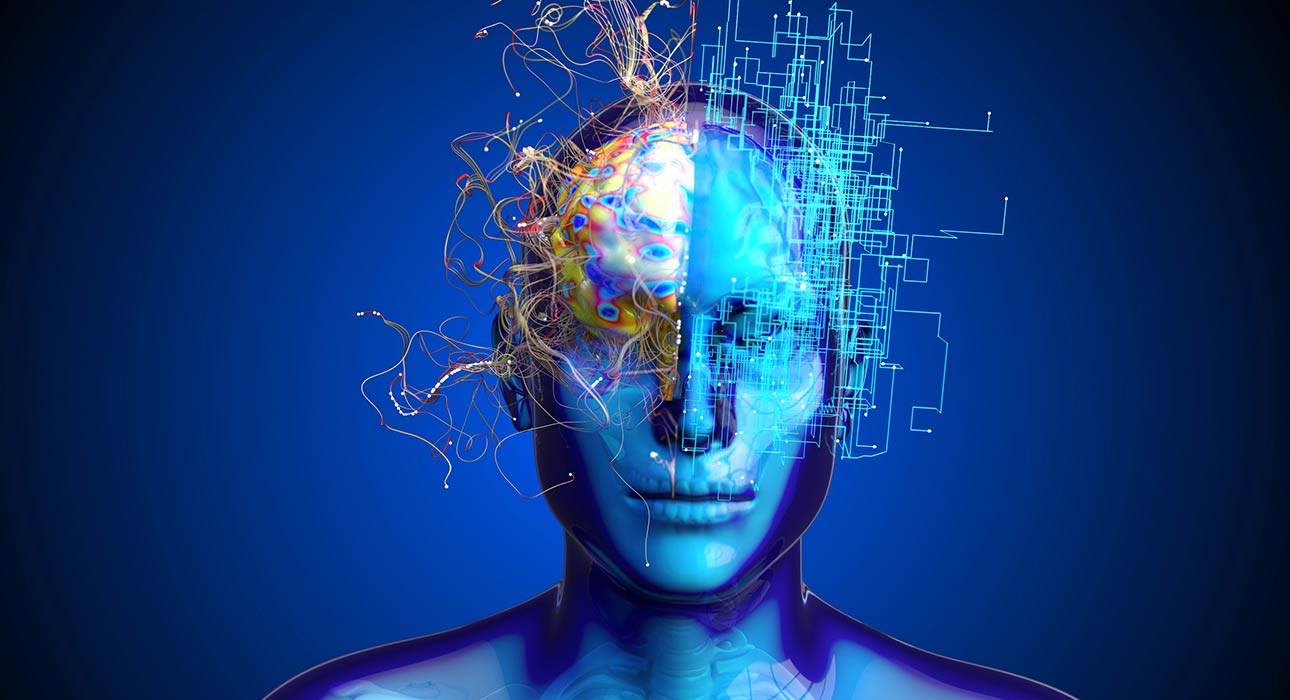
The research article titled “Intelligence Without Awareness: A Neuroscientific Case Against AI Consciousness” examines an essential problem that arises in today’s world dominated by technologies: is AI intelligence (such as chatbots) really conscious, or is it only able to imitate human responses effectively? This problem is vital because people increasingly rely on AI systems for counselling, comfort, and companionship, and such an approach can easily lead to misunderstanding the difference between “smart response” and “actual experience.” The key problem addressed in this paper concerns the role that neuroscience (including “blindsight”) plays in explaining this difference.
Consciousness Versus Blind Sight
In this research, the major focus lies on the difference between intelligence and consciousness. In this case, “intelligence” denotes the capacity of processing information and reacting in an accurate or fluent manner, whereas “consciousness” means having a subjective experience or feelings and being self-aware and aware of the surrounding environment. To prove their point about the separation of complex processing from conscious experience in humans, the authors apply the notion of blindsight, which is a particular brain disorder.
Blindsight happens when the primary visual cortex of an individual is damaged, and he perceives nothing in his visual field but manages to correctly identify the position, movement, or emotion of the object in that blind spot. It is clear that the brain processes complex information visually even without “seeing” it by the individual, thereby making it clear that processing and perception are two separate phenomena. The authors believe that AIs are no different because they process languages and emotions logically and statistically but do not necessarily perceive or feel anything in their own way.
Exploring the Research Background
The paper was authored by neuroscientists Vanessa Hadid, Karim Jerbi, and John W. Krakauer, published on the web-based neuroscience network The Transmitter. Hadid is a postdoctoral researcher in psychology at the Université de Montréal and McGill University Health Centre, while Jerbi is a professor and researcher in psychology at Mila Quebec Artificial Intelligence Institute. John W. Krakauer is the director of the Centre for Restorative Neurotechnologies at Johns Hopkins University. They base their conceptual discussion on several decades of neuroscience research, not one experiment on patients or AI
Rather than directly testing the chatbots, they take the prior knowledge of human unconscious processes like blindsight and apply them as an analogy to AI. This helps in demonstrating that the intelligent and empathic behaviour of these machines can be achieved through computational and statistical learning, devoid of any subjective consciousness. They further wish to alert users, therapists, and society regarding the dangers posed by such interactions at a psychological level.
AI in Emotional Intelligence
Among the many findings that are stated in the paper, one of them includes the idea that the intelligent and emotionally aware behaviour of artificial intelligence is based on statistics and computation rather than experience, emotion, and awareness. The authors point out that the chatbots learn patterns of languages and emotions in order to produce appropriate responses; however, there is no “inner sense of self” in the process of doing so. Blindsight is also an example that proves the idea that conscious experience and information processing are separate phenomena in human beings.
Moreover, the article also mentions something called the “anthropomorphism trap,” wherein humans have a tendency to associate feelings, motives, and consciousness even with things that speak and act like humans. Users may become attached to the artificial intelligence that doesn’t have the capacity to reciprocate and treat their algorithm-driven kindness as actual human kindness. The authors caution that the problem is not just the risk of receiving wrong information but that the machine is able to answer “well enough” for the user to realise that there is nobody behind the text.
Author’s Interpretation
The authors interpreted their results as a clear indicator that people should never mistake intelligence for consciousness, particularly in the face of fast-growing developments in artificial intelligence. The authors point out that regardless of how intelligent and comforting artificial intelligence might be, its behaviour does not prove anything about its consciousness, empathy, or morality but is just a product of a sophisticated computational system. According to the authors, scientific results in the field of neuroscience, such as blindsight, prove that consciousness is a particular form of experience.
“AI does not feel anything and does not have conscious experience” is their main point, and the fact of not keeping in mind this difference can turn out to be the trap of the highest magnitude in our communication with technology. Instead of being against the development of such technologies, they encourage people to use them more thoughtfully; AI should serve as an instrument for language, information and assistance, but at the same time people will be aware that only conscious creatures can provide real emotional connection and professional psychological assistance.
Conclusion
Thus, in general, the study reveals that there is an important distinction between artificial intelligence performing intelligently and true consciousness or emotions. The use of blindsight as an example from the sphere of human neuroscience proves the possibility of complicated data processing without any conscious involvement, suggesting that modern AI, despite all its achievements, does not have any experience inside. The main message here is that people should avoid the temptation to anthropomorphize AI and regard chatbots as advanced machines rather than alternatives to human empathy and psychology.
This difference will have significant implications for the use of AI by society in day-to-day activities, particularly mental health care, counselling, and companionship. Understanding the fact that intelligence does not equate to consciousness will be critical in ensuring that there is no misplaced reliance on AI.
References +
- 1. News, N. (2026, June 19). AI Intelligence Is Not Consciousness – Neuroscience News. https://neurosciencenews.com/ai-intelligence-consciousness-blindsight-30918
Leave feedback about this