







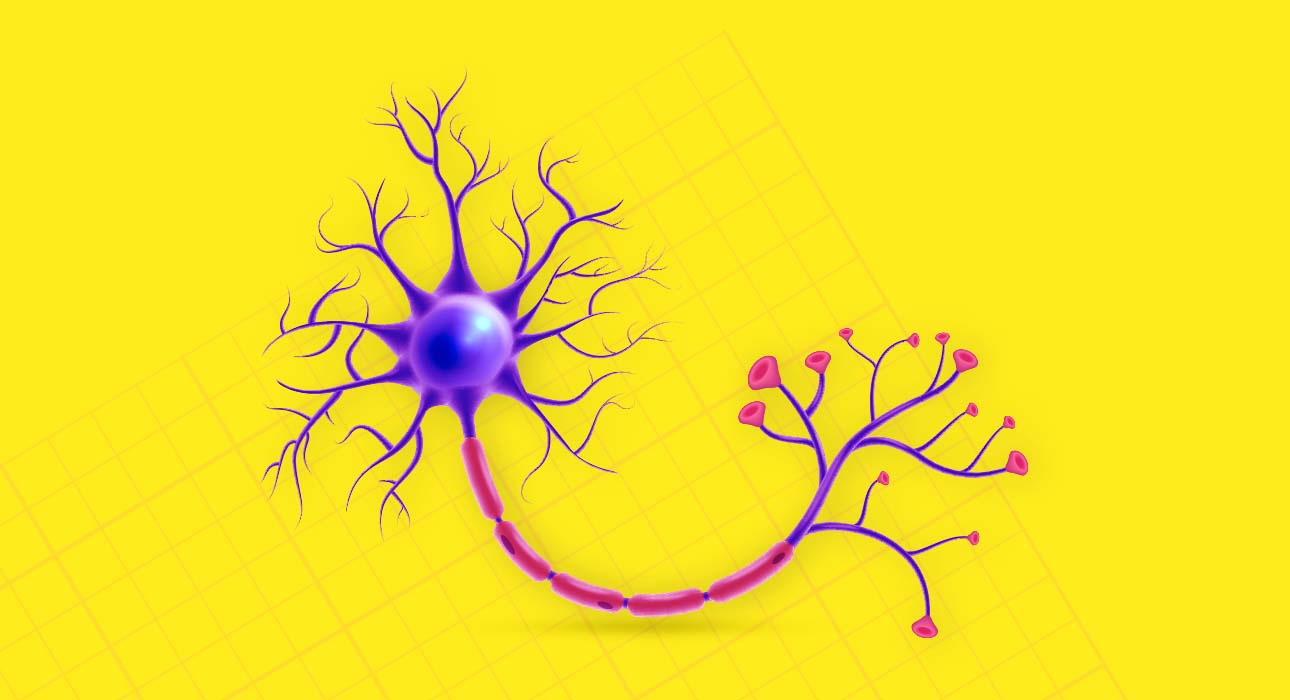
It can be said that the human brain is the most complex structure in the universe. Although only weighing about 1.3 – 1.4 kilos, it consists of about 86 billion neurons that connect with each other through trillions of synaptic connections, allowing us to think, feel, learn, remember, create, and make decisions. Our brain is processing enormous amounts of information all the time, and that too unconsciously, from the recognition of certain faces to coordinating different movements.
In the last few decades, there have been significant advancements in neuroscience leading to the improved understanding of the working of the brain, making it seem more dynamic and adaptable than it was earlier (Azevedo et al., 2009; Bear et al., 2020). Contemporary neuroscience involves psychology, biology, medicine, and the use of sophisticated imaging technology so as to understand the different processes occurring in the human brain when it comes to cognition and behaviour.
The scientific research directed to discovering how a human brain learns, adapts, experiences emotions, and leads to certain behaviour has not only satisfied the everlasting human urge to learn but also enabled people to make wise decisions in their lives. The discoveries of modern neuroscience have changed education, healthcare, rehabilitation and even artificial intelligence (Kandel et al., 2021; Purves et al., 2018). Here you can find six amazing discoveries made by neuroscience that prove how extraordinary the human brain is.
1. The Brain Can Rewire Itself Throughout Life (Neuroplasticity)
The development of neuroplasticity ranks among the most significant accomplishments in neuroscience, as neuroplasticity refers to the brain’s ability to transform through forming new neural connections at any time. For a long time, psychologists thought that the human brain was relatively rigid in personality. However, recent studies indicate that performing activities like learning new skills or recovering from injury has an effect on the structure of the brain.
Neuroplasticity is what explains the ability of habits to get more entrenched through repetition. Each time someone engages in a behaviour, the neural pathways that are linked to that behaviour become more streamlined. The implications of this principle can be observed in rehabilitation processes, learning techniques, and cognitive behavioural strategies. This highlights the significance of pursuing education throughout life, as the brain retains the capacity for change and adaptation even in later adulthood.
However, neuroplasticity does not occur at the same rate or to the same extent across the lifespan, and age-related or neurodegenerative conditions may limit certain aspects of cognitive recovery and adaptation. Rather than being entirely fixed, the brain remains capable of structural and functional modification, supporting continued learning, adaptation, and, in some circumstances, recovery throughout life (Bear et al., 2020; Kolb & Gibb, 2014).
2. Emotions Shape Thinking More Than We Realise
It is commonly thought that emotions act as obstacles to rational thought, but findings in neuroscience suggest otherwise. The amygdala, prefrontal cortex and anterior cingulate cortex are brain structures that work together to identify danger, assign emotional significance to events and influence behaviour. Studies have proven that people with damaged emotional brain parts find it difficult to make simple decisions, as emotions help distinguish between various alternatives and predict consequences (Damasio, 1994; LeDoux, 2012).
The role of emotions in the formation of memories cannot be undermined. Incidents that are attached to strong emotions, positive emotions or fears, are memorised more easily because emotional arousal facilitates memory consolidation through the interplay of the hippocampus and amygdala. This sheds light on why some important events are well-remembered, while many insignificant ones remain in oblivion. This connection is crucial for education, psychotherapy, and trauma treatment, as it highlights that the process of learning is not merely intellectual; rather, it has strong emotional underpinnings (LeDoux, 2012; McGaugh, 2013).
3. Sleep Is the Brain’s Maintenance System
Sleeping is beyond being the process of letting our body recover; sleep is the time when our brain does some much-needed housekeeping. Sleep includes two essential, different stages: slow-wave sleep and REM sleep. During sleep, the brain comes up with ways of consolidating memories, enhancing learning, regulating emotions, and eliminating waste products from the body via the glymphatic system. Insufficient sleep has a negative effect on our attention and memory capacities, and it also enhances our emotional responses (Walker, 2017; Xie et al., 2013).
According to neurobiologists, sleeping for enough hours is advantageous in learning terms, leading to better learning and creative abilities, including problem-solving, compared to sleep-deprived people. In addition to that, chronic deprivation of sleep has been linked to several disorders, including anxiety, depression, an increased likelihood of getting cardiovascular diseases and neurodegenerative disorders, including Alzheimer’s disease. These findings show that sleep is necessary for brain functioning and not a luxury (Stickgold, 2005; Walker, 2017).
4. The Brain Predicts the Future Constantly
An interesting discovery is that instead of only reacting to incoming information, the brain works as a prediction machine. The predictive processing theories point out that the brain makes constant predictions about the environment based on previous experience. When it receives new sensory information, it is able to compare this to its predictions and alter its internal schemata when something unexpected happens. This allows people to act fast and efficiently while saving some mental energy (Clark, 2013; Friston, 2010).
This ability to predict explains how people can finish sentences they have heard before, understand where other people are likely to move, see what they can’t fully see, and adjust themselves to the environment. Nevertheless, it also causes cognitive biases and errors, for expectations may prevent seeing the real state of things. The theory of predictive processing made a contribution to neuroscience since it made it possible to elucidate perception, learning behaviour, attention phenomena, and even disorders, which may result from the disruption of the process of prediction (Clark, 2013; Friston, 2010).
5. The Brain Never Truly Multitasks
Though many individuals have confidence in their multitasking abilities, research from neuroscience finds that the brain does a poor job of doing multiple complex activities at a time. The brain focuses on a particular task, then swiftly moves to a different task. This leads to a performance decrease due to multiple frequent shifts requiring cognitive resources (Ivanoff & Marois, 2005; Ophir et al., 2009).
Research indicates that inordinate digital multitasking can undermine some pivotal cognitive functions such as sustained attention and working memory, and increase the likelihood of mental fatigue. Research shows that students who tend to juggle studying with social media use tend to have a lower level of information retention compared to students who perform only one task at a time. Thus, neuroscience supports learning strategies such as dedicated work sessions, limited distractions and frequent breaks. Focused attention allows the brain to process the information in a deeper way and store it better (Gazzaley & Rosen, 2016; Ophir et al., 2009)
6. Relationships Literally Shape the Brain
Humans need the company of others because it is part of their biology. The science of the brain has shown that the development of the brain, emotions, stress reactions, and mental health depend on whether humans interact well with other people. Social life brings with it emotions, such as good feelings of trust, motivation, and feeling safe. On the contrary, being lonely and living in isolation can turn on parts of the brain that produce stress and make one susceptible to disease (Cacioppo & Cacioppo, 2018; Lieberman, 2013).
Childhood experiences are very strong, as the developing brain is very impressionable when it comes to environments of care. Places that provide love and responsiveness favour good neural development. In terms of environments characterised by chronic abuse or damage, there is no development of the system of stress management. Fortunately, neuroplasticity indicates that relationships and psychotherapy are beneficial for people throughout their lives.
Conclusion
Advances in neuroscience have significantly transformed our understanding of the human brain and its complex functioning. Rather than viewing the brain as a fixed and unchanging structure, contemporary research highlights its dynamic and adaptable nature, shaped by biological processes, everyday experiences, and interactions with the surrounding environment. These findings demonstrate that human thoughts, behaviours, emotions, and cognitive abilities emerge from interconnected processes that continuously influence and modify brain functioning throughout life.
One of the most meaningful insights from neuroscience is that the choices we make each day are important. Each new experience, each good habit, good relationship, and each learning opportunity alters the brain in some way. By promoting the importance of sleep, lifelong learning, emotional wellness, concentrated focus and a good social life, people will help their brains be healthier and more productive throughout their lives.
References +
- Azevedo, F. A. C., Carvalho, L. R. B., Grinberg, L. T., et al. (2009). Equal numbers of neuronal and nonneuronal cells make the human brain an isometrically scaled-up primate brain. Journal of Comparative Neurology, 513(5), 532–541.
- Bear, M. F., Connors, B. W., & Paradiso, M. A. (2020). Neuroscience: Exploring the Brain (4th ed.). Jones & Bartlett Learning.
- Cacioppo, J. T., & Cacioppo, S. (2018). Loneliness: Human Nature and the Need for Social Connection. W. W. Norton.
- Clark, A. (2013). Whatever next? Predictive brains, situated agents, and the future of cognitive science. Behavioural and Brain Sciences, 36(3), 181–204.
- Doidge, N. (2015). The Brain That Changes Itself (Rev. ed.). Penguin Books.
- Friston, K. (2010). The free-energy principle: A unified brain theory? Nature Reviews Neuroscience, 11(2), 127–138.
- Gazzaley, A., & Rosen, L. D. (2016). The Distracted Mind. MIT Press.
- Kandel, E. R., Koester, J. D., Mack, S. H., & Siegelbaum, S. A. (2021). Principles of Neural Science (6th ed.). McGraw-Hill.
- Kolb, B., & Gibb, R. (2014). Searching for the principles of brain plasticity and behaviour. Cortex, 58, 251–260.
- Lieberman, M. D. (2013). Social: Why Our Brains Are Wired to Connect. Crown.
- Marois, R., & Ivanoff, J. (2005). Capacity limits of information processing in the brain. Trends in Cognitive Sciences, 9(6), 296–305.
- McGaugh, J. L. (2013). Making lasting memories: Remembering the significant. Proceedings of the National Academy of Sciences, 110(Supplement 2), 10402–10407.
- Ophir, E., Nass, C., & Wagner, A. D. (2009). Cognitive control in media multitaskers. Proceedings of the National Academy of Sciences, 106(37), 15583–15587.
- Purves, D., Augustine, G. J., Fitzpatrick, D., et al. (2018). Neuroscience (6th ed.). Oxford University Press.
- Shonkoff, J. P., Garner, A. S., et al. (2012). The lifelong effects of early childhood adversity and toxic stress. Pediatrics, 129(1), e232–e246.
- Stickgold, R. (2005). Sleep-dependent memory consolidation. Nature, 437(7063), 1272–1278.
- Xie, L., Kang, H., Xu, Q., et al. (2013). Sleep drives metabolite clearance from the adult brain. Science, 342(6156), 373–377.




Leave feedback about this