







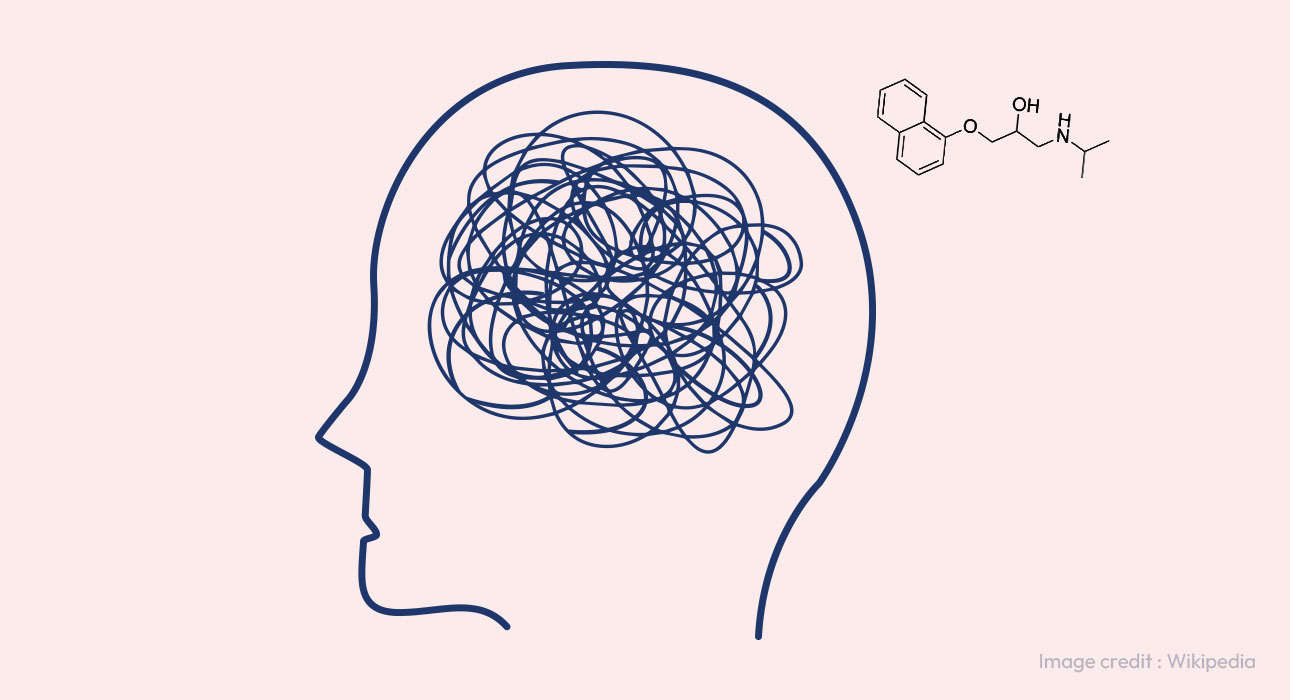
Imagine standing outside a room waiting to give an important presentation. You know your material, you have prepared well, and yet your heart suddenly begins racing, your palms become sweaty, and your hands start to shake. Perhaps your voice becomes unsteady as soon as you begin speaking. A similar experience can happen before an interview, an examination, an audition or even an important conversation.
These physical reactions are a normal part of the body’s response to stress, but for people experiencing anxiety, they can become particularly noticeable and distressing. This is where beta-blockers such as propranolol enter the conversation. Beta-blockers are medicines that can reduce some of the body’s physical responses to adrenaline, such as a rapid heartbeat and trembling. Some treatments primarily aim to change anxious thoughts or longer-term patterns of anxiety. Beta-blockers, on the other hand, mainly act on the physical side of the stress response.
Research involving performance situations has found that beta-blockade can reduce some physiological symptoms associated with anxiety (Brantigan et al., 1982; James & Savage, 1984). But if the medication calms the heart while the fear of being judged remains, what exactly does it treat? Can changing the body’s response to anxiety also change how a person experiences anxiety?
The Anxiety Response
Anxiety is not merely a psychological sensation since it also causes a strong physical reaction. The brain may judge a situation to be threatening. As a result, the sympathetic nervous system activates. The body then releases chemicals associated with stress, for example, adrenaline and noradrenaline. These chemicals prepare the body for quick action. This causes the heart rate to go up. It also alters the way one breathes and makes the muscles more active. It may even result in sweating or trembling.
Research on performance anxiety has shown that situations involving evaluation or public performance can be accompanied by noticeable physiological arousal (Fernholz et al., 2019). These reactions are useful when the body actually needs to respond quickly, but the same system can cause discomfort in situations such as giving a speech, taking an exam, having an interview or performing. Even though a person knows intellectually that there is no real physical danger, the body may still act as if there were. Propranolol operates in part by decreasing the effects of adrenaline and noradrenaline at beta-adrenergic receptors and thus reduces some of the physical symptoms connected with anxiety (Steenen et al., 2016).
There is a clear difference between how anxiety feels in the mind and how it affects the body. For example, someone giving a presentation might think, “Everyone will notice that I am nervous” while at the same time having a racing heart and shaking hands. A beta-blocker is far more applicable to the physical aspect of this experience than to the psychological one. Earlier research also demonstrated that reducing physiological arousal does not necessarily eliminate the subjective feeling of anxiety (Lader & Wing, 1966).
How Beta-Blockers Work
Beta-blockers are drugs that prevent the effects of adrenaline and other similar chemicals at beta receptors present in a number of tissues, such as the heart. Propranolol is an example of a non-selective beta-blocker and, by reducing the impact of adrenaline on the cardiovascular system, it can lower the heart rate and decrease symptoms such as shaking and sweating (Steenen et al., 2016).
A simple example can help clarify the difference. Suppose a student has prepared well for an oral examination; just before going into the room, their heart starts to beat quickly, their hands begin to tremble, and their voice becomes unsteady. The physical sensations might then lead to the idea that things are going wrong, and this in turn can increase the student’s anxiety. When a beta-blocker reduces the rapid beating of the heart and the trembling, some of the physical sensations connected with anxiety become less obvious.
Research on examination stress has similarly shown that beta-adrenergic blockade can reduce some of the physical manifestations of performance anxiety (Brewer, 1972). It doesn’t follow that the medicine gets rid of the basic fear. The student may still worry about making mistakes, forgetting the material or facing criticism. The drug mainly decreases part of the body’s physiological reaction rather than getting rid of the psychological cause of the anxiety.
Performance Anxiety And Stage Fright
Beta-blockers have received particular attention in the case of performance anxiety, a condition sometimes known as stage fright. Musicians, actors and public speakers who perform in the presence of an audience may experience especially noticeable physical symptoms either just before or while they are performing. Fernholz et al. (2019) found that researchers have investigated beta-blockers as a pharmacological approach to reducing the physical symptoms associated with music performance anxiety in a systematic review.
Research into this possibility has continued for several decades. In a study involving professional musicians, beta-blockers reduced heart rates and improved certain aspects of musical performance. However, they did not completely eliminate the musicians’ feelings of stage fright before performing (James & Savage, 1984). A further controlled study among musicians found that beta-blockade could reduce physiological symptoms connected with stage fright (Brantigan et al., 1982).
Earlier work had similarly suggested that beta-blockade could be useful in reducing some of the physical manifestations of performance stress (James et al., 1977). It is therefore understandable that propranolol has become associated with public speaking and other similar circumstances. A person who usually shakes visibly while holding a microphone may find it easier to give a speech when those physical symptoms are lessened. Thoughts such as “What if the audience dislikes the speech?” or “What if something goes wrong?” are not directly eliminated by blocking the beta receptors.
Physical Symptoms Versus Psychological Symptoms
The difference becomes more apparent when anxiety is separated into physical and psychological aspects. The physical symptoms may be a rapid heartbeat, trembling and sweating. The psychological symptoms may include excessive worry, fear of being negatively evaluated, anxious thoughts, and avoidance. They may also involve a constant expectation that something wrong will happen. Beta-blockers are mainly of concern in relation to the physical aspect of anxiety. That is why it is misleading to refer to propranolol simply as an “anti-anxiety pill.” Slowing a racing heart is not equivalent to treating the thoughts, beliefs, and behavioural patterns that maintain an anxiety disorder (Steenen et al., 2016).
For instance, a person experiencing social anxiety might avoid talking to strangers due to a constant belief that others will judge or reject them. Although a beta-blocker can lessen the trembling that occurs during a conversation, it alone does not enable the person to challenge that belief. It also does not help them slowly get used to the social situations that they fear. Cognitive behavioural therapy, in contrast, specifically targets these patterns of thinking and behaviour. Research reviews have found CBT to be an effective psychological treatment across a range of anxiety disorders (Hofmann et al., 2012; Carpenter et al., 2018).
This difference is also reflected in clinical guidelines. The NICE guidelines suggest that individual cognitive behavioural therapy (CBT) should be the first-line psychological treatment for adults who have social anxiety disorder. If medication is preferred, NICE suggests that SSRIs such as sertraline or escitalopram should be used rather than routinely prescribing beta-blockers (NICE, 2013).
The Body And The Mind
Even though beta-blockers mainly affect the physical symptoms, the connection between physical sensations and psychological experience is more complicated. Physical sensations can at times become part of an anxiety cycle. For instance, someone might notice their heart beating rapidly and interpret this as “Something is going wrong.” As a result, they may feel even more frightened and experience increased physiological arousal. This, in turn, may make them more conscious of their heartbeat.
This relationship between bodily sensations and catastrophic interpretations is particularly important in psychological models of panic (Clark, 1986). It is possible that reducing one element of the physical reaction could interrupt part of this feedback loop. However, physical and psychological anxiety do not always alter in a synchronised manner. Research into beta-blockade has shown that a reduction of physiological responses can take place without there being a corresponding decrease in subjective anxiety (Lader & Wing, 1966).
This is why feeling physically calmer does not necessarily mean that one is psychologically calm. The relationship between bodily sensations and anxiety has also been demonstrated experimentally. Studies of panic have shown that changes in bodily sensations can influence how individuals interpret and respond to internal physical experiences (Bouton et al., 2001). Therefore, reducing some physical symptoms may change part of the experience for certain individuals, but it does not automatically address the broader cognitive and behavioural processes involved in anxiety.
What The Research Says
While propranolol is popular for dealing with performance anxiety, the wider evidence regarding the use of beta-blockers in the treatment of anxiety disorders is much less convincing. A systematic review and meta-analysis from 2016 looked at randomised controlled trials involving propranolol for anxiety disorders, and the authors stated that the evidence available was not sufficient to justify its routine use for such disorders (Steenen et al., 2016).
More recently, Archer and colleagues (2025) carried out a systematic review and meta-analysis of the use of beta-blockers in anxiety disorders. The review identified 10 relevant studies, five of which were included in the meta-analysis, involving 179 participants. The researchers concluded that there was no evidence showing that beta-blockers were more beneficial than placebo or benzodiazepines. This finding applied to social phobia and panic disorder. They also observed that several existing studies had small sample sizes and methodological limitations (Archer et al., 2025).
The evidence is therefore quite different when comparing specific performance situations with anxiety disorders more generally. A person who experiences intense trembling before playing an instrument may benefit from reducing that physical reaction. However, this does not mean that propranolol will treat the avoidance, negative beliefs, or persistent worry associated with an anxiety disorder. Research into beta-blockers has also been explored in other psychological conditions.
For example, studies examining propranolol and traumatic memories have investigated whether reducing adrenergic activity during memory reactivation might influence later emotional responses. However, findings have been inconsistent. Additionally, systematic reviews have not established sufficient evidence for propranolol to be considered a routine treatment for post-traumatic stress disorder (Brunet et al., 2018; Raut et al., 2022). This again illustrates the difference between altering physiological arousal and treating a psychological disorder as a whole.
Why They Can Still Be Used
The fact that there is limited evidence regarding the treatment of anxiety disorders does not prove that beta-blockers have no clinical value; rather, their possible usefulness is in cases where physical symptoms are especially noticeable. A person experiencing noticeable trembling, sweating or a rapid heartbeat before an important performance might discover that alleviating these symptoms makes it easier for them to cope with the situation.
This kind of application has been supported by studies carried out on musicians, especially when it comes to physiological arousal and performance (Brantigan et al., 1982; James & Savage, 1984). However, psychological treatments can address aspects of anxiety that beta-blockers cannot. A controlled study of musicians, for example, found that CBT could reduce subjective anxiety and improve aspects of performance (Clark & Agras, 1991).
More broadly, evidence suggests that psychological and pharmacological treatments can both be useful for anxiety disorders. However, their roles are different and depend on the specific condition being treated (Bandelow et al., 2015). This kind of application should therefore be regarded as depending on the individual’s medical situation and the kind of anxiety present. It should also depend on the clinician’s judgement. Beta-blockers should not be considered a general solution for anxiety.
Side Effects And Limitations
- Physical Side Effects: Since beta-blockers have an effect on cardiovascular function, their effects are not confined to anxiety symptoms. Propranolol may lead to feelings of tiredness, dizziness, weakness, cold hands or feet, problems with sleep and intense dreams or nightmares (NHS, 2025).
- Medical Conditions: Individuals who have conditions such as asthma or other respiratory problems, a slow heart rate, low blood pressure or certain heart conditions may need to exercise particular caution or might not be suitable candidates (NHS, 2025).
- Medication Interactions: Propranolol can also interact with other medications, meaning that its suitability depends on an individual’s wider medical circumstances (NHS, 2025).
- Does Not Remove Avoidance: Reducing physical symptoms does not necessarily mean that avoidance will be overcome. A person may continue to avoid presentations, social situations, or other feared activities. In that case, simply reducing the heart rate will not necessarily get rid of the underlying fear.
- Limited Evidence: Although beta-blockers can reduce some physical symptoms, systematic reviews have not found strong evidence to support their routine use as a general treatment for anxiety disorders (Steenen et al., 2016; Archer et al., 2025).
Beta-Blockers And Psychological Treatments
It is especially important to consider the difference between beta-blockers and psychological treatments when anxiety persists. CBT can focus on the thoughts, interpretations, and behaviours connected with anxiety. In the case of social anxiety, this might include identifying the fears of being negatively evaluated and looking at unhelpful beliefs. It may also involve slowly facing situations that have been avoided.
NICE advises that individual CBT, which is specifically designed for social anxiety disorder, should be the first treatment for adults who have the condition (NICE, 2013). SSRIs function differently because they affect serotonin transmission in the brain. They are also used as long-term pharmacological treatments for various anxiety disorders. Unlike a beta-blocker taken to counteract a rapid heart rate before a performance, an SSRI is meant to have an impact on a wider range of anxiety symptoms. These effects develop over a period of time. Additionally, its effects build up slowly rather than appearing immediately (Bandelow et al., 2015).
Research comparing psychological and pharmacological approaches also indicates that treatment choice should be based on the specific anxiety disorder. It should also take its severity into account. It should also consider individual characteristics and treatment preferences. This means we should not assume that one approach is universally superior (Hofmann et al., 2012). Therefore, people cannot use these methods interchangeably. A beta-blocker can mainly have the effect of reducing “the body is reacting.” In contrast, CBT can help people change how they interpret threatening situations. An SSRI may help reduce general anxiety symptoms over a longer period.
The Takeaway: Conclusion
Drugs such as propranolol occupy a special place in the treatment of anxiety. They can change how anxiety affects the body without necessarily addressing its underlying causes. They can reduce symptoms like a rapid heart rate and trembling by blocking some of the effects of adrenaline. These symptoms are especially relevant in cases involving performance or acute physical arousal.
At the same time, research still provides limited support for using beta-blockers to treat anxiety disorders in general. They cannot take the place of psychological treatments that target anxious thoughts, avoidance behaviour, and behavioural patterns. Additionally, they are not suitable in all cases. Therefore, the decision to use beta-blockers depends on the person’s specific symptoms, medical history and treatment goals.
The main point is that anxiety is not entirely “in the mind” and not entirely “in the body”; the two affect each other continuously. Beta-blockers illustrate this link. They can alter part of the anxiety experience by changing the body’s response. However, changing the body’s response does not necessarily treat the anxiety itself.
References +
- Archer, C. S., Wiles, N. J., Kessler, D. S., Turner, K. M., & Caldwell, D. M. (2025). Beta-blockers for the treatment of anxiety disorders: A systematic review and meta-analysis. Journal of Affective Disorders, 368, 90–99. https://doi.org/10.1016/j.jad.2024.09.068
- Bandelow, B., Michaelis, S., & Wedekind, D. (2015). Treatment of anxiety disorders. Dialogues in Clinical Neuroscience, 17(3), 337–349. https://doi.org/10.31887/DCNS.2015.17.3/bbandelow
- Bouton, M. E., Mineka, S., & Barlow, D. H. (2001). A modern learning theory perspective on the aetiology of panic disorder. Psychological Review, 108(1), 4–32. https://doi.org/10.1037/0033-295X.108.1.4
- Brantigan, C. O., Brantigan, T. A., & Joseph, N. (1982). Effect of beta blockade and beta stimulation on stage fright. The American Journal of Medicine, 72(1), 88–94. https://doi.org/10.1016/0002-9343(82)90592-7
- Brewer, C. (1972). Beta-blockade and examinations. The Lancet, 300(7778), 46–47. https://www.thelancet.com/
- Brunet, A., Saumier, D., Liu, A., Tremblay, J., Pitman, R. K., & Birmes, P. (2018). Reduction of PTSD symptoms with pre-reactivation propranolol therapy: A randomised controlled trial. American Journal of Psychiatry, 175(5), 427–433. https://doi.org/10.1176/appi.ajp.2017.17050481
- Carpenter, J. K., Andrews, L. A., Witcraft, S. M., Powers, M. B., Smits, J. A. J., & Hofmann, S. G. (2018). Cognitive behavioural therapy for anxiety and related disorders: A meta-analysis of randomised placebo-controlled trials. Depression and Anxiety, 35(6), 502–514. https://doi.org/10.1002/da.22728
- Clark, D. M. (1986). A cognitive approach to panic. Behaviour Research and Therapy, 24(4), 461–470. https://doi.org/10.1016/0005-7967(86)90011-2
- Clark, D. B., & Agras, W. S. (1991). The assessment and treatment of performance anxiety in musicians. American Journal of Psychiatry, 148(5), 598–605. https://doi.org/10.1176/ajp.148.5.598
- Fernholz, I., Mumm, J. L. M., Plag, J., Noeres, K., Willich, S. N., & Ströhle, A. (2019). Performance anxiety in professional musicians: A systematic review on prevalence, risk factors and clinical treatment effects. Psychological Medicine, 49(14), 2287–2306. https://doi.org/10.1017/S0033291719001910
- Hofmann, S. G., Asnaani, A., Vonk, I. J. J., Sawyer, A. T., & Fang, A. (2012). The efficacy of cognitive behavioural therapy: A review of meta-analyses. Cognitive Therapy and Research, 36, 427–440. https://doi.org/10.1007/s10608-012-9476-1
- James, I. M., Griffith, D. N. W., Pearson, R. M., & Newbury, P. (1977). Effect of oxprenolol on stage fright in musicians. The Lancet, 310(8045), 952–954. https://doi.org/10.1016/S0140-6736(77)90890-X
- James, I. M., Pearson, R. M., Griffith, D. N., Newbury, P., & Taylor, S. H. (1978). Reducing the somatic manifestations of anxiety by beta-blockade: A study of stage fright. Journal of Psychosomatic Research, 22(4), 327–337. https://doi.org/10.1016/0022-3999(78)90053-3
- James, I. M., & Savage, I. (1984). Beneficial effect of nadolol on anxiety-induced disturbances of performance in musicians: A comparison with diazepam and placebo. American Heart Journal, 108(4), 1150–1155. https://doi.org/10.1016/0002-8703(84)90599-4
- Lader, M. H., & Wing, L. (1966). Physiological measures, sedative drugs and the treatment of anxiety. Psychopharmacologia, 9, 226–238. https://doi.org/10.1007/BF00408395
- Neftel, K. A., Adler, R. H., Kappeli, L., Rossi, M., Dolder, M., Kaser, H. E., Heinrich, U., & Vetter, W. (1982). Stage fright in musicians: A model illustrating the effect of beta blockers. Psychosomatic Medicine, 44(5), 461–469. https://doi.org/10.1097/00006842-198210000-00008
- NICE. (2013). Social anxiety disorder: Recognition, assessment and treatment. National Institute for Health and Care Excellence. https://www.nice.org.uk/guidance/cg159
- NHS. (2025). Propranolol: About propranolol. National Health Service. https://www.nhs.uk/medicines/propranolol/about-propranolol/
- Raut, S. B., Canales, J. J., Ravindran, M., Eri, R., Benedek, D. M., Ursano, R. J., & Johnson, L. R. (2022). Effects of propranolol on the modification of trauma memory reconsolidation in PTSD patients: A systematic review and meta-analysis. Journal of Psychiatric Research, 150, 246–256. https://doi.org/10.1016/j.jpsychires.2022.03.045
- Steenen, S. A., van Wijk, A. J., van der Heijden, G. J. M. G., de Lange, J., & de Jongh, A. (2016). Propranolol for the treatment of anxiety disorders: Systematic review and meta-analysis. Journal of Psychopharmacology, 30(2), 128–139. https://doi.org/10.1177/0269881115612236





Leave feedback about this