







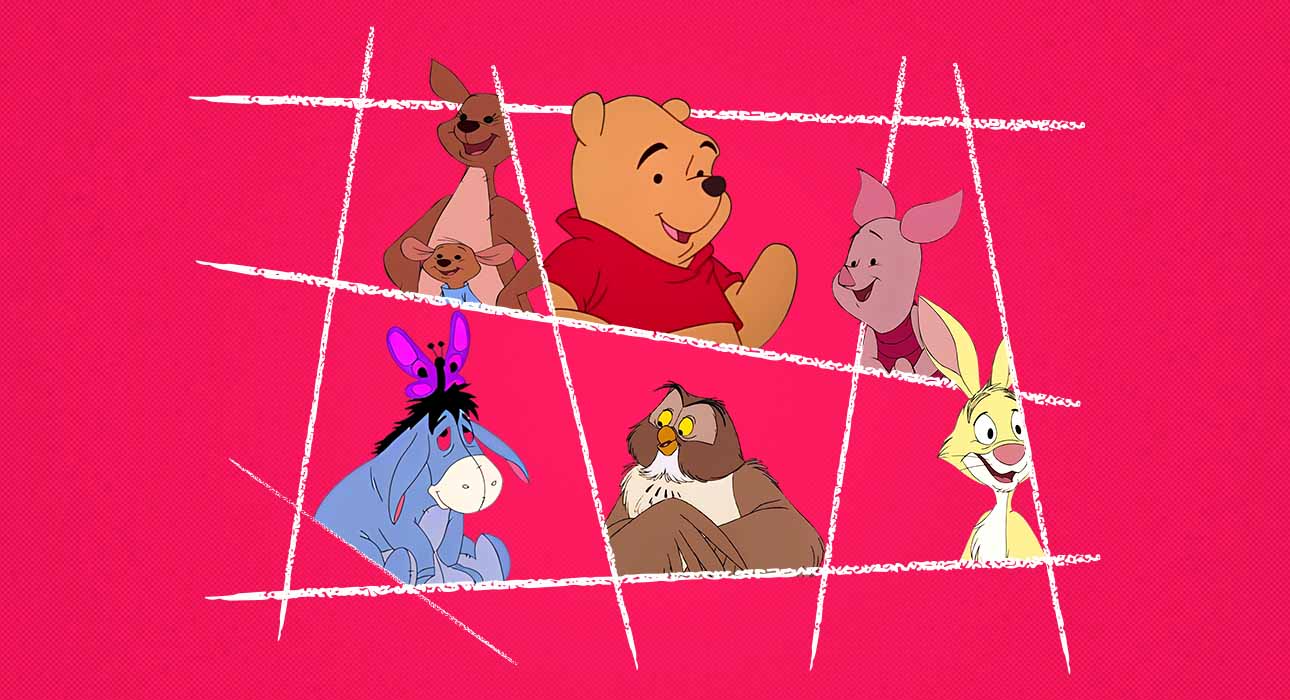
A bear reaches the far corner of the room only to lose track of his reason for moving. When a small pig trembles at shadows, loud sounds, or even silence, fear shapes most moments. Each morning begins for the donkey with certainty: today will bring more weight than yesterday. The tiger rushes through conversations, never pausing long enough to notice how people step back.
These figures do not come from medical case studies. Living in the Hundred Acre Wood, these characters exist simply, without explanation. Through decades of childhoods shaped by their stories, tripping, stumbling, acting oddly, no one ever labels them broken. Instead, across quiet pages and gentle scenes, a bear named Winnie the Pooh quietly does work far deeper than play, showing minds that differ, without making difference seem strange.
Mapping the Hundred Acre Wood
Back in 2000, findings appeared in the Canadian Medical Association Journal under the name “Pathology in the Hundred Acre Wood: A Neurodevelopmental Perspective on A.A. Milne.” Though penned with gentle humour, the analysis relied on official standards from the DSM-IV. Applying these rules, each main character from Milne’s stories exhibited signs of specific disorders (Shea et al., 2000). Consider Winnie the Pooh: his forgetfulness, impulsive behaviours, fixation on honey (in addition to his tendency to freeze and/or be distracted) suggested ADHD, predominantly inattentive type, and some obsessive-compulsive traits.
Piglet’s constant worry, fidgetiness, desire to avoid threats, but in need of constant reassurance, are all features of Generalised Anxiety Disorder. Being “sad and blue”, as with Eeyore, who was sad no matter how many friends he had, is often a sign of depression. Tigger’s high energy, aimless behaviour and impulsivity are similar to the hyperactive-impulsive type of Attention-Deficit Hyperactivity Disorder (ADHD). Rabbit gets easily upset by changes in schedule, is a compulsive cleaner, signs of Obsessive-Compulsive Disorder. Owl is a self-proclaimed wise creature, but he struggles with words, reads slowly, and mixes up letters, all symptoms associated with dyslexia (Shea et al., 2000).
Though written with irony, the study carried weight. Not only did it offer scientists, physicians, and caregivers a structured way to understand something long observed, it gave name to distinctions among these figures that feel genuine, consistent, and still present today, while sparking conversations now found in schools, counselling rooms, and family homes across continents. From such humour came clarity.
How Cartoons Capture What Classrooms Cannot
What stands out about the Hundred Acre Wood in psychological terms is not how accurate the character labels might be. Instead, it is the environment itself that holds meaning. Evaluation never enters the picture there. Being different does not draw judgment; no one is seen as excessive or lacking. Medication is not used to manage Pooh’s difficulty focusing. Piglet keeps his place, even when fear shows. Eeyore stays part of the group, despite carrying sadness. Each one belongs, flaws seen, yet never turned into flaws that matter. Worth is not measured by how they change.
What matters most to neurodivergent children and adults in stories is not the labelling of traits, but the showing of them as ordinary threads of life (Webber et al., 2024). Evidence points to how varied portrayals, particularly where young audiences engage, lessen bias against different minds, build emotional connection, and let neurodivergent youth recognise themselves without distortion (Engel & Sheppard, 2020). In the Hundred Acre Wood, differences slip in quietly, defined not by diagnosis, yet shaped into who characters are, woven deep within plot and behaviour instead of held up for comment or pity.
The Danger When Differences Are Not Accepted
One way to see what the Hundred Acre Wood offers is by examining what it stands against. Neurodivergent people, those whose ways of thinking and learning differ from the norms of society, such as those with ADHD, autism, dyslexia and anxiety, commonly report feeling ashamed, excluded or defective because of their inability to fit in with social norms (Armstrong, 2010). Rather than challenge these perceptions, film, literature and television representations reinforce them, perpetuating these images: the Einstein-like genius, the helpless oddball, the burden. Such representations limit how young minds imagine fitting in, who does, who does not, and why. What results is a quieter kind of harm, built slowly through repetition.
Forgiveness comes easily when Pooh misremembers things. Though often anxious, Piglet still finds himself stepping forward, fear tagging along each time. It turns out, bravery wears a quiet face here. Acceptance greets Eeyore where he stands, sadness included, never shooed away. The forest holds space differently. It matters more than it might seem at first glance. When a young person sees themselves reflected in such figures, the quiet signal is clear: there is nothing wrong with you.
Read More: New Study Exploring Brain Plasticity in Developmental Dyslexia
The Neurodiversity Framework Meets the Quiet Patterns of the Wood
The neurodiversity concept emerged in the late 1990s through sociologist Nick Walker, drawing on autism advocate Judy Singer’s insights (Armstrong, 2010). Far from denying challenges, it highlights how differences in brain functioning are part of natural human variety. Though struggles exist, the focus shifts away from fixing individuals toward reshaping acceptance. In this light, the Hundred Acre Wood stands as a quiet example. Change is not demanded from its residents. Instead, belonging grows when norms stretch to include diverse ways of being.
The Power of Animation
The only neurotypical member of the group, Christopher Robin, plays the role of the accepting friend. He does not fix Pooh and does not desensitise Piglet’s fears. He plays with them and accepts them. In this way, he models something that psychological research consistently identifies as protective for neurodivergent individuals: having at least one relationship that is unconditionally supportive (Engel & Sheppard, 2020).
So why do parents, teachers, and therapists turn to the Hundred Acre Wood when teaching children about mental and cognitive diversity? The medium matters. Animation creates emotional safety. A child who would resist a diagnosis-based explanation of anxiety might see Piglet and simply think: Me too. There have been studies that have used cartoon characters to teach children about accepting their neurodivergent friends with some success, as the emotional impact of using animated characters overcomes the defensiveness that can come from more didactic teaching methods (Engel & Sheppard, 2020).
A.A. Milne didn’t write Winnie the Pooh to teach neurodiversity. He wrote it for his son. But he created something that psychology is still trying to catch up with, a world where different minds are not problems to be fixed, but friends to be loved.
References +
Armstrong, T. (2010). Neurodiversity: Discovering the extraordinary gifts of autism, ADHD, dyslexia, and other brain differences. Da Capo Press.
Engel, C. S., & Sheppard, E. (2020). Can cartoons that depict autistic characters improve attitudes towards autistic peers? Journal of Autism and Developmental Disorders, 50(3), 1007–1017. https://doi.org/10.1007/s10803-019-04318-0
Milne, A. A. (1926). Winnie-the-Pooh. Methuen.
Milne, A. A. (1928). The house at Pooh Corner. Methuen.
Shea, S. E., Gordon, K., Hawkins, A., Kawchuk, J., & Smith, D. (2000). Pathology in the Hundred Acre Wood: A neurodevelopmental perspective on A.A. Milne. Canadian Medical Association Journal, 163(12), 1557–1559.
Webber, R., Boyle, C., & Allen, K. (2024). Representation of neurodivergence in fiction books: Exploring neurodivergent young people’s perspectives. Literacy, 58(2), 112–122. https://doi.org/10.1111/lit.12369



Leave feedback about this