







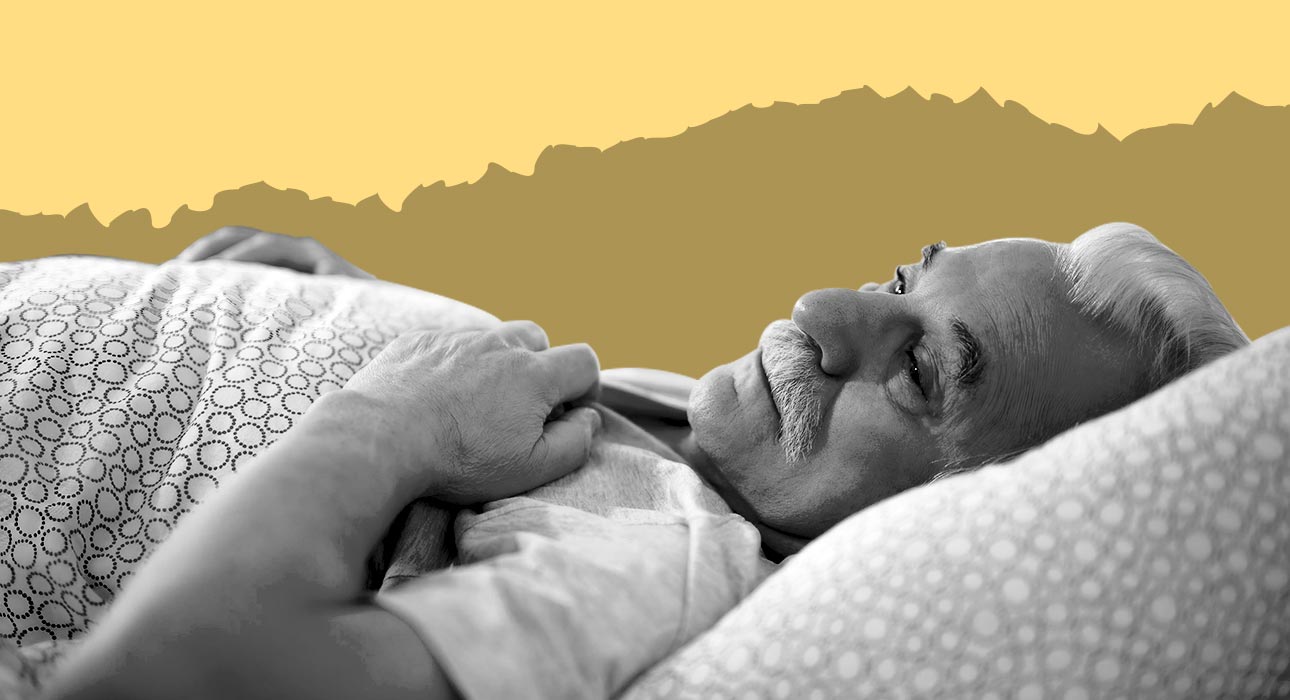
Imagine a 65-year-old man who has slept fairly easily for most of his adult life. In his twenties and thirties, he could stay awake until midnight and sleep until 7 or 8 in the morning without much difficulty. But over the years, his sleep began to change. He starts feeling sleepy around 9:30 or 10 p.m. and wakes up naturally at 4:30 or 5 a.m. He also notices that he wakes several times during the night and no longer feels as deeply rested as he once did. Also, he may initially think that he simply needs less sleep because he is getting older. But is that really what is happening?
This experience illustrates an important distinction in the relationship between ageing and sleep. Older adults do not necessarily stop needing sleep; instead, the timing, depth and continuity of their sleep can change considerably. Research indicates that although older adults as a rule still require a good deal of sleep, the way that sleep is produced can change with age (Mander et al., 2017; Ohayon et al., 2004).
Sleep is more than Simply Rest
It may seem as if the body switches off during sleep, but from a biological point of view, sleep is by no means inactive. While people are sleeping, their brains go through repeated cycles of non-REM and REM sleep, while processes involving memory, emotional regulation, metabolism, immune function and physical restoration take place. Non-REM sleep consists of deeper stages associated with slow brain-wave activity, whereas REM sleep is especially connected with dreaming and the processing of emotions and cognition (Mander et al., 2017).
A useful way of understanding sleep is through two interacting systems. The first is known as sleep homeostasis, which refers to the biological pressure to sleep that increases the longer we remain awake. The second is the circadian rhythm, a biological timing system that lasts approximately 24 hours and helps determine when we feel sleepy and when we feel awake. Simply put, sleep pressure tells us, “You have been awake for a long time; you need sleep,” while the circadian clock tells us, “This is the time when your body is ready to sleep.” The two-process model remains an important framework for understanding this interaction (Borbély et al., 2016).
Ageing Does Not Simply Reduce the Need for Sleep
The idea that older people simply need much less sleep is misleading. Although there is considerable variation between individuals, older adults generally still require around seven to nine hours of sleep. What changes more noticeably is often their ability to obtain that sleep continuously and deeply (National Institute on Ageing, 2025).
Studies across the human lifespan indicate that ageing is associated with several changes in sleep. Total sleep time can decrease, sleep efficiency may decline, the number of awakenings after falling asleep can increase, and the amount of slow-wave sleep generally becomes smaller (Ohayon et al., 2004). This means that two people may both spend eight hours in bed but experience very different nights.
For example, a 25-year-old might go to sleep at 11 p.m. and remain asleep until 7 a.m., with only a few brief awakenings. A 65-year-old might also spend eight hours in bed but remain awake for considerably longer periods or spend more time in lighter sleep. The distinction between time spent in bed and actual sleep obtained is therefore important. Someone may say they slept for seven hours when they actually spent seven hours in bed but were awake for substantial portions of the night.
Changes in the Circadian Clock Can Shift Sleep Earlier
One prominent change associated with ageing is a tendency to go to bed and wake up earlier. A person who was able to stay awake until midnight in their twenties may, several decades later, begin feeling sleepy at 9:30 or 10 p.m. and wake naturally at 4:30 or 5 a.m. One explanation involves changes in the circadian system. Research suggests that ageing can alter and weaken circadian rhythms and shift the timing of sleep and wakefulness (Cajochen et al., 2006; Vitiello, 2006). This is why the statement “I sleep less now” does not necessarily mean “my body needs less sleep.”
In some cases, the timing of the sleep period has shifted. Sleeping from 10 p.m. to 5 a.m. may appear dramatically shorter than sleeping from midnight to 8 a.m., even though part of the difference comes from a change in biological timing. Light is particularly important because it is one of the strongest environmental cues affecting the circadian system. If an older individual spends much of the day indoors, receives little bright daylight, or follows an irregular daily schedule, their biological clock may receive weaker or less consistent timing signals. This becomes particularly relevant because circadian regulation itself changes with age (Cajochen et al., 2006).
Deep Sleep Becomes Less Consolidated
The important change is not simply when older people sleep, but also how deeply and continuously they sleep. As people age, slow-wave activity, the brain activity associated with deep non-REM sleep, generally decreases. Older adults also tend to experience more awakenings and less consolidated sleep (Mander et al., 2017; Ohayon et al., 2004).
This matters because sleep is involved in the processing and consolidation of memories. Consider someone who spends the day learning how to use a new phone application, remembering directions to a new place, learning a recipe or preparing for an examination. Sleep contributes to the processing of such newly acquired information. Studies involving older adults indicate that poorer sleep is associated with poorer cognitive functioning, although the relationship is complex. It does not mean that every older person who experiences interrupted sleep will develop cognitive impairment (Dzierzewski et al., 2018, 2022).
Research has also identified associations between sleep fragmentation and subsequent cognitive decline. Lim et al. (2013), for example, found that higher levels of sleep fragmentation were associated with an increased risk of Alzheimer’s disease and a more rapid rate of cognitive decline in a group of older people. These findings should not, however, be interpreted to mean that every episode of poor sleep causes dementia. Sleep, brain ageing and neurological disease influence one another through complex processes (Lim et al., 2013; Yaffe et al., 2014).
Hormones, Health and Daily Life Can Further Disrupt Sleep
Ageing-related changes in sleep do not occur in isolation. Other biological and lifestyle changes can begin to influence sleep as well. For women, the menopausal transition is one example. Changes in reproductive hormones may be associated with hot flashes, night sweats and changes in mood, all of which can interfere with sleep. Interestingly, research indicates that waking can sometimes occur before a hot flash rather than simply being caused by it (National Institute on Ageing, 2025).
Health conditions are another important factor. A person with arthritis or chronic pain may wake whenever they change position. Someone with urinary problems may have to get up repeatedly during the night. Respiratory problems and sleep apnoea can also fragment sleep without the individual always being fully aware of the interruptions. Medications may affect either sleepiness or alertness. Sleep difficulties in later life are therefore influenced by a combination of factors including health conditions, medication, pain, mental health and sleep disorders rather than being caused by ageing alone (National Institute on Ageing, 2025).
When Sleep Changes Become Insomnia
Waking up at 4 a.m. or experiencing lighter sleep does not, by itself, mean that a person has insomnia. Age-related changes in sleep and insomnia are not the same thing. With ageing, it can be expected that sleep may become lighter, awakenings may become more frequent, and the timing of sleep may shift earlier. These changes become more concerning when difficulty falling asleep, staying asleep, or obtaining restorative sleep becomes persistent and begins to interfere with daytime functioning.
For example, an older adult may wake at 4:30 a.m. but still feel reasonably rested and function normally during the day. In that situation, an earlier sleep schedule may simply reflect a change in circadian timing. Another person may wake at 4:30 a.m. and remain awake for hours, feel exhausted throughout the day, struggle to concentrate and become increasingly distressed about their inability to sleep. If such difficulties are persistent, they are much more consistent with a sleep problem that warrants attention.
This distinction is important because insomnia is not an inevitable consequence of ageing. Older adults may be more vulnerable to insomnia, but persistent sleep difficulties should not automatically be dismissed as something that simply happens with age. Insomnia can also develop through psychological and behavioural processes. Consider someone with an important meeting the following morning.
At midnight, they look at the clock and think, “I should be asleep by now.” By 1 a.m., they become frustrated. By 2 a.m., they begin worrying about how badly they will perform the next day. Gradually, the bed itself becomes associated with anxiety and wakefulness rather than sleep. Psychological and behavioural treatments such as cognitive behavioural therapy for insomnia are designed to address these kinds of thoughts, behaviours and associations (Morin et al., 2006).
Sleep and Psychological Well-Being Influence Each Other
Poor sleep can affect how a person feels during the day. Following a poor night’s sleep, an individual may become more irritable, emotionally sensitive or mentally sluggish. If sleep difficulties persist, their effects can become more significant. Research has identified strong associations between sleep difficulties and mental health, and longitudinal evidence indicates that, in some people, insomnia can precede depression (Baglioni et al., 2011).
This can create a self-reinforcing cycle. An older individual may retire and become less physically active. Spending more time indoors, they may begin taking long afternoon naps, reducing their sleep pressure at night. Their nighttime sleep becomes fragmented, leaving them tired the following day and even less active. If stress or loneliness then makes it harder to sleep, the cycle becomes stronger. Sleep, therefore, cannot always be separated from a person’s daily routine, physical health and psychological environment.
Afternoon Naps Can Influence Night-Time Sleep
An afternoon nap is not necessarily harmful. Short naps can be beneficial for some people. The difficulty arises when naps become long or occur late in the afternoon. While we are awake, sleep pressure gradually builds. Sleeping for several hours during the afternoon can reduce this pressure before bedtime (Borbély et al., 2016; National Institute on Ageing, 2025).
Consider someone who wakes at 5 a.m. and becomes extremely tired by 2 p.m. They sleep from 2:30 to 5 p.m. By 10 p.m., they may wonder why they are no longer sleepy despite having been awake since the morning. The explanation may not be that their body has suddenly stopped requiring sleep. Instead, the long afternoon nap may have altered the balance between sleep pressure and the circadian timing of sleep.
Conclusion: Ageing Changes Sleep, But Poor Sleep Is Not Inevitable
The most important point about ageing and sleep is that a person may not simply be sleeping less; their sleep pattern may have changed. The biological clock may shift towards earlier sleep and wake times, deep slow-wave sleep may decrease, awakenings may become more frequent, and sleep may become less consolidated (Mander et al., 2017; Cajochen et al.,2006). At the same time, sleep is influenced by hormones, physical health, medication, physical activity, social routines and psychological well-being. These factors interact with changes in the ageing brain and circadian system, making sleep more vulnerable to disruption.
Poor sleep can, in turn, affect mood, memory and everyday functioning, creating a cycle in which sleep and daily life continuously influence one another (Dzierzewski et al., 2022; Yaffe et al., 2014). Perhaps, then, the more useful question is not “Why do older people need less sleep?” but rather: “Why does the body become less capable of producing the same kind of sleep as it ages?” The answer involves the brain, biological clocks, hormones, physical health, behaviour and psychology working together. The 5 a.m. awakening of a 65-year-old, the earlier bedtime of someone in their sixties, or the afternoon nap of a retired grandparent may therefore be more than simple signs of getting older. They can offer a glimpse into the changing relationship between the brain, the body and sleep across the lifespan.
References +
- Baglioni, C., Battagliese, G., Feige, B., Spiegelhalder, K., Nissen, C., Voderholzer, U., Lombardo, C., & Riemann, D. (2011). Insomnia as a predictor of depression: A meta-analytic evaluation of longitudinal epidemiological studies. Journal of Affective Disorders, 135(1–3), 10–19. https://doi.org/10.1016/j.jad.2011.01.011
- Borbély, A. A., Daan, S., Wirz-Justice, A., & Deboer, T. (2016). The two-process model of sleep regulation: A reappraisal. Journal of Sleep Research, 25(2), 131–143. https://doi.org/10.1111/jsr.12371
- Cajochen, C., Münch, M., Knoblauch, V., Blatter, K., & Wirz-Justice, A. (2006). Age-related changes in the circadian and homeostatic regulation of human sleep. Chronobiology International, 23(1–2), 461–474. https://doi.org/10.1080/07420520500545813
- Dzierzewski, J. M., Dautovich, N., & Ravyts, S. (2018). Sleep and cognition in older adults. Sleep Medicine Clinics, 13(1), 93–106. https://doi.org/10.1016/j.jsmc.2017.09.009
- Dzierzewski, J. M., Perez, E., Ravyts, S. G., & Dautovich, N. (2022). Sleep and cognition: A narrative review focused on older adults. Sleep Medicine Clinics, 17(2), 205–222. https://doi.org/10.1016/j.jsmc.2022.02.001
- Lim, A. S. P., Kowgier, M., Yu, L., Buchman, A. S., & Bennett, D. A. (2013). Sleep fragmentation and the risk of incident Alzheimer’s disease and cognitive decline in older persons. Sleep, 36(7), 1027–1032. https://doi.org/10.5665/sleep.2802
- Mander, B. A., Winer, J. R., & Walker, M. P. (2017). Sleep and human ageing. Neuron, 94(1), 19–36. https://doi.org/10.1016/j.neuron.2017.02.004
- Morin, C. M., Bootzin, R. R., Buysse, D. J., Edinger, J. D., Espie, C. A., & Lichstein, K. L. (2006). Psychological and behavioural treatment of insomnia: Update of the recent evidence (1998–2004). Sleep, 29(11), 1398–1414. https://doi.org/10.1093/sleep/29.11.1398
- Ohayon, M. M., Carskadon, M. A., Guilleminault, C., & Vitiello, M. V. (2004). Meta-analysis of quantitative sleep parameters from childhood to old age in healthy individuals: Developing normative sleep values across the human lifespan. Sleep, 27(7), 1255–1273. https://doi.org/10.1093/sleep/27.7.1255
- Shi, L., Chen, S. J., Ma, M. Y., Bao, Y. P., Han, Y., Wang, Y. M., Shi, J., Vitiello, M. V., & Lu, L. (2018). Sleep disturbances increase the risk of dementia: A systematic review and meta-analysis. Sleep Medicine Reviews, 40, 4–16. https://doi.org/10.1016/j.smrv.2017.06.010
- Vitiello, M. V. (2006). Sleep in normal ageing. Sleep Medicine Clinics, 1(2), 171–176. https://doi.org/10.1016/j.jsmc.2006.04.001
- Yaffe, K., Falvey, C. M., & Hoang, T. (2014). Connections between sleep and cognition in older adults. The Lancet Neurology, 13(10), 1017–1028. https://doi.org/10.1016/S1474-4422(14)70172-3
- National Institute on Ageing. (2025). Sleep and older adults. National Institutes of Health. https://www.nia.nih.gov/health/sleep/sleep-and-older-adults
- National Institute on Ageing. (2025). Sleep problems and menopause: What can I do? National Institutes of Health. https://www.nia.nih.gov/health/menopause/sleep-problems-and-menopause-what-can-i-d




Leave feedback about this