







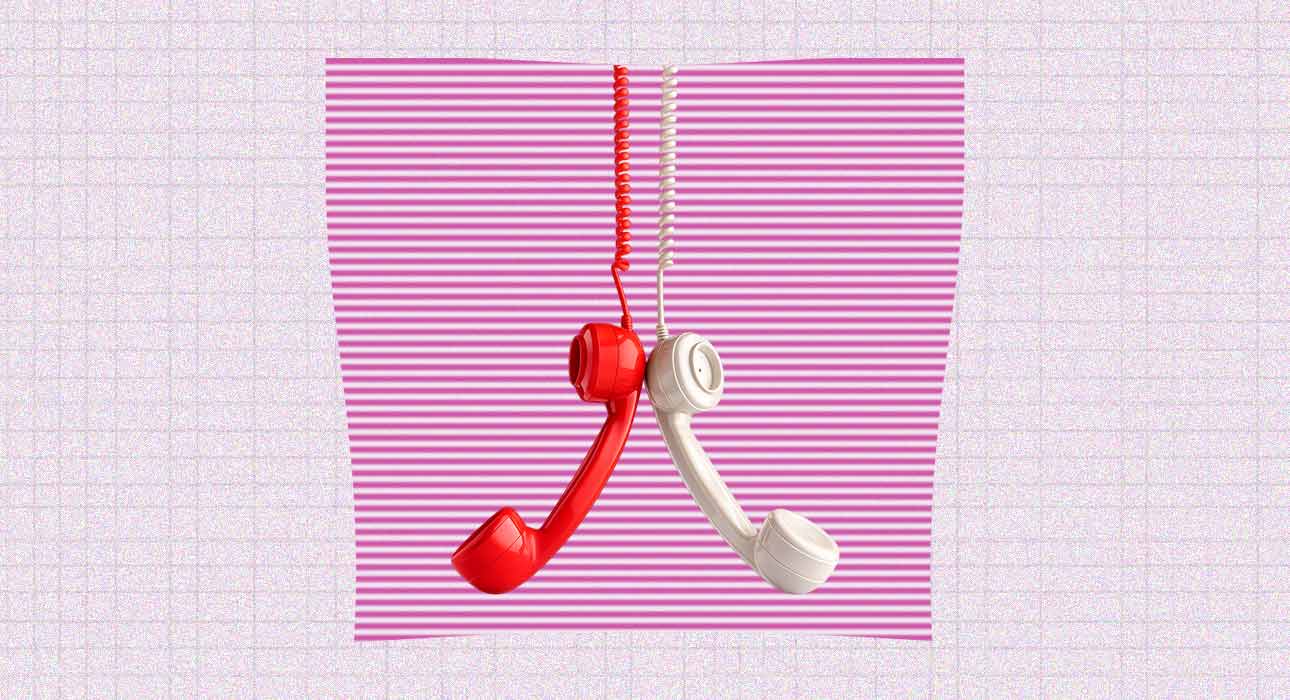
Imagine this: you are texting someone, you need to get some essential details across, and your phone rings, and you see that the person you were texting is calling you. You start to see a blurring of your vision, your hands begin to shake, and you are not sure whether to take the call or not. It is known as “phone anxiety” or “telephobia.”
Telephobia is directed at speaking on the telephone and is a specific type of anxiety. This is different from general phone anxiety, which is an umbrella term for a broad fear of having any phone-related interaction. This is usually linked to social anxiety disorder (Bairwa et al., 2024). The root of general phone anxiety stems from the loss of nonverbal cues and the pressure of unscripted performance (Elizabeth Perry, 2023)
What are the challenges faced by people with telephobia?
Telephobia can be triggered by a phone call, even from a familiar voice, and cause sudden terror. They can also have trouble making outgoing calls over the phone. These individuals may be avoiding phone-related activities, and may have all of the symptoms of anxiety, such as Rapid heartbeat, Shallow breathing, sweating, trembling, Brain fog, and concentrating or focusing problems.
Telephobia comes under the umbrella of social anxiety. Social Anxiety is among the most frequent anxiety disorders, wherein a person feels scared and stays away from social circumstances where they feel they may be judged. It is estimated to impact about 7% of the population (Kessler et al., 2005).
Telephobia can have major effects on a person’s personal and professional life. Even simple activities like making appointments, making inquiries or attending work meetings can be intimidating and overwhelming. Without phone calls, things can start slipping by the wayside, and relationships begin to suffer over time. For instance, someone could not get a job interview because they were unable to do a phone interview, or they might not be able to make an appointment with the doctor when they are sick because they are too afraid.
Read More: Feeling Nervous in Crowds? Here’s How to Beat Social Anxiety
The causes of phone anxiety
On a cognitive level, the telephone eliminates several types of nonverbal feedback (facial expression, gestures, and visual reassurance) that play a crucial role in interpreting social cues and in controlling interaction (Mehrabian, 1972). The absence of these cues can make people who typically are socially anxious feel more uncertain in the way that they are being assessed. Feedback is absent, so fear of misunderstandings or embarrassment is high (Reid & Reid, 2007).
Also, unlike text or email, which require an immediate response, there is no editing when communicating via phone. This immediacy can put an individual under pressure, forcing the socially anxious to react without giving them the time to think through what to do (Pierce, 2009). Unpredictability, like an unknown caller or topic of conversation, can cause anxiety for socially anxious people. The tone or buzz of the phone may then be a conditioned stimulus that lets the individual know that they may be evaluated or confronted (Hofmann et al., 2004).
Changing Communication Norms
The emergence of text messaging, email and social media over the last 20 years has transformed communication habits. The modes offer more control; individuals have time to think in advance before responding and can be more careful about how they present themselves. Younger generations are more likely to prefer to communicate through text and find phone calls to be disruptive or anxiety-provoking (Dimmick et al., 2011).
Digital communication can help to lower stress levels for socially anxious people, but can also help to reinforce avoidance behaviours that can lead to increased and/or sustained anxiety symptoms (Prizant-Passal et al., 2016). This comfort level can therefore establish a feedback loop.
Social Evaluation in the Modern Workplace
In professional situations, phone conversations may be hierarchical or judgmental, for example, calling a supervisor, a client, or an unknown person. This makes it more likely that individuals who tend to be sensitive to negative judgments will perceive themselves as at risk. Even common tasks that rely on visual input, like talking on the phone, can be challenging (Pierce, 2009).
Additionally, the concept of “always on” has taken over in the modern workplace, leading to feelings of urgency and anxiety about missing calls or failing to respond promptly. This need for constant availability can be exhausting for socially anxious people, causing them to avoid or procrastinate.
How to manage and overcome Telephobia
Some steps can be taken to help overcome telephobia, though it takes time and effort:
- Implement Gradual Exposure Therapy: With texting being more popular than the regular phone call, telephobia may simply be a lack of practice. Try to make short, low-dyed phone calls (e.g. calling an answering machine) and then work your way up to calling friends and relatives, then colleagues and people you don’t know.
- Prepare in Advance: It’s useful to jot notes or questions down that should be covered before the call, too, as this can help prevent going too far “off-topic” and can help ease some anxiety.
- Use Breathing Technique: By practising deep, controlled breathing, you can help control the body’s stress response, which can help keep nerves at bay before and during a call. The breathing in and out intentionally can help to calm the person in stressful situations, enabling him/her to think more clearly.
- Role Play: It’s a great idea to role-play with a trusted friend or family member to build confidence. They might even request that the other person play out tough scenarios or questions for them to get ready and feel more comfortable in an actual conversation.
- Another alternative to not having anyone there to support is to visualise the phone call. The mind and body react in the same way to a simulation and an experience, so mentally rehearsing that call in advance can boost confidence and preparedness.
- Remind Self of Safety: Anxiety tends to occur when a person feels a threat or an unsafe situation. Even if there is no real danger. It can be helpful to remember that a phone call isn’t a dangerous situation and helps minimise fear and tension. Smiling and looking up will also help you to exude confidence, which will lead to a higher sense of confidence.
- Seek Professional Help: An anxiety therapist and a specialist would be able to offer personalised strategies, emotional support and practical ways to better cope with phone anxiety.
Read More: Enhancing Help-Seeking Experience: Choosing the Right Professional Help
Conclusion
Social anxiety and telephone aversion have a cognitive and emotional basis; however, telephone aversion also highlights larger sociocultural changes in communication norms. Digital media has provided choices for avoidance, in addition to making it less tolerable to synchronous, unpredictable interactions. Importantly, the telephone phobia is not just “introversion” or “preference”.
It can be a clinically important expression of social anxiety that has important consequences for social, employment, and mental functioning for some people. Understanding the psychological aspects can inform the creation of more compassionate policies in the workplace, such as enabling communication that takes place outside of working hours or providing assistance to anxious workers.
Social anxiety and telephone aversion stem from a combination of cognitive distortions, biological factors and sociocultural influences. Fear of negative evaluation and loss of control constitute the psychological centre. Whereas modern communication trends add to the fears with the absence of visual cues and the sense of urgency. Cognitive restructuring, exposure, and mindful acceptance are the key elements of effective treatment.
These fears are critical to comprehend, not just for the psychological well-being of individual people. But also for the creation of environments for communication that are inclusive and consider different levels of comfort and psychological needs.
References +
Lynn McCarthy. (2025). Understanding Social Anxiety and Telephone Aversion: Psychological Mechanisms and Modern Contexts. Research Gate. https://www.researchgate.net/publication/397340601_Understanding_Social_Anxiety_a nd_Telephone_Aversion_Psychological_Mechanisms_and_Modern_Contexts
Cari Romm and Katja Vujic. (2024). Psychologists Explain Your Phone Anxiety (and How to Get Over It). The Cut.https://www.thecut.com/article/psychologists-explain-your-phone-anxiety.html
Author. (2025). What is Phone Anxiety?. Better your life. https://betteryourlife.co.uk/blogs/blog-posts/what-is-phone-anxiety
Kessler et al. (2005). Prevalence, severity, and comorbidity of 12-month DSM-IV disorders in the National Comorbidity Survey Replication. PubMed. National Institutes of Health. https://pubmed.ncbi.nlm.nih.gov/15939839
Rapee and Spence. (2004). The aetiology of social phobia: Empirical evidence and an initial model. Research Gate. https://www.researchgate.net/publication/8214705_The_etiology_of_social_phobia_Em pirical_evidence_and_an_initial_model
Author. (2019). Mehrabian’s 7-38-55 Communication Model: It’s More Than Words. People shift. https://people-shift.com/articles/mehrabians-7-38-55-communication-model
Reid and Reid. (2007). Text or Talk? Social Anxiety, Loneliness, and Divergent Preferences for Cell Phone Use. Research Gate. https://www.researchgate.net/publication/6243747_Text_or_Talk_Social_Anxiety_Loneli ness_and_Divergent_Preferences_for_Cell_Phone_Use
Pierce et al. (2009). Social anxiety and technology: Face-to-face communication versus technological communication among teens. Research Gate. https://www.researchgate.net/publication/223269286_Social_anxiety_and_technology_ Face-to-face_communication_versus_technological_communication_among_teens
Hofmann. (2004). Cognitive mediation of treatment change in social phobia. PubMed. National Institutes of Health. https://pubmed.ncbi.nlm.nih.gov/15279523
Dimmick et al. (2011). The niches of interpersonal media: Relationships in time and space. Research Gate. https://www.researchgate.net/publication/258173704_The_niches_of_interpersonal_me dia_Relationships_in_time_and_space
Prizant- Passal. (2016). Social anxiety and internet use – A meta-analysis: What do we know? What are we missing?. Science Direct. https://www.sciencedirect.com/science/article/abs/pii/S0747563216302680
Pierce. (2009). Social anxiety and technology: Face-to-face communication versus technological communication among teens. APA PsycNet. https://psycnet.apa.org/record/2009-14372-021
Leave feedback about this