






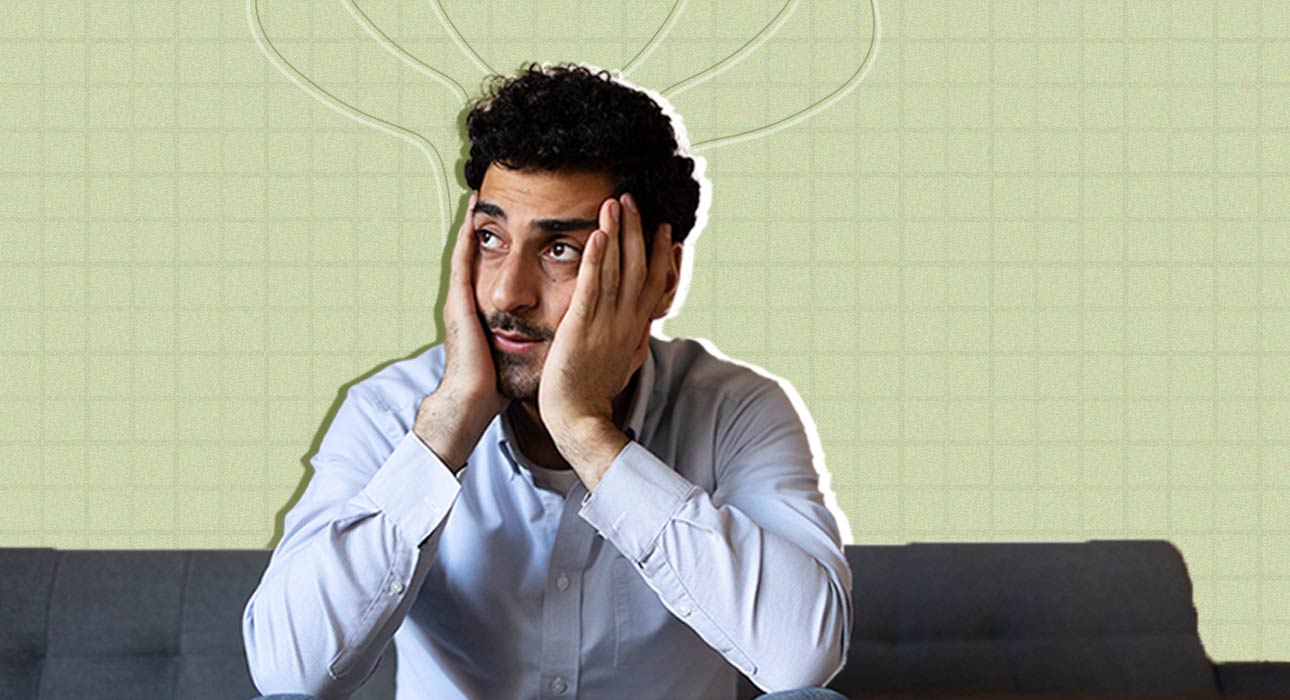
A man sits in his car after work, staring at his phone for several minutes. He wants to book a counselling appointment, but instead he locks the screen and drives home silently. Nothing is visible in his life. He goes to work, talks normally, and appears emotionally strong to everyone around him. Yet inside, he feels mentally exhausted. Still, asking for help feels harder than carrying the pain alone.
This is more common than most people think. Research indicates males are significantly less likely to reach out for mental health assistance despite experiencing stress, anxiety, depression, or emotional burnout (Addis & Mahalik, 2003). A contributing factor to this issue is how males are taught to be masculine. Boys hear from a young age that “real men don’t show weakness” and that they can deal with anything themselves. As they get older, allowing themselves to feel begins to seem weak.
In this article, we will discuss why men fear counselling, how suppression of emotions is ingrained, and why asking for help is brave, not weak.
Growing Up With “Be Strong” Expectations
The concepts that men develop about how they “should” behave originate very early in childhood. Many times, starting at a young age, boys learn to suppress their emotions through common sayings such as “boys don’t cry” or “toughen up.” Although these phrases may seem harmless, repeated hearsay perpetuates a lifetime pattern of stuffing emotions (Pollack, 1999).
As males age into adulthood, crying or displaying vulnerability becomes “unmanly,” while maintaining a “poker face” is admired. Many orthodox ideologies that men are socialised into, known as the “male role norm”, force men to behave as if they are invincible, can complete all goals without anyone’s help, and have their feelings under control at all times (Levant, 1992). These standards are impossible for every man to meet, which can result in “gender role strain”, an extreme form of internal pressure felt when one believes they are not “manly” enough to fit the social standards (Pleck, 1995).
Due to years of reinforcement, many men learn emotional suppression as their primary coping mechanism. Emotional suppression is when an individual works to push down and hide their emotions. Research has found that when someone suppresses a feeling, it does not go away but increases physiological arousal and long-term stress (Gross, 2002). Many times throughout families and friend groups, boys learn that it is “strong” to keep quiet about their feelings, which promotes sharing as a socially and personally risky behaviour (Chu, 2014).
Read More: BIG BOYS DON’T CRY: Wearing Emotions Close to the Surface
The Barrier: Why Therapy Feels Like Failure
Therapy can feel unnatural and even go against how many men were raised – keeping emotions bottled up. Sharing your insecurities, trauma, or fears can make you feel weak if you grew up thinking the strong man doesn’t show his feelings (Levant & Richmond, 2016). This behaviour links back to a fear of reaching “precious manhood.” Many believe that manhood is fragile, and they can lose it if they appear “soft” in any way (Vandello & Bosson, 2013).
Men do not want to appear weak to others or themselves. We refer to this as self-stigma. Many men believe that reaching out for help makes them look “unstable” or “weak” in their own minds (Vogel et al., 2011). They fear what others may think because of hyper-self-reliance. Hyper-self-reliance is an unhealthy belief that you should always be able to deal with your problems on your own (Addis, 2011).
How Men Express Emotional Pain
Some men don’t go to counselling because they don’t want to lose control of their emotions. Men fear that crying or telling someone they’re tired will take away from how “manly” they seem. Many won’t go until their mental stress has reached an all-time high and needs to be resolved (Chu, 2014). Men tend to “act out” or “show” their pain instead of talking about it (Mahalik et al., 2003):
- Isolating themselves or overworking.
- Anger or agitation to cover up the feeling of being sad (Cochran & Rabinowitz, 2000).
- Drug use or playing video games to escape the pain (Rice et al., 2018).
“Real men don’t…” isn’t a phrase we should entertain anymore. Men are often socialised to believe that asking for help is a sign of weakness. (American Psychological Association, 2018). If you can cry, you’re not weak. If you can feel sympathy, you’re not weak. Let yourself be weak. It is strong to admit that you have a problem and confront it. By saying men suppress their emotions, we can tie that to physiological arousal, externalisation behaviours, and “quiet” depression in men.
Read More: Anger as a Secondary Emotion
The Hidden Cost: What Happens When Men Suppress Emotions
Trying to hold in your emotions for an extended period can wreak havoc on your mental and physical well-being. Bottling up emotions doesn’t make them go away; they fester and grow into chronic stress, anxiety, and even physical burnout (Gross, 2002). When you ignore your feelings, you are “emotionally inhibiting” yourself. Research has found that emotional inhibition actually heightens physiological arousal. Essentially, your body doesn’t believe you when you tell yourself it’s ok to calm down (Gross & Levenson, 1997).
So why can’t men share how they feel? Emotional expression was ridiculed when many men were growing up. Instead of internalising emotions to be depressed, these painful emotions “leak out” into what are called externalising behaviours such as aggression, rage, or constant anger (Addis, 2011). This is commonly known as “mask depression” because instead of exhibiting sad behaviours, men tend to portray more socially “acceptable” male emotions such as anger (Cochran & Rabinowitz, 2000).
The Impact on Relationships and Mental Health
Clinical depression, alcohol/substance abuse, and feeling numb have been linked with this constant stirring of emotions (Wong et al., 2017). Romantic relationships can suffer from this, too. Research shows that when males bottle up their emotions (“restrictive emotionality”), they have a hard time forming deep emotional connections with their wives or children (O’Neil, 2008). Men often choose to say nothing at all and retreat from the situation, which further damages their mental well-being in a cyclical pattern (Chu, 2014).
If you don’t talk about it, what’s the problem? Male suicide rates worldwide are drastically higher than those of women. But where women are more likely to seek mental health treatment, men are 11x more likely not to (WHO, 2021). Men can struggle with mental health problems just as women can. Millions of men silently battle their issues because society tells them they should handle everything on their own. When it is actually not a weakness to seek help. (Addis & Mahalik, 2003).
Redefining Strength: From Stoicism to Resilience
Society has taught men to be tough, stoic, and completely self-reliant (Vandello & Bosson, 2013). But science has demonstrated that silence isn’t strength. Not talking about pain is one of many risk factors for developing severe psychological pain. Strength comes from feeling your feelings, not bottling them up (Levant, 1992).
Seeing a counsellor is brave because it forces a man to feel emotions he may not have felt in years (Addis & Mahalik, 2003). Seeking therapy isn’t “giving up” but instead is an active problem-solving technique that can help men pinpoint emotional triggers and learn healthy coping skills to end the cycle of masculine-coded isolation (O’Neil, 2008). Scientists around the world are starting to chip away at the self-stigma associated with seeking help (Vogel et al., 2011). But we as people must chip away at the stigma every day. Families, schools, employers, and communities can create a culture that treats expressing emotions as a basic human need.
Conclusion: Breaking the Architecture of Silence
Men’s lack of desire to seek counselling services stems from masculinity as a social construct. From a young age, society teaches boys to bury their emotions and “fake” toughness to appear self-sufficient (Pollack, 1999). Over time, these barriers create mental blockades that make reaching out for help when needed especially hard—even when emotions become heightened in what many describe as psychological pain; boys learn this behaviour in what scholars have defined as “gender role conflict” (O’Neil, 2008).
As males mature into adulthood, they continue to internalise stress and burnout because they are told that asking for help is “unmasculine” (Vandello & Bosson, 2013). Society teaches men to hide their pain and view emotional expression as weakness, which can make seeking counselling services feel scary(Vogel et al., 2011). The thing is, hiding your emotions doesn’t make them go away. Research indicates that stifling emotions can cause greater physical stress and have detrimental effects on mental health in the long run (Gross, 2002).
Don’t view counselling as something negative. Asking for help is one way of solution-focused coping (American Psychological Association, 2018). There is strength in those who have the bravery to face their feelings instead of further allowing themselves to believe that everything is fine (Addis & Mahalik, 2003). The more we normalise this social construct, the more we allow safe spaces for men to speak. The more we can eliminate stigmas against healing.
References +
Allen, J.G. (1995). Coping with trauma. A guide to self-understanding.Washington, DC: American Psychiatric Press, Inc
Aponte, J. F., & Wohl, J. (2000). Psychological intervention and cultural diversity. Boston: Allyn & Bacon
Anderson, L. M., Adeney, K. L., Shinn, C., Safranek, S., Buckner-Brown, J., & Krause, L. K. (2015). Community coalition-driven interventions to reduce health disparities among racial and ethnic minority populations. The Cochrane Library, 2015(6). https://doi.org/10.1002/14651858.cd009905.pub2
Araújo-Soares, V., Hankonen, N., Presseau, J., Rodrigues, A., & Sniehotta, F. F. (2019). Developing behaviour change interventions for self-management in chronic illness. European Psychologist, 24(1), 7–25. https://doi.org/10.1027/1016-9040/a000330
Bianchin M., & Angrilli A. (2012). Gender differences in emotional responses: a psychophysiological study. Physiology and Behaviour. 105(4):925–32. https://doi.org/10.1016/j.physbeh.2011.10.031.
Crocco, N. T., Nhunzvi, C., Langhaug, L., Duma, S. E., & Harding, R. (2024). Psychological interventions for depression and/or anxiety among men who have sex with men: A systematic review protocol. https://doi.org/10.21203/rs.3.rs-2679440/v1
Drescher, J. (2014). Psychoanalytic therapy and the gay man. Routledge.
Kret, M. E., & De Gelder, B. (2012). A review of sex differences in processing emotional signals. Neuropsychologia, 50(7), 1211–1221. https://doi.org/10.1016/j.neuropsychologia.2011.12.022
World Health Organisation. (2022, June 8). Mental disorders. WHO. https://www.who.int/news-room/fact-sheets/detail/mental-disorders


Leave feedback about this