







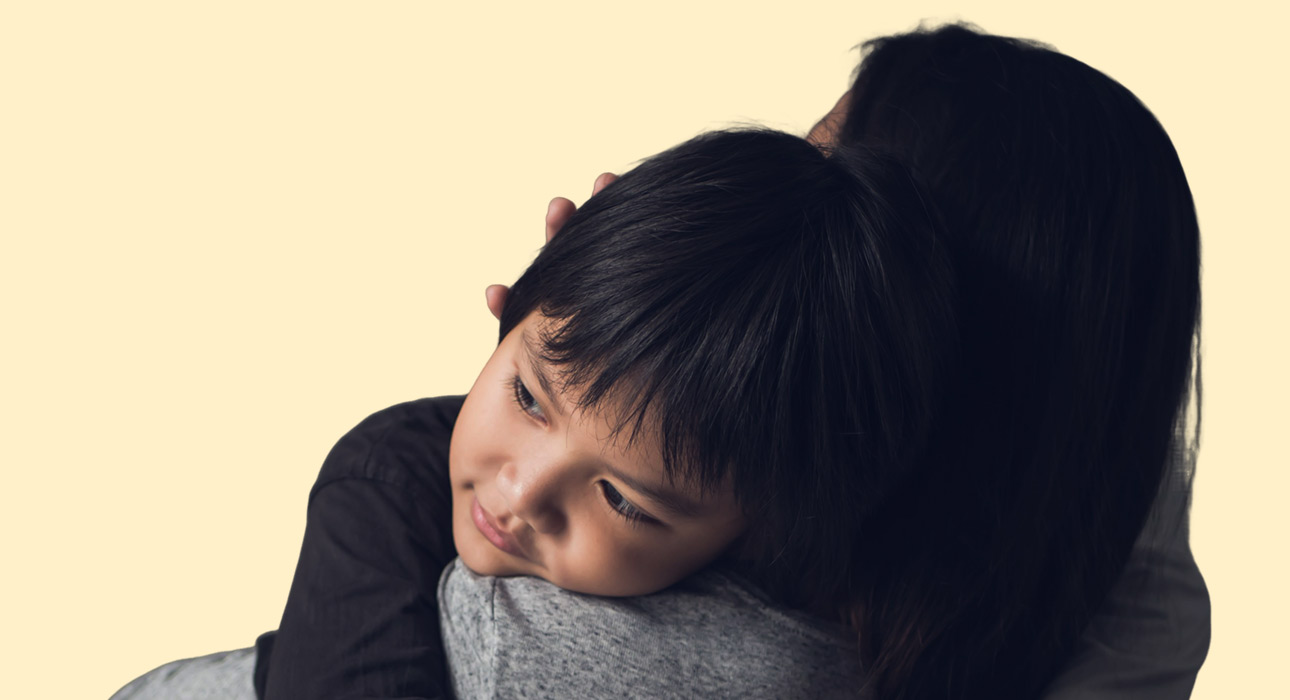
A child learns about love and trust from the relationship they share with their carer. The treatment they receive from their carer shapes how they view the world. However, when a child is neglected and abused, the sense of safety within them cripples before fully developing. This leads to Reactive Attachment Disorder (RAD) – the incapability in young individuals to form emotional bonds due to prior childhood experiences (American Psychiatric Association [APA], 2022).
Read More: Childhood Trauma – High Time to Rewire Your Brain!
What & Why Is Reactive Attachment Disorder?
In childhood, when a child is constantly exposed to abusive environments where they feel unsafe, neglected and abandoned, they develop trauma and fail to form healthy emotional attachments with their parents (or primary carers); this leads to the condition termed “Reactive Attachment Disorder” (Zeanah & Gleason, 2015).
Children with RAD are often afraid to reach out for help and comfort, even when they are emotionally breaking down. Children grown up in a comforting environment turn to their carers (e.g., parents) for reassurance. However, children with RAD emotionally withdraw from and remain distant from their carers (Boris & Zeanah, 2005).
The tendency within children with RDA to be emotionally distant and detached develops due to the hostile, volatile and abusive environment they grow up within, where their emotions remain unheard.
Read More: How Does a Child Develop Attachment Style?
Today’s Experience Shapes Tomorrow’s Response
Studies have shown that traumatic childhood memories and chronic stress significantly affect an individual’s psychological development (Felitti et al., 1998). In an environment filled with fear, emotional neglect or violence, the brain prioritises survival over building emotional bonding (Perry & Szalavitz, 2017).
RAD is strongly associated with Emotional neglect, Physical or emotional abuse, Lack of affection and love, and parents with undiagnosed mental illness (Minnis et al., 2009). A child often ignored and criticised interprets that expressing emotions is unsafe. Over time, they completely stop seeking comfort.
Read More: When Nostalgia Hurts: Understanding Childhood Trauma and Neglect
How To Recognise RAD?
RAD affects the psychological development of individuals. Some symptoms are noticeable at the initial stage, while others become more evident with time.
Common signs include:
- Avoiding physical or emotional closeness
- Rarely seeking comfort when distressed
- Emotional instability, numbness or withdrawal
- Fearfulness and hypervigilance
While some children are unusually independent due to their insecurity in depending on others, many children have overly aggressive reactions at times because their nervous system is trained to live under constant alert (Perry & Szalavitz, 2017).
Childhood Shapes Adulthood
Although RAD is diagnosed during childhood, it has a strong adverse effect on the individual’s life ahead (Zeanah & Gleason, 2015). Most adults with a childhood filled with neglect, abuse and feelings of being abandoned struggle with their relationships in later life. They fail to comprehend their relationships.
Adults who grew up in unhealthy environments often blame themselves for failing to form emotional bonds with others. Even in loving relationships, many experience an emotional emptiness because the feeling of emotional security itself is unfamiliar to them, while many become hyper-independent out of the fear of despair and disappointment.
Children with RAD carry on certain behaviours as they enter adulthood; some of them are listed as follows: Fearing intimacy, Fear of being abandoned, Trust issues and tendency to be emotionally detached, Chronic anxiety, depression, and constantly being pessimistic, and Overly self-dependent. Such people prioritise emotional boundaries and avoid vulnerability (Mikulincer & Shaver, 2019).
Research has consistently shown that ACEs are strongly influential and linked to long-term mental and physical health difficulties, such as depression, chronic stress disorder and the like (Felitti et al., 1998; Hughes et al., 2017).
Right Parenting & Right Environment Are Equally Important
Emotional neglect is equally traumatic as physical abuse. In environments where the carers always remain emotionally unavailable, the child’s psychological development is deeply affected and leads to attachment trauma (Schore, 2001).
Children raised in such environments develop beliefs like the following:
- “My feelings do not matter.”
- “I should not be too expressive; it makes me look sensitive.”
- “I must handle everything alone.”
With the progress of time, as the child steps into adulthood, they carry on these beliefs, which subconsciously affect their relationships, emotional sanity and self-esteem. Although the child grows up, the responses developed in their childhood continue to live on with them and have a severe impact on their daily life.
Read More: The Psychology of Parenting: Balancing Rewards and Mental Health Challenges
Treatment & Healing Is Time-Taking
There is no concrete cure for RAD; however, providing safe environments has proved to be beneficial and a positive approach for healing. Adults must provide children with a safe environment to express themselves, and they must listen to them instead of judging them.
Approaches like Cognitive Behavioural Therapy (CBT) and attachment-based therapy help to gradually rebuild trust and a sense of security (Mikulincer & Shaver, 2019). However, healing does not happen only in the therapy room. Healthy relationships, supportive friends and emotionally understanding partners are equally necessary.
Conclusion
Reactive Attachment Disorder (RAD) illustrates the necessity of a healthy and emotionally responsive environment and showcases how a lack of such an environment psychologically affects a child’s development. Understanding RAD requires an empathetic approach. Many adults continue to silently carry the invisible wound of their traumatic childhood, which makes them insecure about themselves and their feelings. Doctors diagnose RAD as a childhood disorder. However, it has an adverse influence on the adulthood of the individual.
References +
Bowlby, J. (1988). A secure base: Parent-child attachment and healthy human development. Basic Books.
Felitti, V. J., Anda, R. F., Nordenberg, D., Williamson, D. F., Spitz, A. M., Edwards, V., Koss, M. P., & Marks, J. S. (1998). Relationship of childhood abuse and household dysfunction to many of the leading causes of death in adults: The adverse childhood experiences (ACE) study. American Journal of Preventive Medicine, 14(4), 245–258.
Schore, A. N. (2001). Effects of early relational trauma on right brain development, affect regulation, and infant mental health. Infant Mental Health Journal, 22(1–2), 201–269.
Boris, N. W., & Zeanah, C. H. (2005). Practice parameter for the assessment and treatment of children and adolescents with reactive attachment disorder of infancy and early childhood. Journal of the American Academy of Child & Adolescent Psychiatry, 44(11), 1206– 1219.
Minnis, H., Reekie, J., Young, D., O’Connor, T., Ronald, A., Grey, A., & Plomin, R. (2009). Genetic, environmental and gender influences on attachment disorder behaviours. The British Journal of Psychiatry, 190(6), 490–495.
Zeanah, C. H., & Gleason, M. M. (2015). Annual research review: Attachment disorders in early childhood—Clinical presentation, causes, correlates, and treatment. Journal of Child Psychology and Psychiatry, 56(3), 207–222.
Perry, B. D., & Szalavitz, M. (2017). The boy who was raised as a dog: And other stories from a child psychiatrist’s notebook (3rd ed.). Basic Books.
Hughes, K., Bellis, M. A., Hardcastle, K. A., Sethi, D., Butchart, A., Mikton, C., Jones, L., & Dunne, M. P. (2017). The effect of multiple adverse childhood experiences on health: A systematic review and meta-analysis. The Lancet Public Health, 2(8), e356–e366.
Mikulincer, M., & Shaver, P. R. (2019). Attachment orientations and emotion regulation. Current Opinion in Psychology, 25, 6–10.
American Psychiatric Association. (2022). Diagnostic and statistical manual of mental disorders (5th ed., text rev.; DSM–5–TR). American Psychiatric Publishing.



Leave feedback about this