







It’s widely believed that Albert Einstein had an IQ over 160. There’s just one problem: he never took an IQ test. That number is basically a guess someone made up after he died, trying to put a figure on his genius. So where did IQ actually come from? And who decided you could sum up something as messy as intelligence with one number? Do you know your own IQ score? A lot of people around the world take online IQ tests and trust whatever number comes up, thinking it tells them exactly how smart they are.
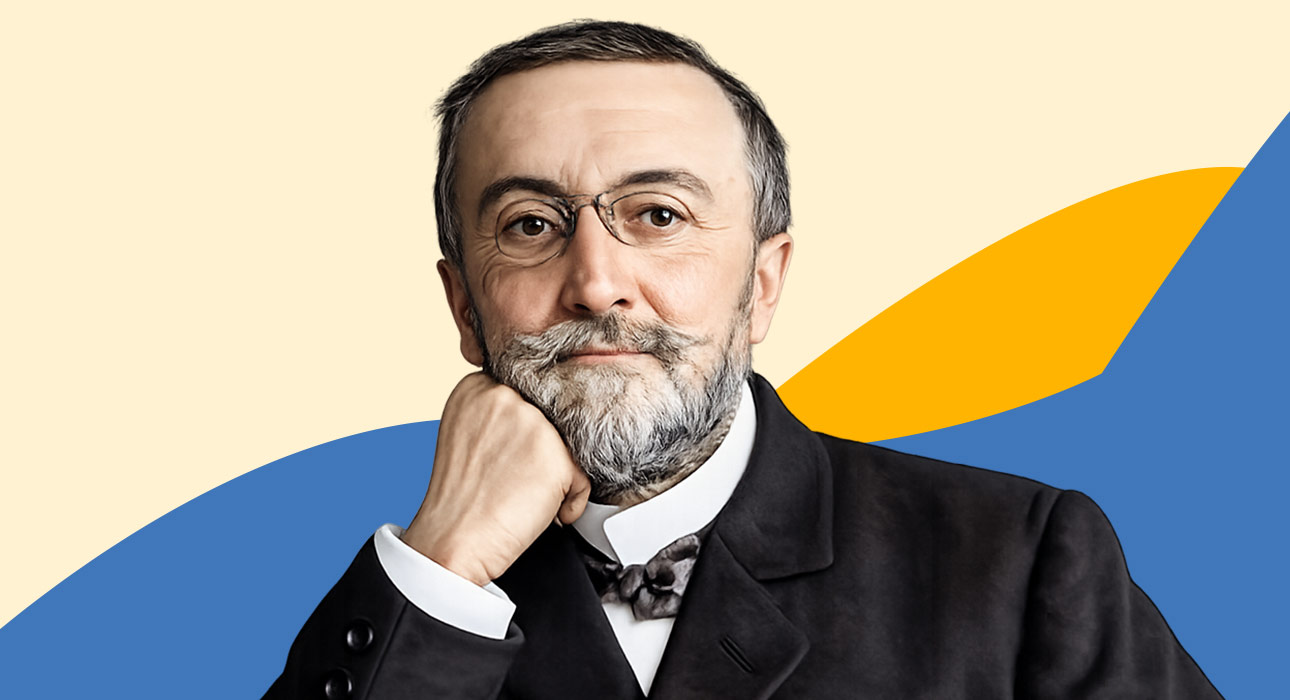
But what even is IQ? Who came up with it, and how? None of this was obvious to begin with: that intelligence could be measured, put on a scale, and compared across kids the same age. That idea came from one man in Paris, over a hundred years ago: Alfred Binet. He built the first practical intelligence test not to sort children into permanent categories, but to catch the ones who were falling behind and get them help.
Read More: Understanding Linguistic and Logical Intelligence Among
From Law to Psychology
Alfred Binet was born on July 8, 1857, in Nice, France. His parents separated while he was still a child, and his mother took him to Paris and pushed him toward law school. He got his law degree in 1878 (Nicolas et al., 2014; Wolf, 1973), but he barely used it; the law wasn’t where his mind wanted to be. By the early 1880s, he was teaching himself psychology at the Bibliothèque Nationale, a field that barely existed as a formal discipline in France at the time (Nicolas, 2002; Wolf, 1973).
He worked through the British empiricist philosophers, John Stuart Mill in particular, who argued that the mind was built through learning and association rather than handed down as a fixed set of traits. That idea, that intelligence is something shaped rather than something simply given, stayed with Binet for the rest of his career.
A Detour Through Hypnosis
Binet’s first real research post was at the Salpêtrière Hospital in Paris, where he joined the neurological department under Jean-Martin Charcot in 1883 (Nicolas, 2002). Charcot was, at the time, the most famous neurologist in Europe, and Alfred Binet published work on hypnotism and suggestibility under his influence. But there was a problem. The Belgian researcher Joseph Delboeuf showed in 1886 that the hypnotic effects Binet and Charcot had been reporting were not genuine, but were the result of subjects picking up on cues from the experimenters themselves (Nicolas, 2002).
It was an embarrassing correction, and Binet left Salpêtrière by 1890, in near disgrace (Evans, n.d.; Wolf, 1973). But why does an early failure like this matter for a paper about intelligence testing? Because it left Binet with a lasting distrust of subjective judgment. Going forward, he wanted methods that did not depend on interpretation.
Read More: False Memory Syndrome: Between Truth and Belief
Watching His Own Daughters
After leaving Salpêtrière, Alfred Binet turned to child psychology, and to the closest subjects he had available: his two daughters, Alice and Madeleine. For years he just watched them, taking notes, and in 1903 that watching turned into a book, L’Étude expérimentale de l’intelligence (The Experimental Study of Intelligence), which used his daughters as a starting point for a wider study of two very different personality types (Binet, 1903; Siegler, 1992). It was here that an idea took hold in him, one that would shape everything he did afterwards: intelligence isn’t one single thing. Reasoning, memory, attention, and judgment seemed to operate somewhat independently in his daughters. A child could be strong in one and weak in another.
Read More: How Is Technology Redefining Human Memory?
The Government’s Real Ask
In 1904, the French Ministry of Education asked Binet to join a commission on a specific, practical problem: how to identify children who were struggling in ordinary classrooms, so they could receive proper support instead of being sent to institutions meant for those who are mentally ill (Brysbaert & Nicolas, 2024). This detail gets flattened in a lot of textbooks, which describe Binet as inventing an all-purpose intelligence test purely on his own initiative (Brysbaert & Nicolas, 2024). In reality, he was responding to an educational dispute, one that was partly political too, over who should decide where a struggling child belonged, and he worked on the answer jointly with Théodore Simon throughout (Brysbaert & Nicolas, 2024).
Read More: High IQ or High Anxiety? Exploring the Link Between Giftedness and Anxiety Disorders
Building the Binet-Simon Scale
Alfred Binet and Simon put out the first version of their scale in 105. It was made up of thirty small tasks, arranged from easy to hard, things like following a command, copying a pattern, naming an object, putting a set of items in order (Siegler, 1992). Instead of testing school knowledge, the tasks focused on reasoning and comprehension, the abilities Binet believed mattered more than memorised facts. A child’s performance could then be compared to other children their age, rather than measured against some abstract standard. The scale was revised in 1908 and again in 1911, the year Binet died (Nicolas, 2002).
Read More: Understanding Objective, Semi-Projective, and Projective Tests in Psychology
Mental Age, Not a Fixed Number
The scale is where the idea of mental age came from. A child didn’t get a score. They got an age, the age at which a typical child could do what this child just did (Brysbaert & Nicolas, 2024; Siegler, 1992). Say a seven-year-old breezed through tasks that stumped most nine-year-olds. That made their mental age nine, even though they were only seven. Alfred Binet himself never turned this into a ratio. That step, dividing mental age by chronological age to produce an intelligence quotient, came later, from William Stern in 1912, and it was Lewis Terman who popularised it through the American Stanford-Binet revision of 1916 (Nicolas, 2002).
Read More: How Legal Frameworks Overlook People with ADHD and Borderline IQ
The Warning Nobody Heeded
Alfred Binet was oddly modern in how he thought about his own test. He described intelligence as complex and modifiable, not fixed, and he coined the term “mental orthopaedics” for the idea that attention, reasoning, and judgment could be trained (Binet, 1909/1975). What he actually warned against was telling a child their intelligence could never change, what he called “brutal pessimism.” The test was supposed to catch kids who needed help. Not brand them for life.
None of that stopped what happened next in America. Terman took the Stanford-Binet and did the opposite of what Binet wanted; he treated intelligence as fixed and passed down through blood. Psychologist Carl Brigham went further, using U.S. Army data to claim there was a racial ranking of intelligence in his 1923 book, A Study of American Intelligence.
Congress even brought his findings into the debate over the Immigration Act of 1924, a law that closed the door on much of southern and eastern Europe. Brigham later walked it back, writing in 1930 that his racial study had no real foundation (Brigham, 1930; Kamin, 1974). Alfred Binet had died more than a decade before any of this happened, and had no say in how his tool would eventually be used.
Read More: Mastering Emotional Regulation: Techniques to Manage Stress and Improve Mental Health
IQ Today: What We’ve Learned Since
Is the test still worth anything, more than a hundred years on? Sort of. Modern versions like the Wechsler scales and today’s Stanford-Binet get updated every decade or so, and they still show up in research as one of the better predictors of things like job performance. But better isn’t the same as complete. Grit and conscientiousness pull just as much weight in real life.
Psychologists have also been trying to stretch the definition of intelligence itself. Howard Gardner argued back in 1983 that people have distinct strengths across areas like music and reading other people, not just logic (Gardner, 1983). A decade after that, Daniel Goleman argued something similar: emotional intelligence might matter just as much as any test score.
Average IQ scores have been rising for close to a hundred years now. Researcher James Flynn spotted the pattern, and it carries his name today: the Flynn effect. It probably reflects a world that’s quietly training people to think more abstractly, more schooling, more symbols, more puzzle-like problems day to day, rather than any sudden leap in raw brainpower.
A score isn’t even fixed test to test. Take the same test twice, and the number usually creeps up a little, mostly from familiarity (Scharfen et al., 2018). And early-life nutrition, enough iodine especially, plays a measurable role in how a child’s mind develops in the first place (Ghazi et al., 2014; Zimmermann, 2012).
Read More: Reducing Lead Exposure: A Seven-Point IQ Opportunity for India’s Children
Conclusion
Alfred Binet spent his whole career trying to make intelligence something you could actually see, not something you just assumed about a child. He never wanted his scale to be the final word on anyone’s potential. In fact, he believed the opposite. He thought the mind could grow, and that is exactly why he came up with mental orthopaedics, his idea that thinking skills like attention and reasoning could be trained the same way a weak muscle gets stronger with exercise.
So the next time IQ comes up in conversation, remember this. It’s not some number stamped on you at birth. Alfred Binet himself would have hated that idea. He built his test to help struggling kids get support, not to shut them out. There’s a real difference between where someone stands right now and where they’ll stand forever, and that’s the thing Binet’s story won’t let us forget.
References +
- Binet, A. (1903). L’étude expérimentale de l’intelligence. Schleicher Frères.
- Binet, A. (1975). Les idées modernes sur les enfants [Modern ideas about children]. Ernest Flammarion. (Original work published 1909)
- Brigham, C. C. (1923). A study of American intelligence. Princeton University Press.
- Brigham, C. C. (1930). Intelligence tests of immigrant groups. Psychological Review, 37(2), 158–165. https://doi.org/10.1037/h0071333
- Brysbaert, M., & Nicolas, S. (2024). Two persistent myths about Binet and the beginnings of intelligence tests in psychology textbooks. Collabra: Psychology, 10(1), Article 117600. https://doi.org/10.1525/collabra.117600
- Duckworth, A. L., & Gross, J. J. (2014). Self-control and grit: Related but separable determinants of success. Current Directions in Psychological Science, 23(5), 319–325. https://doi.org/10.1177/0963721414541462
- Evans, C. H. (n.d.). Alfred Binet. EBSCO Research Starters. EBSCO Information Services.
- Flynn, J. R. (1984). The mean IQ of Americans: Massive gains 1932 to 1978. Psychological Bulletin, 95(1), 29–51. https://doi.org/10.1037/0033-2909.95.1.29
- Gardner, H. (1983). Frames of mind: The theory of multiple intelligences. Basic Books.
- Ghazi, H. F., Md. Isa, Z., Sutan, R., Idris, I. B., & Maimaiti, N. (2014). Nutrition and children’s intelligence quotient (IQ): Review. Annals of Nutritional Disorders & Therapy, 1(1), 1005.
- Goleman, D. (1995). Emotional intelligence: Why it can matter more than IQ. Bantam Books. Kamin, L. J. (1974). The science and politics of I.Q. Lawrence Erlbaum Associates.
- Nicolas, S. (2002). Histoire de la psychologie française: Naissance d’une science nouvelle. In Press Éditions.
- Nicolas, S., Gounden, Y., & Sanitioso, R. B. (2014). Alfred Binet, founder of the science of testimony and psycho-legal science. L’Année Psychologique, 114(2), 209–228.
- Scharfen, J., Peters, J. M., & Holling, H. (2018). Retest effects in cognitive ability tests: A meta-analysis. Intelligence, 67, 44–66. https://doi.org/10.1016/j.intell.2018.01.003
- Schmidt, F. L., & Hunter, J. E. (1998). The validity and utility of selection methods in personnel psychology: Practical and theoretical implications of 85 years of research findings. Psychological Bulletin, 124(2), 262–274. https://doi.org/10.1037/0033-2909.124.2.262
- Siegler, R. S. (1992). The other Alfred Binet. Developmental Psychology, 28(2), 179–190. https://doi.org/10.1037/0012-1649.28.2.179
- Wolf, T. H. (1973). Alfred Binet. University of Chicago Press.
- Zimmermann, M. B. (2012). The effects of iodine deficiency in pregnancy and infancy. Paediatric and Perinatal Epidemiology, 26(s1), 108–117. https://doi.org/10.1111/j.1365- 3016.2012.01275.x




Leave feedback about this