







In certain parts of India, a 45-year-old woman is taking part in a work meeting where she is reminding her son about his assignment, checking that her father’s blood pressure medication has been refilled and answering a family WhatsApp message that asks who is going to accompany her mother to the doctor. She hasn’t had her lunch, but she has remembered everyone else’s choices for lunch.
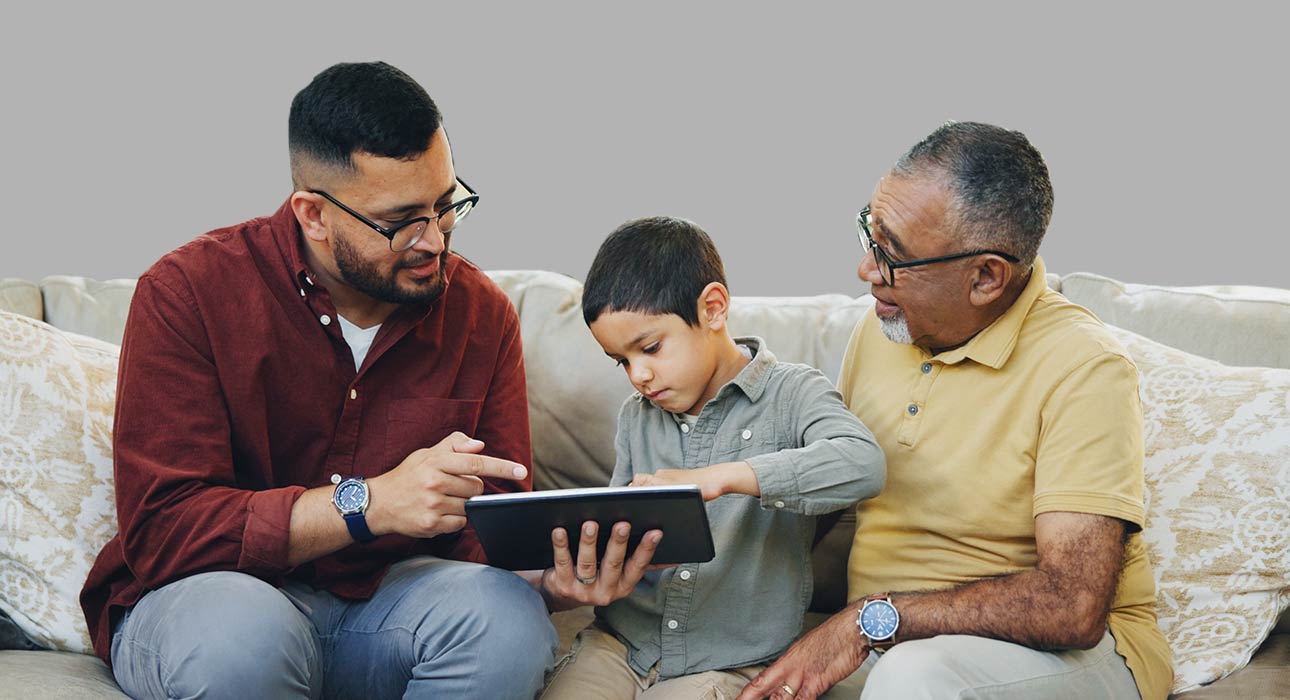
If this situation seems familiar to you, you have entered the sandwich generation, a situation in which adults find themselves situated between the needs of their ageing parents and those of their own children. Although the term refers to a common family setup, the psychological effects it has should receive greater consideration. As India’s population ages and traditional family structures shift, taking care of loved ones is quickly becoming a major social and public health concern (United Nations Population Fund [UNFPA] & International Institute for Population Sciences [IIPS], 2023).
But here’s the thing: caregiving isn’t just about ticking tasks off a to-do list. It’s the constant mental load of remembering appointments, anticipating needs, worrying endlessly, and feeling responsible whenever anything goes sideways. Honestly, it’s a full-time job with zero job description, no set hours, and definitely no annual performance review.
Read More: When Grief Begins with Relief: Understanding Caregivers’ Emotions After Loss
The Caregiving Crunch
According to the India Ageing Report 2023 from the United Nations Population Fund and the International Institute for Population Sciences, people 60 and older will make up over 20% of India’s population by 2050 (UNFPA & IIPS, 2023). Living longer is definitely something to celebrate, but it also raises big questions: Who will handle the daily care, cover the health expenses, and offer financial support?
At the same time, many adults are raising kids, building careers, and helping out ageing parents who might live elsewhere. Caregiving can mean everything from hospital visits and financial help to managing medication schedules and juggling communication across multiple homes. When you try to balance all of this at once, everyday life gets overwhelming fast. Every family’s situation looks different depending on income, gender, location, and healthcare access, but the underlying challenge is the same: the demand for care often far outweighs the time and energy available.
The Time Use Survey 2024 highlights this clearly: 41% of women aged 15 to 59 spend part of their day providing unpaid care for family members, compared to just 21.4% of men. On average, women spend 140 minutes daily on caregiving, while men log around 74 minutes (MoSPI, 2025). These numbers reflect unpaid care in general, but they show the real imbalance caregivers face.
On top of that, caregiving doesn’t keep regular hours: a parent’s medical emergency can interrupt a workday, or a child’s illness can completely throw off plans for an older relative. Even on quiet days, the constant worry that something might happen keeps caregivers on edge. It’s not just about counting hours; it’s about managing unpredictable situations, high emotional stress, and the weight of feeling as it all falls on you.
Read More: From Child to Caregiver: How Adolescents Learn to Support Their Parents Emotionally
The Gendered Burden
With the amount of modernisation in present times, when it comes to caregiving, it is expected that women should be aware of what needs to be done, take charge of the household routines and give both emotional support and practical help. A woman might spend the day meeting professional deadlines and then, on getting home, act as the family’s unofficial operations manager by keeping track of medicines, making appointments, remembering school events and anticipating the needs of the other members of the family. The India Time Use Survey really puts this gap into perspective (MoSPI, 2025).
And honestly, this weight isn’t shared equally. While plenty of men step up or feel the strain too, single moms or women dealing with tight budgets often have far fewer lifelines to lean on. The issue isn’t that every home runs the exact same way; it’s that society just defaults to putting women on care duty before even checking if they have the bandwidth for it.
As the International Labour Organisation (2018) points out, care work keeps families and economies running, yet it’s still barely valued. When families treat caregiving as a personal duty or a quiet virtue rather than a shared responsibility, the caregiver is left to handle the exhaustion entirely on their own. When she is expected to manage it all, over time, resentment creeps in. Not because love is gone, but because one person is being asked to carry the weight of an entire support system.
Read More: Service Before Self: The Hidden Crisis for Caregivers Without Rest
The Mental Load
So much of what makes caregiving exhausting is the stuff nobody sees. It’s the constant mental load of staying on top of everything, planning, making sure nothing slips through the cracks. Even when things seem quiet, your mind is still racing. The stress-process model from Pearlin and his team (1990) breaks down why caregivers feel so overwhelmed: it’s not just the sheer number of chores on your list.
The initial stress comes right from the care tasks themselves, but then it spills over into your job, your wallet, and your relationships. One small thing triggers a domino effect. Lose a little sleep, and your work suffers; worry about work, and suddenly you can’t sleep at all. It’s not just about doing more; it’s constantly adjusting to unpredictable moments without ever getting a real chance to catch your breath.
Research from India really highlights this emotional toll. For instance, Chakraborty, Jana, and Vibhute (2023) found clear links between informal caregiving and poorer health or depression. Now, that doesn’t mean caring for someone automatically causes depression; everyone’s health, living situation, and care setup are different. But it does challenge the myth that caregiving is completely harmless just because it’s rooted in love.
Looking specifically at sandwich-generation caregivers in India, research continues to show high levels of strain and mental fatigue (Anil Kumar, 2024). Constant worry, feeling short-tempered, losing focus, poor sleep, or feeling emotionally numb aren’t just things you should shrug off as “part of adulting.” When these feelings start taking over your days, they deserve real attention and actual support systems, not just a hand-wave dismissal.
Read More: Caregiving is stressful and also a risk factor for depression: Study
The Guilt Trap
Caregivers may feel guilty about becoming impatient with a parent, about missing a school event, about wanting a weekend to themselves or about thinking of getting paid help. They might think that they are letting down their children when looking after their parents and are letting down their parents when looking after their children. When family duties are based on gratitude, respect and sacrifice, setting boundaries can seem morally questionable.
Saying no starts to look like abandonment, and asking for help seems like admitting one’s own inadequacy. Psychologist Pauline Boss came up with a phrase that really captures this experience: ambiguous loss. It describes the kind of grief that doesn’t have a clear ending or closure, like when someone you love is still physically here, but memory loss or illness changes who they are and how you relate to them (Boss, 1999).
Read More: Note to a Caregiver of a chronic disease
Reversing Roles
One of the most confusing parts of looking after ageing parents is the reversal of roles. Those people who used to pack our lunches, remember our vaccination records and make decisions on our behalf might start to depend on us to look after their medication, handle their finances or arrange hospital appointments. This kind of change can be both touching and painful. Adult children may feel a sense of responsibility for keeping their parents safe yet find it hard to come to terms with the fact that they can’t stop the process of ageing.
For parents, feeling dependent can be seen as a loss of dignity, particularly since independence has been a key part of their identity. A simple reminder can come across as criticism, and any practical help may be perceived as interference. These difficulties do not necessarily mean that the relationship is unloving; rather, they show how hard it is to rework roles that have been in place for decades. The India Ageing Report 2023 highlights the need for social protection and suitable support as India’s older population increases (UNFPA & IIPS, 2023). While family commitment is important, it cannot take the place of accessible healthcare and broader support systems.
The Self in Suspension
Caregivers often slip out of their own lives so quietly that nobody even notices. Catching up with friends gets harder, hobbies gather dust, workouts become a luxury, and personal plans keep getting pushed to “someday.” Because you’re still getting things done at work and around the house, everything might look fine from the outside. But let’s be real: just getting by isn’t the same as actually thriving. The World Health Organization emphasizes how vital supportive environments and overall well-being are as we get older (WHO, 2024), and caregivers need those exact same things: social connection, healthcare, and real time to recharge.
Yet in cultures that celebrate self-sacrifice, taking time for yourself can feel almost selfish. Rest is treated like something you have to earn only after every single item on your to-do list is checked off, which, in caregiving, never actually happens. You shouldn’t have to reach a complete breaking point before your own needs matter. Staying in touch with friends, making it to your own doctor appointments, or simply taking an hour where you aren’t responsible for anyone else isn’t a betrayal. It’s just staying human beyond your role as a caregiver.
Organisations like the National Institute on Ageing offer helpful guidance for planning and managing day-to-day care, while the American Psychological Association shares practical ways to spot and deal with stress (National Institute on Ageing, n.d.; APA, n.d.).These resources cannot replace professional help when families need it, and some families may not have access to every service. Above all, caregivers themselves need to help decide what kind of support works best for them, because a plan that ignores their real limits only adds another burden to their already busy lives.
Read More: The Psychologist Who Asked What “Gifted” Really Means
Beyond Individual Resilience
We often talk about caregiving like it’s just a test of personal strength. For example, we tell people to manage their time better, stay positive, take a deep breath, and reach out when they need a hand. While those tips certainly help, they can’t magically make care affordable. Moreover, they can’t provide flexible work hours or ensure that family members split up household chores fairly. As the International Labour Organisation (2018) points out, we truly need to invest in real care policies and services. Moreover, we must recognise that care work is the very backbone of both our daily lives and our economy.
Here in India, that means viewing caregiving as a shared social responsibility. Instead, families should not have to quietly figure out this burden behind closed doors.
Expanding eldercare services, local community support, respite care, and mental health resources would take a massive weight off families. Employers need to recognise that their team members are often balancing the needs of growing kids. At the same time, they are also caring for ageing parents.
Plus, we really need to move past the old idea that women are automatically responsible for unpaid care. We also need to move past the belief that hiring help means you’re failing your family. A truly compassionate society shouldn’t rely on the silent burnout of its most dedicated people. Resilience is wonderful. However, it needs strong, supportive systems behind it. This helps people care for those they love without sacrificing their own health or future.
Conclusion
At the end of the day, members of India’s sandwich generation are doing their best to balance genuine love and real responsibilities. However, they also face hard human limits. Caring for both ageing parents and growing kids can be deeply meaningful, but that doesn’t mean it isn’t tough. Older adults deserve dignity and independence. Meanwhile, children need care and a steady home. At the same time, caregivers themselves deserve time to breathe, keep their own health intact, and actually live their lives without putting everything on permanent hold. The goal isn’t to care less. Instead, it’s to make care about something we share and talk about openly, rather than carrying it all in secret.
That change starts with honest chats around the dinner table. However, it also means getting real support from workplaces, healthcare systems, and public policy. Caregivers run around for school drop-offs and manage doctor appointments. However, they also need recognition as individuals with their own limits and needs. They should allow themselves to feel tired, ask for a helping hand, and rest before they run empty.
References +
- American Psychological Association. (n.d.). Stress. https://www.apa.org/topics/stress
- Anil Kumar, A. H. S. (2024). Navigating the caregiver’s strain: Psychosocial well-being among sandwich generation caregivers in India. International Journal of Community Medicine and Public Health, 11(2), 841–850. https://doi.org/10.18203/2394-6040.ijcmph20240275
- Boss, P. (1999). Ambiguous loss: Learning to live with unresolved grief. Harvard University Press. https://www.hup.harvard.edu/
- Chakraborty, R., Jana, A., & Vibhute, V. M. (2023). Caregiving: A risk factor for poor health and depression among informal caregivers in India: A comparative analysis. BMC Public Health, 23, 42. https://doi.org/10.1186/s12889-022-14880-5
- International Labour Organisation. (2018). Care work and care jobs for the future of decent work. https://www.ilo.org/publications/major-publications/care-work-and-care-jobs-future-decent-w ork
- Ministry of Statistics and Programme Implementation. (2025). Time use in India, 2024 (January–December 2024). Government of India. https://www.pib.gov.in/Pressreleaseshare.aspx?PRID=2116301&lang=2®=48
- National Institute on Ageing. (n.d.). Caregiving. National Institutes of Health. https://www.nia.nih.gov/health/caregiving
- Pearlin, L. I., Mullan, J. T., Semple, S. J., & Skaff, M. M. (1990). Caregiving and the stress process: An overview of concepts and their measures. The Gerontologist, 30(5), 583–594. https://doi.org/10.1093/geront/30.5.583
- Steiner, A. M., & Fletcher, P. C. (2017). Sandwich generation caregiving: A complex and dynamic role. Journal of Adult Development, 24(2), 133–143.https://doi.org/10.1007/s10804-016-9252-7
- United Nations Population Fund & International Institute for Population Sciences. (2023). India ageing report 2023. UNFPA India. https://india.unfpa.org/en/publications/caring-our-elders-institutional-responses-india-ageing report-2023
- World Health Organisation. (2024). Ageing and health. https://www.who.int/news-room/fact-sheets/detail/ageing-and-health
- World Health Organisation. (n.d.). Mental health of older adults. https://www.who.int/news-room/fact-sheets/detail/mental-health-of-older-adults





Leave feedback about this