







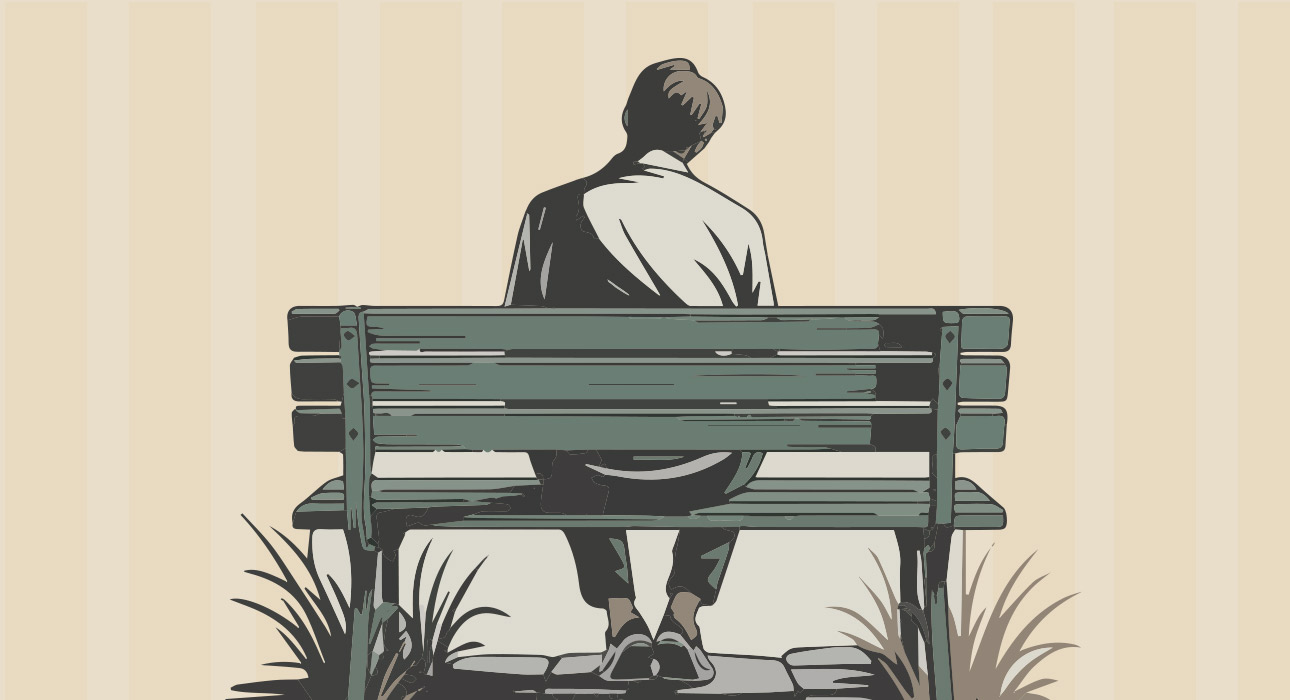
According to the society’s imaginary, what is normal in front of a loss is one way of grieving, which includes crying, screaming and a showcase of sadness. What happens when a loss is not shown in that way? Facing a long disease is not the same as a common one, especially for family, relatives or couples. For example, a wife taking care of a husband with a degenerative disease. That can imply her being in a hospital for long periods of time next to her husband. And also long periods of time at home, taking care of the patient if they can be at home with special routines.
Or maybe a child with cancer. The whole family takes turns to take care of the patient. That includes long periods in the hospital. Maybe sometimes in isolation due to their compromised immune system. Also, being a witness to long periods of suffering from the patient. Physical and mental changes in the patient and the routine of constant medical care, as well as daily routines. All of that can affect any person in several ways.
Mental health of caregivers
Being a caregiver is not an easy task. To begin with, it is a sudden role that someone assumes. It’s not a planned role like taking a job or facing a life project. There is no recipe to follow, and the quality of the treatment received by the patient, who is in the care of a caregiver, can also affect the caregiver.
The role of caregiving fatigue and emotional exhaustion
Hudson (2006) points out that the perception of the last weeks of the patient can influence the grief of the caregiver. If the last weeks are perceived negatively, there is a risk of complicated grief, even if the death occurred under traumatic circumstances. Going to a stage prior to that, there is a need to understand the mental state of the caregiver.
A primary home caregiver can experience emotional, physical and financial distress. Another situation that can be present is the social isolation that the caregiver can experience. For example, in the case of patients with cancer, they need long periods of isolation (Hudson, 2006). The caregiver can also experience stress from the task of caregiving. For example, the assistance to the patient and also activities of daily living (Allen et al., 2019). In the case of caregivers who are spouses, there can be a higher risk of depression or stress caused by witnessing the suffering of the significant other (Allen et al., 2019).
Burnout in caregivers
One aspect that needs to be taken into account is what happens before the death of the person whom the caregiver is taking care of. Months or years before the disease also play a role in the reaction of the caregiver. Since chronic illness, neuropsychiatric conditions or functional impairments take a long process of care, the symptoms of burnout are not seen immediately in the caregivers.
According to Kaminishi et al. (2018), often caregivers are other adults who take into their own hands the care of the person presenting an illness. Adults are vulnerable to present physical effects of caregiving (Kaminishi et al., 2018). But they can also present chronic stress, depression, anxiety, health problems such as decreased immune system functioning and cardiovascular problems (Kaminishi et al., 2018). These symptoms can appear, especially if the caregiving extends for a long period of time.
Adding to the mental and physical symptoms, there are some other adverse effects of caregiving for extended periods of time. Such as caregivers taking less demanding jobs, losing job benefits or losing jobs entirely (Kaminishi et al., 2028). Schulz et al. (2003) found that caregivers of patients with dementia spend at least 46 hours per week assisting patients with their daily activities. Some of them felt that they were providing caregiving 24 hours a day when the patient had frequent pain.
Caregiver relief after a loss
Taking the work of Aguilera et al. (2016), grief in caregivers is often expected to be short and sad. But it can actually be a relief for the caregiver. There can also be caregivers who feel guilty for not feeling like it is supposed to. For example, caregivers of people with dementia feel relief after death (Aguilera et al.,2016).
That can be explained by one theory. There are two theories about stress in caregivers. The one that helps to explain the relief is called the theory of stress reduction. This theory states that the longer the time the caregiver was taking care of the patient, the less the impact on the caregiver’s grief (Aguilera et al.,2016).
Allen et al. (2019) also found that the death of a loved one by caregivers can be a relief from the heavy physical and emotional demands of caregiving. That was shown in caregivers of patients with dementia. And the relief also came after the caregivers saw the patient suffer or as the outcome of a distressed state coming to an end.
Stahl and Schulz (2018) studied caregivers who felt relieved after the loss of a loved one. From research, it’s pointed out that the relief comes as a result of the duties of the caregiver being over and that the suffering of the person the caregiver was taking care of is over. Also, among the caregivers who felt relief, Stahl and Schulz (2018) found that they showed fewer symptoms of complicated grief and more engagement in recreational activities.
More studies show similar results. For example, Piccini et al. (2012) researched several works about the grief in caregivers of dementia patients. The results show that the feeling of relief was seen in several studies, some of them giving more details. Such as: caregivers who had early grief also expressed relief after the loss. When the caregiver is the son of the patient, they also express relief after the loss, as well as feeling more comprehensive toward illness (Piccini et al., 2012).
When relief and sadness coexist
Relief can also come with feelings of guilt. Alameda (2020) found that caregivers of Alzheimer’s patients that these caregivers felt relief two times. The patient was first hospitalised and later died. But the first relief is the one that comes with the guilt of feeling relieved of the duties being over. But when the relief of the loss was present, the caregivers didn’t feel guilty by considering that death as a relief for the patient’s suffering (Alameda, 2020).
Read More: Alzheimer’s Disease: Causes, Symptoms, Signs and Treatment
Moving forward, the bereavement and self-care of the caregivers
As said previously, caregivers deal with grief after the loss of the patient. With bereavement comes grief that includes emotions like sadness or relief. But whether the caregiver feels one way or another, some coping techniques could help them with the grieving process. D’Antoni et al. (2026) mention, for example, mindfulness as a way to help with adaptation, avoid rumination, acceptance and also as a way to cultivate self-compassion.
Nevertheless, going back to the caregiver before the grief, there is also self-care that needs to be present to prevent burnout, which could be taken into consideration. As pointed out by Shi et al. (2025), some of the steps towards the care of a caregiver are:
- Looking for institutional assistance programs, such as therapy sessions for caregivers
- Doing physical activities such as small walks or exercises
- Using meditation apps and looking for hobbies
- Ask for support from family or community
- Set boundaries with activities and responsibilities, maintaining a part of the caregiver’s personal life separate from the care.
Conclusions
Being a caregiver is a sudden life change that can have consequences for the person. It’s an important yet exhausting role that one person assumes for a partner or family member. The consequences can be physical, mental and social. It often involves the development of high levels of stress, even burnout, depression, anxiety and the loss of jobs or the loss of the source of income entirely.
Also, when the loss of a patient’s loss happens, the caregiver goes through the grief process. But, in some cases, this grief can be expressed by a feeling of relief. That feeling, as shown in studies, is a possibility given the facts of the emotional and physical exhaustion that caregivers present as a result of the exhaustion of taking care of someone for long periods of time.
It’s also important to address the fact that resources such as mindfulness can be available for caregivers in the grieving process. But self-care in caregivers before facing the process of grief can have positive results afterwards.
References +
- Aguilera A. G., et al. (2016). Cuidando al cuidador tras la pérdida [Caring for the caregiver after loss]. Investigación en salud y envejecimiento Volumen I, 179. https://formacionasunivep.com/files/publicaciones/investigacion-salud-vol1.pdf#page=180
- Alameda S., S. (2020). Duelo anticipado y duelo real en familiares cuidadores de personas con enfermedad de Alzheimer [Anticipatory grief and actual grief in family caregivers of people with Alzheimer’s disease]. Archivos de la Memoria, 17, e12500. https://tuapoyoenred.com/wp content/uploads/2021/03/Duelo-anticipado-y-duelo-real-familiares-cuidadores-de-enfermos-de Alzheimer.pdf
- Allen, J. Y., Haley, W. E., & Small, B. J. (2021). Bereavement outcomes among spousal hospice caregivers: Relief, rumination, and perceived patient suffering. Death Studies, 45(5), 371–379. https://doi.org/10.1080/07481187.2019.1648331
- D’Antoni, F., et al. (2026, March). Mindfulness-Based Interventions for Bereavement: A Systematised Narrative Review. In Healthcare (Vol. 14, No. 5, p. 673).
- Hudson, Peter L. (2006). How Well Do Family Caregivers Cope after Caring for a Relative with Advanced Disease, and How Can Health Professionals Enhance Their Support? Journal of Palliative Medicine, 9(3), 694–703. doi:10.1089/jpm.2006.9.694 https://journals.sagepub.com/doi/abs/10.1089/jpm.2006.9.694
- Piccini A., T., et al. (2012) Estado emocional y duelo en cuidadores de familiares de enfermos con demencia tras el fallecimiento del paciente: una revisión sistemática [Emotional state and grief in caregivers of relatives of patients with dementia after the death of the patient: a systematic review]. Ansiedad y estrés 2012, 18(2-3), 103-117. Universidad Complutense de Madrid. https://www.ansiedadyestres.es/sites/default/files/rev/ucm/2012/anyes2012a9.pdf
- Kaminishi, K.S., et al. (2018). Caregiver Burnout. In: Hategan, A., Bourgeois, J., Hirsch, C., Giroux, C. (eds) Geriatric Psychiatry. Springer, Cham. https://doi.org/10.1007/978-3-319-67555-8_34
- Schulz, R., Mendelsohn, A. B., Haley, W. E., Mahoney, D., Allen, R. S., Zhang, S., … & Belle, S. H. (2003). End-of-life care and the effects of bereavement on family caregivers of persons with dementia. New England Journal of Medicine, 349(20), 1936-1942.
- Shi, J. M., et al. (2025). Balancing Caregiving and Self-Care: Exploring Mental Health Needs of Alzheimer’s and Dementia Caregivers. Proceedings of the ACM on Human-Computer Interaction, 9(7), 1-36.
- Stahl S, Schulz R. (2018) RELIEF AFTER THE DEATH OF A LOVED ONE. Innov Ageing. 2018 Nov 11;2(Suppl 1):698–9. doi: 10.1093/geroni/igy023.2596. PMCID: PMC6228762. https://pmc.ncbi.nlm.nih.gov/articles/PMC6228762/





Leave feedback about this