







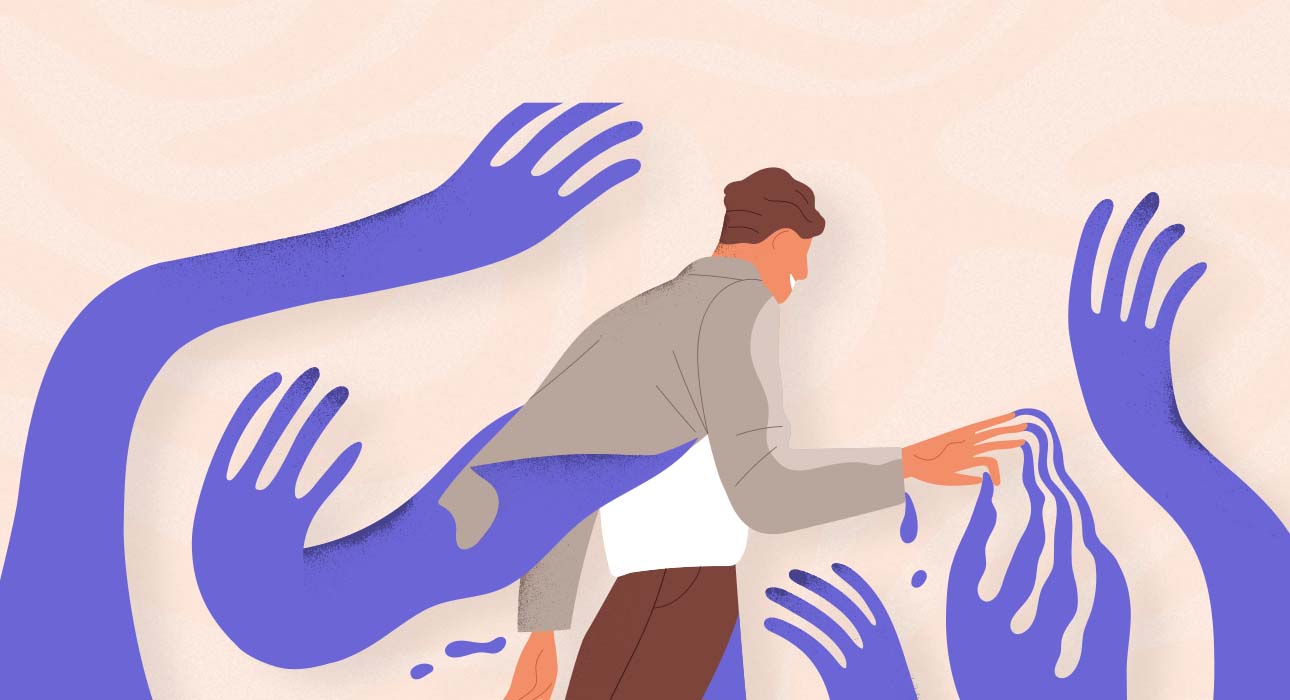
Why People Hurt Own Progress? Sometimes, a person realises that in the past, something did not go well and that memory still hurts. To avoid feeling that pain again, they may withdraw their effort before they even try, convincing themselves that it is better not to risk it at all. This suppression of past hurt quietly guides present choices. Self-sabotage is often mistaken for laziness or lack of ambition, when in reality, it is a deeply ingrained response rooted in past experiences, fear, or unresolved emotions. It operates quietly, shaping choices and actions in ways that are difficult to recognise in the moment.
Understanding this hidden dynamic requires compassion for ourselves and for others. Recognising self-sabotage is not an admission of weakness, but a step toward reclaiming agency from the patterns that no longer serve us. Only then can we begin to move forward, not by fighting against ourselves, but by gently uncovering the origins of our resistance and nurturing a new path forward. It is the email that never gets sent. The relationship is picked apart from the inside. The goal was abandoned right before it could become real.
The World Health Organisation (WHO) has long documented that difficulty with emotional regulation and coping is one of the most persistent contributors to mental health strain. And yet the behaviours that follow from that difficulty, procrastination, perfectionism, emotional withdrawal, returning to situations that caused harm, are rarely understood as coping. They get written off as a weakness or a lack of willpower. They are rarely that. The mind sometimes repeats familiar pain because uncertainty feels more dangerous than suffering. Self-sabotage happens unconditionally. It started a loop. And like most patterns, it started somewhere.
Where It Actually Starts
Martin Seligman’s research on learned hopelessness showed that repeated uncontrollable failure can cause a person to stop trying altogether, not out of laziness, but out of a belief, absorbed over time, that the person thinks that effort simply does not change outcomes. Alongside this, the concept of self-handicapping, well-documented in social psychology, describes how people unconsciously create obstacles before high-stakes moments, so that failure can land people somewhere safer than their sense of self-worth. A student who avoids preparing for an important exam is not being reckless. They are protecting something fragile. These are not character failures. They are emotional strategies that developed before the person had any language to name them.
Read More: Why Do We Self-Sabotage? The Psychology Behind Holding Ourselves Back
When the Protection Becomes the Problem
Most self-sabotaging behaviour has roots in things people did not choose, criticism absorbed too young, rejection that arrived without explanation, and environments where vulnerability consistently led to pain. The nervous system learned from all of it. It built walls, developed early warning systems, and trained itself to leave before being left. Often, people think of sabotaging good things not because they want pain, but because they never genuinely feel emotional safety.
Research on developing the Relationship Sabotage Scale identified three patterns that consistently appeared in people who unsettled their own partnerships: defensiveness, difficulty trusting, and underdeveloped relationship skills. A, round 21% reported affairs; 23% sought counselling for relationship issues related to relational difficulties, likely because they use it as a defined mechanism. The through-line was not cruelty. It was fear of closeness, fear of what happens when someone actually stays.
The animated film Inside Out 2 (2024) captures this more precisely than most clinical descriptions manage. Anxiety works constantly to protect Riley from future danger and, in doing so, creates exactly the chaos it was trying to prevent. It is an accurate portrait of what protective coping looks like once it has outlived its original purpose. The protection does not disappear. It just starts causing the damage it was built to prevent.
Read More: The Inside Out Film: Psychological Analysis
The Loop That Keeps Running
The cycle tends to move the same way every time. A moment of fear or emotional exposure triggers avoidance or a reaction that pushes the good thing away. There is brief relief. Then come the consequences. Right behind the consequences comes shame. And shame, rather than interrupting the pattern, almost always fuels the next round of fear.
Curran and Hill’s 2019 meta-analysis of generational data found that conscientiousness has climbed sharply in time, prompted by increasing social pressure and the fear of visible failure. More people are skipping the attempt entirely because a mistake no longer feels like a hitch. It feels like confirmation of what they already feared was true about themselves.
Research on indirect self-destructiveness and EI found a reliability: lower emotional awareness correlates with higher tendencies toward self-destructive behaviour, unhealthy choices, neglect, and impulsive reactions. The same research showed gender differences in how this is shown, which is due to the reality that these patterns do not affect every person the same way. Emotional awareness is not an interpersonal skill. It turns out to be a defensive one.
self-sabotage, like addiction, that people are unable to stop.
Self-Sabotage and Self-Improvement
The difference, as we see in them, is that self-improvement and process self-sabotage, and falling apart is that they do harm together. Self-improvement operates from a place of growth, adding skills, building toward something, expanding what is already functional. Self-sabotage involves understanding why the mind keeps working against the person who owns it.
Sometimes, self-sabotaging does not need methodologies. They need to understand why they abandon every framework they try. The two can look similar from the outside, but both involve behavioural change; the internal experience is completely different. One feels like building. The other feels like excavation.
Author Brianna Wiest Book The Mountain Is You, show this directly about self-sabotage is not the opposite of success. It is a form of self-protection that has stopped serving the person it was built for. That reframe shifts the question from “Why am I always ruining good things for me ?” to “What am I protecting myself from ?” That second question is the one that actually takes us somewhere to healing.
What Therapy for Self-Sabotage Actually Looks Like
Cognitive Behavioural Therapy (CBT) is evidence-based for these patterns. Research by Leahy (1999) and Johnson (1987) on self-limiting and self-punitive behaviour consistently shows that CBT-based approaches reduce avoidance, self-handicapping, and self-defeating thinking. A study by Jagadeesan and Kanchana (2023) integrating Rational Emotive Behaviour Therapy with Consent and Commitment Therapy found meaningful reductions in academic self-sabotage among young adults, suggesting that working with both the underlying beliefs and the person’s values together is more effective than addressing them in isolation.
For people whose self-sabotage is caught up with shame or emotional dysregulation, Dialectical Behaviour Therapy adds something important. Ramsey et al. (2021) conducted a randomised clinical trial showing that targeting self-criticism within DBT reduced nonsuicidal self-injury in adolescents. How a person talks to themselves is not peripheral to the work. It is often where the work lives.
And then there is the body. Bessel van der Kolk’s research, documented in The Body Keeps the Score, established something that purely cognitive approaches can miss: self-sabotage is often a nervous system response, not just a distorted thought. Trauma is somehow always with you. It lives in the automatic reactions, the tightening when something feels too good, the instinct to exit when closeness becomes real. Healing, in those cases, is not about changing a thought. It is about helping the body slowly learn that safety does not always have to end.
Read More: Trauma on Repeat: Why the Past Keeps Showing Up in the Present
Understanding Instead of Blaming
What strikes me most, reading through account after account of this coping, is how rarely any of it is intentional. People are not choosing to ruin good things. They are following a road drawn a long time ago in circumstances that no longer exist, but the nervous system never received an update on them.
Sometimes healing begins not when people stop asking ‘What is wrong with me?’ but when they start asking ‘What happened to me that made these patterns feel necessary?’ That question is not just a reframe. It is the beginning of something different. Because self-sabotage, understood clearly, is not evidence that someone is broken. It is evidence that they survived something and that part of them is still trying to make sure that keeps happening. Understanding that, with some honesty and without contempt, may be the first real step toward something better.
References +
van der Kolk, B. (2014). The Body Keeps the Score: Brain, Mind, and Body in the Healing of Trauma. Viking.
Wiest, B. (2020). The Mountain Is You: Transforming Self-Sabotage into Self-Mastery. Thought Catalogue Books.
Levine, A., & Heller, R. (2010). Attached: The New Science of Adult Attachment. TarcherPerigee. Dweck, C. S. (2006). Mindset: The New Psychology of Success. Random House.
Curran, T., & Hill, A. P. (2019). Perfectionism is increasing over time: A meta-analysis of birth cohort differences. Psychological Bulletin, 145(4), 410-429.
Jagadeesan, N., & Kanchana, M. N. (2023). Integrating REBT and ACT: An intervention study for managing academic self-handicapping among young adults. International Journal of School and Educational Psychology, 11(3), 274-285.
Johnson, G. M. (1987). Self-punitive habit syndrome: A theoretical model and cognitive-behavioural intervention strategy. Journal of Cognitive Psychotherapy, 1(3), 171-182.
Leahy, R. L. (1999). Strategic self-limitation. Journal of Cognitive Psychotherapy, 13(4), 275-293.
Ramsey, W. A., et al. (2021). Targeting self-criticism in the treatment of nonsuicidal self-injury in dialectical behaviour therapy for adolescents: A randomised clinical trial. Child and Adolescent Mental Health, 26(4), 320-330.
Kearns, H., Gardiner, M., & Marshall, K. M. (2008). Innovation in PhD completion: The hardy shall succeed (and be happy!). Higher Education Research & Development, 27(1), 77-89.
Relationship Sabotage Scale (RSS) Study — Findings on defensiveness, trust difficulty, and relationship skill deficits.
Study on Manifestations of Indirect Self-Destructiveness and Dimensions of Emotional Intelligence. Study on Gender Differentiation in Self-Destructiveness and Emotional Intelligence.
World Health Organisation. Mental Health Reports.
American Psychological Association. Stress in America Reports.





Leave feedback about this