







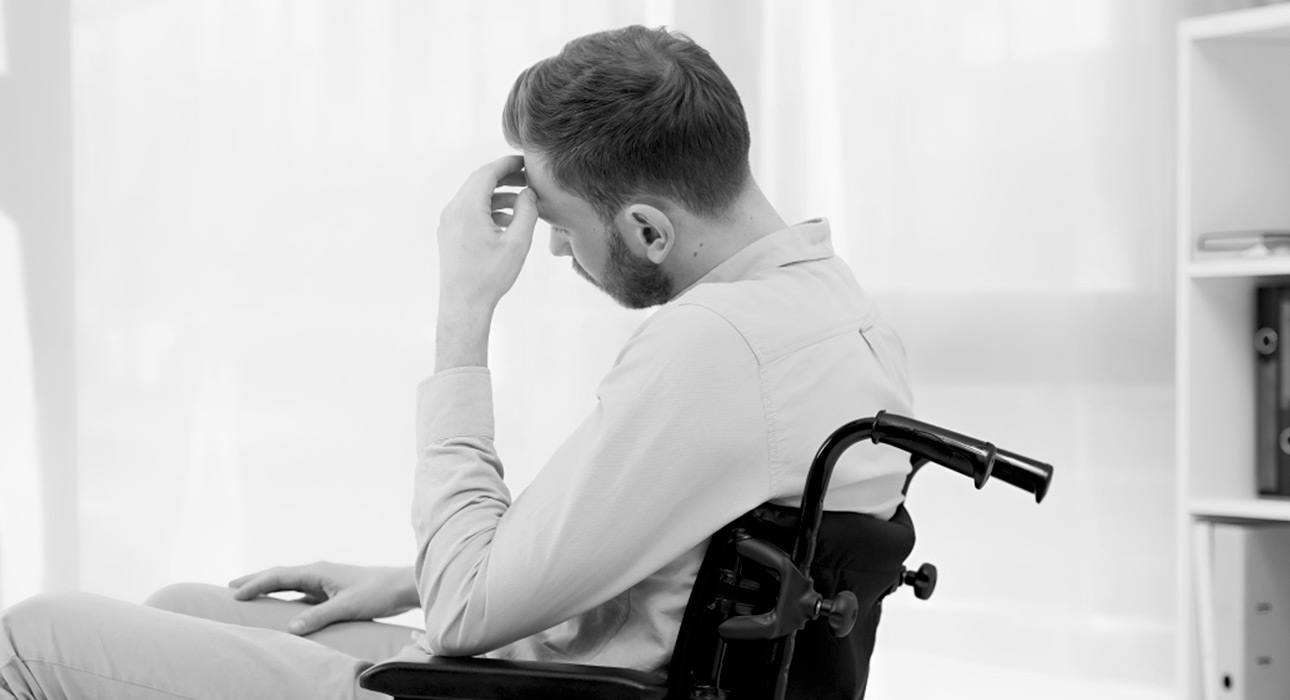
Imagine telling someone about a new job opportunity, but them asking you, ‘Will you be able to manage?’. Or someone telling the companion you came with, instead of you. Imagine someone always thinking that you need assistance, or that you cannot manage on your own. Unfortunately for people with a disability, this could be an everyday reality for them. This could mean facing ableist discrimination or even being subjected to physical barriers.
But how fair is it for someone to face rejection, discrimination, stereotypes, and negativity in behaviour and attitude toward them for something which is beyond their control? What must the constant feeling that they are being viewed as someone beneath what they are do to a person? Ableism, on top of making disabled people feel isolated and without freedom. Can also affect their perception of themselves and their surroundings.
Understanding Ableism and Its Psychological Impact
Ableism refers to a set of biased, discriminatory, or prejudiced attitudes towards individuals with disabilities, believing that people without disabilities have superior traits. Ableism implies that people who have physical, mental, cognitive, or sensory disabilities are inferior in some way to those who do not have disabilities. Such biased opinions can be manifested in a person’s attitude, behavior towards disabled people, as well as social and institutional interactions. For instance, assuming that a person in a wheelchair cannot work, refusing to accept a disabled person as capable of making their own decisions, or designing public places without considering accessibility to all are examples of ableism.
Ableism exists within psychology too. Historical roots of the field and its practices, such as psychological testing and clinical assessment, are closely linked with attempts to classify people according to their intelligence or ability, which leads to marginalisation and exclusion of disabled people. While professional practices have changed, ableist attitudes can persist in clinical assessment and treatment (Bergstrom et al., 2023). Similarly, Mentalism, or prejudiced attitudes towards people with mental health conditions or those who are perceived as mentally different in any other way, can intersect with ableism when a diagnosis is used to dismiss opinions of others or to question a person’s capacity to make decisions. Ableism can also manifest in more positive-seeming ways.
Benevolent ableism is expressed through infantilisation of disabled people and assuming that other people know what is best for them. While ambivalent ableism is a combination of benevolent and hostile ableism. Microaggressions, which are negative attitudes expressed through everyday speech and actions, also affect people with disabilities. This can include surprise at a disabled person having a job or unsolicited offers of assistance that disregard their needs (Nario-Redmond et al., 2019).
These attitudes are significant because they can affect the treatment of disabled people, their social acceptance, and access to everyday activities. Along with people and their attitudes, ableism relates to all those circumstances in society and the environment due to which disabled people are prevented from participating (Mannor & Needham, 2024).
Read More: Why Representation of Disability Matters: The Psychology of Visibility
How Stigma and Exclusion Affect Psychological Well-being
Unfair treatment, based on belonging to a particular group, gives rise to stigma. In the context of disabilities, such kind of stigma could include beliefs that people with disabilities are powerless, dependent, or lacking the ability to make their own decisions successfully. This stigma can have a serious impact on a day-to-day basis. It can go from ignoring one’s opinions to underestimating their abilities, to completely excluding them from social events.
Not being included by peers or colleagues can have a major impact on people. They may experience feelings of loneliness. For instance, someone is excluded from a sporting event despite his eligibility and ability to participate, only because of his colleagues’ impression that he does not do well in the sport. He may feel unwelcome. We can often see this happening at various workplaces or even in schools.
According to studies focusing on disabled young people as participants, exposure to ableist views leads to struggles with emotional well-being, depression, increased risk of anxiety, low self- confidence, and other negative mental health outcomes (Lindsay et al., 2026). Though everyone has a different experience with discrimination, these studies clearly show that not only does it limit people’s opportunities. But it can also make them feel as though they do not belong in their community.
Read More: Neurodiversity Inclusion strategies in workplaces
When Stigma Is Internalised
Repeated exposure to negative attitudes can affect people’s perceptions of themselves. Internalised ableism is a phenomenon where a person with disability absorbs negative messages about the disability and forms negative opinions towards their abilities or value as a person. For instance, when a disabled person is constantly exposed to the idea that disabled people are a burden to society. They might think that any help they ask for is a nuisance.
According to the research conducted by Jóhannsdóttir et al. (2022) on internalised ableism among disabled young people, internalised ableism can affect an individual’s attitude towards oneself, cause shame and uncertainty about requesting support. Lead to avoidance of opportunities due to expectations of judgment from others. All of these factors can influence low self-esteem and the inability to acknowledge one’s strengths and qualities.
However, internalised ableism can be reversed! Supportive relationships, healthy societal inclusion, and the availability of opportunities that could connect people with disabilities can help challenge negative beliefs. Furthermore, people with disabilities are not responsible for eliminating ableism. It is society’s responsibility to change its perceptions and preconceptions of disabled individuals.
Read More: The Evolution of Language Around Intellectual Disability: From Labels to Respect
The Stress of Navigating an Ableist World
Ableism can cause chronic stress for those who are too frequently put in situations that don’t account for their needs. Justifying one’s needs daily to the public, about why a certain kind of help and support is needed and yet being ignored, can feel overwhelming and unfair. These instances may seem small on an individual basis, but they can lead to significant stress.
Stress can also occur due to the fear of discrimination. For example, someone who has experienced discrimination in the past may have anxiety towards new people, such as a new employer or doctor. When society is not empathetic enough to understand various conditions, people with those conditions may have to ask for accommodations. After facing enough stereotyping, they may hesitate to disclose their needs or ask for support.
Research into ableist microaggressions sheds light on ways that interactions can unwittingly contribute to these challenges. For instance, interactions in which family members or others act as if the disabled person is helpless and incapable can undermine their autonomy, despite their intentions to do otherwise (Nario-Redmond et al., 2019).
The psychological toll of ableism is thus not restricted to overtly abusive interactions. Being consistently underestimated, excluded, or denied opportunities can also have negative consequences on one’s mental health.
Barriers to Mental Health Support
Disabled people face psychological distress and additional barriers in accessing mental health care. Some of these are pragmatic, such as the centre being inaccessible, information not being presented in the desired way, or transport and therapy expenses being unaffordable. Others are due to the attitudes and assumptions of professionals.
For instance, a therapist may single out the anxiety as the sole cause of the client’s disability without exploring avenues of discrimination, loneliness, or relationship problems. Another professional may fail to provide sufficient communication support or assume the ability level of the disabled person. Wang et al. (2024) conducted interviews with disabled adults who had received mental health care in the United States and identified experiences such as inadequate accommodations, dismissal, and lack of knowledge by the care providers.
In Bangladesh, the study also finds stigma, financial constraints, lack of awareness, and accessibility to relevant services as barriers to mental health care for persons with disabilities (Saba et al., 2024). While it cannot be generalized to the Indian population, such findings can represent potential barriers in the country as well.
Making mental health care accessible, then, goes beyond ramps and wheelchair accessible buildings and involves ensuring that professionals listen to disabled people’s concerns without preconceptions, provide appropriate accommodations, and consider the impact of social circumstances on their distress. Disability should not be viewed as an automatic explanation for all psychological difficulties, nor should it prevent a person from having their concerns taken seriously.
Conclusion
We can see ableism being manifested indirectly and not always by direct discrimination, making it more difficult to identify. It can come out in comments or overprotectiveness. Sometimes in how public places remain inaccessible, or inability to receive help from the society around.
Ableism is often manifested implicitly and not necessarily through direct discrimination, which makes it more difficult to identify. Sometimes it comes out in comments or overprotectiveness. Sometimes it is reflected in the inaccessibility of living spaces or the inability to receive adequate help or support from one’s surroundings. When discrimination takes such forms, it can exclude disabled people from public life. It cause emotional trauma, stress, anxiety, depression, and other mental health problems. However, this does not mean that people should accept their disability passively. Adjust to the presence of barriers in their lives.
Fighting ableism requires changing social attitudes and removing restrictions on the rights of disabled people. Most importantly, it is necessary to treat disabled people as complete subjects of communication, capable of making decisions and judging for themselves. People should stop pretending that the problems of disabled people are insignificant. That disability is something that should be ashamed of. Disabling society and discrimination should be combated by focusing on the capabilities of disabled people and not on the shortcomings that they may have.
References +
- Ancha, C. J. R. (2022). Gender and disability: The experiences of microaggressions against women with disabilities in the Philippines. The European Journal of Development Research, 34, 2688–2707. https://doi.org/10.1057/s41287-021-00483-0
- Bergstrom, T., Reid, B. M., Lee, S. Y., & Stroud, L. R. (2023). The history of clinical psychology and its relationship to ableism: Using the past to inform future directions in disability-affirming care. Behavior Therapy (New York, N.Y.), 46(7), 255–261. https://pmc.ncbi.nlm.nih.gov/articles/PMC11562767/
- Jóhannsdóttir, Á., Egilson, S. Þ., & Haraldsdóttir, F. (2022). Implications of internalised ableism for the health and wellbeing of disabled young people. Sociology of Health & Illness, 44(2), 360–376. https://doi.org/10.1111/1467-9566.13425
- Lindsay, S., Phonepraseuth, J., Leo, S., & Abdeahad, N. (2026). The impact of ableism on the health and well-being of children and youth with disabilities: A systematic review. Disability and Rehabilitation. https://doi.org/10.1080/09638288.2025.2578425
- Mannor, K. M., & Needham, B. L. (2024). The study of ableism in population health: A critical review. Frontiers in Public Health, 12, Article 1383150. https://doi.org/10.3389/fpubh.2024.1383150
- Nario-Redmond, M. R., Kemerling, A. A., & Silverman, A. (2019). Hostile, benevolent, and ambivalent ableism: Contemporary manifestations. Journal of Social Issues, 75(3), 726–756. https://doi.org/10.1111/josi.12337
- Saba, J., Nessa, Z., Islam, S., Kaley, A., & Koly, K. N. (2024). “I don’t care about my mental health because I have a physical disability”: A qualitative study on the mental healthcare-seeking behaviours of people with disabilities in Bangladesh. Acta Psychologica, 251, Article 104624. https://doi.org/10.1016/j.actpsy.2024.104624
- Wang, K., Ostrove, J. M., Manning, R. B., Fodero, S., Ash, S. L., Whang, J., Bogart, K. R., Cipollina, R., Nario-Redmond, M. R., Adler, J. M., & Lowe, S. R. (2024). Ableism in mental healthcare settings: A qualitative study among U.S. adults with disabilities. SSM – Qualitative Research in Health, 6, Article 100498. https://doi.org/10.1016/j.ssmqr.2024.100498





Leave feedback about this