







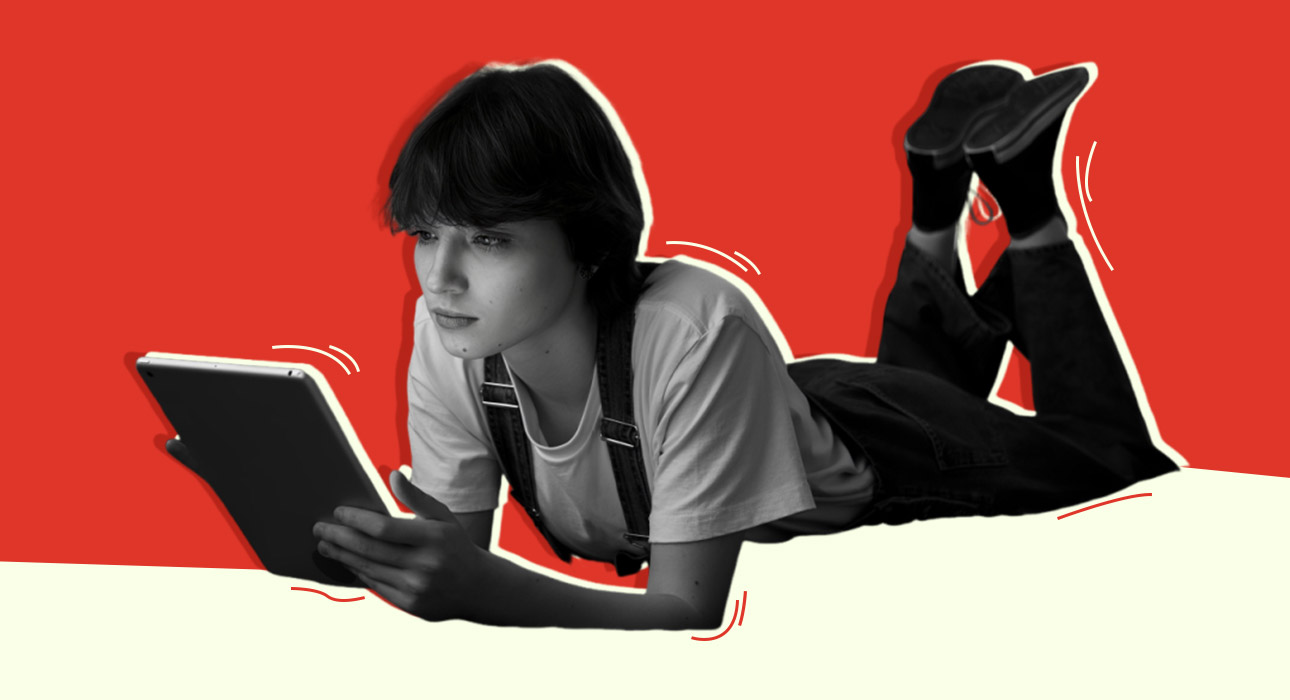
Nowadays, anyone can look for everything online. Teens used to look for advice among their peers. But now it’s easy for any teenager to go online and look for all the information needed as long as they have internet access. Content that is easy to find among male teenagers falls into something called the manosphere. But the consumption of this content can have negative effects on young males, and could be considered one of the dangers on the web.
What is Manosphere
The “Manosphere” is a network that includes content on podcasts, blogs, websites, online forums, and social media (like TikTok or Instagram) dedicated to sharing ideas that often include a combination of anti-feminism and misogyny under the impression that it is content with the objective of self-improvement. But the content spread on those kinds of digital spaces relies on the main ideas of dominance and control of men over women (Mental Health Commission of Canada [MHCC], 2025).
Another point given in these forums or social media content is “selling male victimhood and hypermasculine posturing as both identity and profit model” (MHCC, 2025).
This kind of content has its influencers who profit from the creation of social media content with extreme ideas. These influencers promote: alpha-male mentality, religious extremism, and cultural bigotry (the intolerance of others based on their culture). Such ideas have an impact on young males, especially adolescents. As explained by Xavier Bird (2025), this kind of content goes straight into young men’s vulnerabilities that they deal with and takes advantage of them by giving them content that they can easily consume.
Read More: How Smartphones and Social Media Rewire Our Brains: A Neuroscience Perspective
Why Adolescents Are Drawn to Manosphere Content
One of the reasons the content of the manosphere is attractive to young males is that it includes fitness tips and luxury cars as content that draws attention (Gilmour, 2025). Male adolescents were also attracted to “jokes” used in the manosphere. That content uses subjects such as gender roles, dominance, control and an unequal division of labour in heterosexual relationships (Milne & Baker,2025). Also, this content is sold as being self-help tips for achieving wealth and physical strength (Milne & Baker,2025).
The social media environments shaped by the manosphere take advantage of limited critical thinking and media literacy, which is used to amplify its content on algorithms to find more vulnerable users. Ging (2017) talked about the use of a meme-based communication in claims to victimhood that can amplify to dismantle “perceived threats online and offline” targeting women.
This kind of behaviour can lead to a normalisation of conduct found in the manosphere, such as joining political radical groups, death and rape threats made by men, and inappropriate conduct online towards women, like sending unsolicited private pictures as a way to harass women (Ging, 2017).
Read More: Social Media’s Role in Redefining Personal and Societal Values
Psychological effects on teens exposed to the manosphere content
- Development of mental illness: Being exposed to the manosphere content can affect the mental health of male adolescents. This kind of content has an impact on the development of low self-esteem. The increased feeling of rejection and ideas of violence (Murphy et al., 2025). Also, in the psychiatric field, there is a concern that those feelings can look like, cover or accelerate the development of mental illness such as depression, anxiety or psychosis (Murphy et al., 2025).
- Relationships: While going through adolescence, teenagers can create distance and even the loss of some relationships because of the ideas spread in the manosphere of autonomy, sexism and emotional stoicism (not showing your feelings).
- Changes in behaviour: There can also be language changes (using more violent language) and point of view. Acts of violence against women tend to be normalised by manosphere groups and their followers (White & Zarling, 2026).
- Effects on women: Women may also be affected mentally by the spread of manosphere ideas among adolescent boys. More directly, female teachers in schools with students who consume manosphere content have reported depression symptoms as well as work-related stress symptoms (Over et al., 2025).
Read Mpore: Psychological Dependence on Algorithms: Who Is in Control—You or the Algorithm?
Self-image: Risk for Teens who Consume Manosphere Content
The manosphere is composed of many communities. One of those is focused on how men can become better-looking and more masculine. This community also promotes self-harm practices (Mental Health of Canada, 2025). The constant exposure of young men to social media influencers is related to problems of having a negative body image, muscle dysmorphia (thinking that one is not muscular enough), and the development of eating disorders fueled by a body image promoted by social media of a thin and muscular ideal body type (Nagata et al., 2026).
Read More: Masculinity and Emotional Suppression
Is basic online security enough in this case?
A responsible use of the internet is always advised. But, even if a security block, parent locks or only child-appropriate content is given to minors, teenagers can access another kind of content. Again, easy access is one of the characteristics of the web. And one of the types of content that has been seen as a potential risk for teens is content inside the manosphere.
Unfortunately, this is not an isolated phenomenon. The internet is global, and the content can be seen anywhere in the world. And studies show that young men have seen and changed their perspectives on gender and their treatment of women in countries like the US, UK, Ireland (Murphy, Roddy, Skelton, 2025), Bangladesh (Anjume & Hasan, 2026), etc.
What can a parent or guardian do in front of the manosphere content?
If someone close to a male teenager sees signs of changes in their way of talking or reacting. It could indicate that the teen is consuming the manosphere content. Some actions could help:
- Asking a young male what he finds interesting or attractive about manosphere content can lead to an honest conversation about his interest and maybe the suggestion of healthier content, such as finding other role models, sources of alternative information that could fulfil his curiosity (Gilmour, 2025).
- Suggesting video games as an alternative to social media content could be a good idea. Teenagers who have participated in gaming in interactive video games have reported an increase in the development of social skills (Nagata et al., 2026).
- Present teenagers’ alternative sources of information. For example, healthy workout routines or information such as the digital campaign “My friend, Max hates” or this research by the Canadian Museum of Human Rights can help (MHCC, 2025).
Read More: Stay Sharp, Stay Smart: Daily Brain Workouts Anyone Can Do!
Conclusions
The manosphere is a network, more than just an influencer on social media, that spreads ideas of gender inequality, dominance and control, even violence and extremist ideas across podcasts, blogs, forums and social media whose target is male, especially young teens. Being exposed to that kind of content can have consequences. Such as presenting depressive and anxiety symptoms, a high risk of muscular dysmorphia, the development of eating disorders and a high risk of violent conduct against women. There are ways to deal with a teenager who is in danger or has consumed the content in the manosphere. Actions include providing alternative sources of information and providing hobbies outside of social media.
References +
- Anjume, Hasan, 2026. Social Media Exposure to Masculinity-Focused Content and Gender Attitudes Among Adolescents. https://www.researchgate.net/publication/405243729_Social_Media_Exposure_to_Masculinity Focused_Content_and_Gender_Attitudes_Among_Adolescents
- Bird X., 2025. Playing Catch Up: A Brief Look into Modern Internet Culture and Its Impact on Adolescent Male Development. University of Denver. https://digitalcommons.du.edu/capstone_masters/559
- Ging, Debbie. (2017). Alphas, Betas, and Incels. Men and Masculinities, 1097184X1770640–. doi:10.1177/1097184X17706401 https://journals.sagepub.com/doi/abs/10.1177/1097184X17706401
- Gilmour, J. (2025), Narrative Matters: Adolescence in The Manosphere – A perfect storm?. Child Adolesc Ment Health, 30: 320-322. https://doi.org/10.1111/camh.70012
- Mental Health Commission of Canada, 2025. The Manosphere and Mental Health. https://mentalhealthcommission.ca/resource/the-manosphere-and-mental-health/
- Milne, B., & Baker, C. R. (2025). From ‘villains’ to ‘idols’: exploring teenage boys’ conflicting attachments to manospheric masculinities. Gender and Education, 1–22. https://doi.org/10.1080/09540253.2025.2568407
- Murphy, S., Roddy, D. W., & Skelton, C. (2025). Adolescence, the manosphere and psychiatry. Irish Journal of Psychological Medicine, 42(4), 327–328. doi:10.1017/ipm.2025.10081 https://www.cambridge.org/core/journals/irish-journal-of-psychological-medicine/article/adolescence-the-manosphere-and-psychiatry/84B4C2026CE0FC5DDF8FDE1EC3BDDB22
- Nagata, J.M., Low, P., Lee, E.D. et al. (2026) Digital Media Use and Psychosocial Health among Adolescent Boys and Young Men. Curr Psychiatry Rep 28, 31 (2026). https://doi.org/10.1007/s11920-026-01681-5
- Over, H., Bunce, C., Konu, D. and Zendle, D. (2025), Editorial Perspective: What do we need to know about the manosphere and young people’s mental health? Child Adolesc Ment Health, 30: 272-274. https://doi.org/10.1111/camh.12747
- White, A. C., and A. Zarling. 2026. “Masculinity Development in the Manosphere: An Ecological Systems Perspective.” Journal of Family Theory & Review18, no. 2: 365–377. https://doi.org/10.1111/jftr.70065. https://onlinelibrary.wiley.com/doi/full/10.1111/jftr.70065



Leave feedback about this