







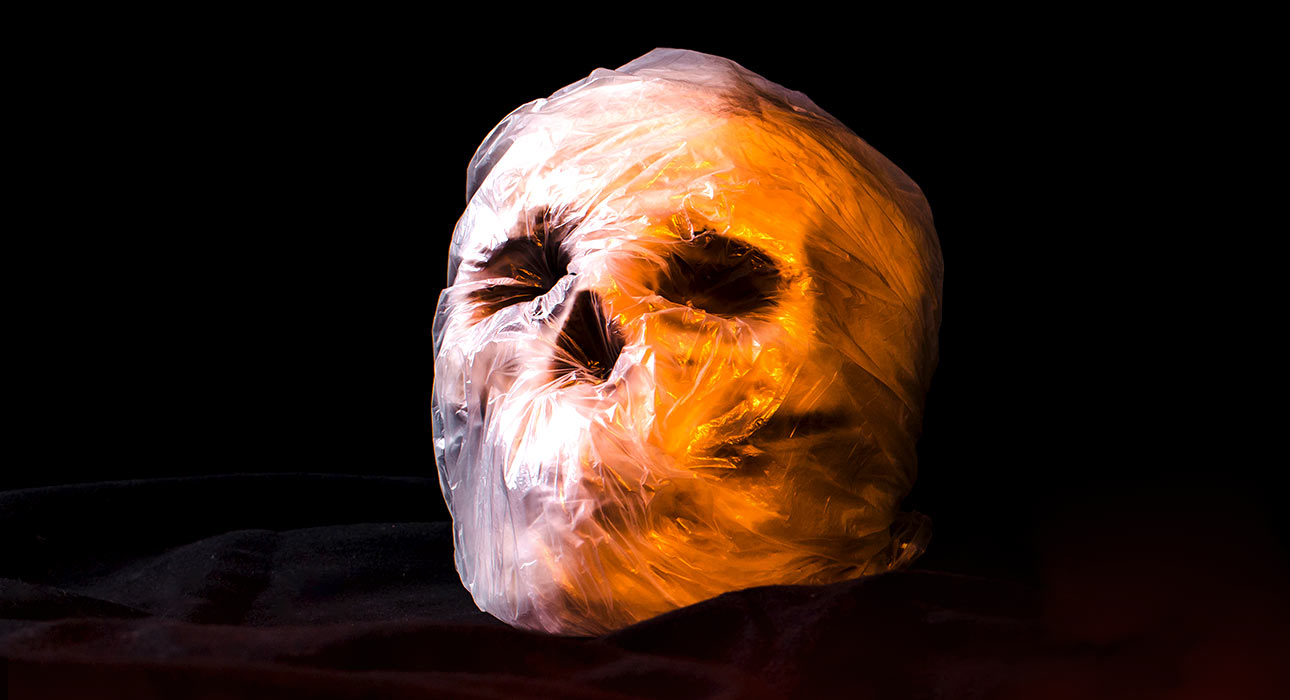
What if the human mind can see beyond the 5 senses? Is consciousness an independent reality or nothing more than the result of psychology and neuroscience? For centuries, experts in science, philosophy, and the general public have been pitting their wits against these questions. Parapsychology attempts to examine these extreme experiences, including telepathy, “living on after death,” psychokinesis, and precognition, but not through folklore or superstition (Irwin & Watt, 2007; Hyman, 2010; Reber & Alcock, 2020). The discipline has much experimental evidence (from the past decades), and it is continually being studied. However, it also has many criticisms for its reproducibility, methodology, and plausibility (Cardeña, 2018).
This article examines the genesis, central ideas and research in parapsychology, and the reasons why the area remains one of the most fascinating and contentious branches of psychological research.
What is Parapsychology?
Parapsychology is a scientific investigation of phenomena and experiences that seem to defy rational analysis using theories accepted in contemporary science. Parapsychologists do not dismiss paranormal reports as obviously true or untrue. But rather study and investigate them by experimental, statistical and carefully observed methods (Cardeña, 2018).
The field concentrates on the study of certain phenomena, collectively known as psi. These are experiences that, broadly speaking, appear to take place without the known sensory or physical processes (Irwin & Watt, 2007). They can involve extrasensory perception (ESP), psychokinesis (PK), near-death experiences, mediumship, reincarnation claims, and other accounts of unusual experiences of the human person (Beischel, 2015; Greyson, 2005; Hyman, 2010; Reber & Alcock, 2020; Stevenson, 1974 & 1997; Tucker, 2005).
Contrary to common misconceptions, parapsychology isn’t about ghost hunting or entertainment! Instead, researchers try to investigate ‘extraordinary claims’ through empirical investigation, using methods similar to those of mainstream psychology (Cardeña, 2018; Reber & Alcock, 2020).
Read More: What Effects Could Superstition Have on Our Psychological Well-Being?
From Spiritualism to Scientific Inquiry: A Brief History
The curiosities about unusual human experience go back thousands of years. Prophetic dreams, talking to spirits and supernatural abilities were all noted in ancient Egyptian, Greek, Indian, Chinese and Indigenous cultures. The modern scientific study of these phenomena, however, began in the nineteenth century. It began with the Spiritualist Movement, making séances and mediumship widely promoted in Europe and North America (Irwin & Watt, 2007).
In the 1930s, modern experimental parapsychology was begun at Duke University in the wake of J. B. Rhine. Rhine brought statistical techniques into psychic studies and coined the term extrasensory perception (ESP). In his laboratory experiments, he tried to find out if people could recognise symbols faster than they could predict by chance (Rhine, 1934). Later, however, critics of Rhine challenged some of Rhine’s methodology and argued for a greater degree of experimental controls (Hyman, 1985).
Understanding Psi: The Core of Parapsychological Research
The word psi is used to describe generally possible processes of information or influence that are not the usual ones known to sensory or physical mechanisms (Cardeña, 2018; Irwin & Watt, 2007; Reber & Alcock, 2020). There are largely two types of psi:
- Extra-sensory Perception (ESP): The learning of information that bypasses the human senses.
- Psychokinesis (PK): The supposed power to move physical objects with the mind’s intention (Irwin & Watt, 2007).
In such general terms, several specific phenomena have emerged in parapsychology research.
Read More: Let’s Get Some Mysteries of Transpersonal Psychology
Telepathy: Direct Communication?
Telepathy is perhaps the best-known topic in parapsychology. It is the supposed communication of thought, emotion or information that occurs between people without the use of natural senses (Hyman, 2010; Reber & Alcock, 2020).
In the 1900s, as telepathy was studied in a lab setting, it gained popularity. The Ganzfeld experiment, which was created to minimise outside sensory input, is one of the most influential. The sender, during a typical Ganzfeld, sits and focuses on an image or a video. While the receiver sits in a state of sensory homogenization with translucent eye covers, red light and white noise. Then, the receiver tries to find the target among alternative targets (Bem & Honorton, 1994). Some investigators have claimed that these deviations from chance, which have been reported in several meta-analyses, call for further investigation of telepathy (Storm et al., 2010).
Read More: Telepathy and Its Potential Impact on Mental Health
Looking Beyond Time and Space: Clairvoyance and Precognition
Communication between minds is telepathy; receiving information about an object that is distant, not there, or “hidden” without sensory contact is clairvoyance. In experimental research, subjects may be asked to locate hidden targets and/or describe locations, in a controlled context (Irwin & Watt, 2007).
Precognition, on the other hand, is the claimed power of “knowing” something that has not yet happened. This idea gained new prominence after psychologist Daryl Bem conducted controversial experiments that found “anticipation” to be slightly above chance (Bem, 2011). Repeated and even larger-scale replication efforts, however, yielded less reliable results, and most researchers found it hard to accept Bem’s results as proof of precognition (Galak et al., 2012).
Read More: Precognitive Dreams: Glimpses of What’s to Come
Mind over Matter: Psychokinesis
Psychokinesis (PK) or telekinesis is the supposed use of mental intention to influence physical objects or events (Irwin & Watt, 2007). Cinema often showcased PK dramatically– things/objects being set off through the air, mind-bending things. Typical scientific studies, however, study much smaller effects (Jahn & Dunne, 2005; Jeffers, 2003). Like so much in parapsychology, the effects were small and impossible to consistently duplicate by independent laboratories.
Near-Death Experiences: Windows into Consciousness?
In all parapsychology fields, near-death experiences (NDEs) are probably the most well-researched. People who have approached death or even been clinically dead for a short time and then successfully revived experience NDEs (Greyson, 2003). Many elements are common. Like seeing a bright light, feeling peace, moving through a tunnel, seeing one’s deceased relatives, seeing spiritual beings, revisiting one’s life, and seeing a brightly colored tunnel (Greyson, 2003).
The interpretations of NDEs are still conflicting. Given the synchronicity of these various reports, some propose that they provide clues to the previously unexplained dimensions of consciousness. Still others believe that NDEs are the result of neurobiological processes. They could result under conditions of stress, such as anoxia, or a disturbance in neurotransmitter function, in the temporal lobe, intrusion on REM sleep or disturbance in brain network activation (Greyson, 2010; Parnia et al., 2014).
Read More: Neuroinflammation and Its Effects on Mental Health
Mediumship and the Question of Survival After Death
One of the most longstanding fields of Parapsychology is survival research, studying the persistence of human consciousness beyond spiritual death. Mediums, who allegedly provide messages, information or memories from the dead, form a central part of this puzzle and area of research (Beischel, 2015).
The earliest mediumistic effects were in the nineteenth-century Spiritualist movement. But the many instances of fraud caused scientists to invent more carefully devised tests. Usually, modern studies of mediumship use double-blind or triple-blind solutions. Neither party is at any time aware of the name of the deceased person involved in the reading. Independent judges then decide if the information given better describes the target person than random guessing (Beischel, 2015).
In some experiments, higher results than chance have been reported, but critics point to subtle leakage of information. There’s subjectivity in the reporting, confirmation bias, and the fact that many mediumistic statements are flexible, making definite results hard to judge (Wiseman & Greening, 2005). Therefore, there is no agreement that mediumship is proof of the presence of the departed.
Reincarnation Research: Investigating Children’s Memories
A branch of parapsychology focuses on reports of young children who remember past lives. Ian Stevenson, a psychiatrist, was the most powerful voice in this field, with over four decades of studying over 2,500 experiences in Asia, Africa, Europe and America (Stevenson, 1974).
Stevenson studied children aged two to six who began recounting very vivid memories of another life at random. Researchers, in many instances, tried to authenticate names, places, jobs or death dates and family relationships as the basis of the previous personality. Stevenson also made notes on birthmarks and birth defects that he said at times matched injuries of the deceased person (Stevenson, 1997). Jim B. Tucker, who has followed in his footsteps, has recorded another case and explored potential psychological and cultural factors (Tucker, 2005).
These studies are among the most complete in parapsychology. They are hampered by criticism in the form of cultural expectation, selective memory, suggestion and confirmation bias, and incomplete historical verification (Edwards, 1996). Yet Stevenson’s rigorous, text-formatted documentation has won praise from many scholars, who believe that the cases merit further study, whatever the interpretation.
Experimental Parapsychology: Searching for Evidence
As opposed to anecdotal reports, experimental parapsychology seeks to study psychic phenomena in a structured laboratory setting. Randomisation, computer testing, statistical analyses, preregistered protocols and blind procedures are used to minimise bias (Storm et al., 2010). One of the most popular laboratory paradigms is the Ganzfeld experiment, done in many laboratories. Some research indicates that people occasionally identify the images at a much higher rate than chance, but still, many take the findings as evidence in favour of ESP (Storm et al., 2010).
A second line of research was remote viewing. Here, subjects try to describe geographical areas or hidden objects far away without making use of their usual senses. In the height of the Cold War, the U.S. government sponsored investigations known as the Stargate Project, largely out of fear that other countries were trying to do the same (Mumford et al., 1995).
However, the evidence lacked a conclusive phenomenon for intelligence applications. It was then discontinued, but it stayed one of the most talked-about cases of government-sponsored parapsychological studies (Mumford et al., 1995).
Why is parapsychology still controversial?
There are few scientific fields more controversial than parapsychology.
The main question is about replicability. Some success has been achieved in telepathy, psychokinesis, and precognition studies. But the outcomes are frequently small and elusive and hard to replicate among different labs (Reber & Alcock, 2020).
Another limitation is the lack of an established theory. There is, as of yet, no biology or physics known cause of information flow without a sensory path or mental control on a remote physical system. Many scientists doubt such a mechanism, even in the light of reported statistical anomalies (Alcock, 2003).
There continue to be methodological issues. Publication bias, the “file drawer problem” (failing experiments not covered professionally), optional stopping, multiple statistical testing and experimenter effects have been brought up by critics. Collectively, these drawbacks may lead to false positive results, especially if the effect is very subtle (Cardeña, 2018; Reber & Alcock, 2020).
Psychological and Neuroscientific Perspectives on Paranormal Experiences
There are several reasons offered by psychology for why paranormal experiences are commonplace and fascinating.
Humans can see patterns in information, even if the information is random. It is evolutionarily beneficial, as pattern perception can help the organism survive by noticing meaningful relationships. It can also encourage people to see “coincidences” where there are actually none (Shermer, 2008). Confirmation bias also reinforces paranormal beliefs in that it promotes remembering items that confirm preexisting beliefs and forgetting items that do not (Kahneman, 2011).
There are also conditions known for their unusual experiences, found by neuroscience. For instance, sleep paralysis can manifest as the feeling of a person looming, hearing sounds or seeing spirits. Bizarre experiences can also be caused by disturbances of the temporal lobes, migraines, epilepsy, sensory deprivation, and extreme stress (French & Stone, 2014).
Important to stress here is that people who experience these aren’t liars or mentally troubled. Instead, they demonstrate how unusual subjective experiences can naturally arise out of normal cognitive and neural processes.
Parapsychology Today- A Field Between Curiosity and Scepticism
The Parapsychological Association, which is a part of the American Association for the Advancement of Science (AAAS), continues to sponsor scholarly research and international conferences on the subject. Although parapsychology isn’t considered mainstream science, it is being explored by researchers. It is in the areas of consciousness, cognition, anomalous experiences, and the boundaries of current scientific knowledge (Cardeña, 2018; Irwin & Watt, 2007). As an objective investigation of the unexplained, parapsychology can also be a powerful tool for studying the extraordinary potential of the human brain (Cardeña, 2018; French & Stone, 2014).
Conclusion
In science, psychology, philosophy, and human curiosity, parapsychology finds itself at an intersection. For over a hundred years, scientists have collected data on all kinds of telepathy, psychokinesis, mediumship, reincarnation and NDE experiences with advanced scientific techniques. Some studies have reported interesting patterns of data. However, issues in replication, methods, and theoretical plausibility have hindered the status of most of these findings in science. In parallel, psychology and neuroscience hint towards phenomena that can be produced from standard cognitive and neurological mechanisms. Instead of answers, parapsychology beckons the unacquainted and the curious to ask a truly old question: How much do we actually know about the mind?
References +
- Alcock, J. E. (2003). Give the null hypothesis a chance: Reasons to remain doubtful about the existence of psi. Journal of Consciousness Studies, 10(6–7), 29–50.
- Beischel, J. (2015). Among mediums: A scientist’s quest for answers. Windbridge Institute.
- Bem, D. J. (2011). Feeling the future: Experimental evidence for anomalous retroactive influences on cognition and affect. Journal of Personality and Social Psychology, 100(3), 407–425. https://doi.org/10.1037/a0021524
- Bem, D. J., & Honorton, C. (1994). Does psi exist? Replicable evidence for an anomalous process of information transfer. Psychological Bulletin, 115(1), 4–18. https://doi.org/10.1037/0033-2909.115.1.4
- Cardeña, E. (2018). The experimental evidence for parapsychological phenomena: A review. American Psychologist, 73(5), 663–677. https://doi.org/10.1037/amp0000236
- Edwards, P. (1996). Reincarnation: A critical examination. Prometheus Books.
- French, C. C., & Stone, A. (2014). Anomalistic psychology: Exploring paranormal belief and experience. Palgrave Macmillan.
- Galak, J., LeBoeuf, R. A., Nelson, L. D., Simmons, J. P., & Frederick, S. (2012). Correcting the past: Failures to replicate psi. Journal of Personality and Social Psychology, 103(6), 933–948. https://doi.org/10.1037/a0029709
- Gauld, A. (1968). The founders of psychical research. Routledge & Kegan Paul.
- Greyson, B. (2003). Incidence and correlates of near-death experiences in a cardiac care unit. General Hospital Psychiatry, 25(4), 269–276. https://doi.org/10.1016/S0163-8343(03)00042-2
- Greyson, B. (2010). Seeing dead people not known to have died: “Peak in Darien” experiences. Anthropology and Humanism, 35(2), 159–171.
- Hyman, R. (1985). The ganzfeld psi experiment: A critical appraisal. Journal of Parapsychology, 49, 3–49.
- Hyman, R. (2010). Meta-analysis that conceals more than it reveals: Comment on Storm et al. (2010). Psychological Bulletin, 136(4), 486–490.
- Irwin, H. J., & Watt, C. A. (2007). An introduction to parapsychology (5th ed.). McFarland.
- Jahn, R. G., & Dunne, B. J. (2005). Margins of reality: The role of consciousness in the physical world. ICRL Press.
- Jeffers, S. (2003). Physics and claims for anomalous effects related to consciousness. Journal of Consciousness Studies, 10(6–7), 135–152.
- Kahneman, D. (2011). Thinking, fast and slow. Farrar, Straus and Giroux.
- Mumford, M. D., Rose, A. M., & Goslin, D. A. (1995). An evaluation of remote viewing: Research and applications. American Institutes for Research.
- Parnia, S., Spearpoint, K., de Vos, G., et al. (2014). AWARE—AWAreness during REsuscitation: A prospective study. Resuscitation, 85(12), 1799–1805. https://doi.org/10.1016/j.resuscitation.2014.09.004
- Reber, A. S., & Alcock, J. E. (2020). Why parapsychological claims cannot be true. Sceptical Inquirer, 44(4), 8–10.
- Rhine, J. B. (1934). Extra-sensory perception. Boston Society for Psychic Research.
- Shermer, M. (2008). Patternicity: Finding meaningful patterns in meaningless noise. Scientific American, 299(6), 48.
- Stevenson, I. (1974). Twenty cases suggestive of reincarnation (2nd ed.). University Press of Virginia.
- Stevenson, I. (1997). Reincarnation and biology: A contribution to the aetiology of birthmarks and birth defects. Praeger.
- Storm, L., Tressoldi, P. E., & Di Risio, L. (2010). Meta-analysis of free-response studies, 1992–2008: Assessing the noise reduction model in parapsychology. Psychological Bulletin, 136(4), 471–485. https://doi.org/10.1037/a0019457
- Tucker, J. B. (2005). Life before life: A scientific investigation of children’s memories of previous lives. St. Martin’s Press.
- Wiseman, R., & Greening, E. (2005). It’s still bending: Verbal suggestion and alleged psychokinetic ability. British Journal of Psychology, 96(1), 115–127.


Leave feedback about this