







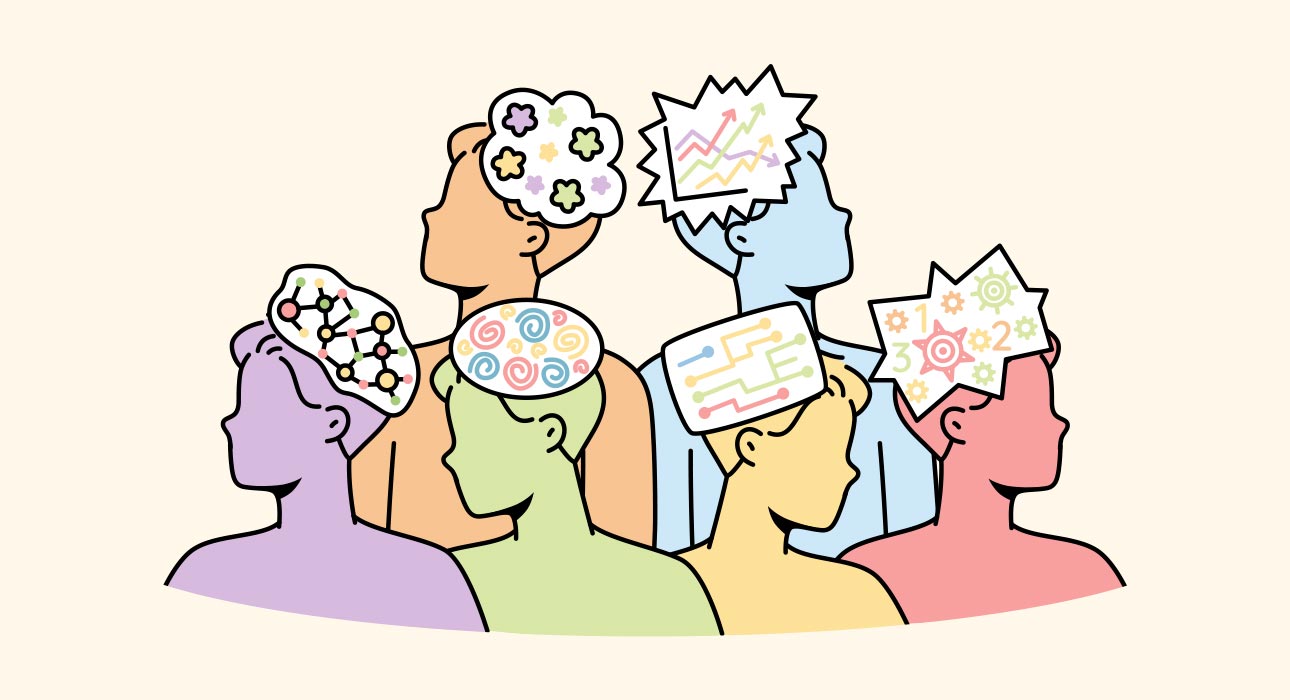
Up until recently, the typical workplace assumed that everyone should act, think, and speak the same way. Workers diagnosed with Attention-Deficit/Hyperactivity Disorder (ADHD) and autism were taught to mask their behaviours to be considered “professional.” Masking is a practice that consists of repressing one’s traits, mimicking social behaviour, and adapting to match workplace standards (Hull et al., 2017). Though many neurodivergent people practised masking to avoid stigmatisation and discrimination, it became evident through scientific investigation that prolonged use of the strategy may cause stress, fatigue, and anxiety (Hull et al., 2017).
As early as 2026, science and workplace studies have slowly started to break away from this view on neurodivergent people. In today’s research, ADHD and autistic cognitive style are seen not only through the lens of shortcomings. Instead, scientists and corporations recognise that there could be strengths in being neurodivergent as well in terms of creativity, innovation, deep thinking, and problem solving (Sedgwick et al., 2019). Why does cognitive diversity matter for the corporation of the future?
Read More: Inside the ADHD Brain: A Neuroscientific Perspective
Why Traditional Workspaces Did Not Accommodate Neurodiverse Employees
Most traditional workspaces were based on one standard model of productivity. Workers were required to be motionless for long periods of time, pay constant attention during meetings, perform multiple tasks at once, communicate in socially acceptable manners, and adjust to a hectic work environment. Although such a model proved to be effective for some people, it posed many obstacles to neurodiverse workers.
ADHD is typically associated with difficulty with maintaining focus and controlling attention, hyperactivity, and impulsive behaviour (Barkley, 2015). Yet ADHD does not equal inability to concentrate. The individuals who are diagnosed with attention-deficit/hyperactivity disorder usually have issues with hyperfocus, which means that they are extremely absorbed by particular actions (Barkley, 2015). Therefore, for example, one can not pay attention to his or her responsibilities during boring conferences but be able to find an answer to a complicated question without being interrupted.
Read more: Creating Workplaces Where Everyone Can Breathe: AI, Assistive Technology, and Inclusive Design
Different Neurotypes, Different Strengths
Autistic people perceive and process data in a different way than neurotypical people do. Several research works have shown that many autists have very strong abilities to find and analyse patterns, apply logic and concentration to particular situations (Baron-Cohen et al., 2009). These skills can make them highly competitive in spheres such as IT, engineering, finance, and scientific research, for example. Still, regardless of their strengths, neurodiversity was not fully recognised within the context of the conventional workplace. A person with autism could seem indifferent or even disrespectful because they do not maintain eye contact.
Rather than accommodating neurodiversity in the workplace, companies would require people to “be normal.”
This resulted in workers covering up their true selves to fit into what the work environment expected. This could range from role-playing before a meeting to making themselves look at others, to repressing stimming behaviour and copying mannerisms (Hull et al., 2017). Though masking behaviours may seem like the easiest way out, studies have found that it is actually quite detrimental to one’s wellbeing (Hull et al., 2017). However, the problem was not usually the employee.
Strengths of Neurodivergent Thinking
In contemporary psychology, the understanding of neurodiversity has changed dramatically. Many experts believe that neurodiversity is not a disorder but a natural variation of human cognition (Singer, 1999). In this regard, several companies have come to identify the strengths that neurodivergent individuals carry with them while entering into the professional world.
For example, it has been seen that ADHD patients function effectively in dynamic, innovative, and adaptable surroundings (Sedgwick et al., 2019). Individuals with ADHD are quick thinkers; they generate innovative ideas, take proactive steps during uncertainties, and look at things in an unconventional manner. These skills prove valuable for individuals in professions requiring innovation and creativity.
Therefore, many businesspeople and employees involved in creative jobs find their ADHD beneficial for them. For instance, a marketer who suffers from ADHD will quickly come up with different campaign options while other people may spend this time analysing a problem at hand.
Read More: Neurodiversity in the Corporate Ecosystem
Recognising Neurodivergent Talent in the Workplace
Autistic individuals have also been observed displaying several unique qualities that allow them to succeed in their workplace (Baron-Cohen et al., 2009). Several notable companies have come to recognise the advantages as well. Organisations like Microsoft, SAP, and IBM have started neurodiversity recruitment programmes that assist neurodivergent individuals with specialised jobs. Such programmes pay less attention to interview skills and more to abilities and capabilities.
It is crucial to note that the idea of neurodiversity does not presuppose that all individuals in question have special talents. On the contrary, neurodivergent individuals are quite diverse. The notion of neurodiversity only suggests that all people have diverse brain functioning, which cannot necessarily be seen as deficits (Singer, 1999). Finally, diverse teams are unlikely to experience groupthink since members will think in various ways and provide diverse solutions.
From Accommodations to Workplace Evolution
In modern times, organisations have started to provide accommodations to their neurodivergent employees. The kind of accommodations can include flex-time, designated quiet zones, telecommuting, visual instructions, flexible deadlines, and noise cancellation headsets. But accommodations alone are not enough. The term ‘accommodation’ itself indicates that the neurodivergent employees are required to fit into the workplace systems meant for neurotypical employees. Workplace evolution means changing those workplace systems.
Workplace evolution understands that every individual will have their own productivity style. Some might feel more productive working in an environment void of sound, while some others might be productive walking around as they think. There may be employees who communicate better through writing than through verbal conversations. While other employees require more time to answer questions raised during meetings.
Universal design benefits all employees, not only neurodivergents. Communication, expectations, flexibility in scheduling, and lessening the sensory stimulation contribute to making employees happy (World Health Organisation, 2022). Leadership is another key factor towards providing psychological safety at workplaces. Psychological safety can be described as the security one feels when speaking up without fear of embarrassment or punishment (Edmondson & Lei, 2014). Leaders with awareness of neurodiversity tend to emphasise the positive aspects of their workers as opposed to their flaws.
The recruitment process is also flawed. Traditional interviewing methods value social skills instead of technical skills. Even if the applicant has excellent qualifications for the job. They will be put off by the requirement to maintain constant eye contact or to participate in irrelevant conversation. Work-related tests may level the playing field for numerous candidates. As organisations grow in complexity and innovativeness, cognitive diversity can become an asset.
Read More: Neurodiversity Inclusion strategies in workplaces
Conclusion
The idea that neurodivergent minds are “defective” is being refuted with new evidence emerging from psychology and corporate environments. The cognitive styles associated with conditions like ADHD and autism are not necessarily shortcomings. They represent alternative methods of information processing, problem-solving, and interaction with reality. Qualities viewed as defects in corporate settings, including focused attention, pattern recognition, imagination, inquisitiveness, and innovative thinking, have potential benefits for the modern business world.
The question remains whether businesses will persist in requiring their neurodiverse employees to mask their true nature to make it through professionally or transform themselves into entities that appreciate unique types of cognition. Inclusion should be not only about accommodating neurodiversity within existing corporate structures but also redefining those structures so that people can succeed while expressing their individuality. As corporations continue changing, the way to innovation in the future may lie not in developing employees’ conformity but in embracing cognitive diversity.
References +
- Baron-Cohen, S., Ashwin, E., Ashwin, C., Tavassoli, T., & Chakrabarti, B. (2009). Talent in autism: Hyper-systemising, hyper-attention to detail and sensory hypersensitivity. Philosophical Transactions of the Royal Society B: Biological Sciences, 364(1522), 1377-1383. https://doi.org/10.1098/rstb.2008.0337
- Cage, E., & Troxell-Whitman, Z. (2019). Understanding the reasons, contexts and costs of camouflaging for autistic adults. Journal of Autism and Developmental Disorders, 49(5), 1899–1911. https://doi.org/10.1007/s10803-018-03878-x
- Greenberg, D. M., Baron-Cohen, S., Stillwell, D. J., Kosinski, M., & Rentfrow, P. J. (2015). Musical Preferences are Linked to Cognitive Styles. PLoS ONE, 10(7), e0131151. https://doi.org/10.1371/journal.pone.0131151
- Kidwell, K. E., Clancy, R. L., & Fisher, G. G. (2023). The Devil You Know Versus the Devil You Don’t: Disclosure Versus Masking in the Workplace. Industrial and Organisational Psychology, 16(1), 55-60. https://doi.org/10.1017/iop.2022.101
- Spiel, K., Hornecker, E., Williams, R. M., & Good, J. (2022b). ADHD and technology Research – investigated by Neurodivergent Readers. CHI Conference on Human Factors in Computing Systems, 1–21. https://doi.org/10.1145/3491102.3517592
- Wanless, S. B., & Domitrovich, C. E. (2015). Readiness to implement School-Based Social-Emotional learning interventions: using research on factors related to implementation to maximise quality. Prevention Science, 16(8), 1037–1043. https://doi.org/10.1007/s11121-015-0612-5




Leave feedback about this