







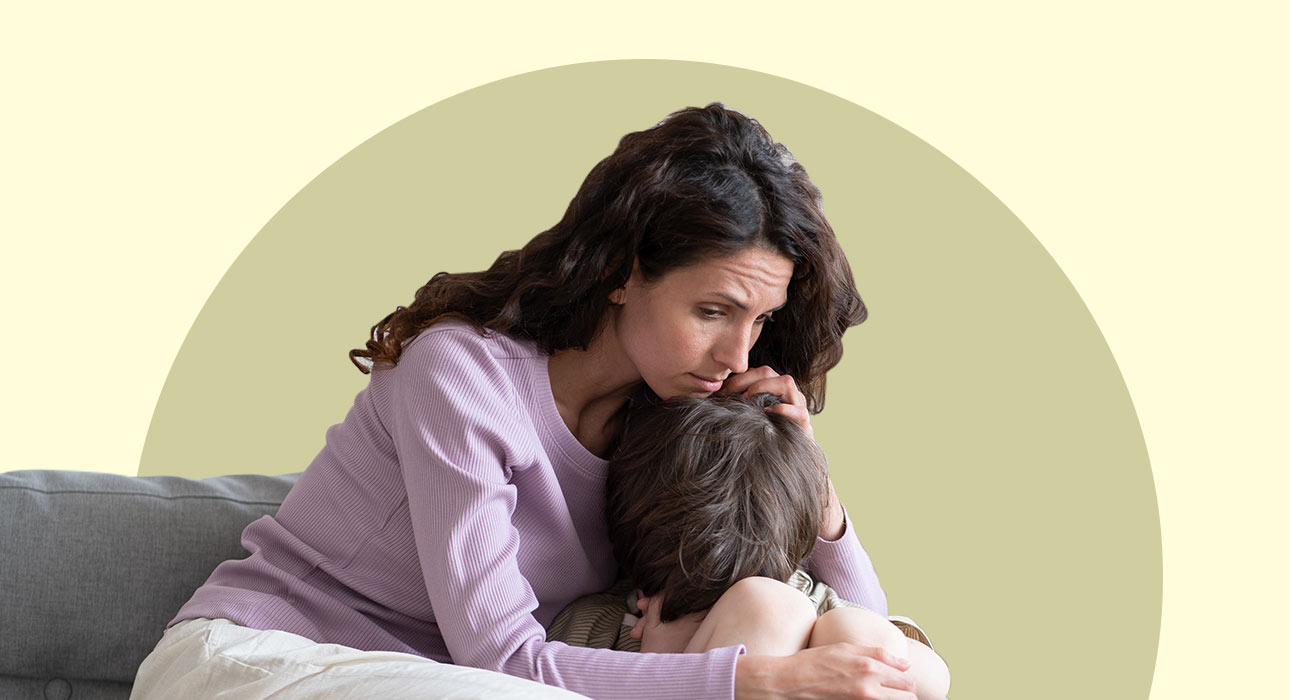
Parents help shape the way children learn about the world. Even before children can articulate what actually feels good or bad to them, they are aware of parental responses to strange situations, errors or perceived risk. A concerned parent may thus share more than just words. Body language, voice, and gestures, along with avoidance, reassuring behaviours, and trying to protect children can all convey information about what is thought to be safe or not (Aktar, 2022; Perlman et al., 2022).
Some studies indicate that parents’ anxiety can lead to greater anxiety and other emotional problems in children. But this is not a one-to-one transmission and does not imply that if parents are anxious, then their children are likely to be anxious as well (Sweeney & Wilson, 2023). This article discusses parenting styles, communication, emotional modelling, and how children learn to respond through these factors. It further explores the covert emotional responses of parents and their influence on children.
Learning Anxiety Through Observation
Emotional modelling is one of the most apparent ways of how parental anxiety can influence the kid. Children often imitate the behaviour of adults who are important to them when they encounter new situations. Fears of the parent can be contagious and may cause a child to feel that this situation is dangerous, even if it has not caused any harm to the child (Aktar, 2022; Nimphy et al., 2023). An insightful systematic review and meta-analysis study was conducted in 2023. It revealed a correlation between the observation of fearful responses from parents and fear and avoidance acquisition by children, especially in early childhood (Nimphy et al., 2023).
It may happen in a very common situation. A parent who freaks out when their child comes across a dog, has a lifelong anxiety about travel or continues to worry about strangers may unwittingly teach the child to approach similar situations carefully. A dual-process perspective of parent-to-child transmission of anxiety is also available. It shows that modelling fear and verbal communication of threat information are potential routes for such transmission (Aktar, 2022).
Most importantly, children do not imitate all the behaviours that they see. They are attuned to their parents’ feelings, as they see them in the light of their temperament and experiences. Despite this, the child may end up with negative attitudes regarding uncertainty and danger with repeated exposure to anxious responses. Aktar et al. (2017) call this a process by which children can develop threat-related biases; situations that are ambiguous are increasingly perceived as being threatening.
When Protection Becomes “Overprotection”
Fear and anxiety can play a role in parenting styles, too. The anxious parent may think it is in their child’s best interest to be around him or her and prevent any suffering, failure, embarrassment or danger to them. This may lead to enhanced surveillance, limitation, or proxy decision-making by adults, or a lack of acceptance of “adolescent” independence by adults (Affrunti & Ginsburg, 2012; van der Bruggen et al., 2008).
Care is more likely to be the motivation behind such behaviour than negative acts. But very high levels of parental regulation could restrict the chances for children to learn that they are capable of handling any tough situation. Parental control has been consistently studied as a possible predictor of childhood anxiety; however, the relationship is not always clear. Anxious children may elicit more parental control in response to their distress (van der Bruggen et al., 2008).
One suggested mechanism is what is termed perceived competence. As parental support persists often, children can have less opportunities to have their own sense of self-efficacy for dealing with difficulties in managing their own lives. Affrunti and Ginsburg (2012) found that children’s perceived competence partially mediated the relationship between maternal overcontrol and child anxiety. This suggests that excessive control may influence anxiety partly by affecting children’s notions about their own ability to cope.
The Unspoken Messages in Everyday Communication
Parents can also shape children by both talking with them about uncertainty and risk and by their own behaviour. A warning, ‘Be careful crossing the road,’ is a realistic safety behaviour. Repeatedly stating potential disaster, however, carries with it a different message; that threats abound in normal circumstances and one must be ever on guard (Aktar et al., 2017; Aktar, 2022).
Evidence provided on the environmental transmission of generalised anxiety indicates that children can learn anxious styles from their parents’ verbal interactions and from their behaviour. Parents can unwittingly convey messages which may include that the world is unsafe, uncertainty is intolerable or negative feelings must be avoided (Aktar et al., 2017). This can influence children’s interpretation of ambiguous situations. Imagine a child who hears that a school presentation which they are scheduled to make is likely to fail. The child might start to think about his/her embarrassment instead of about learning.
These messages can build a negative cognitive style over time if they’re repeated, and the perceived threats can take precedence (Aktar, 2022; Lawrence et al., 2019). A systematic review revealed supporting evidence of the role of parental factors in children’s anxious cognitions. This is by example of fear-inducing responses, diminishing children’s autonomy, and transmitting messages of vulnerability in children (Lawrence et al., 2019).
The Avoidance Loop
One of the other major routes is avoidance. Often, people will avoid situations because of feelings of anxiety. Often, avoidance temporarily relieves the pain and fear, strengthening the initial notion that it was potentially unsafe in the first place (Lebowitz et al., 2014; Norman et al., 2015). Parents can enter into this cycle if they systematically help children to avoid situations and activities that create anxiety.
For instance, a parent may continuously overlook opportunities for their child to engage in strenuous tasks, take over for them in unappealing circumstances, or alter family demands when the child is upset. Such reactions may temporarily alleviate distress, but can also limit the child’s chances to learn how to handle it (Lebowitz et al., 2014; Norman et al., 2015). This pattern is associated with the parenting adaptation pattern (family accommodation), the parent’s adaptation of behaviour to help alleviate a child’s anxiety-related distress.
Among children with anxiety disorders, the family is known to provide family accommodation, which is correlated with increased anxiety levels (Iniesta-Sepúlveda et al., 2021). The accommodation can thus turn into a complex cycle. The child struts, and the parent adapts their behaviour to offset the anxiety. Later on, the child feels better, and the family begins to increasingly depend on the accommodation to alleviate anxiety. While these reactions by parents usually serve an adaptive purpose, excessive accommodation may be detrimental to child anxiety (Norman et al., 2015).
Children Notice More Than Parents Say
Parents don’t transmit anxiety exactly or at a given depth. Children are influenced by non-verbal emotional indicators: expression, body language, voice and reactions. A parent can tell their children to calm down, but also may be concerned or worry multiple times about whether things are safe. The verbal message and emotional message can thus be contradicted.
A child may use the parent’s behaviour to decide which is more believable (Aktar, 2022; Perlman et al., 2022). Recent research has begun to view parent-to-child anxiety transmission as a two-way street. Perlman et al. (2022) hypothesise that child–parent interactions in the moment, like emotional synchrony and emotional modelling, can play a role in problematic pathways that lead to anxiety.
This likewise has an impact on the behaviour of the child, influencing their parents. A low-key temperament can be seen as being extra sensitive. Due to this, the parent may end up being extra protective of them, which can further foster the child’s sense of danger in the world. Therefore, parent and child can find themselves in a vicious circle of anxiety instead of winding up in just one direction (Bridgett et al., 2015; Buss et al., 2021).
The Reality Behind “Parents Cause Anxiety”
Not blaming (or suggesting) parents as a cause of child anxiety is crucial. Biological vulnerability, temperament, genes, experiences, peer, school, and family factors all play a role in the development of anxiety (Branje et al., 2020; McLeod et al., 2007). A meta-analysis of 47 studies has shown that parenting only accounts for a small proportion of the variance in children’s anxiety, with many other factors involved (McLeod et al., 2007).
Recent work also highlights that intergenerational transmission is shaped by environment and complex processes involving genetics as well as non-genetic factors (Branje et al., 2020). This is crucial as parents can be anxious but not transmit anxiety as a disorder to their children. Similarly, even with parents who are not experiencing substantial anxiety, children may feel anxious. On these grounds, the evidence indicates that the risk and influence are greater than inevitability (Branje et al., 2020; McLeod et al., 2007).
Breaking the Cycle
One essential tool that proves to be helpful is emotional regulation. No parent needs to dismiss all their expressions of anxiety and remain perfectly calm. Instead, they can demonstrate healthier feelings and behaviours when uncertain. “I’m feeling a bit nervous about that, but I’ll manage it,” doesn’t mean the same thing as giving a signal to the child that something is out there that they should be cautious about (Aktar, 2022; Perlman et al., 2022).
For the same reason, it is important to enable kids to take on challenges that are appropriate for their age, so that they can learn to be independent and confident. Parents can validate feelings of fear, but not all of the sources of fear need to be eliminated. Talking with children in a loving and non-threatening way about what is possible in the context of what is impossible helps them to understand that it’s okay to have difficult feelings (Affrunti & Ginsburg, 2012; van der Bruggen et al., 2008).
This is especially relevant as interventions are turning towards the family as a potentially important locus of childhood anxiety. In a systematic review from 2022, direct evidence around treating parental anxiety and children’s mental health wasn’t available. Still, there was some early evidence around parenting interventions that reduce the intergenerational transmission of anxiety (Chapman et al., 2022).
Conclusion
Parental anxiety has multiple ways to impact children’s development that interweave: by providing emotional modelling, by excessive overprotection, by communication, by avoidance, and by family accommodation. Children watch how their parents handle uncertainty and are subsequently, to some degree, able to carry on the interpretations of their parents. However, parental anxiety can’t be blamed for causing childhood anxiety automatically.
Parents can offer valuable support by reassuring children that it is okay to feel worried and that they do not need to resolve every problem immediately. Parents can impart to children that uncertainty is a fact of life, not a cause for concern or fear, and that it is acceptable if they experience anxiety. In addition, they can demonstrate effective coping skills and thus help children to learn coping skills when they encounter stressful situations.
References +
- Aktar, E. (2022). Intergenerational transmission of anxious information processing biases: An updated conceptual model. Clinical Child and Family Psychology Review, 25(1), 182–203. https://doi.org/10.1007/s10567-022-00390-8
- Aktar, E., Nikolić, M., & Bögels, S. M. (2017). Environmental transmission of generalised anxiety disorder from parents to children: Worries, experiential avoidance, and intolerance of uncertainty. Dialogues in Clinical Neuroscience, 19(2), 137–147. https://doi.org/10.31887/DCNS.2017.19.2/eaktar
- Affrunti, N. W., & Ginsburg, G. S. (2012). Maternal overcontrol and child anxiety: The mediating role of perceived competence. Child Psychiatry & Human Development, 43(1), 102–112. https://doi.org/10.1007/s10578-011-0248-z
- Branje, S., Geeraerts, S., de Zeeuw, E. L., Oerlemans, A. M., Koopman-Verhoeff, M. E., Schulz, S., Nelemans, S., Meeus, W., Hartman, C. A., Hillegers, M. H. J., Oldehinkel, A. J., & Boomsma, D. I. (2020). Intergenerational transmission: Theoretical and methodological issues and an introduction to four Dutch cohorts. Developmental Cognitive Neuroscience, 45, 100835. https://doi.org/10.1016/j.dcn.2020.100835
- Bridgett, D. J., Burt, N. M., Edwards, E. S., & Deater-Deckard, K. (2015). Intergenerational transmission of child and parent anxiety: The role of parenting and child temperament. Frontiers in Psychology, 6, 1875. https://doi.org/10.3389/fpsyg.2015.01875
- Buss, K. A., et al. (2021). Bidirectional effects of toddler temperament and maternal overprotection on maternal and child anxiety symptoms across preschool. Development and Psychopathology.
- Chapman, L., Hutson, R., Dunn, A., Brown, M., Savill, E., & Cartwright-Hatton, S. (2022). The impact of treating parental anxiety on children’s mental health: An empty systematic review. Journal of Anxiety Disorders, 88, 102557. https://doi.org/10.1016/j.janxdis.2022.102557
- Iniesta-Sepúlveda, M., Rodríguez-Jiménez, T., Lebowitz, E. R., Goodman, W. K., & Storch, E. A. (2021). The relationship of family accommodation with pediatric anxiety severity: Meta-analytic findings and child, family and methodological moderators. Child Psychiatry & Human Development, 52(1), 1–14. https://doi.org/10.1007/s10578-020-00987-6
- Lawrence, P. J., Murayama, K., & Creswell, C. (2019). Systematic review and meta-analysis: Anxiety and depressive disorders in offspring of parents with anxiety disorders. Journal of the American Academy of Child & Adolescent Psychiatry, 58(1), 46–60.
- Lebowitz, E. R., Scharfstein, L., & Jones, J. (2015). Child-report of family accommodation in pediatric anxiety disorders: Comparison and integration with mother-report. Child Psychiatry & Human Development, 46(4), 501–511. https://doi.org/10.1007/s10578-014-0491-1
- McLeod, B. D., Wood, J. J., & Weisz, J. R. (2007). Examining the association between parenting and childhood anxiety: A meta-analysis. Clinical Psychology Review, 27(2), 155–172.
- Nimphy, C. A., et al. (2023). Parent-to-offspring fear transmission via modelling in early life: A systematic review and meta-analysis. Clinical Child and Family Psychology Review, 26(3), 751–772. https://doi.org/10.1007/s10567-023-00448-1
- Norman, K. R., Silverman, W. K., & Lebowitz, E. R. (2015). Family accommodation of child and adolescent anxiety: Mechanisms, assessment, and treatment. Journal of Child and Adolescent Psychiatric Nursing, 28(3), 131–140. https://doi.org/10.1111/jcap.12116
- Perlman, S. B., Lunkenheimer, E., Panlilio, C., & Pérez-Edgar, K. (2022). Parent-to-child anxiety transmission through dyadic social dynamics: A dynamic developmental model. Clinical Child and Family Psychology Review, 25(1), 110–129. https://doi.org/10.1007/s10567-021-00382-6
- Sweeney, S., & Wilson, C. (2023). Parental anxiety and offspring development: A systematic review. Journal of Affective Disorders, 327, 64–78. https://doi.org/10.1016/j.jad.2023.01.128
- van der Bruggen, C. O., Stams, G. J. J. M., & Bögels, S. M. (2008). Research review: The relation between child and parent anxiety and parental control: A meta-analytic review. Journal of Child Psychology and Psychiatry, 49(12), 1257–1269. https://doi.org/10.1111/j.1469-7610.2008.01898.x



Leave feedback about this