







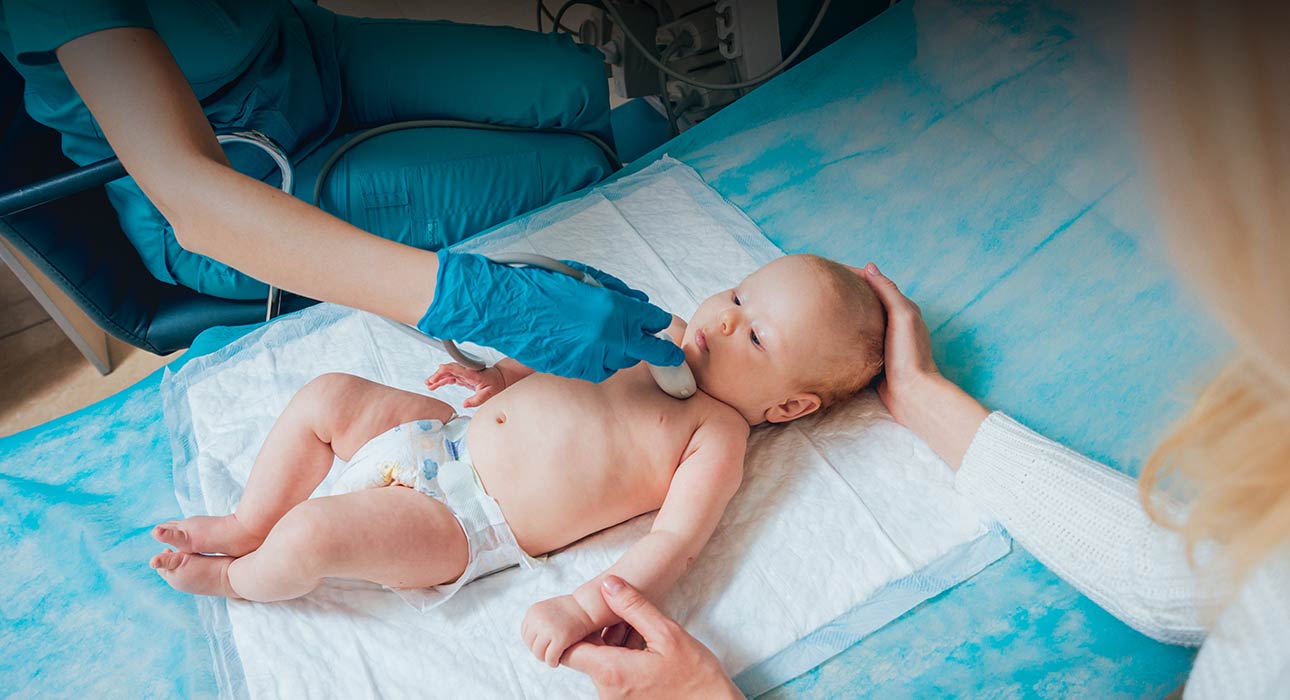
The paper addresses the issue of whether the implementation of whole genome sequencing for infants is safe and rational, and why scientists call for caution prior to its wide implementation in health care systems. The significance of the study lies in the fact that the technology of genetic sequencing has become more affordable and efficient recently, and some countries are planning to introduce it into the routine newborn screening.
Challenges and Ethical Considerations in Newborn Genomic Screening
“Newborn genomic screening” is the central concept of the topic. It refers to sequencing the partial or entire genome of an infant shortly after his/her birth in order to detect genetic mutations associated with disease development. In traditional newborn screening, only biochemical testing methods such as blood spot testing are employed to detect a restricted list of conditions, while the introduction of genomic screening would result in an enormous increase in the number of diagnosed conditions (even some of those may never become the source of any pathology). The main problem highlighted by the Exeter group is the problem of overdiagnosis.
Before moving on with the investigation, it is worth considering that genomic testing should be considered a “risk map” rather than a crystal ball, since there are many gene mutations that increase the risk slightly, while the environment, lifestyle, and other genetic factors determine whether or not the disease will actually occur. The key issue is the appropriateness of providing such risk information to families with healthy children.
Population-Scale Genomic Analysis
The work described is a series of papers led by researchers at the University of Exeter, using large population datasets to analyse how often genetic variants flagged in screening actually lead to disease. They examine different types of genetic conditions, focusing especially on situations where disease risk is linked to loss of one gene copy (heterozygous loss‑of‑function) versus loss of both copies (biallelic variants) and compare predicted risks with real‑world outcomes in population cohorts. (parenting patch)
Their approach is more about “real‑world evidence” than a single lab experiment: they use population‑scale genomic and health data to estimate how many children with certain variants will ever develop the related disease and how many would be labelled “at risk” without ever becoming ill. The team’s goal is to inform policy and design safer genomic newborn screening programs by identifying which kinds of variants are most likely to cause harmful overdiagnosis and which seem more reliable for screening.
Read More: Postpartum Depression & How It Impacts Newborn’s Holistic Development
Reliance on diagnostic procedure
The researchers report that the highest risk of overdiagnosis occurs for conditions where losing just one of the two gene copies is enough to be tagged as “at risk.” In these cases, many people carrying such variants may never develop serious symptoms, yet newborn screening could still label them as abnormal, creating a large group of children who appear “sick on paper” but remain healthy in practice.
In contrast, the emerging evidence suggests that conditions requiring loss of both gene copies to cause disease tend to show a lower risk of overdiagnosis, because the link between the genotype and the actual disorder is stronger and more consistent. Even so, the picture is mixed: different genes and diseases behave differently, reinforcing the idea that not all genetic findings are equally suitable for population screening.
Future research
The authors claim that even though genomically-based newborn screening can be truly effective at identifying serious but treatable conditions in the early stages, policymakers shouldn’t implement such screening in every region before gathering more evidence regarding both its positive and negative effects. What the authors stress is that the inappropriate introduction of this program may lead to needless anxiety and additional medical procedures for disorders that might never actually matter to anyone.
In this regard, they emphasise the importance of conducting additional well-designed, large-scale studies before any widespread implementation and highlight the importance of concentrating on diseases for which the connection between genetics and disease is well understood, and early treatment is known to help. In their view, the essential aspect of this is designing genomic testing that is equitable, evidence-based, and transparent about uncertainties.
Conclusion
In summary, the study shows that there is great potential for genomic screening at birth; however, it is still not at the stage where it can be applied on a widespread level without further investigation and protection. The primary message is that healthcare facilities must proceed slowly and cautiously, first concentrating on diseases with a proven connection to genetics and an advantage of early detection.
References +
- News Medical. (2026, June 16). News-Medical. News-Medical. https://www.news-medical.net/news/20260615/Researchers-urge-caution-over-large-scale-newborn-g enome-screening.aspx
- Wisconsin Department of Health Services. (2021, September 20). People at Higher Risk for Communicable Disease. Wisconsin Department of Health Services. https://www.dhs.wisconsin.gov/disease/risk.htm




Leave feedback about this