







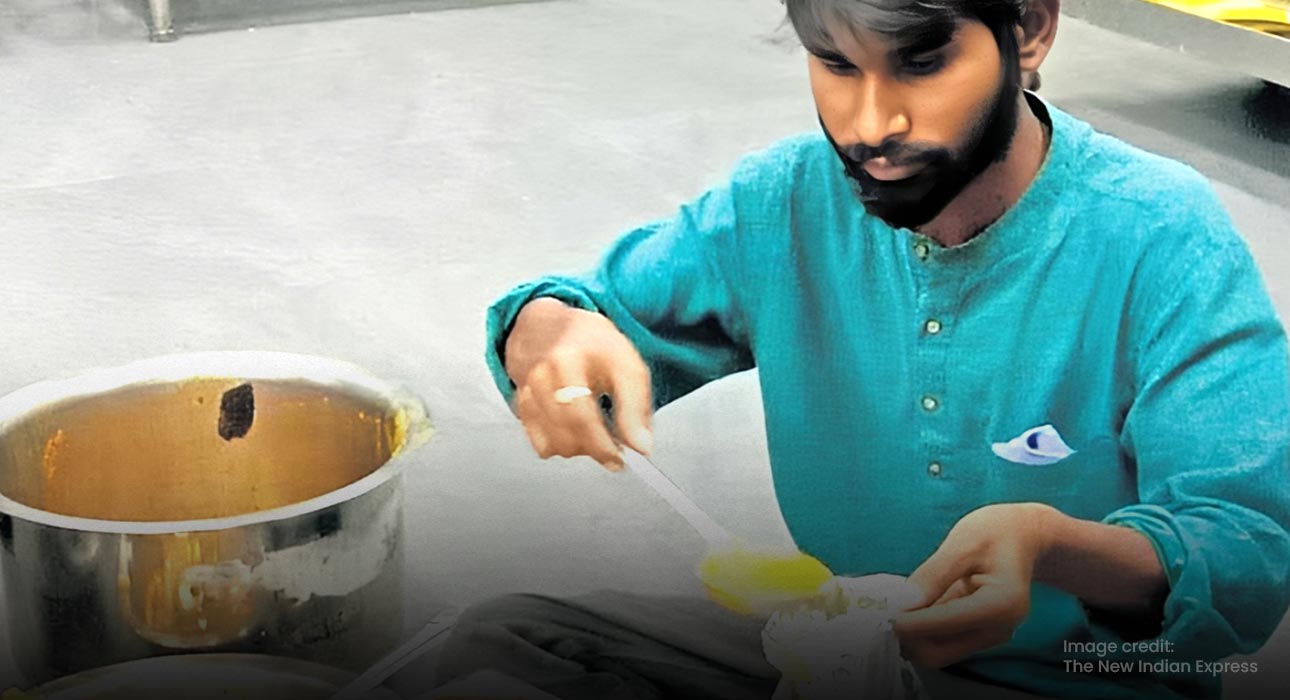
A social activist from Hyderabad, who once faced difficulties like starvation and poverty, is now getting noticed due to his contributions toward fighting food insecurity by distributing surplus food. Mr Nemani Malleshwar Rao, founder of a social movement known as “Don’t Waste Food”, has turned his own experience of starvation and poverty into a movement that has helped millions of people by providing meals all around India (The New Indian Express, 2026).
As mentioned by The New Indian Express (2026), the foundation stone of Rao’s journey was his childhood, when he grew up in a family that went through financial hardships due to floods, in which they lost their agricultural farm. This led the family to migrate for work; consequently, they couldn’t afford necessities, and Rao had to work instead of studying in school.
Read More: The Psychological Effects of Growing Up in Poverty
Childhood Adversity Shaped Future Action
Rao’s life changed because the social worker helped him to enter the welfare home so that he could attain his academic goals. This was a significant event in the life of Rao that influenced his later social work career (The New Indian Express, 2026).
It has been demonstrated that proper education alongside sufficient social assistance can contribute to improved outcomes in the lives of impoverished children suffering from malnutrition (UNICEF, 2024).
Wedding Food Waste Inspired the Initiative
“Don’t Waste Food” was the idea from which the campaign was launched, and this idea was generated by Rao in 2012 while he was working at a wedding catering event that would raise money for his engineering studies. This massive waste of food reminded him of his childhood days when he used to go hungry. Instead of throwing the leftover food away, Rao, along with some of his friends, picked up this leftover food and gave it out to people without homes in Hyderabad. The campaign eventually became a volunteer group that took up the task of collecting extra food from such events.
Combating both Hunger and Food Waste
The current process involves gathering these food items, which are then distributed to those individuals experiencing food insecurity. Two key problems related to the processes carried out by the organisation are addressed. In the first place, there is the problem of food wastage. As stated by the UN Environment Program (2024), the problem of food wastage is one of the most pressing issues currently faced by society. This is because even though much food is wasted every year, the issue of food security remains very fragile.
“Food Waste” shows an excellent example of how social problems can be tackled via community initiatives.
Psychological Significance of Lived Experience
As has been observed by mental health experts, people who have faced adversities tend to show more empathy towards others who have gone through hardships. Resilience and post-traumatic growth are associated with such cases where hard times enable one to find meaning and become socially connected (Tedeschi & Calhoun, 2004).
The example of Rao is no exception. Apparently, the experience he had in his childhood concerning hunger issues is one that played a pivotal role in fostering his determination to help people dealing with such issues. Indeed, participating in good prosocial behaviours results in the enhancement of happiness levels (American Psychological Association [APA], 2023).
Expanding Community Support
Apart from redistributing food, the organisation is known to engage in blood donation campaigns, education assistance programs, and disaster response. All these show that the organisation’s contribution to the welfare of society goes beyond fighting hunger (The New Indian Express, 2026).
As the issues of food insecurity and wastage become more pressing around the world, the case of Rao shows the part played by individuals and community involvement in dealing with social issues. The personal experience of hardship in childhood and becoming a social leader is one way in which such social transformation can be achieved.
A social activist from Hyderabad, who once faced difficulties like starvation and poverty, is now getting noticed due to his contributions toward fighting food insecurity by distributing surplus food. Mr Nemani Malleshwar Rao, founder of a social movement known as “Don’t Waste Food”, has turned his own experience of starvation and poverty into a movement that has helped millions of people by providing meals all around India (The New Indian Express, 2026).
As mentioned by The New Indian Express (2026), the foundation stone of Rao’s journey was his childhood, when he grew up in a family that went through financial hardships due to floods, in which they lost their agricultural farm. This led the family to migrate for work; consequently, they couldn’t afford necessities, and Rao had to work instead of studying in school.
Read More: The Psychological Effects of Growing Up in Poverty
Childhood Adversity Shaped Future Action
Rao’s life changed because the social worker helped him to enter the welfare home so that he could attain his academic goals. This was a significant event in the life of Rao that influenced his later social work career (The New Indian Express, 2026).
It has been demonstrated that proper education alongside sufficient social assistance can contribute to improved outcomes in the lives of impoverished children suffering from malnutrition (UNICEF, 2024).
Wedding Food Waste Inspired the Initiative
“Don’t Waste Food” was the idea from which the campaign was launched, and this idea was generated by Rao in 2012 while he was working at a wedding catering event that would raise money for his engineering studies. This massive waste of food reminded him of his childhood days when he used to go hungry. Instead of throwing the leftover food away, Rao, along with some of his friends, picked up this leftover food and gave it out to people without homes in Hyderabad. The campaign eventually became a volunteer group that took up the task of collecting extra food from such events.
Combating both Hunger and Food Waste
The current process involves gathering these food items, which are then distributed to those individuals experiencing food insecurity. Two key problems related to the processes carried out by the organisation are addressed. In the first place, there is the problem of food wastage. As stated by the UN Environment Program (2024), the problem of food wastage is one of the most pressing issues currently faced by society. This is because even though much food is wasted every year, the issue of food security remains very fragile.
“Food Waste” shows an excellent example of how social problems can be tackled via community initiatives.
Psychological Significance of Lived Experience
As has been observed by mental health experts, people who have faced adversities tend to show more empathy towards others who have gone through hardships. Resilience and post-traumatic growth are associated with such cases where hard times enable one to find meaning and become socially connected (Tedeschi & Calhoun, 2004).
The example of Rao is no exception. Apparently, the experience he had in his childhood concerning hunger issues is one that played a pivotal role in fostering his determination to help people dealing with such issues. Indeed, participating in good prosocial behaviours results in the enhancement of happiness levels (American Psychological Association [APA], 2023).
Expanding Community Support
Apart from redistributing food, the organisation is known to engage in blood donation campaigns, education assistance programs, and disaster response. All these show that the organisation’s contribution to the welfare of society goes beyond fighting hunger (The New Indian Express, 2026).
As the issues of food insecurity and wastage become more pressing around the world, the case of Rao shows the part played by individuals and community involvement in dealing with social issues. The personal experience of hardship in childhood and becoming a social leader is one way in which such social transformation can be achieved.
Referneces +
- The New Indian Express. (2026, May 31). A childhood of hunger, a lifetime of giving. Retrieved from https://www.newindianexpress.com/cities/hyderabad/2026/May/31/a childhood-of-hunger-a-lifetime-of-giving
- United Nations Environment Programme. (2024). Food Waste Index Report 2024.

Leave feedback about this